
Explainer
What was Arctic Frost?
Arctic Frost is the FBI's name for an investigation opened in April 2022 into efforts to overturn the 2020 presidential election. Special counsel Jack Smith took it over that November. Republicans in Congress have challenged how it collected records, including members' phone records.
U.S. PoliticsLaw EnforcementJanuary 6 AttackGovernment Transparency
What the investigation was
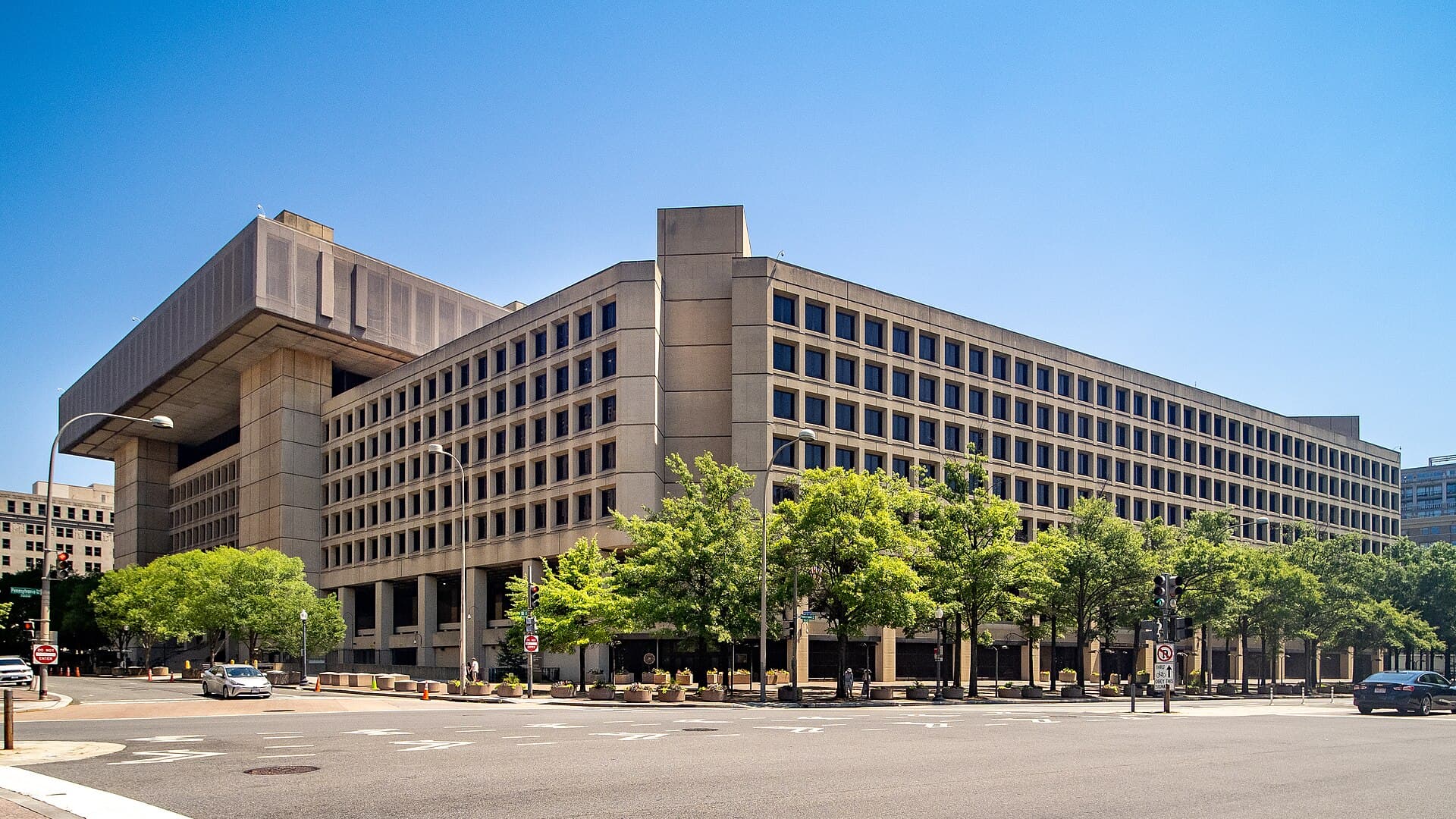
Arctic Frost is the name the FBI gave an investigation it opened in April 2022 into efforts to overturn the 2020 presidential election. According to the Senate Judiciary Committee's Republican majority, Attorney General Merrick Garland, Deputy Attorney General Lisa Monaco and FBI Director Christopher Wray signed off on April 4, 2022, and the FBI formally opened the case on April 13. The majority's account says an FBI email that February described a case on the Trump campaign and others "for conspiring to defraud the US Govt via the elector case."1 Committee chairman Chuck Grassley's office has said the investigation "formed the basis of Jack Smith's elector case against President Donald Trump."2
The special counsel's case
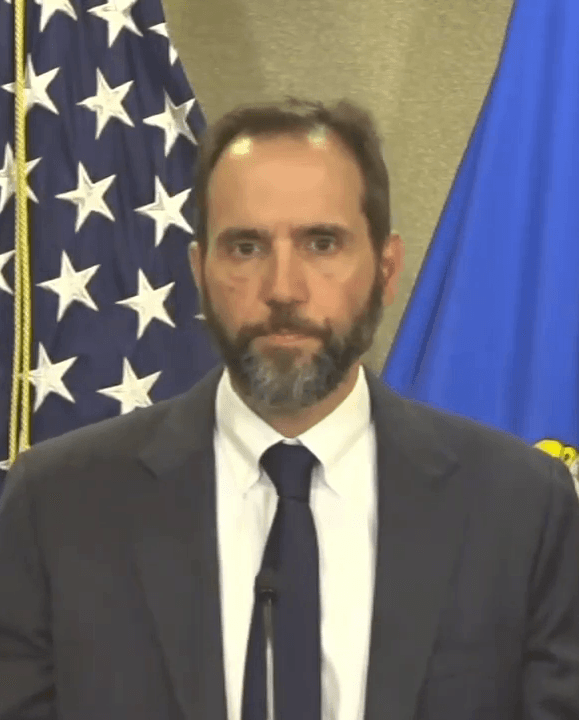
Garland appointed Jack Smith as special counsel on November 18, 2022.1 Smith's final report describes the election inquiry as "an investigation into whether any person violated the law in connection with efforts to interfere with the lawful transfer of power following the 2020 presidential election."3 On August 1, 2023, a federal grand jury in Washington indicted Donald Trump on four counts, including conspiracy to defraud the United States and conspiracy against rights.4
On July 1, 2024, the Supreme Court held that a former president has absolute immunity from prosecution for actions within his "conclusive and preclusive constitutional authority," at least presumptive immunity for his other official acts, and no immunity for unofficial acts.5 After Trump won the 2024 election, Smith's office moved to dismiss the case on November 25, 2024, following the Justice Department's view that a sitting president cannot be prosecuted, and the court dismissed it without prejudice. Smith's report says his office brought the case because it concluded that "the admissible evidence would be sufficient to obtain and sustain a conviction." Trump's lawyers dispute the report in a letter appended to it.3
How it gathered records
Investigators used grand jury subpoenas to obtain records from phone carriers and businesses. Phone toll records show "when and to whom a call is made, as well as the duration and general location data of the call," but not what was said, according to Grassley's office.2 Verizon told Grassley that a special counsel subpoena dated May 25, 2023 sought call records for 12 numbers from January 4 through 7, 2021, and came with a nondisclosure order signed by a federal judge.6 An FBI document Grassley released lists preliminary analysis of toll records for eight Republican senators and one Republican House member.2
Grassley also released 197 subpoenas, sent to 34 individuals and 163 businesses, that he said sought records related to at least 430 named Republican individuals and entities.7 The Justice Department told Congress in July 2026 that Smith's team obtained White House text messages from the National Archives, including texts with 44 current and former members of Congress.8
The case against it
Republicans in Congress describe Arctic Frost as political targeting. Grassley said that "Arctic Frost and related weaponization by federal law enforcement under Biden was arguably worse than Watergate."2 A report by Republican staff of the House Judiciary Committee argues that the toll-record subpoenas and the nondisclosure orders that kept members from learning of them were unconstitutional.9
The dispute has moved into legal complaints. House Judiciary Chairman Jim Jordan referred Smith to the Justice Department in July 2026, saying Smith "seemingly made willfully and intentionally false statements of material fact" in his December 2025 deposition.10 In September 2026, Sen. Marsha Blackburn sued Smith over the subpoena for her phone records.11
The case for it
Smith and his lawyers say the investigation followed the rules. His attorneys wrote that the subpoena for the senators' toll records "was entirely proper, lawful, and consistent with established Department of Justice policy."12 In his September 2026 statement to the Senate Judiciary Committee, Smith said his office "followed Justice Department policies, observed legal requirements, and took actions based on the facts and the law."13
Dan Schwager, a former prosecutor in the Justice Department's Public Integrity Section, testified that "Non-disclosure orders are also commonly warranted and sought."14 The Justice Department's inspector general reported in 2024 that during leak investigations in 2017 and 2018, the department obtained non-content records of two Democratic members of Congress and 43 congressional staffers.15 Roll Call reported in September 2026 that "No court has found wrongdoing on the part of Smith or any of the prosecutors as part of the probes themselves."16
The Speech or Debate question
Much of the dispute turns on the Constitution's Speech or Debate Clause, which says that "for any Speech or Debate in either House," members of Congress "shall not be questioned in any other Place."17 In 2023, the D.C. Circuit held in a sealed case about Rep. Scott Perry's phone that his messages had to be reviewed one by one for protection, and that his communications with other members about the 2020 certification vote were "quintessential legislative acts." That ruling concerned a search warrant for the contents of a phone and did not address toll-record subpoenas.18 Schwager called the clause's application to the toll records "unclear and debatable."14
History
- April 13, 2022
The FBI formally opens Arctic Frost.1
- November 18, 2022
Attorney General Merrick Garland appoints Jack Smith as special counsel.1
- May 25, 2023
A special counsel subpoena to Verizon seeks call records for 12 numbers, with a nondisclosure order.6
- August 1, 2023
A federal grand jury in Washington indicts Donald Trump in the election case.4
- July 1, 2024
The Supreme Court rules on presidential immunity in the election case.5
- November 25, 2024
After Trump's election, the case is dismissed without prejudice.3
- January 7, 2025
Smith sends his final report on the election case to the attorney general.3
- October 6, 2025
Grassley releases an FBI document on toll records of eight senators and one House member.2
- July 22, 2026
Rep. Jim Jordan refers Smith to the Justice Department over his deposition.10
- September 29, 2026
Smith testifies before the Senate Judiciary Committee.13
What is disputed
Whether members of Congress's phone toll records and text messages were properly obtained, and whether the Speech or Debate Clause protected them.
See the case: Were members of Congress's phone records and text messages properly obtained in the Arctic Frost and Jack Smith investigations?Whether Jack Smith attended the Warriors-Hawks game Sen. Eric Schmitt asked him about at the September 29, 2026 hearing.
See the case: Did Jack Smith Attend the Warriors-Hawks Game Eric Schmitt Asked About?Whether the investigation was opened on a proper basis, or reflected partisanship, as Senate Judiciary Committee Republicans allege.
Cases on the Dispute Index
Did Jack Smith Attend the Warriors-Hawks Game Eric Schmitt Asked About?
At a September 29 Senate hearing, Sen. Eric Schmitt asked Jack Smith whether he attended a February 2024 Atlanta Hawks game, in questions about Fani Willis. Smith said no and recalled a Maryland-Iowa game; Klobuchar said Schmitt had the teams wrong.
Were members of Congress's phone records and text messages properly obtained in the Arctic Frost and Jack Smith investigations?
Republicans say Jack Smith's team improperly obtained members of Congress's phone records and texts and used nondisclosure orders to hide it. Smith and Democrats say the toll records were approved and lawful; Smith says the texts came from White House phones. Member counts differ.
Sources
- Arctic Frost | United States Senate Committee on the Judiciary (opens in a new tab) · Saved copy (opens in a new tab)
- Biden FBI Spied on Eight Republican Senators as Part of Arctic Frost Investigation, Grassley Oversight Reveals (opens in a new tab) · Saved copy (opens in a new tab)
- Final Report of the Special Counsel, Volume One: The Election Case (January 7, 2025) (opens in a new tab) · Saved copy (opens in a new tab)
- Indictment, United States v. Donald J. Trump, No. 1:23-cr-00257 (D.D.C. Aug. 1, 2023) (opens in a new tab) · Saved copy (opens in a new tab)
- Trump v. United States, 603 U.S. 593 (2024), No. 23-939, opinion of the Court (opens in a new tab) · Saved copy (opens in a new tab)
- Verizon to Sen. Chuck Grassley, October 24, 2025 (toll records) (opens in a new tab) · Saved copy (opens in a new tab)
- NEW: Jack Smith Subpoenaed Records for Over 400 Republican Targets As Part of Arctic Frost (opens in a new tab) · Saved copy (opens in a new tab)
- U.S. Department of Justice (Assistant Attorney General Patrick D. Davis) to Sen. Chuck Grassley, July 2026 (Arctic Frost filter team) (opens in a new tab) · Saved copy (opens in a new tab)
- How Jack Smith and the Biden-Harris Department of Justice Disregarded the Separation of Powers to Spy on Their Political Opposition (Interim Staff Report) (opens in a new tab) · Saved copy (opens in a new tab)
- Jim Jordan to Acting Attorney General Todd Blanche, July 22, 2026 (referral of Jack Smith) (opens in a new tab) · Saved copy (opens in a new tab)
- Blackburn files lawsuit over Arctic Frost phone records (opens in a new tab)
- Lanny A. Breuer and Peter Koski to Sen. Chuck Grassley, October 21, 2025 (Investigation of Jack Smith) (opens in a new tab) · Saved copy (opens in a new tab)
- Statement of Jack Smith, Former Special Counsel, U.S. Department of Justice, before the Committee on the Judiciary, U.S. Senate, September 29, 2026 (opens in a new tab)
- Statement of Dan Schwager before the Senate Judiciary Subcommittee on Privacy, Technology, and the Law, February 10, 2026 (opens in a new tab)
- A Review of the Department of Justice's Issuance of Compulsory Process to Obtain Records of Members of Congress, Congressional Staffers, and Members of the News Media (Report 25-010) (opens in a new tab) · Saved copy (opens in a new tab)
- Senators gear up for Judiciary clash with Jack Smith (opens in a new tab) · Saved copy (opens in a new tab)
- The Constitution of the United States: A Transcription (National Archives), Article I, Section 6 (opens in a new tab)
- In re: Sealed Case, No. 23-3001 (D.C. Cir. Sept. 5, 2023, reissued Sept. 13, 2023) (opens in a new tab) · Saved copy (opens in a new tab)
Last reviewed October 10, 2026. We review this explainer when a case that uses it changes. Report an error