
Abdul El-Sayed objects to the question's divided-loyalty premise
Abdul El-SayedDemocratic nominee for U.S. Senate in Michigan
El-Sayed argues that the questioner assumes he would have dual loyalties or an allegiance higher than the Constitution.
“You’re asking the question because implicitly you assume that I’ll have dual loyalties, right?”
Original post
Analysis
Where this statement fits
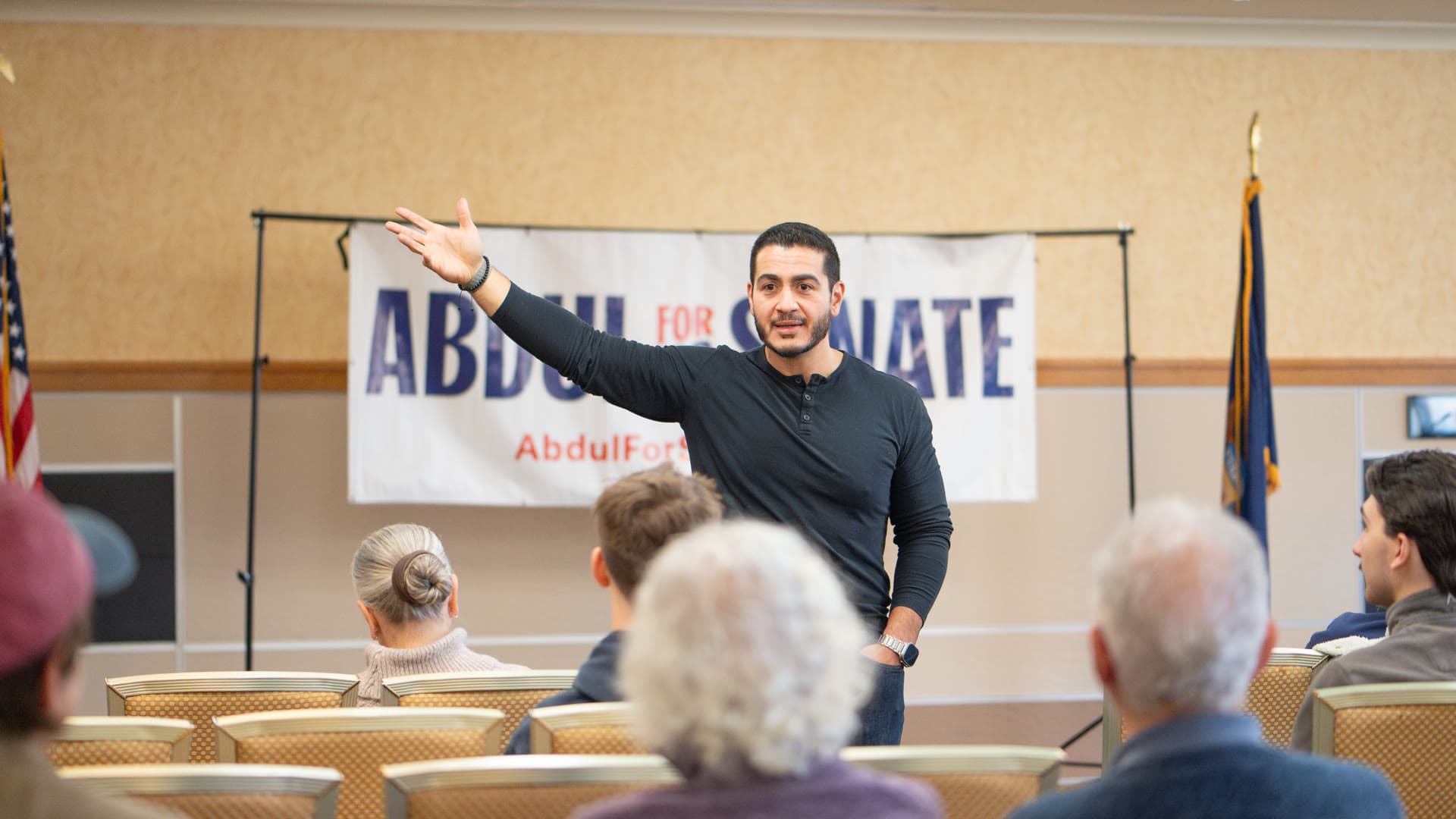
Abdul El-Sayed challenges a Muslim Brotherhood question at his Caro town hall
At a Caro town hall, an attendee asked Abdul El-Sayed to disavow the Muslim Brotherhood. El-Sayed answered affirmatively, then challenged the assumption behind the question. Byron York calls the question reasonable and argues that the ensuing response diverted legitimate scrutiny.
Source and context
Original post
About this source
The campaign shares an extended exchange and frames it as a question about allegiances. The post does not contain the complete town hall.
Archived copy (opens in a new tab)Analysis
About this source
York calls the question reasonable and criticizes El-Sayed's response. The column quotes El-Sayed's affirmative disavowal before his objection to the question's premise.
Before the quotation
He answers the disavowal question affirmatively before challenging its premise.
After the quotation
He compares the question with those put to John F. Kennedy about allegiance to the Pope.
How this statement is classified
The label describes this statement's response within the context above.
Why this label?
Relative to the town-hall question and its premise, El-Sayed expressly criticizes the assumption of divided loyalty behind it. He does not refuse to disavow the Brotherhood in this exchange.
- Recorded on
- Published here
More from this case
Read the full caseDmitri Bolt defends asking El-Sayed to disavow the Muslim Brotherhood
“there are straightforward reasons to ask the question, and “because he’s Muslim” isn’t one of them.”Read statement
Byron York calls the Brotherhood question reasonable
“It was a reasonable question.”Read statement
Marisa Kabas criticizes the premise of the Muslim Brotherhood question
“Then, on October 17th, Tommy asked his question in Caro, implying that El-Sayed had to disavow the Muslim Brotherhood simply because he’s a Muslim. Without knowing Tommy’s background and the effort by America Next to stoke controversy around El-Sayed’s public town halls, this might have seemed like an honest question, asked in good faith. Instead, it quickly appeared to be an inorganic attempt to generate negative publicity for El-Sayed.”Read statement
Share or embed this statement
The embed keeps its attribution link to The Dispute Index. Credit the image to The Dispute Index and link to the statement page.
Cite this record
- Publisher
- The Dispute Index
- Title
- Abdul El-Sayed objects to the question's divided-loyalty premise
- First published
- Last updated
- Permalink
- https://disputeindex.com/events/6340-el-sayed-argues-that-the-questioner-assumes-he
Last updated marks the most recent saved version of this published statement.
The Dispute Index. "Abdul El-Sayed objects to the question's divided-loyalty premise". First published: 2026-10-21. Last updated: 2026-10-21. https://disputeindex.com/events/6340-el-sayed-argues-that-the-questioner-assumes-he