
Was the United States right to sanction the ICC as an institution?
Rubio defends sanctions against the ICC itself as protection for Americans. The Court and human-rights groups reject the pressure, while Treasury licenses permit specified dealings to continue under stated conditions.
Claim in dispute
Institution-wide ICC sanctions are justified to protect Americans from the Court's prosecutions.

Case period:
Published by The Dispute Index editorial teamPublished Updated
Overview
On October 9, Secretary of State Marco Rubio announced institutional sanctions (opens in a new tab) against the ICC. He argued that the United States had never joined the Court and should protect Americans from its prosecutions. He also said the action left room for a diplomatic solution while threatening further measures.
OFAC's designation (opens in a new tab) adds the Court itself to the sanctions list, effective October 9. This is separate from earlier sanctions against individual judges and prosecutors. The ICC's response (opens in a new tab) rejects the action as interference with independent justice and asks member states to protect its work. Human Rights Watch (opens in a new tab) also opposes the sanctions.
The designation is not a finding that the Court has stopped operating. General License 13 (opens in a new tab) authorizes specified maintenance and wind-down transactions through 12:01 a.m. EDT on April 7, 2027. License 14 (opens in a new tab) separately permits specified telecommunications and enterprise-software transactions without that stated deadline. Licenses 15 and 16 address pension payments and certain detainees. Licenses 14-16 have no stated expiry, which does not prevent later amendment or revocation. Their conditions matter, and they do not erase earlier individual designations.
The Assembly bureau (opens in a new tab) called for immediate revocation on October 10. An EU statement (opens in a new tab), posted October 12, opposes the measures while welcoming diplomacy. The question remains whether sanctions against the institution are a defensible means of addressing U.S. concerns or an unjustified restriction on international criminal justice.
People in this case
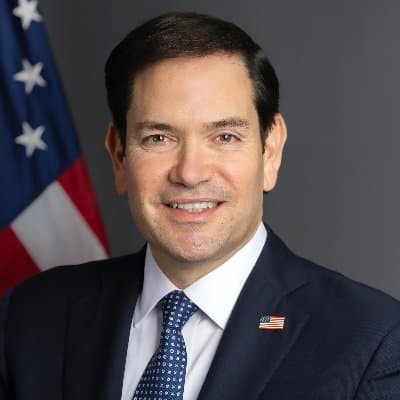 Marco RubioDirectly involved
Timeline
5 timeline entries on this page. Dates: October 9, 2026 to October 12, 2026
October 2026
5 events
United States designates the ICC itself
Incident
OFAC adds the International Criminal Court to its sanctions list. Rubio defends the designation and calls for a diplomatic solution addressing U.S. concerns.
[01]Rubio announces sanctions against the ICC as an institution
Rubio defends institutional sanctions and asks member states to address U.S. concerns. His description of the Court's jurisdiction is the administration's position.
Rubio announces sanctions against the ICC as an institutionComplete press statement; sovereignty argument and diplomatic solution paragraphs.[02]OFAC designates the International Criminal Court
OFAC adds the Court itself to the sanctions list and issues licenses for specified dealings. The entry also contains unrelated sanctions actions.
OFAC designates the International Criminal CourtICC addition to the SDN list and four general licenses.OFAC issues licenses for specified ICC transactions
Source release
License 13 authorizes maintenance and wind-down dealings through April 7, 2027. Other licenses address telecommunications and software, pension payments and certain detainees. Their conditions differ.
[03]ICC-related General License 13
License 13 authorizes specified maintenance and wind-down transactions through 12:01 a.m. EDT on April 7, 2027. It does not generally authorize dealings with other separately blocked persons.
ICC-related General License 13Complete license.[04]ICC-related General License 14
License 14 separately authorizes specified telecommunications and enterprise-software dealings. It does not state the April 7 deadline in License 13.
ICC-related General License 14Complete license.[05]ICC-related General License 15
License 15 authorizes specified transactions related to pension payments involving the Court.
ICC-related General License 15Complete license.[06]ICC-related General License 16
License 16 authorizes specified transactions for certain Court detainees, subject to its conditions.
ICC-related General License 16Complete license.ICC and Human Rights Watch reject institutional sanctions
Reaction
The Court rejects the designation and seeks member-state support. Human Rights Watch also condemns the action.
[07]ICC rejects sanctions against the institution
The Court rejects the institutional designation, calls for member-state support and says it will continue its work. This response is distinct from its earlier responses to individual sanctions.
ICC rejects sanctions against the institutionComplete English statement, including President Tomoko Akane's quotation.[08]Human Rights Watch opposes institutional ICC sanctions
Human Rights Watch condemns the sanctions and calls for measures to protect the Court. Its claims about U.S. motives are attributed to the organization.
Human Rights Watch opposes institutional ICC sanctionsOpening institutional response and Philippe Bolopion quotations.Assembly bureau calls for sanctions to be revoked
Reaction
The Assembly of States Parties bureau opposes the institutional designation and calls for its immediate revocation.
[09]Assembly bureau calls for revocation of ICC sanctions
The Bureau of the Assembly of States Parties rejects institutional sanctions and calls for their immediate revocation.
Assembly bureau calls for revocation of ICC sanctionsComplete English statement.EU statement opposes sanctions and welcomes diplomacy
Reaction
A statement posted by the EU opposes pressure on the Court and welcomes discussion with member states. It should be read alongside the designation's specific licenses.
[10]EU response to sanctions against the ICC
The EU rejects pressure on the Court and welcomes scope for diplomacy. Its description of delayed entry into force should be read alongside OFAC's actual designation and licenses.
EU response to sanctions against the ICCFull statement by Kaja Kallas on behalf of the EU.
Claims
Claims separate what was said from what is contested. Follow each source for the original wording and context.
What's disputed
Disputed claim
Institution-wide ICC sanctions are justified to protect Americans from the Court's prosecutions.
Sources (1)
- Rubio announces sanctions against the ICC as an institutionComplete press statement; sovereignty argument and diplomatic solution paragraphs.
Disputed claim
Institutional sanctions obstruct the Court's independent judicial work.
International Criminal Court
Sources (1)
- ICC rejects sanctions against the institutionComplete English statement, including President Tomoko Akane's quotation.
Arguments
Documented position
ICC and Human Rights Watch
Institutional pressure reaches beyond one prosecution
The Court and Human Rights Watch argue that institutional sanctions threaten independent justice and access to remedies across the Court's work.
Limit of this argument
Authorized transactions can continue under the general licenses; immediate total shutdown is not established.
Read sources
Sources
- ICC rejects sanctions against the institutionComplete English statement, including President Tomoko Akane's quotation.
- Human Rights Watch opposes institutional ICC sanctionsOpening institutional response and Philippe Bolopion quotations.
- ICC-related General License 13Complete license.
- ICC-related General License 14Complete license.
Documented position
Marco Rubio
Sanctions as pressure on the Court
Rubio argues that the United States should use sanctions to protect Americans and encourage member states to resolve U.S. concerns.
Limit of this argument
This is the administration's jurisdictional argument. Licenses limit specified transaction restrictions, and the designation does not establish whether a particular prosecution would be lawful.
Read sources
Sources
- Rubio announces sanctions against the ICC as an institutionComplete press statement; sovereignty argument and diplomatic solution paragraphs.
- ICC-related General License 13Complete license.
Response record
Responses
Latest recorded positions: 3. Dates: October 9, 2026
Choose one response filter, or select All responses to see the full record.
3 responses on this page
 Marco RubioUnited States secretary of stateDirectly involved
"President Trump will never allow the International Criminal Court to prosecute Americans. That is why, today, the United States is sanctioning the International Criminal Court. We will ban transactions with this rogue court, cutting off their resources and crippling its ability to operate."
Defended or excusedCase context: Was the United States right to sanction the ICC as an institution?
Read more
Rubio defended institutional sanctions as a means of preventing ICC prosecutions of Americans.
Before the statement
Rubio says the United States never joined the Court and rejects its authority over Americans.
After the statement
He says the action leaves room for diplomacy and threatens further measures if U.S. concerns remain unresolved.
Rubio announces sanctions against the ICC as an institutionComplete press statement; sovereignty argument and diplomatic solution paragraphs.Why this label?
The case examines sanctions against the ICC itself. Rubio expressly justifies that action as protection of Americans and U.S. sovereignty.
This label describes the statement's response within the context above.
International Criminal CourtTreaty-based international criminal courtDirectly involved "It is an attempt to obstruct the course of justice and to prevent the Court from doing what it was created to do."
CondemnedCase context: Was the United States right to sanction the ICC as an institution?
Read more
The ICC rejected the sanctions as an attempt to obstruct its work.
Before the statement
The statement identifies a new designation against the institution after earlier sanctions on individual officials.
After the statement
The Court says it will continue its mandate and asks member states to protect its operations.
ICC rejects sanctions against the institutionComplete English statement, including President Tomoko Akane's quotation.Why this label?
The case examines institutional U.S. sanctions. The Court expressly rejects them as interference with justice, rather than merely disputing a label for the designation.
This label describes the statement's response within the context above.
 Human Rights WatchInternational human-rights organizationDirectly involved
"an unprecedented assault on global justice and the rule of law"
CondemnedCase context: Was the United States right to sanction the ICC as an institution?
Read more
Human Rights Watch condemned institutional sanctions and urged protection of the Court.
Before the statement
The release identifies the new sanctions against the institution.
After the statement
It argues that the consequences extend across the Court's cases and calls for countermeasures.
Human Rights Watch opposes institutional ICC sanctionsOpening institutional response and Philippe Bolopion quotations.Why this label?
The case examines institutional sanctions. Human Rights Watch expressly denounces that action as an assault on justice and the rule of law.
This label describes the statement's response within the context above.
Sources
(10)
Official statement
Rubio announces sanctions against the ICC as an institution
Relevant passage: Complete press statement; sovereignty argument and diplomatic solution paragraphs.
About this source
Rubio defends institutional sanctions and asks member states to address U.S. concerns. His description of the Court's jurisdiction is the administration's position.
- Author
- Marco Rubio
- Published
- Accessed
Official statement
EU response to sanctions against the ICC
Relevant passage: Full statement by Kaja Kallas on behalf of the EU.
About this source
The EU rejects pressure on the Court and welcomes scope for diplomacy. Its description of delayed entry into force should be read alongside OFAC's actual designation and licenses.
- Author
- Kaja Kallas
- Published
- Accessed
Official statement
Assembly bureau calls for revocation of ICC sanctions
Relevant passage: Complete English statement.
About this source
The Bureau of the Assembly of States Parties rejects institutional sanctions and calls for their immediate revocation.
- Author
- Bureau of the Assembly of States Parties
- Published
- Accessed
Original text
ICC-related General License 16
Relevant passage: Complete license.
About this source
License 16 authorizes specified transactions for certain Court detainees, subject to its conditions.
- Author
- Office of Foreign Assets Control
- Published
- Accessed
Original text
ICC-related General License 15
Relevant passage: Complete license.
About this source
License 15 authorizes specified transactions related to pension payments involving the Court.
- Author
- Office of Foreign Assets Control
- Published
- Accessed
Original text
ICC-related General License 13
Relevant passage: Complete license.
About this source
License 13 authorizes specified maintenance and wind-down transactions through 12:01 a.m. EDT on April 7, 2027. It does not generally authorize dealings with other separately blocked persons.
- Author
- Office of Foreign Assets Control
- Published
- Accessed
Original text
OFAC designates the International Criminal Court
Relevant passage: ICC addition to the SDN list and four general licenses.
About this source
OFAC adds the Court itself to the sanctions list and issues licenses for specified dealings. The entry also contains unrelated sanctions actions.
- Author
- Office of Foreign Assets Control
- Published
- Accessed
Original text
ICC-related General License 14
Relevant passage: Complete license.
About this source
License 14 separately authorizes specified telecommunications and enterprise-software dealings. It does not state the April 7 deadline in License 13.
- Author
- Office of Foreign Assets Control
- Published
- Accessed
Official statement
Human Rights Watch opposes institutional ICC sanctions
Relevant passage: Opening institutional response and Philippe Bolopion quotations.
About this source
Human Rights Watch condemns the sanctions and calls for measures to protect the Court. Its claims about U.S. motives are attributed to the organization.
- Author
- Human Rights Watch
- Published
- Accessed
Official statement
ICC rejects sanctions against the institution
Relevant passage: Complete English statement, including President Tomoko Akane's quotation.
About this source
The Court rejects the institutional designation, calls for member-state support and says it will continue its work. This response is distinct from its earlier responses to individual sanctions.
- Author
- International Criminal Court
- Published
- Accessed
Share or embed this case
The embed keeps its attribution link to The Dispute Index. Credit the image to The Dispute Index and link to the case page.
Cite this record
- Publisher
- The Dispute Index
- Title
- Was the United States right to sanction the ICC as an institution?
- First published
- Last updated
- Permalink
- https://disputeindex.com/cases/us-institution-wide-icc-sanctions-october-2026
The Dispute Index. "Was the United States right to sanction the ICC as an institution?". First published: 2026-10-12. Last updated: 2026-10-12. https://disputeindex.com/cases/us-institution-wide-icc-sanctions-october-2026