
Italy's parliament passes a 30% cap on foreign pupils in first-year classes; Valditara says it promotes integration, and opposition leaders call it discrimination
Italy's parliament gave final approval to a school decree capping foreign pupils at 30 percent of first-year classes and banning face coverings in schools. Education Minister Valditara says it promotes integration; opposition leaders call it discriminatory.
Case period:
Published by The Dispute Index editorial teamPublished Updated
Where it stands
ActiveAs of
Established
- Italy's Chamber of Deputies gave final approval to the school decree on November 26, 2026, by 142 votes to 112 with four abstentions.Italy's parliament approves school decree capping share of foreign pupils in classrooms (opens in a new tab)Scuola, via libera al decreto: tetto agli studenti stranieri, stop a burqa e niqab in classe (opens in a new tab)
- From the next school year, the law caps pupils of foreign origin at 30 percent of first-year classes, except pupils who already have an adequate knowledge of Italian.Scuola, via libera al decreto: tetto agli studenti stranieri, stop a burqa e niqab in classe (opens in a new tab)No burqas at school and fewer foreign pupils: Italy passes controversial education law (opens in a new tab)
- The law also bans face coverings in class and fines foreign parents who skip required Italian courses after a warning.Dl scuola approvato alla Camera: è legge. Protestano le opposizioni: "In classe nessuno è straniero" (opens in a new tab)No burqas at school and fewer foreign pupils: Italy passes controversial education law (opens in a new tab)
Disputed
- Whether the cap promotes integration or discriminates: Valditara says the decree promotes true integration of foreign students, while opposition deputies call the cap discrimination and say it treats children like parcels.Dl Scuola, Valditara: "Un passo decisivo per studenti e famiglie. Maggioranza compatta al fianco del governo" (opens in a new tab)Scuola, via libera al decreto: tetto agli studenti stranieri, stop a burqa e niqab in classe (opens in a new tab)See the claim
Not yet known
- How schools will move pupils when a first-year class exceeds the 30 percent cap.
- Whether the law will be challenged before Italy's Constitutional Court.
Overview
Opposition deputies held up protest signs in the Chamber during the final vote (Anadolu (opens in a new tab)). The decree also requires publishers to sell digital school and university textbooks at half the price of printed editions, a provision the Italian Publishers Association opposes and that divided the governing coalition before the final vote (Euronews (opens in a new tab)).
Under the law, schools must report cases in which foreign parents' persistent language difficulties hinder their child's schooling or behavior in class (la Repubblica (opens in a new tab)).
People in this case
 Giuseppe ValditaraDirectly involved
 Elly SchleinDirectly involved
 Antonio CasoDirectly involved
 Irene ManziDirectly involved
Timeline
3 timeline entries on this page. Dates: September 30, 2026 to November 26, 2026
September 2026
Government issues the school decree, including a cap on foreign pupils
The government issues decree-law 170 of September 30, 2026, on the start of the 2026/2027 school year, recovery plan measures and the integration of foreign students. It includes a 30 percent cap on pupils of foreign origin in first-year classes.
November 2026
Senate approves the school decree
Italy's Senate approves the bill converting the school decree into law and sends it to the Chamber of Deputies.
Chamber gives the school decree final approval, 142 to 112
Italy's Chamber of Deputies gives the school decree final approval by 142 votes to 112, with four abstentions, after the government tied it to a confidence vote. Opposition deputies hold up protest signs during the vote.
Claims
Claims separate what was said from what is contested. Follow each source for the original wording and context.
What's disputed
Disputed claim
Copy link to this disputed claim by Giuseppe ValditaraThe school decree, including its 30 percent cap on foreign pupils in first-year classes, promotes true integration of foreign students based on knowledge of the Italian language and respect for common rules.
What is disputed
Education Minister Giuseppe Valditara says the decree promotes true integration, and Brothers of Italy deputy group leader Augusta Montaruli says the cap is intended to prevent segregation in classrooms. Opposition deputies say the cap divides children by origin, moves them between schools and amounts to discrimination.
Sources (2)
Disputed claim
Copy link to this disputed claim by Antonio CasoLimiting how many foreign children are in a class is discrimination and racism; the real problem is how many teachers and tools schools have to guarantee everyone the right to learn.
What is disputed
The government says the decree promotes integration, and the cap does not apply to pupils who already have an adequate knowledge of Italian.
Sources (2)
- Scuola, via libera al decreto: tetto agli studenti stranieri, stop a burqa e niqab in classeFull article (in Italian)
In their own words
Their own account
Statements from the person or group whose act or claim this case is about. They are listed apart from the responses, and each label says what the speaker did with their own act or claim.
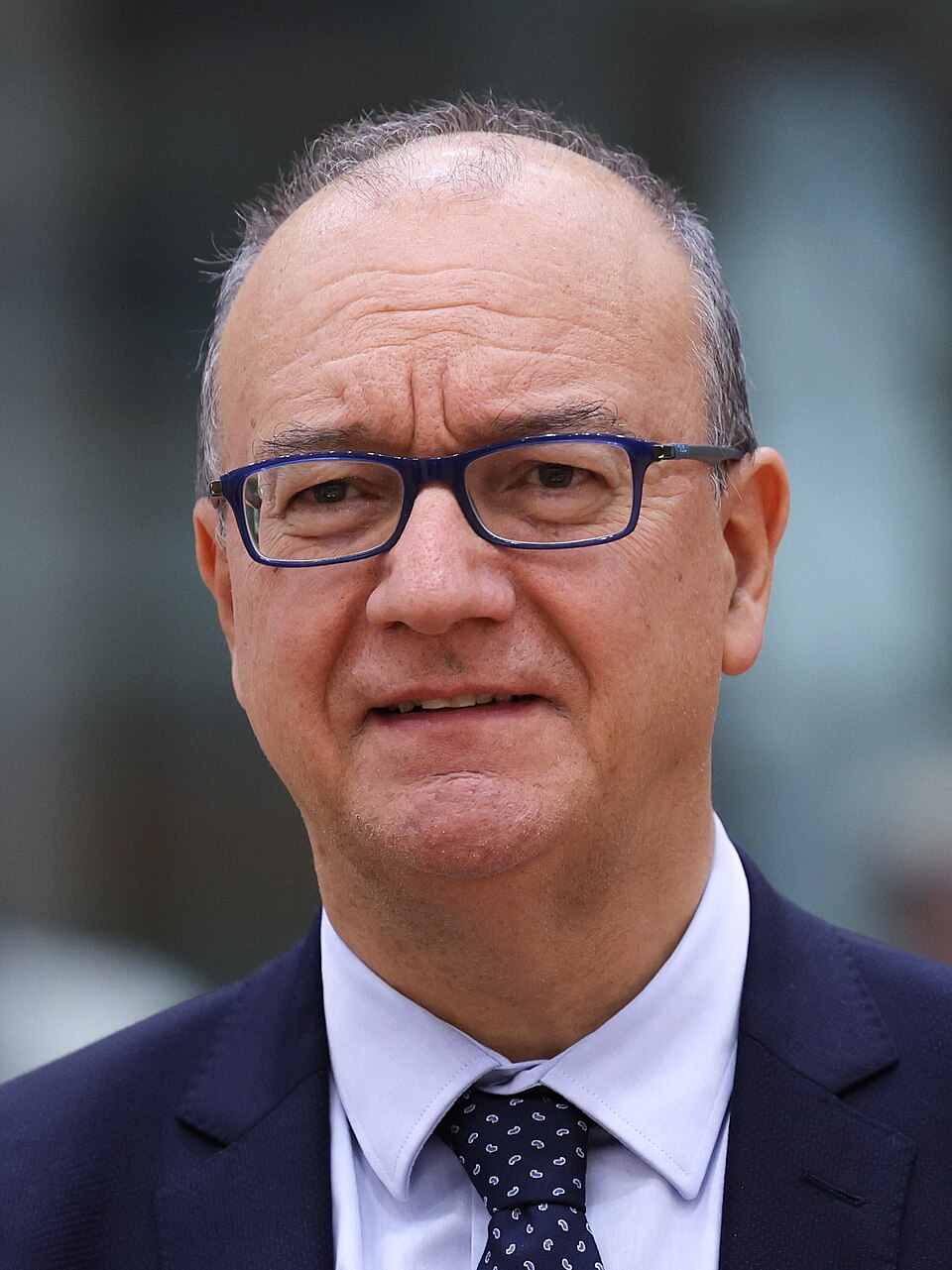 Giuseppe ValditaraItaly's minister of education and merit, in a ministry statement
"We are promoting true integration of foreign students, founded on knowledge of the Italian language and on respect for common rules. (Translated from Italian. Original: Promuoviamo una vera integrazione degli studenti stranieri, fondata sulla conoscenza della lingua italiana e sulla osservanza delle regole comuni.)"
Original-language text checked word for word against a linked source on . We did not check the English translation.
Stood by itResponding to: The school decree, including its 30 percent cap on foreign pupils in first-year classes, promotes true integration of foreign students based on knowledge of the Italian language and respect for common rules.
Full statement and sources
Education Minister Giuseppe Valditara says the decree promotes true integration of foreign students, founded on knowledge of the Italian language and respect for common rules.
Before the statement
Valditara expresses maximum satisfaction with the final approval of the decree and says it gives concrete answers to Italian families and strengthens every student's right to educational success (translation).
After the statement
He says the decree also invests in education in respect and in the fight against bullying and cyberbullying, and that the vote shows the majority's unity around the government (translation).
Why this label?
Valditara, whose ministry wrote the decree, says it promotes the integration of foreign students.
This label describes the statement's response within the context above.
Response record
Responses
Choose one response filter, or select All responses to see the full record.
3 responses. Newest first.
 Elly SchleinSecretary of Italy's Democratic Party, quoted by la RepubblicaDirectly involved
"a terrible decree. Schools do not need caps to drive out foreign children, they need roofs that do not fall on pupils' heads, and therefore a major investment in school buildings and staff (Translated from Italian. Original: un pessimo decreto. Alla scuola non servono tetti per cacciare i bambini stranieri, servono tetti che non cadano sulle teste degli alunni, e quindi un grande investimento sull'edilizia scolastica e sul personale)"
Original-language text checked word for word against a linked source on . We did not check the English translation.
CondemnedResponding to: The school decree, including its 30 percent cap on foreign pupils in first-year classes, promotes true integration of foreign students based on knowledge of the Italian language and respect for common rules.
Full statement and sources
Democratic Party secretary Elly Schlein calls the school decree terrible, says schools do not need caps to drive out foreign children but roofs that do not fall on pupils' heads, and calls for major investment in school buildings and staff.
Before the statement
La Repubblica reports that opposition protests continued after the Chamber passed the decree.
After the statement
Schlein says the government proposed further cuts in its budget bill and, after saying it would scrap them, has yet to act (translation).
Dl scuola approvato alla Camera: è legge. Protestano le opposizioni: "In classe nessuno è straniero"Full article (in Italian)Why this label?
Schlein rejects the cap on foreign pupils, saying it would drive foreign children out, and calls the decree terrible.
This label describes the statement's response within the context above.
 Antonio CasoFive Star Movement member of the Chamber of Deputies, speaking in the Chamber, as quoted by EuronewsDirectly involved
"The problem is not how many foreign children there are in a class, but how many teachers and what tools we provide to guarantee everyone the right to learn. Everything else is discrimination and racism (Translated from Italian. Original: Il problema non è quanti bambini stranieri ci sono in una classe, ma quanti insegnanti e quali strumenti mettiamo a disposizione per garantire a tutti il diritto di imparare. Tutto il resto sono discriminazione e razzismo)"
Original-language text checked word for word against a linked source on . We did not check the English translation.
CondemnedResponding to: Limiting how many foreign children are in a class is discrimination and racism; the real problem is how many teachers and tools schools have to guarantee everyone the right to learn.
Full statement and sources
Five Star Movement deputy Antonio Caso says the problem is not how many foreign children are in a class but how many teachers and tools schools have to guarantee everyone the right to learn, and calls everything else discrimination and racism.
Before the statement
Speaking in the Chamber, Caso says the decree does not tackle any of the real urgent issues, including the safety of school buildings, teachers' low salaries and the right to study.
After the statement
The Chamber then gave the decree final approval by 142 votes to 112, with four abstentions.
Scuola, via libera al decreto: tetto agli studenti stranieri, stop a burqa e niqab in classeFull article (in Italian)Why this label?
Caso calls limiting the number of foreign children in a class discrimination and racism.
This label describes the statement's response within the context above.
 Irene ManziDemocratic Party national head for schools and leader of its group on the Chamber's education committee, in a statement quoted by EuronewsDirectly involved
"A decree that divides girls and boys within classes and moves them from one school to another if the 30 percent limit is exceeded, ignoring their stories, the contexts in which they live, the environment in which they grow up. It treats them like parcels. (Translated from Italian. Original: Un decreto che divide bambine e bambini dentro le classi e li sposta da una scuola all'altra se si supera il limite del 30 per cento, ignorando le loro storie, i contesti in cui vivono, l'ambiente in cui crescono. Li tratta come pacchi.)"
Original-language text checked word for word against a linked source on . We did not check the English translation.
CondemnedResponding to: Limiting how many foreign children are in a class is discrimination and racism; the real problem is how many teachers and tools schools have to guarantee everyone the right to learn.
Full statement and sources
Irene Manzi, the Democratic Party's national head for schools, says the decree divides girls and boys within classes and moves them between schools when the 30 percent limit is exceeded, ignoring their circumstances, and treats them like parcels.
Before the statement
Manzi is the Democratic Party's national head for schools and leads its group on the Chamber's education committee.
After the statement
She says the decree adds sanctions for parents and reports from educational institutions, breaking the climate of trust the school community should rest on, as if foreign families had fewer rights, and calls it a decree without vision.
Scuola, via libera al decreto: tetto agli studenti stranieri, stop a burqa e niqab in classeFull article (in Italian)Why this label?
Manzi says the cap divides children by origin and treats them like parcels.
This label describes the statement's response within the context above.
Sources
(5)
Official statement
Dl Scuola, Valditara: "Un passo decisivo per studenti e famiglie. Maggioranza compatta al fianco del governo"
Relevant passage: Full statement (in Italian)
About this source
Italy's Ministry of Education and Merit publishes Minister Giuseppe Valditara's statement on the final approval of the school decree, saying it promotes true integration of foreign students based on knowledge of Italian and respect for common rules.
- Author
- Ministero dell'Istruzione e del Merito
- Published
- Accessed
Reporting
Italy's parliament approves school decree capping share of foreign pupils in classrooms
Relevant passage: Full article
About this source
Anadolu reports the 142 to 112 vote with four abstentions after the government tied the decree to a confidence vote, Brothers of Italy deputy Augusta Montaruli's defense of the cap and the opposition's criticism.
- Author
- Necva Tastan Sevinc
- Published
- Accessed
Reporting
Dl scuola approvato alla Camera: è legge. Protestano le opposizioni: "In classe nessuno è straniero"
Relevant passage: Full article (in Italian)
About this source
La Repubblica reports the Chamber's final vote on the school decree, the cap on foreign pupils, the fines for foreign parents who skip Italian courses, and Democratic Party secretary Elly Schlein's criticism of the decree.
- Author
- Serena Riformato
- Published
- Accessed
Reporting
No burqas at school and fewer foreign pupils: Italy passes controversial education law
Relevant passage: Full article
About this source
Euronews (English edition) reports the final approval of Italy's school decree, the 30 percent cap on foreign pupils and the face-covering ban, and quotes Antonio Caso, Irene Manzi and Giuseppe Valditara in translation.
- Author
- Chiara Zampiva
- Published
- Accessed
Reporting
Scuola, via libera al decreto: tetto agli studenti stranieri, stop a burqa e niqab in classe
Relevant passage: Full article (in Italian)
About this source
Euronews (Italian edition) reports the Chamber's 142 to 112 final vote on decree-law 170, the 30 percent cap on pupils of foreign origin in first-year classes, the face-covering ban, and statements by Antonio Caso, Irene Manzi and Giuseppe Valditara.
- Author
- Chiara Zampiva
- Published
- Accessed
Share or embed this case
The embed keeps its attribution link to The Dispute Index. Credit the image to The Dispute Index and link to the case page.
Cite this record
- Publisher
- The Dispute Index
- Title
- Italy's parliament passes a 30% cap on foreign pupils in first-year classes; Valditara says it promotes integration, and opposition leaders call it discrimination
- First published
- Last updated
- Permalink
- https://disputeindex.com/cases/italy-s-parliament-passes-a-30-cap-on-foreign-pupils-in-first-year-classes-valditara-says-it-promotes-integration-and-opposition-leaders-call-it-discrimination
The Dispute Index. "Italy's parliament passes a 30% cap on foreign pupils in first-year classes; Valditara says it promotes integration, and opposition leaders call it discrimination". First published: 2026-11-27. Last updated: 2026-11-27. https://disputeindex.com/cases/italy-s-parliament-passes-a-30-cap-on-foreign-pupils-in-first-year-classes-valditara-says-it-promotes-integration-and-opposition-leaders-call-it-discrimination