All topics

Korean Peninsula

Public disputes about relations between North Korea and South Korea, the Demilitarized Zone and the 1953 Armistice Agreement, and security on the Korean Peninsula involving the two Korean governments and the United Nations Command.

Published coverage on this page: 1 case · 4 statements. Statements are ordered newest first.

Related cases

Statements

Filter by response label (1 selected)

Labels describe a response to the linked claim or the action explained in the statement summary. Choose one or more.

4 matching statements

United Nations Command

Role at the time: United Nations Command, in a statement emailed to reporters

Mixed or conditional

Response to this claim

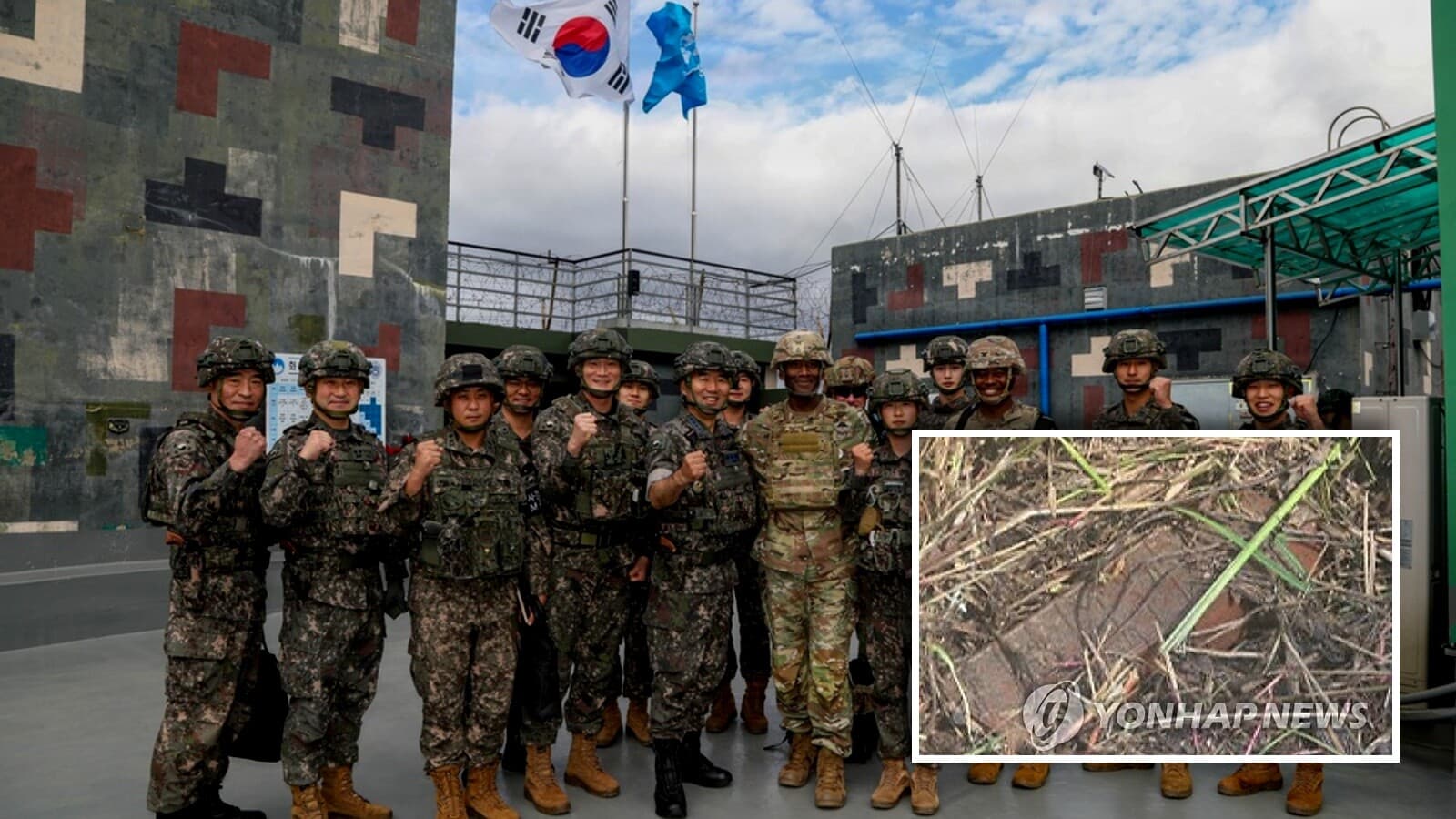
The United Nations Command said on September 30, 2026 that its joint investigation with South Korea's military identified an active North Korean anti-personnel mine on the South Korean side of the Military Demarcation Line, and that based on the investigation's findings it determined an Armistice Agreement violation occurred.

Quotation excerpt

“During the investigation, the team identified an active Democratic People's Republic of Korea anti-personnel mine on the ROK side of the Military Demarcation Line ... Based on the findings of the investigation, UNC determined that an…”
Read full quotation
“During the investigation, the team identified an active Democratic People's Republic of Korea anti-personnel mine on the ROK side of the Military Demarcation Line ... Based on the findings of the investigation, UNC determined that an Armistice Agreement violation occurred. UNC is addressing the violation through established Armistice mechanisms”
Open source (opens in a new tab)U.N. Command says Armistice Agreement violation occurred over DMZ mine blast · Yonhap News AgencyParagraphs 1-4, quoting the UN Command's emailed statement
Why we used this label

The case asks whether North Korean forces planted the mines that exploded. The command's statement supports part of the South Korean account: it identified an active North Korean anti-personnel mine on the South Korean side of the line and found a violation. It stops short of the rest: it does not say which side violated the agreement, and it does not say the two exploded mines were North Korean. Because it combines a finding that supports part of the proposition with an express limit, we labeled it Mixed or conditional. Explicitly stayed out does not fit because the statement makes a finding, and Challenged the characterization does not fit because it disputes nothing.

Lee Jae Myung

Role at the time: President of South Korea, speaking at a Cabinet meeting at the Blue House

Mixed or conditional

Statement summary

At a Cabinet meeting on September 29, 2026, the day after the Joint Chiefs' preliminary findings, President Lee Jae Myung told the military to work closely with the UN Command on a swift and thorough investigation and to establish transparently what happened. He said the government would take necessary measures based on what the investigation finds. He also warned against fueling conspiracy theories over the incident, and JoongAng reported that he dismissed allegations that the military had held back the announcement because of his UN General Assembly speech.

“We will take the necessary measures based on what the investigation finds.”
Open source (opens in a new tab)Lee orders transparent DMZ mine probe, waves off 'conspiracy theories' · Korea JoongAng DailyParagraphs 1-6 (President Lee Jae Myung's Cabinet meeting remarks on the DMZ blast)

What this label refers to

The case asks whether North Korean forces planted the mines. The president neither adopted the Joint Chiefs' preliminary attribution nor rejected it. He directed the military to establish what happened with the UN Command and made the government's measures depend on what the investigation finds. Because the position rests on an express, unresolved condition, we labeled it Mixed or conditional.

Kwon Dae-won

Role at the time: Vice chairman of South Korea's Joint Chiefs of Staff, speaking at a press briefing at the Ministry of National Defense

Mixed or conditional

Response to this claim

South Korea's Joint Chiefs of Staff said on September 28, 2026 that North Korean land mines were highly likely the cause of the two explosions that wounded three South Korean soldiers south of the Military Demarcation Line on September 21, and said on September 30 that South Korean soldiers were seriously injured by North Korean landmines while conducting search operations south of that line.

Quotation excerpt

“If the final investigation confirms that this was inflicted by land mines laid by North Korean forces, it constitutes a clear attack in which our soldiers, who were lawfully performing DMZ operations south of the MDL, were injured by North…”
Read full quotation
“If the final investigation confirms that this was inflicted by land mines laid by North Korean forces, it constitutes a clear attack in which our soldiers, who were lawfully performing DMZ operations south of the MDL, were injured by North Korean mines and consequently, accountability rests entirely with North Korea”
Open source (opens in a new tab)N. Korean land mines highly likely cause of DMZ blast: S. Korean military · The Korea HeraldParagraphs 3-6 (Lt. Gen. Kwon Dae-won's remarks) and the paragraph on the UN Command's reply
Why we used this label

The case asks whether North Korean forces planted the mines. Kwon said the evidence made North Korean mines highly likely the cause, but he tied North Korea's accountability to the final investigation confirming that North Korean forces laid them. Because the attribution depends on an express, unresolved condition, we labeled it Mixed or conditional rather than Condemned.

Kang Shin-chul

Role at the time: Minister of National Defense, speaking to reporters after his inauguration

Mixed or conditional

Statement summary

On September 22, 2026, his first day as defense minister, Kang Shin-chul urged North Korea to stop its border fortification and said the explosion the day before could be one of the secondary effects of North Korea's border-hardening. He also said the military had not confirmed whether the suspected minefield, the patrol route and the explosion site matched, and that the investigation must determine that.

“There are secondary effects that stem from North Korea's border-hardening, and this (explosion) could be one of them”
Open source (opens in a new tab)New defense minister urges N. Korea to halt border-hardening following DMZ explosion · The Korea HeraldParagraphs 1-8 (Defense Minister Kang Shin-chul's first press remarks after the blasts)

What this label refers to

The case asks whether North Korean forces planted the mines. Kang linked the blast to North Korea's border work only as a possibility and said the military could not yet confirm whether the sites matched. The position depends on what the investigation determines, so we labeled it Mixed or conditional.

People in this topic

Kim Min-seok

Kim Min-seok is a South Korean politician and a member of the National Assembly for Yeongdeungpo-eul. In September 2026 he was leader of the Democratic Party of Korea, the governing party.

1 case and 1 statement

Kang Hyun-woo

Kang Hyun-woo is a lieutenant general in the South Korean military and the chief director of operations at the Joint Chiefs of Staff. The operations directorate he leads plans and directs the South Korean armed forces' operations.

1 case and 1 statement

Kim Yo Jong

Kim Yo Jong is a senior official of North Korea's ruling Workers' Party of Korea and the sister of leader Kim Jong Un. State media identified her in September 2026 as a department director of the party's Central Committee. She issues statements on relations with South Korea and the United States that the Korean Central News Agency publishes.

1 case and 2 statements

Kang Shin-chul

Kang Shin-chul is South Korea's minister of national defense. A retired four-star Army general, he was deputy commander of the South Korea-U.S. Combined Forces Command before President Lee Jae Myung nominated him as defense minister on August 30, 2026. He took office on September 22, 2026.

1 case and 2 statements

Lee Jae Myung

Lee Jae Myung is the 21st president of South Korea, in office since June 2025, and a member of the Democratic Party of Korea. Before the presidency he was a lawyer, mayor of Seongnam and governor of Gyeonggi Province.

1 case and 1 statement

Kwon Dae-won

Kwon Dae-won is a lieutenant general in the South Korean Army and the vice chairman of the Joint Chiefs of Staff, the second-ranking position on the body that commands the Republic of Korea armed forces.

1 case and 1 statement

Jang Dong-hyeok

Jang Dong-hyeok is a South Korean politician and a member of the National Assembly. In September 2026 he was chair of the People Power Party, the main opposition party.

1 case and 1 statement