
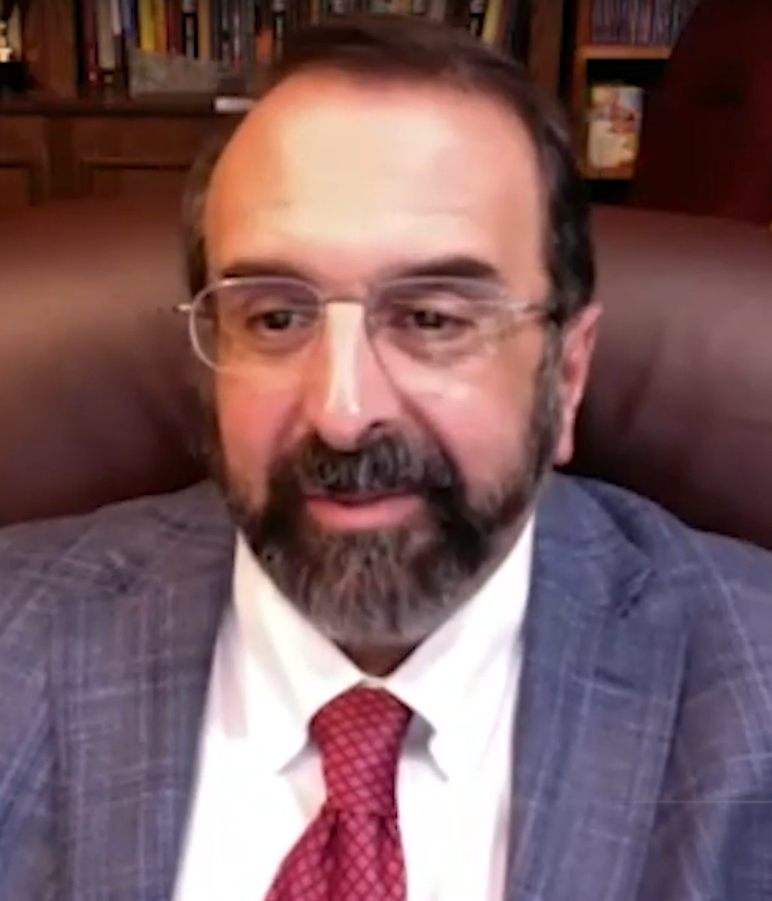
Robert Spencer
Role at the time: Director of Jihad Watch, writing a signed opinion column for PJ Media
Statement summary
Robert Spencer argued in a PJ Media column that Yousef's remarks were not based on bigotry or ignorance but on firsthand experience, and characterised the condemnations of them as virtue signalling.
“Many will find his words about wanting Muslims out of America to be too strong, but no one can honestly say they're based on bigotry or ignorance, or even on dislike of Muslims as human beings. He is speaking this way because he has firsthand experience regarding the brutality, inhumanity, and oppression of Islamic law.”
Why we used this label
On Yousef's remarks and whether they constitute anti-Muslim bigotry, Spencer defends them. He concedes only that others will find the words "too strong," which reports their reaction rather than adopting it, and then justifies the remarks by reference to Yousef's experience of Islamic law. “Challenged the characterization” is the closest competing label, because he does dispute the words "bigotry" and "racism," but it loses because the passage does not stop at rejecting a label: it goes on to supply an affirmative justification for the remarks themselves. This is one of only three non-condemning positions recorded on the case, and the most substantive.