
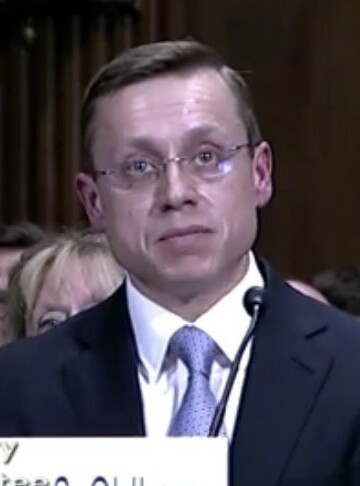
Andrew Oldham

Portrait of Andrew Oldham
U.S. Senate Judiciary Committee, via Wikimedia CommonsSourcePublic domain (U.S. government work)Stored unchanged.

Andrew Oldham is a judge on the U.S. Court of Appeals for the Fifth Circuit, appointed in 2018. He previously served as general counsel to Texas Governor Greg Abbott and as a deputy solicitor general of Texas.

Also known as Andrew S. Oldham, Andrew Stephen OldhamWebsite (opens in a new tab)

What we have documented

We have documented 2 statements by Andrew Oldham, in 2 cases. Each statement below gives the quotation, its original source and a link to the full case.

Case updates

Want the next important update?

Follow "Fifth Circuit rejects bond hearings for three immigration detainees; dissenters invoke due process" and get an email when an important development changes the record.

Important updates only. Free. Confirm your email to start. Unsubscribe anytime. How we handle your email.

Statements by Andrew Oldham

Portrait of Andrew Oldham

Andrew Oldham

Role at the time: Fifth Circuit judge writing in concurrence

Defended or excused

Statement summary

In a concurrence, Judge Andrew Oldham responded to Judge Douglas's description of the government's history as a "sham history," writing that she may hold her own view of the history but that lower-court judges must follow Supreme Court precedent.

“While she’s entitled to her opinion on the history, the same cannot be said for Supreme Court precedent.”
Read the original text (opens in a new tab)Fifth Circuit en banc opinion in Sosnava Rodriguez v. Vergara · United States Court of Appeals for the Fifth CircuitEn banc opinion; Southwick dissent on printed pages 100-131, followed by Haynes dissent
Why we used this label

The case concerns detaining these petitioners during removal proceedings without the individualized bond hearings they sought. Oldham defends the ruling upholding that detention and rejects the dissent's challenge to it, so we labeled it as defending the detention.

Portrait of Andrew Oldham

Andrew Oldham

Role at the time: Fifth Circuit judge writing a separate concurrence

Condemned

Statement summary

Oldham argues that actual malice lacks a constitutional basis and criticizes its application to public figures. He concurs in the result because his court is bound by Sullivan.

“why should the First Amendment protect some Americans less than it protects others?”
Read the original text (opens in a new tab)Bryant v. Rosenberg: Fifth Circuit decision and Oldham concurrenceOldham concurrence, pages 3-4
Why we used this label

Oldham criticizes retaining the actual-malice protection examined in this case. Following binding precedent is compliance rather than endorsement.

A participant is a subject of the case. A speaker has a statement documented in it. A commentator has an opinion or editorial documented in it.

Topics in this coverage