
Explainer
What is Pickaxe Mountain?
Pickaxe Mountain is the nickname for Kuh-e Kolang Gaz La, a mountain about 2 km from Iran's Natanz enrichment site where Iran began a large tunnel complex in 2020. Iran has said it is for assembling centrifuges; some Western governments and analysts suspect it could hold enrichment. The IAEA has never inspected it.
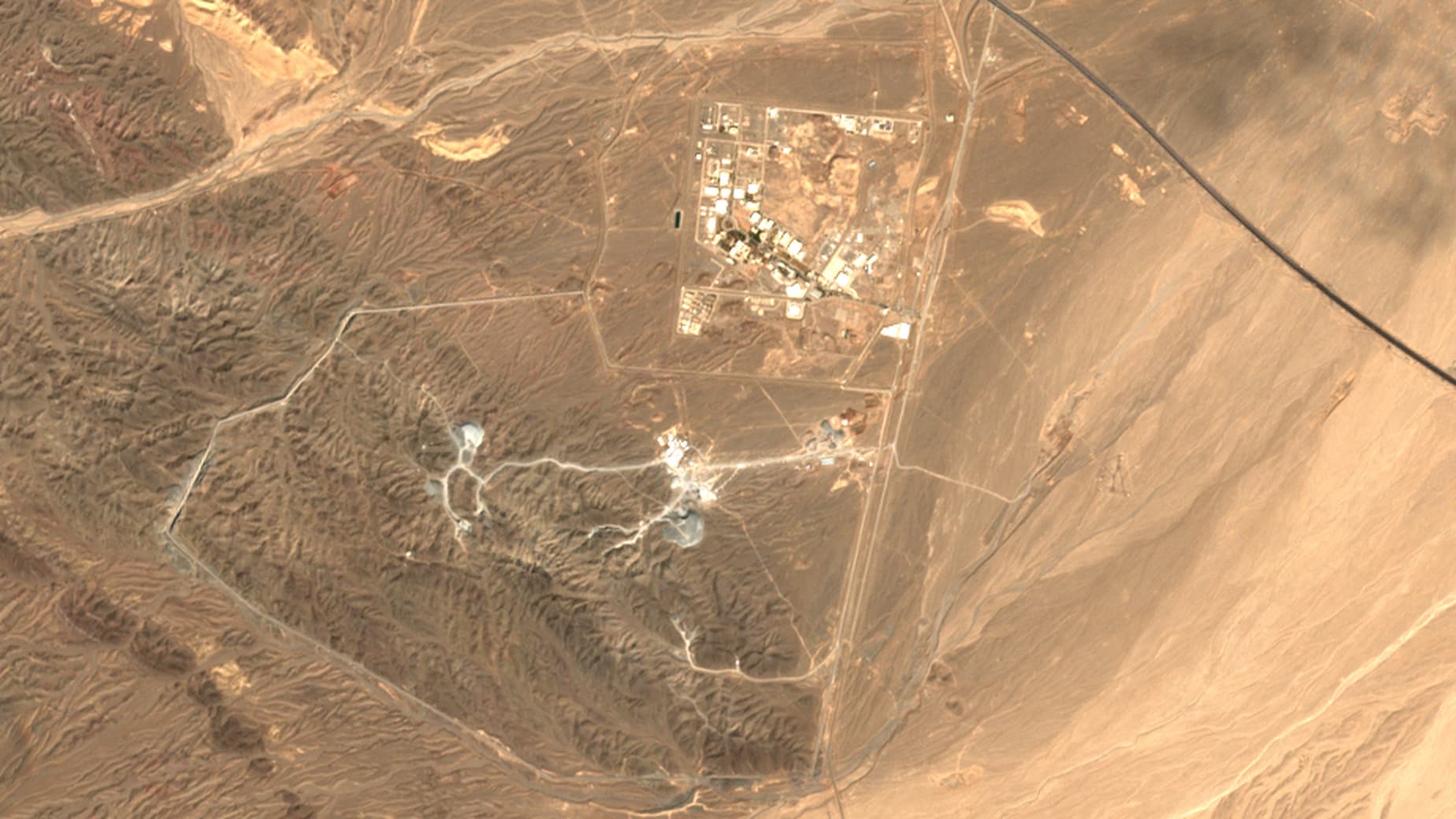
The name and the place
Pickaxe Mountain is an English nickname. The Institute for Science and International Security (ISIS), a research group that tracks Iran's nuclear sites in satellite imagery, says the mountain holding the main tunnel complex is called Kuh-e Kolang Gaz La, and that Kolang translates to pickaxe.1 ISIS gives the mountain's height as 1,608 meters above sea level.2 The Persian name is also written Kūh-e Kolang Gaz Lā,3 and the nickname is sometimes spelled Pickax Mountain.4
Reuters places the site 220 km (140 miles) south of Tehran and 2 km (1.2 miles) from the Natanz nuclear complex.5 Al Jazeera places it in Isfahan province.6 Natanz is Iran's main uranium enrichment site.7
The mountain holds two separate tunnel complexes: a large, newer one and a smaller one dating to 2007 that ISIS first reported that year. ISIS says the International Atomic Energy Agency (IAEA) has visited neither.8 By November 2025, ISIS reported, a completed security wall surrounded the base of the mountain, including the 2007 complex.9 Reporting on Pickaxe Mountain usually means the newer complex, and so does this page unless it says otherwise.
Why Iran began digging
On July 2, 2020, an explosion damaged a building at Natanz that housed centrifuges, the machines that enrich uranium. Iranian officials called it sabotage.7 ISIS says the destroyed building was an advanced centrifuge assembly center designed to assemble about 6,000 advanced centrifuges a year.1
On Sept. 8, 2020, Iran's nuclear chief, Ali Akbar Salehi, said Iran had decided to build a more modern, wider hall "in the heart of the mountain" near Natanz, and that work had begun, according to state TV.7 ISIS says construction began that fall, and that Iran announced at the time that the underground halls would replace the destroyed assembly facility.1 In April 2021 Salehi said Iran was working around the clock to move its sensitive halls into the mountain, according to ISIS.2
What the site is for
Iran's government has said the site will house a plant for assembling centrifuges.10 In 2023 Iran's mission to the United Nations told the Associated Press that Iran's nuclear activities were peaceful and under IAEA safeguards.3 On Sept. 26, 2025, President Masoud Pezeshkian said satellite images could not show what was happening at the site and called for IAEA inspectors to verify its purpose, according to the Center for Strategic and International Studies (CSIS).11 On July 22, 2026, Foreign Ministry spokesperson Esmail Baghaei said there was no nuclear activity at the site.512
Outside analysts and some governments have raised other possibilities. In 2022 ISIS reported that a Western intelligence official said there was strong reason to believe an enrichment plant was being built there; ISIS said it could not confirm this.2 ISIS assesses that the space under the mountain could also hold an enrichment plant able to make weapon-grade uranium.1 CSIS lists three likely explanations: a centrifuge assembly facility, as Iran indicated in 2020; an enrichment facility for Iran's roughly 440 kilograms of 60 percent enriched uranium; or a new home for weapons-related work, such as the metallurgy and conversion facilities destroyed at Isfahan in June 2025.13 Matthew Bunn of the Harvard Kennedy School, writing in Arms Control Today, argues that the complex is too big for assembling centrifuges alone.14
In July 2026 The Wall Street Journal reported that Israeli intelligence assessed Iran had moved centrifuges into the site the previous fall, according to ABC News. Asked about the report on July 21, President Trump said Iran "may have" moved them but "we don't have it on record."15 CSIS says its imagery analysis can neither confirm nor refute the Israeli claim.13 ISIS said in October 2026 that Iran's restrictions on access to the site support public reporting that it contains valuable equipment or materials, such as centrifuges.16 No independent inspector has seen inside.
Depth and entrances
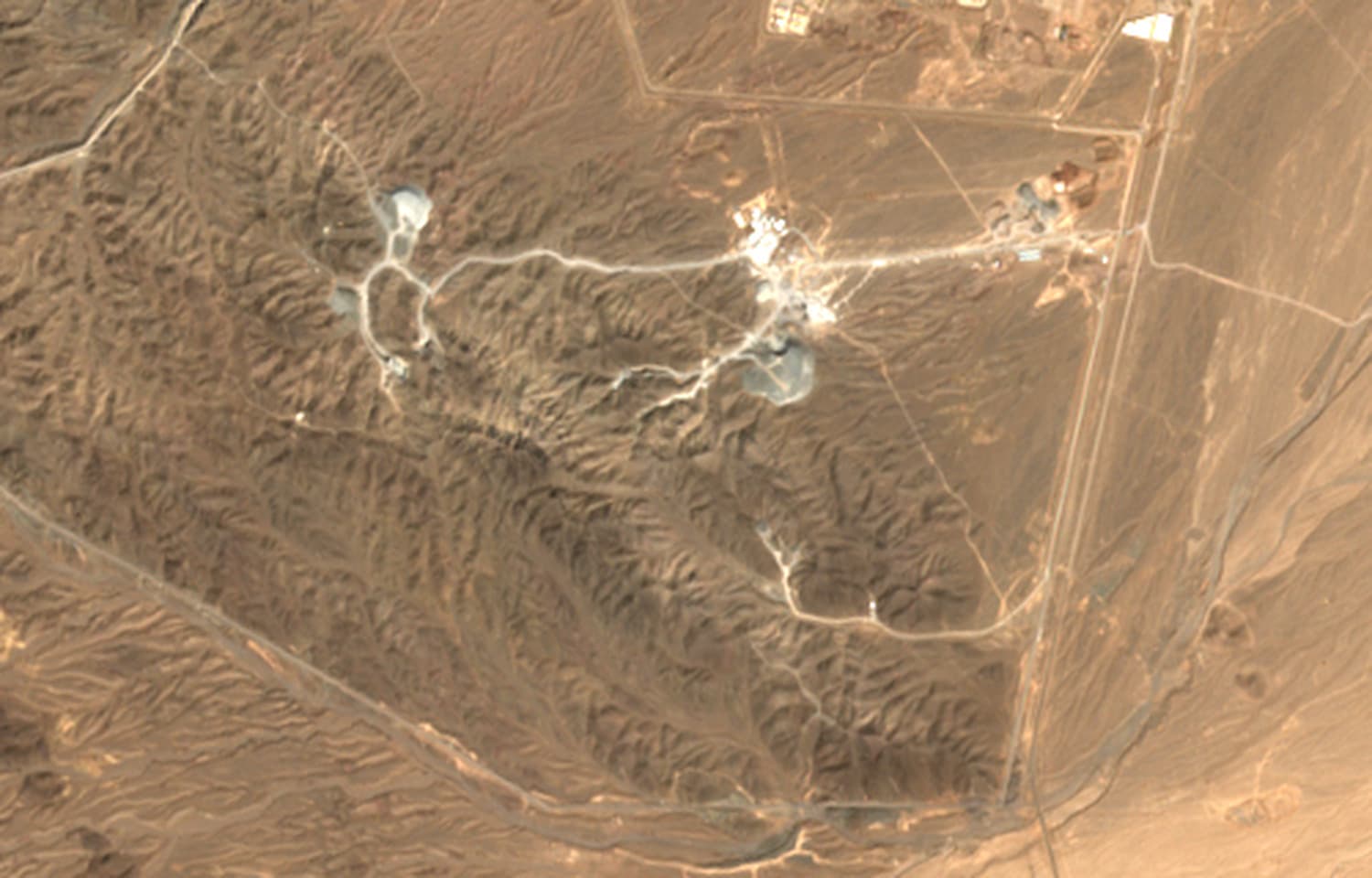
ISIS says the site has two pairs of entrances under the mountain ridge, which it assumes lead to one facility. It puts the height of the ridge above the eastern entrance at about 145 meters and above the western entrance at about 100 meters, and estimates the facility is at least 100 meters under the mountain.1 In 2022 ISIS estimated that a single hall 400 meters long and 13 meters wide would give about 5,200 square meters of floor space.2
Other estimates are somewhat shallower. Analysts at the James Martin Center for Nonproliferation Studies told the AP in 2023 that the facility was likely 260 to 328 feet (about 80 to 100 meters) deep, judging from its spoil piles and satellite data, and counted four entrances, each 20 feet wide and 26 feet tall.3 CSIS says the depth is hard to assess and notes open-source estimates of 80 to 100 meters.13
Descriptions of the rock differ. CSIS calls the site a deeply buried granite fortification,13 while Scientific American describes the mountain as andesite, a hard volcanic rock, banded with limestone.17 CSIS also says the tunnel portals are shaped in a U-bend that could stop missiles flying straight down a tunnel and reduce blast effects inside.13
Could it be destroyed from the air?
The heaviest U.S. non-nuclear bomb is the 30,000-pound GBU-57 Massive Ordnance Penetrator, which CSIS says can reportedly penetrate 60 meters into the ground before it detonates.13 In 2023 the AP cited the U.S. military as saying it can go through at least 200 feet of earth.3 CSIS says the site would be difficult to destroy even with that bomb, and suggests the Pentagon may prefer collapsing the tunnel entrances with cruise missiles to trying to damage the halls.13 Arms Control Today says the United States would likely need the Massive Ordnance Penetrator to damage the facility.12 Kelsey Davenport of the Arms Control Association told ABC News there would be no guarantee the site would be destroyed.15
ISIS assesses that the site in its present condition would be more suitable for a ground attack or sabotage, though it says vulnerabilities may exist that deep-penetrating bombs could exploit.1 In October 2026 it said it had found a probable and a possible location for ventilation shafts on the mountain.16
Asked at a July 21, 2026 hearing whether the United States could destroy what is under the mountain, Defense Secretary Pete Hegseth said that if anybody can reach anything, "it's the United States military."15 The War Zone reports that CBS News said in October 2026 that the White House and Pentagon had prepared plans to use the GBU-43/B Massive Ordnance Air Blast bomb (MOAB) on sites including Pickaxe Mountain if the president ordered it.4 ISIS notes that the MOAB is not a bunker buster.16
Inspections and the missing uranium
Accounts differ on what Iran has told the IAEA. ISIS said in April 2025 that neither tunnel complex south of Natanz had been declared to the IAEA as a nuclear site, and that Iran refuses to apply a safeguards provision, known as Code 3.1, that requires early notice and design information for a new nuclear facility.8 Its November 2025 report describes the site as declared and centrifuge-related.9 Arms Control Today says Iran declared the site to the IAEA as a centrifuge assembly facility, and that the IAEA has never inspected it.12 CSIS says the IAEA has asked for information about the site and for access, and that Iran reportedly never replied.13 The IAEA reported in June 2026 that it had had no access to Iran's centrifuge assembly workshops since February 2021.18
On Sept. 10, 2026, IAEA Director General Rafael Grossi told Bloomberg Television there were some indications of movement around the construction site, and added that the agency had no concrete information on what may be happening there, according to Asharq Al-Awsat.19 That week the IAEA Board of Governors reported Iran to the UN Security Council over its failure to cooperate in an investigation of uranium traces at undeclared sites.19
The site also figures in questions about Iran's enriched uranium. The IAEA says Iran had 440.9 kilograms of uranium enriched up to 60 percent by the time of the June 2025 attacks, and that it cannot report the stockpile's current size, composition or location.18 Foreign Minister Abbas Araghchi said in March 2026 that the material is under the rubble of the 2025 strikes, according to the Congressional Research Service.20 The New York Times reports that Grossi believes about half of it is buried at Isfahan, and that some experts fear Iran may have stashed part of it at Pickaxe Mountain.21 ISIS said in June 2026 that the Pickaxe complex is not believed to hold enriched uranium, and that the contents of the sealed 2007 complex nearby are not publicly known.22 Trump suggested on July 21, 2026 that Iran had not moved nuclear material to the site, Arms Control Today reports.12
Strikes, threats and the state of the site
On June 22, 2025, Hegseth said U.S. forces had struck three Iranian nuclear facilities: Fordow, Natanz and Esfahan.23 ISIS says Pickaxe Mountain was not visibly attacked,9 and said in July 2026 that the tunnel facility had not been targeted in June 2025 or in the 2026 fighting, apart from a vehicle destroyed on a nearby spoil pile.1 CSIS reported that Iran stepped up construction after the June 2025 strikes,11 and in November 2025 ISIS judged the site to be entering a late stage of construction.9
Satellite imagery in 2026 showed work at the entrances. ISIS reported concrete being poured over the western tunnel entrance extension on Feb. 10,24 and imagery from April 22 showing the eastern portals partly backfilled with dirt.22 CSIS found more road activity at the site in 2026 than at any earlier point, and construction at a high rate during the period covered by a June 17 U.S.-Iran memorandum of understanding.13 In late July and early August, ISIS says, Iran placed earthen roadblocks on the roads to the western entrances; with both pairs of entrances blocked, ISIS says, Iran appears unable to drive vehicles into the facility.25 In October 2026 ISIS assessed the facility as neither operating nor under major construction.16
Trump threatened the site several times in 2026. In mid-July he told the Hugh Hewitt Show that the United States would "take out Pickaxe Mountain,"6 and on July 21 he told reporters, "We'll be hitting that area pretty soon, and very heavily."15 On Sept. 4 he said the United States may strike the site "very soon."6 Iran's Khatam al-Anbiya central military headquarters warned that bombing the mountain would renew war across the region, and Tehran calls the U.S. focus on the site a manufactured pretext for attack, Al Jazeera reports.6
On Nov. 1, 2026, the commentator Tucker Carlson wrote on X that the administration may be within days of a nuclear strike on Iran, naming Pickaxe Mountain as the target. A White House official told The War Zone that Carlson has no insight into military planning, and on Nov. 2 Trump answered "no" when asked whether he was considering an attack after the election.4 The claim and the responses are tracked on the case page (opens in a new tab).
History
- 2007
ISIS reports a small tunnel complex in the mountain south of Natanz, separate from the later Pickaxe Mountain complex.8
- July 2, 2020
An explosion damages a centrifuge building at Natanz; Iranian officials call it sabotage.7
- September 8, 2020
Nuclear chief Ali Akbar Salehi says work has begun on a wider hall in the heart of the mountain near Natanz.7
- Fall 2020
Construction of the tunnel complex begins, according to ISIS.1
- January 2022
ISIS reports the complex is deeper and larger than expected, estimating that, if the tunnels run level, the halls would lie 78 or 145 meters below the ridge, depending on the entrance.2
- May 2023
Analysts tell the AP the facility is likely 260 to 328 feet deep.3
- June 22, 2025
- September 26, 2025
President Pezeshkian calls for IAEA inspectors to verify the site's purpose, according to CSIS.11
- February 10, 2026
ISIS imagery shows concrete being poured over the western tunnel entrance extension.24
- April 22, 2026
Imagery shows the eastern portals partly backfilled with dirt, according to ISIS.22
- July 21, 2026
Trump says the United States will hit the area pretty soon; asked about a report that Israeli intelligence believes Iran moved centrifuges there, he says Iran "may have."15
- July 22, 2026
Iran's Foreign Ministry says there is no nuclear activity at the site.5
- Late July to early August 2026
Iran blocks the roads to the western entrances with earthen roadblocks, ISIS reports.25
- September 10, 2026
IAEA chief Rafael Grossi says there are indications of movement around the site but no concrete information.19
- October 16, 2026
ISIS reports activity at the site remains dormant.16
- November 1, 2026
Tucker Carlson writes that the administration may be within days of a nuclear strike on Iran, naming the site; a White House official says he has no insight into military planning.4
What is disputed
Whether the Trump administration is preparing a nuclear strike on Pickaxe Mountain, as Tucker Carlson wrote on Nov. 1, 2026 and the White House disputes.
See the case: Tucker Carlson says the Trump administration may be days from a nuclear strike on Iran; the White House says he has no insight into military planning
Cases on the Dispute Index
Tucker Carlson says the Trump administration may be days from a nuclear strike on Iran; the White House says he has no insight into military planning
Tucker Carlson wrote on X that, under pressure from Benjamin Netanyahu, the Trump administration may be within days of a nuclear strike on Iran's Pickax Mountain. A White House official said Carlson has no insight into military planning.
Sources
- What to Know About Pickaxe Mountain (opens in a new tab) · Saved copy (opens in a new tab)
- Iran's Natanz Tunnel Complex: Deeper, Larger than Expected (opens in a new tab) · Saved copy (opens in a new tab)
- An Iranian nuclear facility is so deep underground that U.S. airstrikes likely couldn't reach it (opens in a new tab) · Saved copy (opens in a new tab)
- A Nuclear Strike On Iran? It Sounds Absurd Because It Is. Let's Talk About It (opens in a new tab) · Saved copy (opens in a new tab)
- What is Pickaxe Mountain, the Iranian nuclear-linked site threatened by Trump? (opens in a new tab) · Saved copy (opens in a new tab)
- Why is Trump threatening to strike Iran's Pickaxe Mountain again, now? (opens in a new tab) · Saved copy (opens in a new tab)
- New Building Started 'In The Heart Of The Mountain' Near Uranium-Enrichment Facility In Iran (opens in a new tab) · Saved copy (opens in a new tab)
- New Security Perimeter Around Mt. Kolang Gaz La Secret Nuclear Tunnel Complexes (opens in a new tab) · Saved copy (opens in a new tab)
- Comprehensive Updated Assessment of Iranian Nuclear Sites Five Months After the 12-Day War (opens in a new tab) · Saved copy (opens in a new tab)
- Inside the Discovery of New Activity at Pickaxe Mountain, Iran's Deep-Underground Suspected Nuclear Site (opens in a new tab) · Saved copy (opens in a new tab)
- CSIS Satellite Imagery Analysis Reveals Possible Signs of Renewed Nuclear Activity in Iran (opens in a new tab) · Saved copy (opens in a new tab)
- Trump Threatens Economic Warfare on Iran (opens in a new tab) · Saved copy (opens in a new tab)
- New Satellite Imagery Analysis Reveals an Uptick in 2026 Construction Activity at Pickaxe Mountain (opens in a new tab) · Saved copy (opens in a new tab)
- Managing the Dangers of Iran's Remaining Nuclear Capabilities (opens in a new tab) · Saved copy (opens in a new tab)
- What is Pickaxe Mountain? Trump says US will hit Iranian nuclear site 'pretty soon' (opens in a new tab) · Saved copy (opens in a new tab)
- Activity Remains Dormant at Pickaxe Mountain (opens in a new tab) · Saved copy (opens in a new tab)
- Ancient geology could insulate Iran's nuclear centrifuges under Pickaxe Mountain from bombing (opens in a new tab) · Saved copy (opens in a new tab)
- NPT Safeguards Agreement with the Islamic Republic of Iran (GOV/2026/33) (opens in a new tab) · Saved copy (opens in a new tab)
- IAEA Confirms Activity at Iran's Pickaxe Mountain (opens in a new tab) · Saved copy (opens in a new tab)
- Iran's Nuclear Program: Tehran's Compliance with International Obligations (R40094) (opens in a new tab) · Saved copy (opens in a new tab)
- Suspected Iranian nuclear site may be beyond Trump's reach (opens in a new tab) · Saved copy (opens in a new tab)
- Comprehensive Imagery Report on Nuclear Enrichment Related Sites, Post-April Ceasefire (opens in a new tab) · Saved copy (opens in a new tab)
- Secretary of Defense Pete Hegseth and Chairman of the Joint Chiefs of Staff General Dan Caine Hold a Press Conference (opens in a new tab) · Saved copy (opens in a new tab)
- Imagery Update: New Developments at Pickaxe Mountain Tunnel Entrances (opens in a new tab) · Saved copy (opens in a new tab)
- Imagery Update: Iran Limits Access to Tunnel Entrances at Pickaxe Mountain (opens in a new tab) · Saved copy (opens in a new tab)
Last reviewed November 3, 2026. We review this explainer when a case that uses it changes. Report an error