
Explainer
How does Congress investigate its own members for ethics complaints?
Each chamber of Congress polices its own members. In the House, a bipartisan Ethics Committee investigates, including matters referred by the independent Office of Congressional Conduct. In the Senate, the Select Committee on Ethics does. Only the full chamber can expel or censure a member.
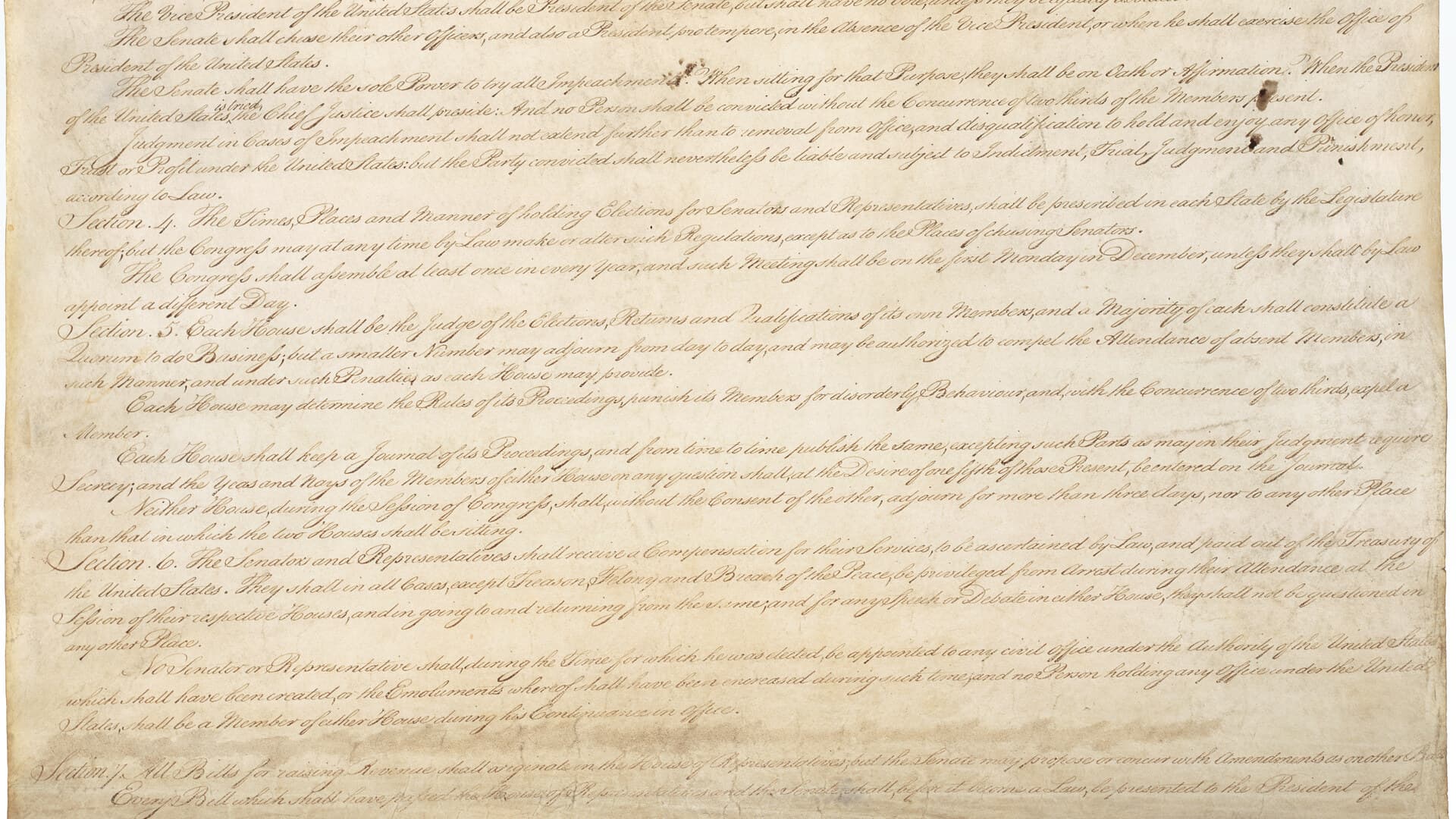
Where the power comes from
The Constitution lets each chamber of Congress "punish its Members for disorderly Behaviour, and, with the Concurrence of two thirds, expel a Member."1 For most of their history neither chamber had a standing body to investigate members. The Senate created a Select Committee on Standards and Conduct in 1964 and replaced it with the Select Committee on Ethics in 1977.2 The House created its Committee on Standards of Official Conduct in 1967, renamed the Committee on Ethics in 2011.3
The committees investigate, and each can issue a lesser rebuke on its own: the House committee can send a letter of reproval, and the Senate committee can order a reprimand or restitution by a unanimous vote of its six members.45 Heavier punishments, such as expulsion and censure, take a vote of the full chamber.16 In the House, only the Ethics Committee may recommend discipline of members and staff to the House. Neither the committee nor the House's independent Office of Congressional Conduct has jurisdiction over former members, so a review ends when a member leaves office.3
The House Ethics Committee
The House Committee on Ethics has 10 members, five from each party, and a nonpartisan staff. Besides investigating alleged violations of House rules and related laws by members, officers and employees, it gives ethics advice and training and reviews financial disclosure statements.7 It accepts information about possible misconduct from the public through an online form, and it says confidentiality rules generally keep it from disclosing what it decides about any particular submission.8
A formal complaint is different. Under the committee's rules, a House member may file one directly; a complaint from anyone else may be sent only if a member certifies in writing that it is submitted in good faith and warrants the committee's review. A complaint must be sworn, must state specific facts and "shall not contain innuendo, speculative assertions, or conclusory statements." The committee will not accept a complaint filed within 60 days before an election in which the subject is a candidate, and it generally does not consider conduct from before the third previous Congress.4
Once a complaint is accepted, the chair and ranking member have set periods to recommend dismissing it or resolving it with a letter to the member, to establish an investigative subcommittee, or to ask for more time. A subcommittee can adopt a Statement of Alleged Violation, the committee's formal charging document.4
The Office of Congressional Conduct
The House also has an independent screening office. The House created the Office of Congressional Ethics in March 2008, it opened in January 2009, and the House renamed it the Office of Congressional Conduct in January 2025. Its board has six members and at least two alternates, half appointed by the Speaker and half by the minority leader; sitting House members, federal employees and lobbyists cannot serve. Anyone may send it information, but only the board can start a review, and its jurisdiction covers only the House.3
A preliminary review needs a "reasonable basis" to believe the allegation and the written agreement of two board members, one appointed by each party's leader. It must finish within 30 calendar days or 5 legislative days, whichever is later. A second-phase review takes a finding of probable cause and the votes of at least three board members, and it has 45 calendar days or 5 legislative days, with a possible 14-day extension. The office then sends the Ethics Committee a report recommending dismissal or further review, or noting a tie, with findings but no conclusions about guilt. The office cannot issue subpoenas; the task force that designed it decided against that power, citing concerns including delay.3
The Ethics Committee generally must make the office's report public within 45 days, or after one more 45-day period if it extends the matter, though it need not publish a recommendation to dismiss that it follows.4 From 2009 through 2024, the board sent the committee 111 referrals recommending further review and 56 recommending dismissal, according to the Congressional Research Service's tally of the office's quarterly reports.3
In January 2026, for example, the committee published the office's report on Rep. Mike Collins.9 The board found substantial reason to believe that Collins retained an employee, paid as an intern, who did not perform duties commensurate with her compensation. It made related findings that he used congressional resources for unauthorized purposes and dispensed special favors by keeping on an employee with whom his chief of staff had a personal relationship. It recommended that the committee subpoena Collins, his chief of staff, the intern and three other current or former staff members.10 The committee said it would review the matter further and that doing so did not itself mean a violation had occurred.9
The Senate Ethics Committee
The Senate Select Committee on Ethics has six members, three from each party, and a nonpartisan staff.11 Unlike the House committee, which needs a member's certification before it takes a formal complaint from outside the House, the Senate committee lets any person report a sworn complaint or other allegation, and its sources can include anonymous complaints and news reports.5
The committee first conducts a preliminary inquiry into whether there is "substantial credible evidence" of a violation. It can then dismiss the matter, settle an inadvertent, technical or minor violation with a public or private letter of admonition, which does not count as discipline, or open an adjudicatory review. An adjudicatory review needs the votes of at least four of the six members. It can end in a report and recommendation to the full Senate or, for misconduct warranting less serious discipline, in a reprimand or order of restitution that the committee imposes itself by a unanimous vote.5
Punishments
The House ranks its punishments, from most to least severe, as expulsion, censure and reprimand.12 Expulsion takes a two-thirds vote.1 The House has expelled six members: three in 1861 for supporting the Confederacy, Michael Myers in 1980 and James Traficant in 2002 after criminal convictions, and George Santos on December 1, 2023, by a vote of 311 to 114, while he faced a 23-count federal indictment.12
Censure is adopted by majority vote, and the censured member stands in the well of the House while the resolution is read aloud. The House has censured six members since 2021, most recently Rep. Chuck Edwards on September 1, 2026, by 413 to 2. The House report behind that censure found that he had "violated the House Code of Official Conduct by failing to adhere to the spirit of rules prohibiting sexual harassment of and unwanted advances to House staffers." A reprimand is a milder rebuke; the last was David Schweikert's in 2020.12
The Senate has expelled 15 members, 14 of them during the Civil War for supporting the Confederacy.13 It has censured nine, most recently in 1990; censure does not remove a senator from office.6
The debate over self-policing
Members judging members has long drawn criticism. The Congressional Research Service notes that both ethics committees have sometimes been perceived as reluctant to investigate and discipline colleagues, and that they work with little publicity so as not to prejudge allegations. Dennis Thompson, a Harvard professor of public policy, long argued for an independent body such as an ethics commission to counter what the report describes as the institutional conflict of interest of members judging members.3
The House's independent office followed efforts inside and outside Congress to create such a body, but the Ethics Committee kept the final say. Options the Congressional Research Service lists for Congress include writing the office into law, giving it limited subpoena power, placing it within the Ethics Committee, or taking no immediate action.3
History
- September 17, 1787
Delegates sign the Constitution, which gives each chamber of Congress the power to punish its members and to expel one by a two-thirds vote.1
- 1797
The Senate expels William Blount.13
- July 13, 1861
The House expels John B. Clark for supporting the Confederacy, its first expulsion.12
- July 24, 1964
The Senate creates the Select Committee on Standards and Conduct.2
- 1967
The House creates the Committee on Standards of Official Conduct.3
- 1977
The Senate replaces it with the Select Committee on Ethics.2
- March 11, 2008
The House creates the Office of Congressional Ethics.3
- 2011
The House committee is renamed the Committee on Ethics.3
- December 1, 2023
The House expels George Santos, 311 to 114.12
- January 3, 2025
The House renames the Office of Congressional Ethics the Office of Congressional Conduct.3
- January 5, 2026
- September 1, 2026
The House censures Rep. Chuck Edwards, 413 to 2.12
What is disputed
Whether Rep. Lauren Boebert had prohibited relationships with staff or misused official or campaign funds, as an ethics complaint alleges, and whether the committee can accept that complaint.
See the case: Did Lauren Boebert have prohibited relationships with staff or misuse official or campaign funds?Who supplied the information in the ethics complaint against Rep. Lauren Boebert.
See the case: Was Jace Ratzlaff a source for David Wheeler's Boebert ethics complaint?Whether Rep. Mike Collins's office improperly paid an intern, a matter the Office of Congressional Conduct referred to the Ethics Committee.
See the case: Did Mike Collins's office improperly pay Caroline Craze as an intern?What Rep. Ilhan Omar's House financial disclosures show about her wealth, and whether she is worth more than $44 million, as President Trump claims.
See the case: Is Ilhan Omar worth more than $44 million, as Trump claims?Whether Congress should give its ethics offices more independence or power, such as subpoena authority.
Cases on the Dispute Index
Did Mike Collins's office improperly pay Caroline Craze as an intern?
A congressional watchdog questions whether Caroline Craze's intern work matched her pay. Mike Collins's lawyer defends the payments, while Collins rejects the complaint and Jon Ossoff accuses him of misusing public money.
Was Jace Ratzlaff a source for David Wheeler's Boebert ethics complaint?
Wheeler identifies Ratzlaff as a source, and Ratzlaff denies involvement. This case asks who supplied information for the complaint, separately from whether the allegations against Boebert are true.
Is Ilhan Omar worth more than $44 million, as Trump claims?
Trump says Ilhan Omar is worth more than $44 million. Omar calls the claim a lie, while amended House disclosures report no positive value for the spouse-owned businesses that drove earlier estimates.
Did Lauren Boebert have prohibited relationships with staff or misuse official or campaign funds?
David Wheeler released an ethics complaint alleging misconduct by Rep. Lauren Boebert. Navarro and Boebert denied the relationship allegations, while a representative rejected the complaint more broadly. House rules raise a separate question about whether the committee can accept the submission.
Sources
- The Constitution of the United States: A Transcription (National Archives), Article I, Section 5 (opens in a new tab) · Saved copy (opens in a new tab)
- History (U.S. Senate Select Committee on Ethics) (opens in a new tab) · Saved copy (opens in a new tab)
- House Office of Congressional Conduct: History, Authority, and Procedures, CRS Report R40760 (updated August 5, 2025) (opens in a new tab) · Saved copy (opens in a new tab)
- House Ethics Committee Rules for the 119th Congress (opens in a new tab) · Saved copy (opens in a new tab)
- Rules of Procedure, Select Committee on Ethics, United States Senate (revised November 1999, reprinted October 2021) (opens in a new tab) · Saved copy (opens in a new tab)
- About Censure (United States Senate) (opens in a new tab) · Saved copy (opens in a new tab)
- About Us (U.S. House Committee on Ethics) (opens in a new tab)
- File a Complaint (U.S. House Committee on Ethics) (opens in a new tab) · Saved copy (opens in a new tab)
- House Ethics Committee announces further review of Mike Collins referral (opens in a new tab) · Saved copy (opens in a new tab)
- Office of Congressional Conduct report and findings concerning Mike Collins (opens in a new tab) · Saved copy (opens in a new tab)
- About Us (U.S. Senate Select Committee on Ethics) (opens in a new tab) · Saved copy (opens in a new tab)
- List of Individuals Expelled, Censured, or Reprimanded in the U.S. House of Representatives (History, Art & Archives, U.S. House of Representatives) (opens in a new tab)
- About Expulsion (United States Senate) (opens in a new tab) · Saved copy (opens in a new tab)
Last reviewed October 13, 2026. We review this explainer when a case that uses it changes. Report an error