
Fortas opinion rejects fear alone as a basis for the armband ban
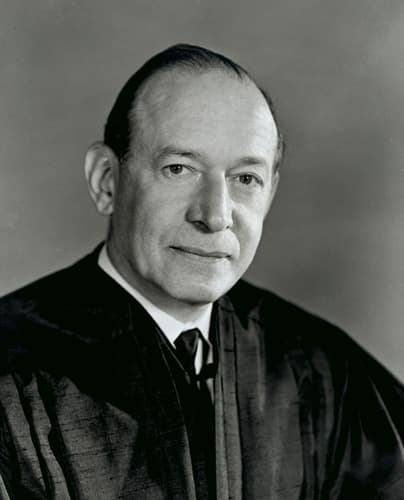
Abe FortasAssociate justice writing for the Court
Writing for the Court, Fortas rejects undifferentiated fear as a basis for the armband ban.
“undifferentiated fear or apprehension of disturbance is not enough to overcome the right to freedom of expression.”
Original text
Original text
Where this statement fits
Tinker v. Des Moines: Supreme Court protects antiwar armbands; Black dissents
In Tinker v. Des Moines, the Supreme Court held on February 24, 1969, that public-school officials could not prohibit the students' quiet antiwar armbands on the record before it. Justice Abe Fortas wrote that the schools lacked evidence supporting a forecast of substantial disruption or interference with others' rights. Justice Hugo Black dissented, arguing that distraction and school discipline justified the authorities' decision. Justice John Marshall Harlan also dissented, favoring greater deference to school officials unless an improper motive was shown. The Court reversed and remanded, 7-2.
Source and context
Original text
About this source
The Court reversed and remanded, 7-2. The case concerns public-school armbands and the justification for restricting student expression.
Archived copy (opens in a new tab)Original text
About this source
The opening pages identify the decision date and state that Justice Fortas delivered the Court's opinion. The complete opinion is available in the same document.
Archived copy (opens in a new tab)Before the quotation
The opinion considers quiet armband expression and the absence of a supported disruption forecast.
After the quotation
It recognizes authority to address material disruption or invasion of others' rights.
How this statement is classified
The label describes this statement's response within the context above.
Why this label?
Relative to the school prohibition, the majority rejects fear alone as a sufficient basis for restricting expression.
- Recorded on
- Published here
More from this case
Read the full caseBlack defends school discipline in dissent from the armband ruling
“School discipline, like parental discipline, is an integral and important part of training our children to be good citizens - to be better citizens.”Read statement
Share or embed this statement
The embed keeps its attribution link to The Dispute Index. Credit the image to The Dispute Index and link to the statement page.
Cite this record
- Publisher
- The Dispute Index
- Title
- Fortas opinion rejects fear alone as a basis for the armband ban
- First published
- Last updated
- Permalink
- https://disputeindex.com/events/7475-writing-for-the-court-fortas-rejects-undifferentiated-fear
Last updated marks the most recent saved version of this published statement.
The Dispute Index. "Fortas opinion rejects fear alone as a basis for the armband ban". First published: 2026-10-31. Last updated: 2026-10-31. https://disputeindex.com/events/7475-writing-for-the-court-fortas-rejects-undifferentiated-fear