
Goldwater Institute tells the trade court the Section 301 tariffs rest on a predetermined conclusion and asks it to grant the plaintiffs' motion
Goldwater InstitutePublic-interest law and policy organization, amicus curiae in In re Section 301 Forced Labor Cases
In an amicus brief submitted to the Court of International Trade with a motion for leave on September 10, 2026 (the court granted leave on September 14), the Goldwater Institute argued that the Section 301 forced-labor tariffs are the product of a prejudged conclusion and not a good-faith application of the statute, called the 10 and 12.5 percent rates arbitrary and capricious, and said the plaintiffs' motion should be granted. In a blog post the same day, Timothy Sandefur, its vice president for legal affairs, wrote that the tariffs are bad policy, unpopular and illegal.
“Manipulating the Section 301 process to reach a predetermined conclusion through a pro forma gesture toward the statute is an abuse of discretion and should not be blessed by this Court.”
Original text
Official statement
Where this statement fits
Are Trump's Section 301 "forced labor" tariffs a lawful remedy, or a pretext to revive struck-down global tariffs?
On July 23, 2026, U.S. Trade Representative Jamieson Greer, at President Trump's direction, imposed additional tariffs of 10% or 12.5% on imports from 60 economies under Section 301 of the Trade Act of 1974. The duties took effect July 24. USTR says each economy failed to impose and effectively enforce a ban on imports of goods made with forced labor, which it found unreasonable and a burden on U.S. commerce. Businesses and 25 states sued in the Court of International Trade. They say the forced-labor rationale is a pretext for re-creating the global tariffs the Supreme Court struck down in February, and that USTR skipped the country-by-country findings the statute requires. The Justice Department says USTR made findings for all 60 economies on a record of data, testimony and public comments. A three-judge panel heard argument on September 30, 2026. As of that date, no court had ruled on the Section 301 tariffs. The disputed question is whether the tariffs are a lawful remedy under Section 301 or a pretext to revive the struck-down global tariffs.
Source and context
Original text
About this source
The Goldwater Institute's amicus brief supporting the plaintiffs' motion, signed by Timothy Sandefur on September 9 and submitted to the court on September 10, 2026 with a motion for leave to file, which the court granted on September 14. It argues that the Trade Representative's decision was a foregone political conclusion, calls the 10 and 12.5 percent rates arbitrary and capricious, and ends by saying the plaintiffs' motion should be granted. The Institute hosts the file on its own website.
Archived copy (opens in a new tab)Official statement
About this source
Blog post by Timothy Sandefur, vice president for legal affairs at the Institute's Scharf-Norton Center for Constitutional Litigation, published the day the Institute filed its brief and linking to it. A Goldwater Institute staff member pointed Dispute Index to this post by email on October 6, 2026 as the Institute's explanation of its position.
Before the quotation
The plaintiffs in In re Section 301 Forced Labor Cases challenge the tariffs the U.S. Trade Representative imposed under Section 301, effective July 24, 2026.
After the quotation
The blog post says the case shows why the powers of the administrative state should be reined in. In an email to Dispute Index on October 6, a Goldwater Institute staff member pointed to the post as the Institute's explanation of its position.
How this statement is classified
The label describes this statement's response within the context above.
Why this label?
Goldwater's brief says the tariffs come from a predetermined conclusion, that manipulating the process is an abuse of discretion the court should not bless, and that the plaintiffs' motion should be granted. Its blog post calls the tariffs illegal. That is a rejection of the tariffs themselves, so we labeled it Condemned.
- Recorded on
- Published here
- People and groups discussed
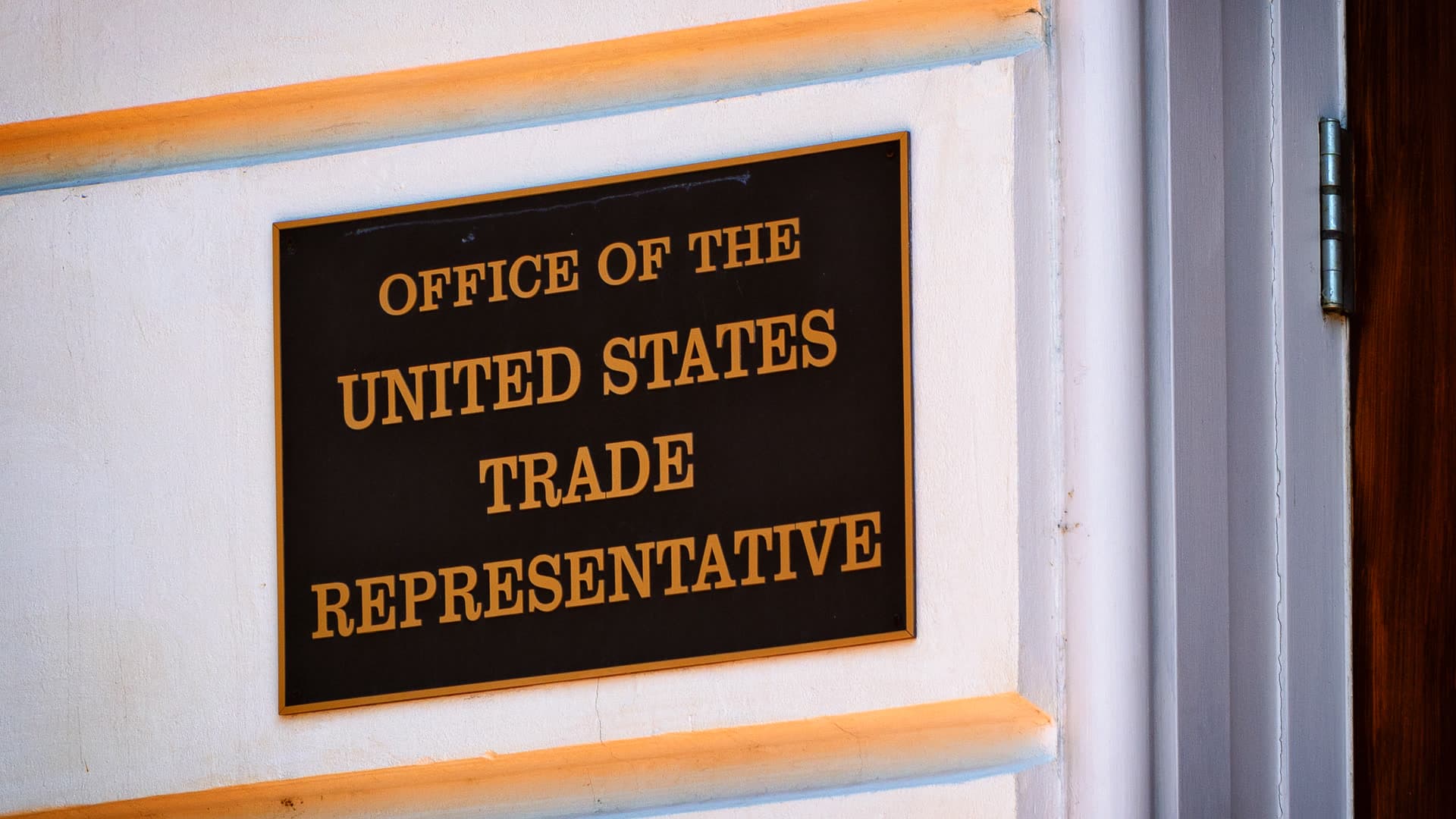
- Donald Trump, Office of the United States Trade Representative
More from this case
Read the full caseGreer says the state attorneys general challenging the tariffs turn a blind eye to forced labor abroad
“I agree on wanting to have certainty on tariffs. If I could stop having Democrat attorneys general try to overturn tariffs or turn a blind eye to forced labor in other countries, we could have more of that stability.”Read statement
States tell the trade court the tariffs will cost them about $733 million a year and ask for relief covering every economy
“Professor Hines's declaration confirms the breadth of these injuries: the Plaintiff States annually purchase $28.2 billion in imported goods, and the Section 301 tariffs will increase their direct annual purchasing costs by approximately $733 million each year. The Plaintiff States therefore respectfully request judgment in their favor on their claims and, if the Court delineates relief by country or economy, relief extending to all economies subject to the Section 301 tariffs.”Read statement
Raskin doubts the forced-labor rationale and says the tariff exemptions favor Trump's benefactors
“One could be forgiven for doubting the sincerity of your Administration's sudden concern for the victims of forced labor. In practice, many of the exemptions make little to no sense under the USTR's own criteria. They do, however, make sense when factoring in the now world famous Trump Tariff Discount.”Read statement
Share or embed this statement
The embed keeps its attribution link to The Dispute Index. Credit the image to The Dispute Index and link to the statement page.
Cite this record
- Publisher
- The Dispute Index
- Title
- Goldwater Institute tells the trade court the Section 301 tariffs rest on a predetermined conclusion and asks it to grant the plaintiffs' motion
- First published
- Last updated
- Permalink
- https://disputeindex.com/events/4877-in-an-amicus-brief-submitted-to-the-court
Last updated marks the most recent saved version of this published statement.
The Dispute Index. "Goldwater Institute tells the trade court the Section 301 tariffs rest on a predetermined conclusion and asks it to grant the plaintiffs' motion". First published: 2026-10-06. Last updated: 2026-11-21. https://disputeindex.com/events/4877-in-an-amicus-brief-submitted-to-the-court