
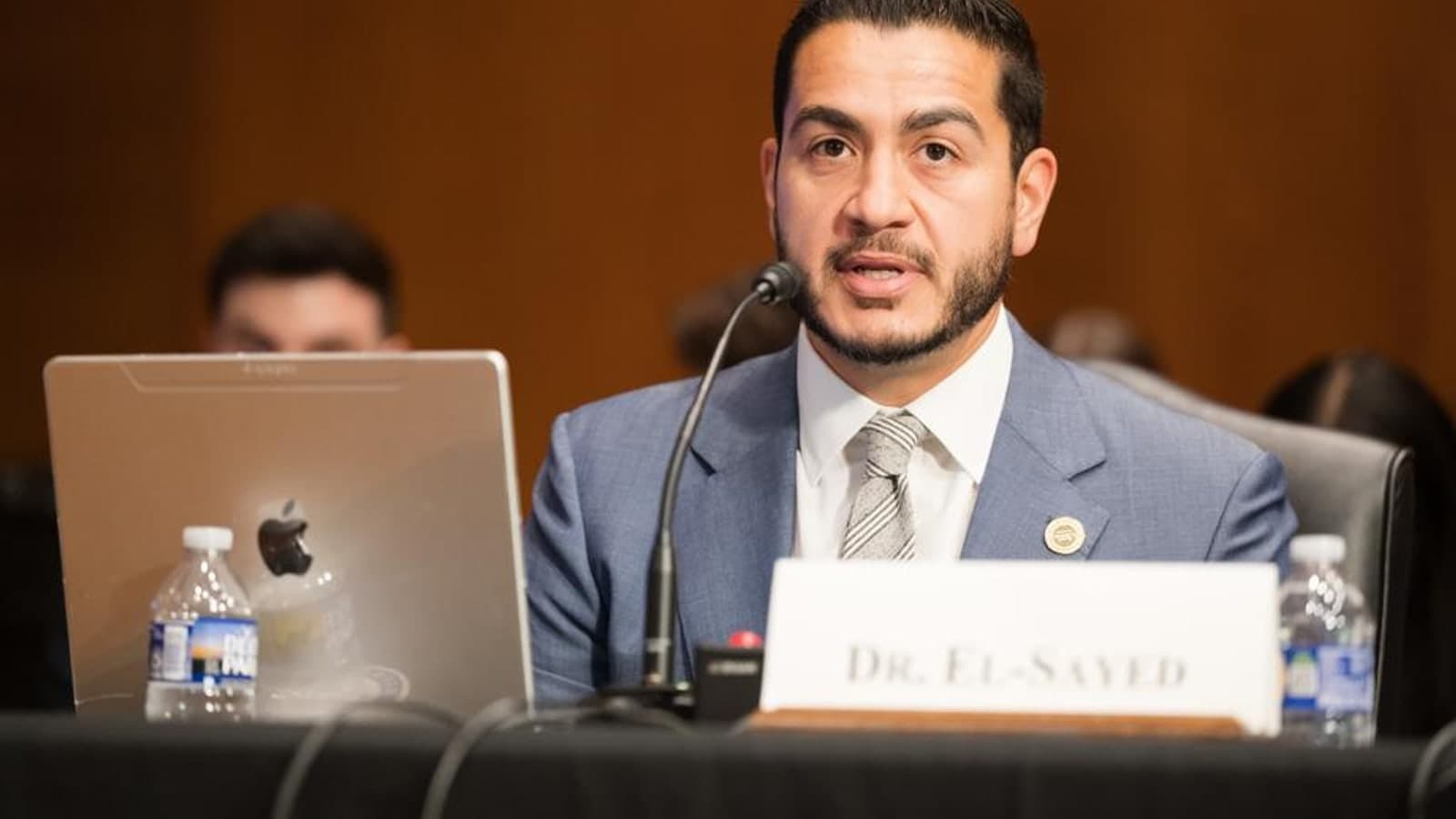
Abdul El-Sayed denies seeking to impose Sharia law on anyone
Abdul El-SayedDemocratic nominee for U.S. Senate in Michigan
El-Sayed rejected the implication that defending Muslim religious practice meant seeking to impose it. He described preemptive bans as targeting a minority and invoked Christians’ freedom to observe their own religious rules.
Responding to
El-Sayed supports Sharia law and treats opposition to it as white supremacy.
“Nobody is trying to push Sharia law on anyone else.”
Interview
Reporting
Where this statement fits
Abdul El-Sayed’s Sharia-law defense: religious freedom or support for religious government?
JD Vance characterized Abdul El-Sayed’s opposition to Sharia bans as support for Sharia and hostility to its critics. El-Sayed defended his position as equal religious freedom and rejected imposing his faith. Hasan Piker challenged the premise of a threatened imposition while questioning El-Sayed’s reliance on a canon-law analogy. Andrew Kolvet, Dana Loesch and Todd Aglialoro disputed that analogy, arguing that it understated Sharia’s relationship to civil government.
Source and context
Interview
About this source
Fox's complete upload of the August 24 evening broadcast, published August 25 UTC. The interview includes El-Sayed's rejection of imposing his religion, Watters's distinction between religion and Sharia, and El-Sayed's redirect to household costs. August 24 is the event date.
Archived copy (opens in a new tab)Reporting
About this source
Independent reporting corroborates the broadcast date and El-Sayed’s explanation that religious observance should not be imposed on others. Other interview subjects are outside this case.
Archived copy (opens in a new tab)Before the quotation
Watters replayed an earlier speech and asked why El-Sayed associated Sharia bans with white supremacy.
After the quotation
El-Sayed expressly said he would not impose his religion on others, then redirected the discussion to household costs and health care.
How this statement is classified
The label describes this statement's response within the context above.
Why this label?
The full answer affirmatively justifies his stance through religious freedom and discriminatory targeting, not merely a denial that he favors compulsory government. Defense refers to his remarks, not imposing religious rule.
- Recorded on
- Published here
- People and groups discussed
- Jesse Watters, JD Vance
Corrections to this statement
These notices document reporting corrections, classification changes, and topic-label updates.
Classification correction
Correction to: Statement by Abdul El-Sayed
- Previous classification
- Challenges the characterization. He challenged the meaning attached to his position while continuing to defend opposition to the bans. This is not an endorsement of compulsory religious government.
- Corrected classification
- Defends or excuses. The full answer affirmatively justifies his stance through religious freedom and discriminatory targeting, not merely a denial that he favors compulsory government. Defense refers to his remarks, not imposing religious rule.
We corrected the editorial classification of Abdul El-Sayed's response about His opposition to anti-Sharia bans. The full answer affirmatively justifies his stance through religious freedom and discriminatory targeting, not merely a denial that he favors compulsory government. Defense refers to his remarks, not imposing religious rule. This corrects our labeling, not a later change in the speaker's position.
This corrects an editorial classification.
Fox's complete upload of the August 24 evening broadcast, published August 25 UTC. The interview includes El-Sayed's rejection of imposing his religion, Watters's distinction between religion and Sharia, and El-Sayed's redirect to household costs. August 24 is the event date.
Archived copy (opens in a new tab)Independent reporting corroborates the broadcast date and El-Sayed’s explanation that religious observance should not be imposed on others. Other interview subjects are outside this case.
Archived copy (opens in a new tab)More from this case
Read the full caseMatt Whitlock says El-Sayed "has spoken out on support of Sharia law"
“This is a pretty wild pretzel to twist into just to justify supporting somebody who actually has spoken out on support of Sharia law.”Read statement
Evita Duffy-Alfonso says El-Sayed "likes Sharia law"
“Abdul El-Sayed likes Sharia law, wants racial reparations, and hates American football. He comes from a violent tradition that is fundamentally incompatible with American culture and values.”Read statement
Mehdi Hasan calls the claim that El-Sayed pushes Sharia law absurd
“So the idea that they're pushing Sharia law is absurd.”Read statement
Share or embed this statement
The embed keeps its attribution link to The Dispute Index. Credit the image to The Dispute Index and link to the statement page.
Cite this record
- Publisher
- The Dispute Index
- Title
- Abdul El-Sayed denies seeking to impose Sharia law on anyone
- First published
- Last updated
- Permalink
- https://disputeindex.com/events/428-el-sayed-rejected-the-implication-that-defending-muslim
Last updated marks the most recent saved version of this published statement.
The Dispute Index. "Abdul El-Sayed denies seeking to impose Sharia law on anyone". First published: 2026-09-11. Last updated: 2026-09-30. https://disputeindex.com/events/428-el-sayed-rejected-the-implication-that-defending-muslim