
Justice Department brief says USTR's actions are "consistent with the text, object, and purpose of the Section 301 statute"
United States Department of JusticeDepartment of Justice Civil Division lawyers, including Deputy Assistant Attorney General Eric J. Hamilton, in a brief for the United States and the other defendants
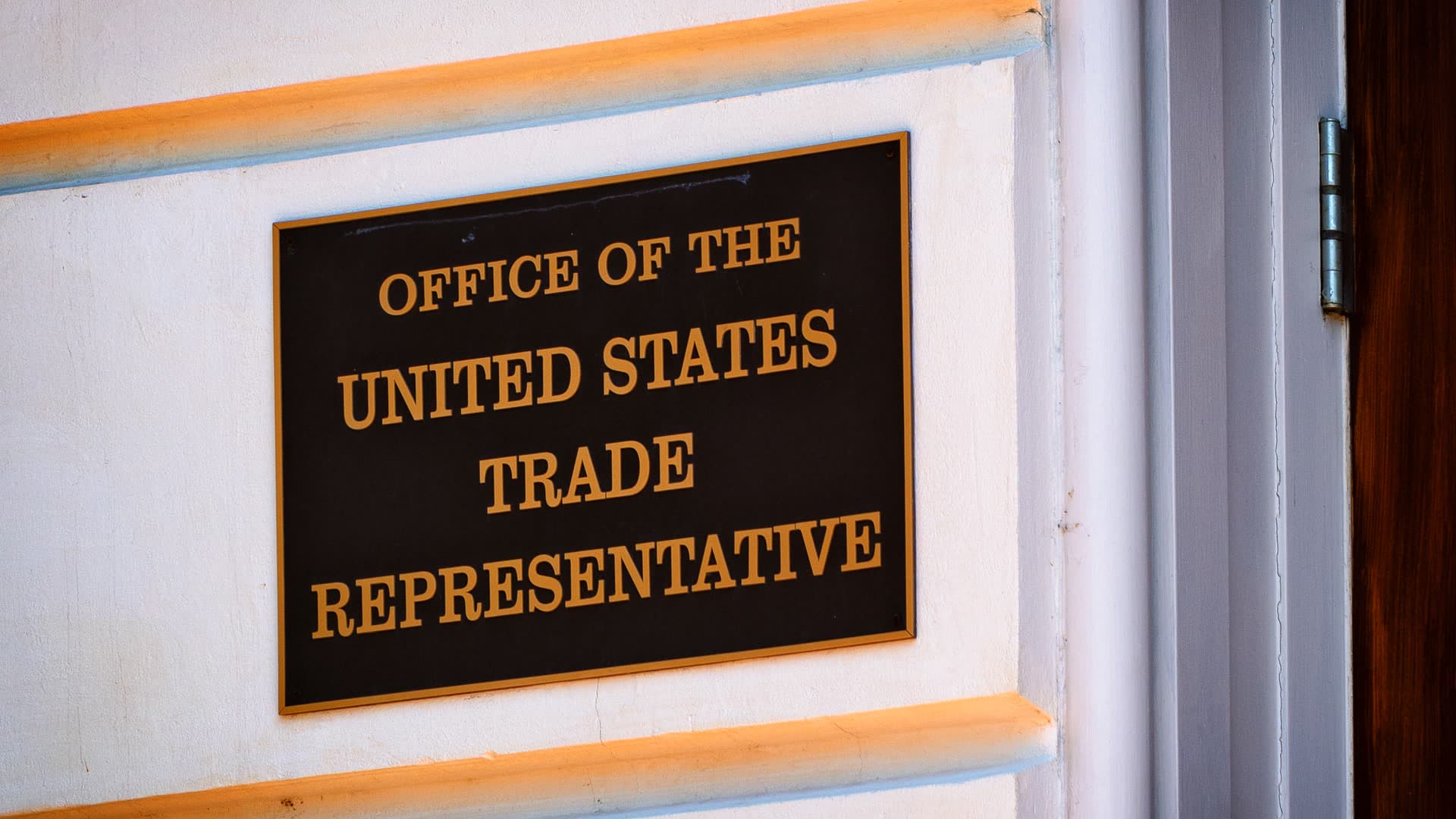
In its September 4, 2026 response in the court's sample case, the Justice Department said the actions USTR took at the President's direction are "consistent with the text, object, and purpose of the Section 301 statute" and with the President's commitment to condition access to the U.S. market on action against trade in forced-labor goods. It called the investigations the culmination of decades of efforts to eradicate forced labor from supply chains and said USTR followed Section 301's "demanding procedural prerequisites." Elsewhere the brief argues that USTR made findings for each of the 60 economies, that the pretext argument is baseless and that the plaintiffs have not shown standing.
Responding to
The Justice Department said in its September 4, 2026 brief that USTR made findings on unreasonableness, burden and appropriate action for each of the 60 investigated economies on a record of data, testimony and comments, and that its determinations are reasonable and consistent with Section 301.
“The actions that USTR has taken at the direction of the President in this case are consistent with the text, object, and purpose of the Section 301 statute, as well as with the President's firm commitment to create a level playing field for U.S. workers, producers, and exporters by conditioning access to the U.S. market on concrete action to prohibit international trade in forced labor goods. The investigations and responsive actions under Section 301 are the culmination of decades of efforts by the U.S. Government to eradicate forced labor from international supply chains. USTR followed Section 301's "demanding procedural prerequisites" when taking those actions.”
Original text
Original text
Where this statement fits
Are Trump's Section 301 "forced labor" tariffs a lawful remedy, or a pretext to revive struck-down global tariffs?
On July 23, 2026, U.S. Trade Representative Jamieson Greer, at President Trump's direction, imposed additional tariffs of 10% or 12.5% on imports from 60 economies under Section 301 of the Trade Act of 1974. The duties took effect July 24. USTR says each economy failed to impose and effectively enforce a ban on imports of goods made with forced labor, which it found unreasonable and a burden on U.S. commerce. Businesses and 25 states sued in the Court of International Trade. They say the forced-labor rationale is a pretext for re-creating the global tariffs the Supreme Court struck down in February, and that USTR skipped the country-by-country findings the statute requires. The Justice Department says USTR made findings for all 60 economies on a record of data, testimony and public comments. A three-judge panel heard argument on September 30, 2026. As of that date, no court had ruled on the Section 301 tariffs. The disputed question is whether the tariffs are a lawful remedy under Section 301 or a pretext to revive the struck-down global tariffs.
Source and context
Original text
About this source
The government's brief in the sample case. It argues that USTR made findings for each of the 60 economies, that its determinations are reasonable and entitled to deference, that the President's specific direction is expressly required by Section 301, that the pretext argument is baseless, that plaintiffs have not shown standing, and that any relief should be limited. It relies on the Federal Circuit's 2025 decision in HMTX Industries v. United States.
Original text
About this source
The plaintiffs' reply to the government's September 4 response. It argues that Section 301 requires country-by-country findings, that USTR did not make them and that what they call the government's pretextual inquiry adds to USTR's violations.
Before the quotation
The brief answered the plaintiffs' August 24 motion for judgment on the agency record in the court's sample case, Learning Resources, Inc. v. United States. The phrase in quotation marks comes from the Chief Justice's opinion in Learning Resources, Inc. v. Trump, which the brief cites.
After the quotation
The plaintiffs' September 18 reply says the government's response "boils down to a plea for deference." The court heard argument on September 30, 2026 and had not ruled as of that date.
How this statement is classified
The label describes this statement's response within the context above.
Why this label?
Relative to the Section 301 forced-labor tariffs, the brief argues the action is within the statute and procedurally sound, which defends the tariffs as a lawful use of Section 301. The closest competing label is Challenged the characterization, because much of the brief answers the plaintiffs' pretext theory, but the quoted passage defends the action itself. The brief is counsel's advocacy for the defendants.
- Recorded on
- Published here
More from this case
Read the full caseFormer trade officials Hills, Wolff and Maruyama tell the court the administration is turning "targeted authority" into "a sweeping power"
“This case concerns the Executive Branch's attempt to transform that targeted authority into a sweeping power to impose broad, economy-wide tariffs untethered from the statute Congress enacted. The text, structure, and history of Section 301 demonstrate that Congress intended the provision to address specific foreign acts, policies, or practices identified through a meaningful investigation and supported by findings of harm to U.S. commerce.”Read statement
Learning Resources and six other plaintiffs say the government's determinations are "pretextual and preordained"
Learning Resources, Inc.
“To be clear, Plaintiffs do not condone reliance on forced labor or forced-labor imports. But that is not the real issue here. Defendants' pretextual and preordained determinations do not satisfy the statutory requirements of Section 301 or the applicable Administrative Procedure Act ("APA") standards. The charade must stop.”Read statement
Peterson Institute's Cline says the forced-labor provision is not "a credible basis for replacing" the struck-down tariffs
“As a consequence, the forced-labor provision does not constitute a credible basis for replacing the "reciprocal" tariffs ruled illegal by the Supreme Court.”Read statement
Cite this record
- Publisher
- The Dispute Index
- Title
- Justice Department brief says USTR's actions are "consistent with the text, object, and purpose of the Section 301 statute"
- First published
- Last updated
- Permalink
- https://disputeindex.com/events/3958-in-its-september-4-2026-response-in-the
Last updated marks the most recent saved version of this published statement.
The Dispute Index. "Justice Department brief says USTR's actions are "consistent with the text, object, and purpose of the Section 301 statute"". First published: 2026-10-01. Last updated: 2026-10-01. https://disputeindex.com/events/3958-in-its-september-4-2026-response-in-the