
European Council President António Costa says associate membership means the EU wants to do more with Canada
António CostaPresident of the European Council, speaking in an interview with POLITICO in Dublin
European Council President António Costa told POLITICO that the EU wants to develop the closest possible relationship with Canada. Asked to define associate membership, he described it as a way of saying the EU wants to do more with Canada and act with it as much as possible.
“This concept means basically that we want to do more and act as much as possible with Canada”
Reporting
Where this statement fits
Should Canada become an associate member of the European Union?
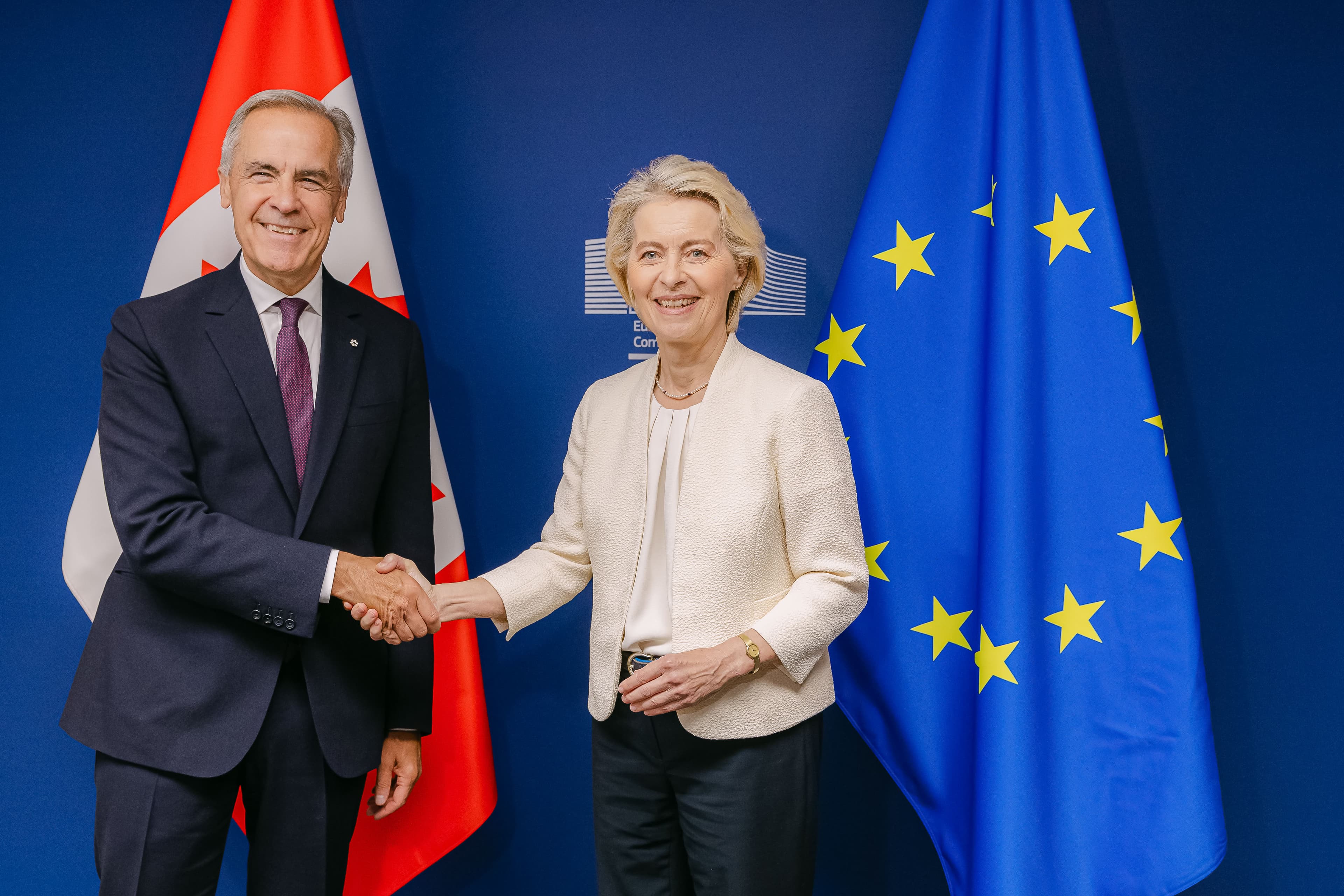
In her State of the European Union address on 16 September 2026, European Commission President Ursula von der Leyen said she would like to work with Prime Minister Mark Carney on opening the door for Canada to be the first associate member of the European Union, as part of moving beyond the existing CETA trade agreement to what she called an Alliance for the Future. Carney, present as an invited guest, told the European Parliament the following day that Canada welcomes the ambition, while attributing the associate-member phrase to von der Leyen rather than adopting it, and promised debates and a vote in the Canadian Parliament on the final structure. Conservative leader Pierre Poilievre set red lines against Canadians paying taxes to Brussels, following European laws they did not vote on, or adopting European immigration policy. United States President Donald Trump said that if he judged the arrangement a hostile act he would impose heavy tariffs on Europe or curtail trade. No agreement has been signed, and associate membership is not a status defined in the European Union's treaties.
Source and context
Reporting
About this source
POLITICO's report on an interview with European Council President António Costa in Dublin, published September 20, 2026. It carries his answer when asked to define associate membership and his remarks on defence, technology and democracy as areas for cooperation with Canada.
Archived copy (opens in a new tab)Before the quotation
POLITICO reported that European Commission President Ursula von der Leyen had offered the previous week to make Canada the EU's first associate member, and that the offer surprised many European governments, which were still asking what the relationship would involve.
After the quotation
POLITICO reported that Costa added that Canada cannot apply for EU membership because it is not a European country, and that he pointed to the EU-Canada summit in Montreal on October 29 and 30 as a key moment to define the future relationship.
How this statement is classified
The label describes this statement's response within the context above.
Why this label?
The reference point is the offer to make Canada the first associate member of the European Union. Costa said the EU wants the closest possible relationship with Canada and described associate membership as a way of saying the EU wants to do more with it, naming defence, technology and democracy as areas to work on. He also noted that Canada cannot apply for full membership, which limits the label but not his support for the offer. We labeled it Defended or excused.
- Recorded on
- Published here
More from this case
Read the full caseFrançois-Philippe Champagne tells the BBC the Canada–EU proposal is “about the substance, to build an alliance of the future”
“This is all about the substance, to build an alliance of the future. The world has changed. America has changed. So we need to change. We need to look at partnership in a different way, and the great thing is that when you look at Canada, and I would say the United Kingdom, we share the same values. We are very aligned in our vision of the world. Why don't we team up? We are independent and sovereign, but we are stronger together.”Read statement
Poilievre says Canada will “never be the 28th state” of the European Union
“never be the 28th state … reckless European-style immigration”Read statement
Macron says France supports Canada’s future alliance with Europe as an associate state, as Commission President von der Leyen put it
“That is why we very much support this agenda of rapprochement within this alliance of the future that you have named, as an associate state, as the President of the Commission said, as a full member of a European political community to which you did us the friendship of coming a few months ago, in Yerevan. (Translated from French. Original: C'est pourquoi nous soutenons ô combien cet agenda de rapprochement dans cette alliance du futur que vous avez nommée en tant qu'État associé, comme l'a dit la présidente de la Commission, comme membre à part entière d'une communauté politique européenne à laquelle vous nous avez fait l'amitié de venir il y a quelques mois, à Erevan.)”Read statement
Share or embed this statement
The embed keeps its attribution link to The Dispute Index. Credit the image to The Dispute Index and link to the statement page.
Cite this record
- Publisher
- The Dispute Index
- Title
- European Council President António Costa says associate membership means the EU wants to do more with Canada
- First published
- Last updated
- Permalink
- https://disputeindex.com/events/2839-european-council-president-ant%C3%B3nio-costa-told-politico-that
Last updated marks the most recent saved version of this published statement.
The Dispute Index. "European Council President António Costa says associate membership means the EU wants to do more with Canada". First published: 2026-09-26. Last updated: 2026-09-26. https://disputeindex.com/events/2839-european-council-president-ant%C3%B3nio-costa-told-politico-that