
Should the United States seek "fundamental change" in Cuba's government?
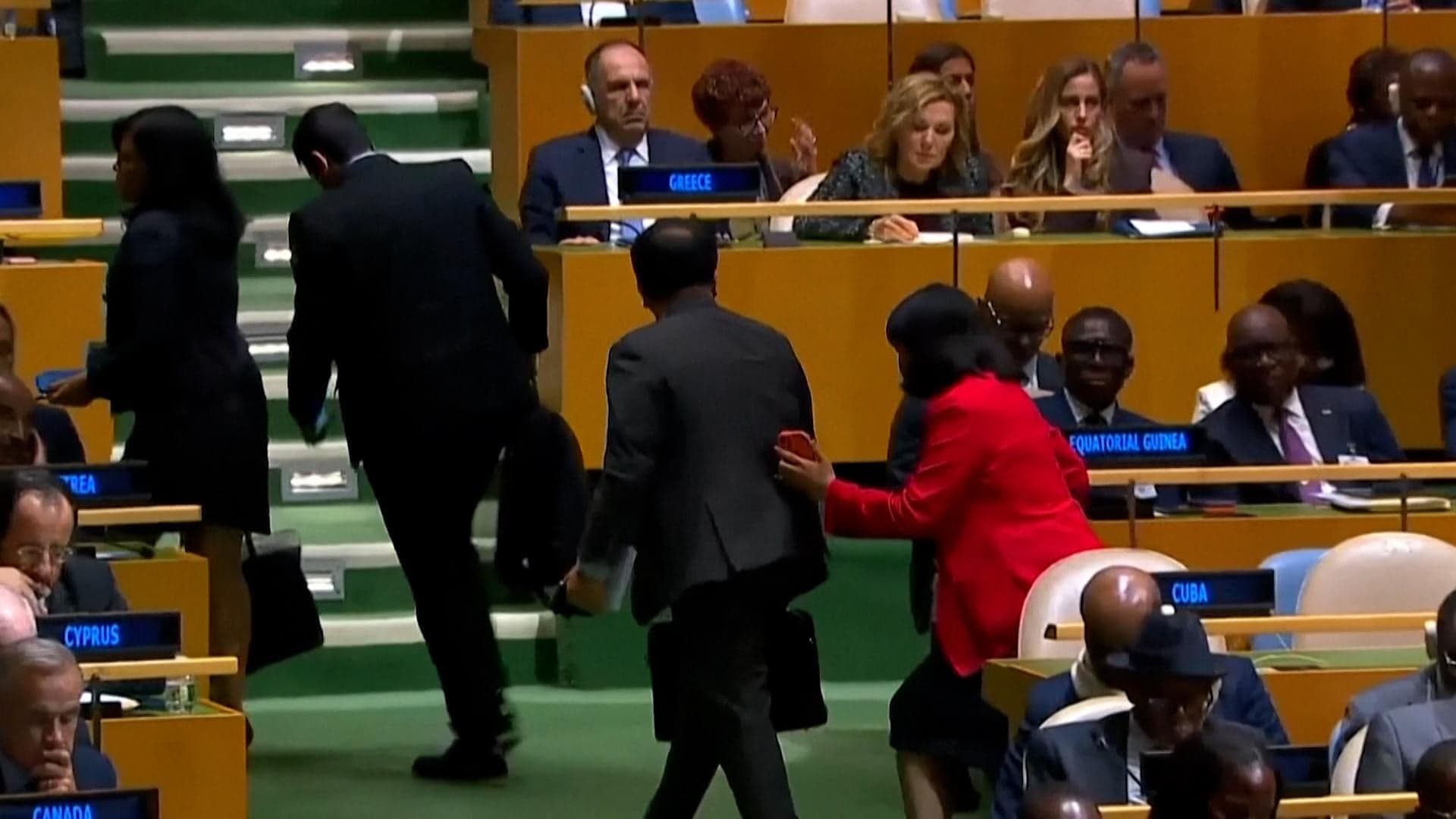
Trump told the UN that Cuba is a failed state that "will fall" and that his administration seeks fundamental change there. Cuba's delegation walked out; Foreign Minister Bruno Rodriguez called the claims falsehoods.
Case period:
Published by The Dispute Index editorial teamPublished Updated
Overview
In his September 22, 2026 address to the UN General Assembly, President Trump called Cuba "an absolutely failed state," said it is "failing like never before, and it will fall," and said his administration is "seeking a fundamental change in the situation in Cuba." He also said Secretary of State Marco Rubio is "deep into negotiations with Cuba." The Cuban delegation walked out of the hall during the remarks. Foreign Minister Bruno Rodríguez responded on X that Washington cannot accept that Cuba is independent and sovereign, called Trump's statements false, and said Cuba is not a threat to the United States or to other countries. The dispute is whether the United States should openly pursue the fall of Cuba's government.
Read the full background
The fixed reference point for classification in this case is the Cuba passage of President Trump's September 22, 2026 address to the UN General Assembly: the statements that Cuba is "an absolutely failed state," that "it will fall," and that his administration is "seeking a fundamental change in the situation in Cuba." Responses are recorded against that stated objective. They are not recorded against the speech's remarks on Iran or Venezuela, against the U.S. embargo as a whole, or against any specific sanction or executive order, each of which can carry its own case.
In the address (opens in a new tab), Trump said his administration is seeking fundamental change in Cuba, where "the communist regime is under great pressure, the biggest pressure they've ever been under." He said, "It's an absolutely failed state. It's failing like never before, and it will fall," and added that "freedom will be coming to Cuba." He said Secretary of State Marco Rubio "is deep into negotiations with Cuba," and that the United States will "not allow a haven for foreign adversaries to threaten America on our own doorstep." He also accused the Cuban government of encouraging opposition activity in the United States.
The Cuban delegation walked out of the General Assembly hall as Trump delivered the passage, Reuters (opens in a new tab) and other outlets reported (opens in a new tab). Roya News reported (opens in a new tab) that Rodríguez answered the same day on X, accusing Washington of refusing to respect Cuban sovereignty and calling Trump's claims falsehoods. Cubadebate's account of the response (opens in a new tab) says Rodríguez wrote that Washington is "unable to accept" that Cuba is an independent and sovereign country and that Cuba poses no threat to the United States or other nations.
The exchange follows months of escalation. A January 29, 2026 executive order threatened tariffs on countries that export fuel to Cuba, which the Cuban government calls an energy blockade; Rodríguez denounced the measure at the time as "a brutal act of aggression." At a CELAC ministerial meeting on September 21, he described the pressure campaign as "equivalent to a naval blockade." In his own General Assembly address on September 26 (opens in a new tab), Rodríguez denounced the energy measures and warned of a collapsing power grid, and the U.S. delegation was reported to have walked out during his remarks.
Trump's assertion that Rubio is "deep into negotiations with Cuba" has not been matched by a public Cuban confirmation. As of September 28, 2026, we could not locate a statement from the Cuban government confirming that negotiations with Rubio are taking place, or a public response to Trump's remarks from the State Department beyond the speech itself.
Silence is not a position. A refusal to comment, or a referral to an earlier statement, is recorded only where a source reports it.
People in this case
 Donald TrumpDirectly involved
 Marco RubioDirectly involved
 Bruno Rodríguez ParrillaDirectly involved
Timeline
9 timeline entries on this page. Dates: January 29, 2026 to October 5, 2026
January 2026
Trump signs executive order targeting fuel supplies to Cuba
Incident
President Trump signed an executive order threatening tariffs on countries that export fuel to Cuba. Cuba calls the measure an energy blockade.
[01]Statement by Cuba's Foreign Minister, Bruno Rodríguez Parrilla, through his X account
MINREX publication of Foreign Minister Bruno Rodríguez's January 30, 2026 statement condemning the January 29 executive order threatening tariffs on countries that export fuel to Cuba, which he called a brutal act of aggression.
Rodríguez condemns the order as a brutal act of aggression
Reaction
Foreign Minister Bruno Rodríguez, in a statement published by MINREX, condemned the executive order as a new escalation and a brutal act of aggression, and said Cuba is not a threat to the United States.
[01]Statement by Cuba's Foreign Minister, Bruno Rodríguez Parrilla, through his X account
MINREX publication of Foreign Minister Bruno Rodríguez's January 30, 2026 statement condemning the January 29 executive order threatening tariffs on countries that export fuel to Cuba, which he called a brutal act of aggression.
September 2026
At CELAC, Rodríguez likens the pressure campaign to a naval blockade
Claim
At a CELAC ministerial meeting, Rodríguez denounced what he called an unprecedented intensification of the U.S. blockade, including energy measures he described as equivalent to a naval blockade.
[02]Cuba Is Not a Threat, Bruno Rodríguez Responds to Trump's Speech at the UN
English translation of Cubadebate's account of Rodríguez's September 22, 2026 response on X and of his September 21 remarks at a CELAC ministerial meeting describing the U.S. pressure campaign as equivalent to a naval blockade.
Trump tells the UN that Cuba will fall and the U.S. seeks fundamental change
Claim
In his UN General Assembly address, Trump called Cuba an absolutely failed state, said it will fall, and said his administration is seeking a fundamental change in Cuba. He said Secretary of State Marco Rubio is deep into negotiations with Cuba.
[03]September 22, 2026: Address before the 81st United Nations General Assembly
Record of President Trump's September 22, 2026 address to the UN General Assembly, sourced by the Miller Center from the White House. The address covers the war with Iran, the Western Hemisphere, Venezuela, Mexico and Cuba. In the Cuba passage, Trump calls Cuba an absolutely failed state, says it will fall, and says his administration is seeking a fundamental change in Cuba.
Cuban delegation walks out of the General Assembly hall
Reaction
Members of the Cuban delegation left the hall as Trump delivered the Cuba passage, as cameras in the chamber showed and news outlets reported.
[04]Trump warns in UN speech he could 'annihilate' Iran, says Cuba 'will fall'
Reuters report on President Trump's September 22, 2026 UN General Assembly address, including the Cuba passage and the Cuban delegation's walkout.
Rodríguez answers Trump on X
Reaction
Rodríguez posted on X that Washington is unable to accept that Cuba is independent and sovereign, called Trump's statements false, and said Cuba is not a threat to the United States or other countries.
[05]Cuban FM slams Trump's UN remarks as 'falsehoods'
Roya News report that Cuban Foreign Minister Bruno Rodríguez answered Trump's UN remarks on X the same day, accusing Washington of refusing to respect Cuban sovereignty and calling the claims falsehoods.
[02]Cuba Is Not a Threat, Bruno Rodríguez Responds to Trump's Speech at the UN
English translation of Cubadebate's account of Rodríguez's September 22, 2026 response on X and of his September 21 remarks at a CELAC ministerial meeting describing the U.S. pressure campaign as equivalent to a naval blockade.
Rodríguez denounces the energy measures in his own UN address
Reaction
In his General Assembly address, Rodríguez denounced the U.S. energy measures against Cuba and warned of a collapsing power grid. The U.S. delegation was reported to have walked out during his remarks.
[06]In UN speech, Cuba denounces Trump's 'energy blockade' and warns of grid collapse, economic war
WLRN report on Foreign Minister Bruno Rodríguez's September 26, 2026 address to the UN General Assembly, in which he denounced U.S. energy measures against Cuba and warned of a collapsing power grid; the U.S. delegation was reported to have walked out.
October 2026
Díaz-Balart predicts Cuba's government will not survive Trump's term
Claim
In an interview published October 1, Díaz-Balart said he would bet his house that Cuba's government would not survive Trump's remaining term. He defended continued pressure on officials and entities supporting the government. The remarks were a forecast, not evidence of a completed change of government.
[07]NTN24 interview with Mario Díaz-Balart on U.S. pressure against Cuba
Díaz-Balart's interview segment opens the October 1 broadcast. The remainder covers other stories. He endorses continued pressure and predicts a fall; the prediction is attributed.
NTN24 interview with Mario Díaz-Balart on U.S. pressure against CubaInterview 00:13-02:40; quotation at 01:41-01:52.Cuban diplomat says contacts have not become formal negotiations
Reaction
Torres Rivera tells Reuters that Cuba and the United States maintain communication channels but are not in formal negotiations. She says changes to Cuba's political system are off limits in talks and rejects removing the government as a violation of sovereignty.
[08]Reuters
Reuters interviews Cuban charge d'affaires Lianys Torres Rivera. This is the Reuters report carried by Investing.com; statements about contacts and negotiations are attributed to the diplomat.
Cuba and US maintain channels of communication, but no negotiations, diplomat says · ReutersOpening interview paragraphs and passage beginning What we have with the US is channels of communication.
Response record
Responses
Choose one response filter, or select All responses to see the full record.
6 matching responses. Newest first.
 Bruno Rodríguez ParrillaCuba's minister of foreign affairs, posting on XDirectly involved
Before this statement
Rodríguez posted this on October 28, 2026, summarizing his speech in the General Assembly debate on Cuba's annual resolution calling for an end to the U.S. embargo, shortly before the vote.
"At the UN General Assembly I denounced the economic war the U.S. is waging against Cuba for the purposes of domination and "regime change." This aggression includes a fuel blockade, which is equivalent to a naval blockade, which is an act of war and an act of collective punishment and genocide, prohibited by international law. (Translated from Spanish. Original: En la Asamblea General de @ONU_es denuncié la guerra económica que EEUU lleva a cabo contra Cuba con fines de de dominación y "cambio de régimen". Esta agresión incluye un bloqueo de combustible, que equivale a un bloqueo naval, que es un acto de guerra y un acto de castigo colectivo y de genocidio, proscritos por el Derecho Internacional.)"
CondemnedCase context: Should the United States seek "fundamental change" in Cuba's government?
Full statement and sources
In the General Assembly debate on Cuba's annual resolution against the U.S. embargo, Rodríguez said the United States wages economic war on Cuba to dominate it and bring about regime change. He called the fuel blockade the equivalent of a naval blockade and an act of war, collective punishment and genocide.
After the statement
He wrote that the consequences fall on Cuban families, the sick, women in childbirth and children's meals and schooling, and on access to electricity, drinking water and medicine.
Bruno Rodríguez on X: his General Assembly speech on the U.S. economic war and regime change · Bruno Rodríguez ParrillaX post of Oct. 28, 2026, 15:13 UTC, full text (Spanish)Why this label?
Relative to the administration's stated aim of fundamental change in Cuba, Rodríguez describes U.S. economic pressure as a campaign for domination and regime change and calls it an act of war. That rejects the objective the case tracks.
This label describes the statement's response within the context above.
- Bruno Rodríguez ParrillaCuba's minister of foreign affairs, posting on XDirectly involved
Before this statement
Earlier on October 23, at a campaign rally in Fort Myers, Florida, Trump said U.S. Navy ships returning from the Iran war would pass by Cuba, that one would stop close to shore, and that Secretary of State Marco Rubio would then go to close a deal with the Cuban government.
"We reject any threat over U.S. ambitions toward Cuba. On our coasts there are beautiful beaches, but also jagged dog's-tooth rock, inhospitable to those who arrive with hostile aims and a hunger for domination. (Translated from Spanish. Original: Rechazamos toda amenaza sobre ambiciones de EEUU hacia Cuba. En nuestras costas hay bellas playas, pero también diente de perro, inhóspito para quienes llegan con fines hostiles y ansias de dominación.)"
CondemnedCase context: Should the United States seek "fundamental change" in Cuba's government?
Full statement and sources
After Trump told a Florida rally that U.S. ships returning from Iran would stop off Cuba's coast and that Marco Rubio would then close a deal with Havana, Rodríguez wrote that Cuba rejects any threat over U.S. ambitions toward the island and warned that its coast is inhospitable to those who come with hostile aims.
After the statement
Diente de perro is the Cuban name for the sharp limestone rock found along much of the island's coast. President Miguel Díaz-Canel posted the same day that the U.S. government had shown it does not renounce its ambitions of domination over Cuba.
Bruno Rodríguez on X: Cuba rejects any threat over U.S. ambitions toward the island · Bruno Rodríguez ParrillaX post of Oct. 23, 2026, 20:26 UTC, full text (Spanish)Why this label?
Rodríguez answers Trump's remarks about pressing Cuba once the Iran war ends by rejecting them as threats driven by ambitions of domination. That rejects the objective of forcing change in Cuba that the case tracks.
This label describes the statement's response within the context above.
- Bruno Rodríguez ParrillaCuba's minister of foreign affairs, posting on XDirectly involved
Before this statement
Nine days after Trump told the UN General Assembly that his administration seeks fundamental change in Cuba and that its government will fall, Rodríguez wrote that U.S. society does not support the maximum-pressure policy.
"American society does not go along with the policy of maximum pressure against Cuba. ... In the speech delivered at the UN, the President of the U.S. says he speaks on behalf of the U.S., but he does not reflect what most of its population thinks. (Translated from Spanish. Original: La sociedad estadounidense no acompaña la política de máxima presión contra Cuba. ... En el discurso pronunciado en @ONU_es, el Presidente de EEUU dice hablar en nombre de EEUU, pero no refleja lo que opina la mayor parte de su población.)"
CondemnedCase context: Should the United States seek "fundamental change" in Cuba's government?
Full statement and sources
Rodríguez wrote that most Americans support diplomatic relations with Cuba, disapprove of the oil blockade, reject military intervention and do not trust Trump to decide on the island. He said Trump's address at the UN did not reflect the views of most of the U.S. population.
After the statement
Between the two sentences quoted, he cited 2026 polling that he said shows most Americans favor keeping diplomatic relations with Cuba and oppose the oil blockade and a military intervention. He linked a Cubadebate article on the polls.
Bruno Rodríguez on X: most Americans do not back maximum pressure on Cuba · Bruno Rodríguez ParrillaX post of Oct. 1, 2026, 13:37 UTC, full text (Spanish)Why this label?
Relative to the administration's stated aim of fundamental change in Cuba, Rodríguez rejects the maximum-pressure policy and argues that Trump's UN address lacks the support of most Americans. He opposes the policy itself rather than only disputing how it was described.
This label describes the statement's response within the context above.
- Bruno Rodríguez ParrillaCuba's minister of foreign affairsDirectly involved
Before this statement
Rodriguez describes the impact of the policy as a siege with a human face.
"The economic warfare is aimed against the people."
CondemnedCase context: Should the United States seek "fundamental change" in Cuba's government?
Full statement and sources
Rodriguez argues that US economic pressure deliberately harms Cuban families and seeks to induce a humanitarian crisis. He connects it to an effort to overthrow Cuba's government while offering dialogue based on sovereign equality and non-interference.
After the statement
He blames the policy for harm to the Cuban people, loss of life and pain.
Bruno Rodriguez Parrilla's address to the 81st UN General AssemblyPages 2-8, pressure on Cuba, humanitarian consequences and terms for dialogueWhy this label?
The case concerns US efforts to change Cuba's government. Rodriguez condemns economic pressure for that purpose as collective punishment and defends Cuba's sovereignty.
This label describes the statement's response within the context above.
- Bruno Rodríguez ParrillaCuba's minister of foreign affairs, posting on XDirectly involved
Before this statement
Hours earlier, Trump had told the UN General Assembly that Cuba is a failed state whose government will fall and that his administration seeks fundamental change there. The Cuban delegation walked out during the remarks.
"Washington is "unable to accept" that Cuba is an independent and sovereign country."
CondemnedCase context: Should the United States seek "fundamental change" in Cuba's government?
Full statement and sources
Foreign Minister Bruno Rodríguez responded to Trump's address on X the same day, saying Washington is unable to accept that Cuba is independent and sovereign. He called Trump's statements false and said Cuba is not a threat to the United States or to other countries.
After the statement
Rodríguez returned to the dispute in his own General Assembly address on September 26, denouncing what Cuba calls an energy blockade and warning of a collapsing power grid.
Why this label?
Rodríguez rejects both the description of Cuba and the policy objective Trump stated, which we record as condemning the position.
This label describes the statement's response within the context above.
 Donald TrumpPresident of the United States, addressing the 81st UN General AssemblyDirectly involved
Before this statement
The address came after months of U.S. pressure on Cuba, including a January 29, 2026 executive order threatening tariffs on countries that export fuel to the island.
"My administration is also seeking a fundamental change in the situation in Cuba, where the communist regime is under great pressure, the biggest pressure they've ever been under. It's an absolutely failed state. It's failing like never before, and it will fall."
Defended or excusedCase context: Should the United States seek "fundamental change" in Cuba's government?
Full statement and sources
President Trump told the UN General Assembly that his administration is seeking a fundamental change in Cuba, called Cuba an absolutely failed state, and said its government will fall. He said Secretary of State Marco Rubio is deep into negotiations with Cuba and that the United States will not allow a haven for foreign adversaries on its doorstep.
After the statement
The Cuban delegation walked out of the hall during the remarks. Foreign Minister Bruno Rodríguez answered on X the same day, calling Trump's claims falsehoods and saying Cuba is not a threat.
Why this label?
Trump's statement asserts and defends the objective the case asks about: openly seeking fundamental change in Cuba's government.
This label describes the statement's response within the context above.
Sources
(14)
Original text
September 22, 2026: Address before the 81st United Nations General Assembly
About this source
Record of President Trump's September 22, 2026 address to the UN General Assembly, sourced by the Miller Center from the White House. The address covers the war with Iran, the Western Hemisphere, Venezuela, Mexico and Cuba. In the Cuba passage, Trump calls Cuba an absolutely failed state, says it will fall, and says his administration is seeking a fundamental change in Cuba.
- Author
- Donald Trump
- Published
- Accessed
Original post
Bruno Rodríguez on X: his General Assembly speech on the U.S. economic war and regime change
About this source
Post in Spanish by Cuba's foreign minister summarizing his speech in the UN General Assembly debate on Cuba's annual resolution against the U.S. embargo, posted shortly before the vote.
- Author
- Bruno Rodríguez Parrilla (@BrunoRguezP)
- Published
- Accessed
Reporting
Cuba acusa a EE. UU. de "ambiciones de dominación" sobre la isla y rechaza "toda amenaza"
About this source
EFE wire report in Spanish on the responses of President Miguel Díaz-Canel and Foreign Minister Bruno Rodríguez to Trump's October 23 rally remarks. It quotes Trump's comments in Fort Myers about U.S. ships stopping off Cuba and Marco Rubio closing a deal, and explains the term diente de perro.
- Author
- EFE, published by Diario Libre
- Published
- Accessed
Original post
Bruno Rodríguez on X: Cuba rejects any threat over U.S. ambitions toward the island
About this source
Post in Spanish by Cuba's foreign minister on October 23, 2026, the day President Trump told a campaign rally in Fort Myers, Florida, that U.S. Navy ships returning from Iran would stop off Cuba's coast.
- Author
- Bruno Rodríguez Parrilla (@BrunoRguezP)
- Published
- Accessed
Original post
Bruno Rodríguez on X: most Americans do not back maximum pressure on Cuba
About this source
Post in Spanish by Cuba's foreign minister responding to President Trump's September 22 address to the UN General Assembly. It cites polling on U.S. public opinion about Cuba policy and links a Cubadebate article on those polls.
- Author
- Bruno Rodríguez Parrilla (@BrunoRguezP)
- Published
- Accessed
Original text
Bruno Rodriguez Parrilla's address to the 81st UN General Assembly
Relevant passage: Pages 2-8, pressure on Cuba, humanitarian consequences and terms for dialogue
About this source
The official English text records Cuba's foreign minister opposing US economic pressure while offering talks based on sovereign equality and non-interference.
- Author
- Bruno Rodriguez Parrilla
- Published
- Accessed
Original post
Emma Vigeland's X post on U.S. pressure on Cuba
About this source
Emma Vigeland posted this on X on February 17, 2026 (UTC), quoting a clip of Trump discussing Cuba and the embargo.
- Author
- Emma Vigeland
- Published
- Accessed
Interview
Cuba and US maintain channels of communication, but no negotiations, diplomat says
Relevant passage: Opening interview paragraphs and passage beginning What we have with the US is channels of communication.
About this source
Reuters interviews Cuban charge d'affaires Lianys Torres Rivera. This is the Reuters report carried by Investing.com; statements about contacts and negotiations are attributed to the diplomat.
- Author
- Matt Spetalnick
- Published
- Accessed
Original video
NTN24 interview with Mario Díaz-Balart on U.S. pressure against Cuba
About this source
Díaz-Balart's interview segment opens the October 1 broadcast. The remainder covers other stories. He endorses continued pressure and predicts a fall; the prediction is attributed.
- Author
- NTN24, La Noche
- Published
- Accessed
Reporting
Cuba Is Not a Threat, Bruno Rodríguez Responds to Trump's Speech at the UN
About this source
English translation of Cubadebate's account of Rodríguez's September 22, 2026 response on X and of his September 21 remarks at a CELAC ministerial meeting describing the U.S. pressure campaign as equivalent to a naval blockade.
- Author
- Resumen Latinoamericano English
- Published
- Accessed
Official statement
Statement by Cuba's Foreign Minister, Bruno Rodríguez Parrilla, through his X account
About this source
MINREX publication of Foreign Minister Bruno Rodríguez's January 30, 2026 statement condemning the January 29 executive order threatening tariffs on countries that export fuel to Cuba, which he called a brutal act of aggression.
- Author
- Bruno Rodríguez Parrilla
- Published
- Accessed
Reporting
In UN speech, Cuba denounces Trump's 'energy blockade' and warns of grid collapse, economic war
About this source
WLRN report on Foreign Minister Bruno Rodríguez's September 26, 2026 address to the UN General Assembly, in which he denounced U.S. energy measures against Cuba and warned of a collapsing power grid; the U.S. delegation was reported to have walked out.
- Author
- WLRN
- Published
- Accessed
Reporting
Cuban FM slams Trump's UN remarks as 'falsehoods'
About this source
Roya News report that Cuban Foreign Minister Bruno Rodríguez answered Trump's UN remarks on X the same day, accusing Washington of refusing to respect Cuban sovereignty and calling the claims falsehoods.
- Author
- Roya News
- Published
- Accessed
Reporting
Trump warns in UN speech he could 'annihilate' Iran, says Cuba 'will fall'
About this source
Reuters report on President Trump's September 22, 2026 UN General Assembly address, including the Cuba passage and the Cuban delegation's walkout.
- Author
- Reuters
- Published
- Accessed
Share or embed this case
The embed keeps its attribution link to The Dispute Index. Credit the image to The Dispute Index and link to the case page.
Cite this record
- Publisher
- The Dispute Index
- Title
- Should the United States seek "fundamental change" in Cuba's government?
- First published
- Last updated
- Permalink
- https://disputeindex.com/cases/trump-un-speech-cuba-fundamental-change-will-fall
The Dispute Index. "Should the United States seek "fundamental change" in Cuba's government?". First published: 2026-09-29. Last updated: 2026-09-29. https://disputeindex.com/cases/trump-un-speech-cuba-fundamental-change-will-fall