
NOAA confirms a Royal Caribbean cruise ship struck and killed a pregnant fin whale near Seward; conservationists say the company must slow its ships in whale habitat
NOAA's final report confirms a Royal Caribbean cruise ship killed a pregnant endangered fin whale near Seward, Alaska, in June. Conservationists want the company to slow to 10 knots in whale habitat; Royal Caribbean cites crew training and new measures.
Case period:
Published by The Dispute Index editorial teamPublished Updated
Overview
NOAA says 11 vessel strike incidents involving cruise ships have been reported in Alaska since 2001, not all of them confirmed or fatal. Its Office of Law Enforcement investigated this one, including interviews with the captain and crew. In 2016, a Holland America ship arrived in Seward with a dead fin whale on its bow; federal investigators found that a ship strike killed it but that the ship was not necessarily responsible.
The Anchorage Daily News reported that voluntary speed reductions to 10 knots for large ships in parts of California's waters cut whale strikes in half in 2021, according to a 2022 NOAA presentation, and that Glacier Bay National Park has long set seasonal speed limits to protect humpback whales.
Timeline
5 timeline entries on this page. Dates: June 19, 2026 to November 16, 2026
June 2026
Ovation of the Seas docks in Seward with a dead fin whale on its bow
Incident
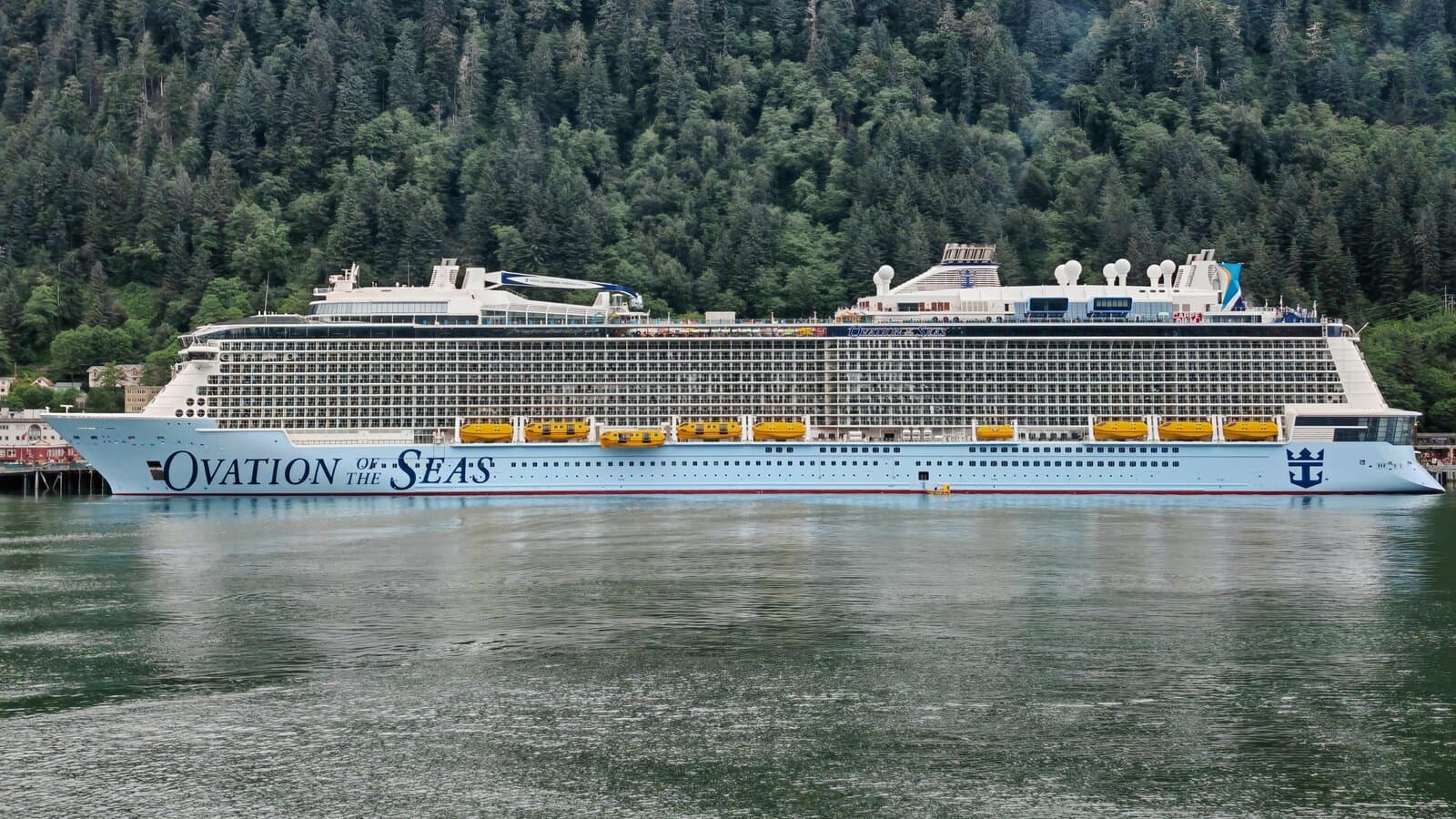
Royal Caribbean's Ovation of the Seas arrives in Seward, Alaska, with a dead 61-foot adult female fin whale on its bulbous bow. NOAA Fisheries and its partners respond, and the carcass is towed to a nearby beach for a necropsy.
NOAA's preliminary necropsy finds injuries consistent with a vessel strike
Source release
NOAA Fisheries says the whale was freshly dead, pregnant and in good condition, with blunt force trauma to the jaw, spine and ribs consistent with a vessel strike. It says the official cause of death awaits further testing.
Center for Biological Diversity asks Royal Caribbean to slow its ships to 10 knots in whale habitat
Reaction
The Center for Biological Diversity sends Royal Caribbean a letter asking it to require its cruise ships to slow to 10 knots or less in important whale habitat.
July 2026
Center for Biological Diversity estimates the ship was traveling 15 to 20 knots
Claim
The Center for Biological Diversity publishes an analysis of the ship's location data estimating that it traveled between 15 and 20 knots in coastal waters where whales gather. It says Royal Caribbean has not responded to its letter.
November 2026
NOAA's final necropsy report attributes the deaths of the whale and her fetus to a vessel strike
Source release
NOAA Fisheries releases final necropsy results showing fractures to the jaw and spine and extensive hemorrhaging consistent with a vessel strike, and says a separate exam found the fetus also died of blunt force trauma.
Claims
Claims separate what was said from what is contested. Follow each source for the original wording and context.
What's disputed
Center for Biological Diversity
Ovation of the Seas was likely traveling between 15 and 20 knots in coastal waters and bays where whales gather, speeds that greatly increase the risk of a fatal strike.
What is disputed
The Center for Biological Diversity based its estimate on the ship's broadcast location data and says such data can contain errors or gaps. The Anchorage Daily News reported that Royal Caribbean did not answer questions about the ship's speed as it traveled into Seward.
Sources (2)
- Whale-Hitting Cruise Ship Was Likely Traveling Above Safe Speeds, Analysis Finds · Center for Biological DiversityPress release, July 1, 2026
- Strike by Seward cruise ship killed endangered whale, preliminary findings showArticle, Anchorage Daily News, June 23, 2026 (Yahoo News copy)
Response record
Responses
Choose one response filter, or select All responses to see the full record.
3 matching responses. Newest first.
Center for Biological DiversityConservation group, in a statement by its oceans director, Miyoko Sakashita, as quoted by Alaska's News SourceDirectly involved "The company should do their part and slow down in whale hotspots like Seward. We'll keep pushing until they show some respect for Alaska's coastal communities and marine life"
CondemnedCase context: NOAA confirms a Royal Caribbean cruise ship struck and killed a pregnant fin whale near Seward; conservationists say the company must slow its ships in whale habitat
Full statement and sources
After NOAA's final report, the Center for Biological Diversity says Royal Caribbean should slow its ships in whale hotspots like Seward, and that it will keep pressing the company until it does.
Before the statement
Alaska's News Source reported NOAA's final necropsy findings and a Royal Caribbean statement that its shipboard officers receive whale awareness and detection training.
After the statement
Alaska's News Source reported that NOAA's Anne Marie Eich said the agency is committed to working with vessel operators on the importance of reducing speed where practicable in areas with concentrations of whales.
Final necropsy report confirms cruise ship hit, killed pregnant fin whaleArticle, Alaska's News Source (KTUU), November 16, 2026Why this label?
The Center says Royal Caribbean should do its part and slow its ships in whale hotspots like Seward, and that it will keep pushing until the company acts, so we labeled it Condemned.
This label describes the statement's response within the context above.
 Royal Caribbean GroupCruise company that operates Ovation of the Seas, in a statement from a spokesperson to Alaska's News SourceDirectly involved
"Protecting marine life is a serious responsibility across our fleet. All shipboard officers receive specialized whale awareness and detection training and follow bridge protocols to identify and avoid marine mammals wherever possible."
Defended or excusedCase context: NOAA confirms a Royal Caribbean cruise ship struck and killed a pregnant fin whale near Seward; conservationists say the company must slow its ships in whale habitat
Full statement and sources
Royal Caribbean says it remains heartbroken by the strike and that protecting marine life is a serious responsibility across its fleet. It says its officers are trained to detect whales and follow protocols to avoid them, and that it is adding a layered set of further measures.
Before the statement
NOAA released its final necropsy report confirming that a vessel strike killed the whale and her fetus. NOAA says Royal Caribbean immediately alerted authorities and later approached the agency about strengthening its whale-strike avoidance efforts.
After the statement
Alaska's News Source reported that the average cruising speed of Royal Caribbean ships is about 18 to 20 knots, depending on the ship and itinerary.
Final necropsy report confirms cruise ship hit, killed pregnant fin whaleArticle, Alaska's News Source (KTUU), November 16, 2026Vessel Strike Caused Fin Whale Death in SewardFeature story, November 16, 2026Why this label?
Royal Caribbean answers the final findings by pointing to its officers' whale training, its avoidance protocols and new measures, without addressing its ships' speed, so we labeled it Defended or excused.
This label describes the statement's response within the context above.
Center for Biological DiversityConservation group, in a press release quoting its Alaska director, Cooper FreemanDirectly involved "The death of this mother and baby fin whale sets back the entire population. Royal Caribbean must be held accountable for this gruesome death and take immediate action to avoid this happening again."
CondemnedCase context: NOAA confirms a Royal Caribbean cruise ship struck and killed a pregnant fin whale near Seward; conservationists say the company must slow its ships in whale habitat
Full statement and sources
The Center for Biological Diversity says Royal Caribbean must be held accountable for the whale's death and take immediate action to prevent another strike. It asks the company to slow its ships to 10 knots or less in important whale habitat.
Before the statement
Federal officials had found that the whale carried into Seward on the bow of a Royal Caribbean ship was pregnant and had injuries to the spine, ribs and jaw consistent with a ship strike.
After the statement
The group's letter asks the company to adopt a policy requiring its cruise ships to slow to 10 knots or less when traveling through important whale habitat.
Following Whale Death, Royal Caribbean Cruises Urged to Slow Down to Prevent Ship Strikes · Center for Biological DiversityPress release, June 24, 2026Why this label?
The Center blames Royal Caribbean's ship for the whale's death and demands that the company be held accountable and slow its ships, so we labeled it Condemned.
This label describes the statement's response within the context above.
Sources
(5)
Official statement
Vessel Strike Caused Fin Whale Death in Seward
Relevant passage: Feature story, November 16, 2026
About this source
NOAA Fisheries reports the final necropsy results for the fin whale found on the bow of Ovation of the Seas, which attribute the deaths of the whale and her fetus to blunt force trauma from a vessel strike, and describes its investigation and Royal Caribbean's approach to the agency.
- Author
- NOAA Fisheries
- Published
- Accessed
Official statement
Whale-Hitting Cruise Ship Was Likely Traveling Above Safe Speeds, Analysis Finds
Relevant passage: Press release, July 1, 2026
About this source
The Center for Biological Diversity publishes its analysis of the ship's location data, which estimates Ovation of the Seas was traveling between 15 and 20 knots in coastal waters where whales gather, and says Royal Caribbean had not answered its letter.
- Author
- Center for Biological Diversity
- Published
- Accessed
Official statement
Following Whale Death, Royal Caribbean Cruises Urged to Slow Down to Prevent Ship Strikes
Relevant passage: Press release, June 24, 2026
About this source
The Center for Biological Diversity announces a letter asking Royal Caribbean to slow its cruise ships to 10 knots or less in important whale habitat, with comments from its Alaska director, Cooper Freeman.
- Author
- Center for Biological Diversity
- Published
- Accessed
Reporting
Strike by Seward cruise ship killed endangered whale, preliminary findings show
Relevant passage: Article, Anchorage Daily News, June 23, 2026 (Yahoo News copy)
About this source
The Anchorage Daily News reports NOAA's preliminary necropsy findings, Royal Caribbean's first statement, comments by marine ecologist Rick Steiner and a statement from the Cruise Lines International Association.
- Author
- Zaz Hollander
- Published
- Accessed
Reporting
Final necropsy report confirms cruise ship hit, killed pregnant fin whale
Relevant passage: Article, Alaska's News Source (KTUU), November 16, 2026
About this source
Alaska's News Source reports NOAA's final necropsy findings and carries statements from a Royal Caribbean spokesperson and from the Center for Biological Diversity's oceans director, Miyoko Sakashita.
- Author
- Hannah Lee
- Published
- Accessed
Share or embed this case
The embed keeps its attribution link to The Dispute Index. Credit the image to The Dispute Index and link to the case page.
Cite this record
- Publisher
- The Dispute Index
- Title
- NOAA confirms a Royal Caribbean cruise ship struck and killed a pregnant fin whale near Seward; conservationists say the company must slow its ships in whale habitat
- First published
- Last updated
- Permalink
- https://disputeindex.com/cases/royal-caribbean-ship-fin-whale-seward-speed
The Dispute Index. "NOAA confirms a Royal Caribbean cruise ship struck and killed a pregnant fin whale near Seward; conservationists say the company must slow its ships in whale habitat". First published: 2026-11-18. Last updated: 2026-11-18. https://disputeindex.com/cases/royal-caribbean-ship-fin-whale-seward-speed