
James Dolan defends MSG's facial-recognition lawyer exclusions; New York officials object
In January 2023, James Dolan defended MSG's facial-recognition exclusion of lawyers at firms suing the company, and New York officials objected. A 2023 appeals ruling said state law requires admitting ticket holders to concerts but not games, and a 2026 report described another exclusion.
Case period:
Published by The Dispute Index editorial teamPublished Updated
Overview
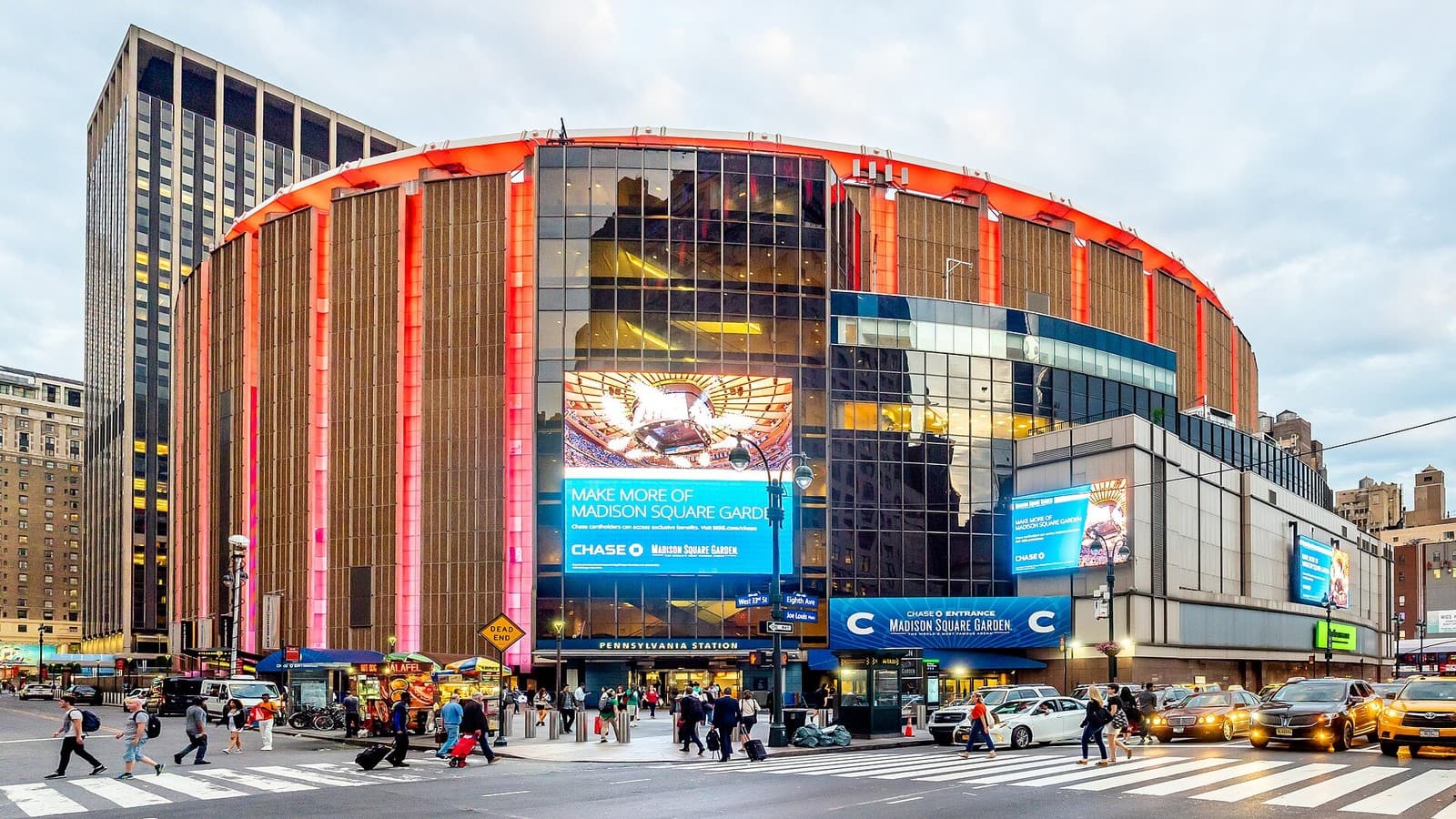
In January 2023, James Dolan defended MSG Entertainment's use of facial recognition to bar lawyers at firms suing the company, saying a property owner may choose whom it serves. Letitia James and Brad Hoylman-Sigal objected that the policy punished people for pursuing legal claims. A New York appeals court later held that state law requires MSG to admit ticket holders to concerts and theatrical shows but not sporting events, with damages as the only remedy. MSG described the exclusions as a safety measure in 2025, and WIRED reported in May 2026 that MSG had revoked the tickets of a lawyer suing it.
Read the full background
This case records the January 2023 dispute over MSG Entertainment's policy of excluding lawyers at firms with active lawsuits against the company, and what later happened to that policy. It is not about facial recognition in general. Statements are labeled by their response to the policy: one that defends it is labeled as defending it, and one that criticizes it as condemning it. The attorney general raised possible legal violations; Dolan asserted a right to control entry. As MSG described the policy on January 26, 2023, it kept those attorneys out of its venues until the litigation ended and did not cover sexual harassment or employment discrimination claims (MSG Entertainment (opens in a new tab)). In February 2023 MSG lifted the policy for firms in litigation with Tao Group entities (ABA Journal (opens in a new tab)).
In March 2023 the Appellate Division held that Civil Rights Law 40-b requires MSG venues to admit ticket holders to concerts and theatrical performances, but not sporting events, and that the law's remedy is damages rather than an injunction (decision (opens in a new tab)). Davidoff Hutcher & Citron, the first firm to sue, dropped its case in late 2023 after the litigation behind its ban was resolved (ABA Journal (opens in a new tab)). A federal judge dismissed a biometric-privacy suit tied to the exclusions in May 2024 (opinion (opens in a new tab)). The State Liquor Authority's case over the policy, which an appeals court allowed to proceed in November 2023 (decision (opens in a new tab)), ended in July 2026 when the authority dropped its access charges and three MSG venues agreed to pay $10,000 each on a separate corporate-change charge (Gothamist (opens in a new tab)).
ESPN reported in August 2025 that the exclusion list remained in effect. In a statement issued after that report, MSG said the policy is a safety and security measure, that lawyers at firms suing the company or its employees are barred from its venues until the litigation concludes, and that they are reinstated afterward (ESPN (opens in a new tab)). In April 2026 MSG revoked the tickets of a lawyer suing it on behalf of an injured police officer, according to a letter WIRED reviewed (WIRED (opens in a new tab)). We did not find a later company statement of the policy's terms, so we could not confirm its scope or exceptions as of October 2026, including whether the 2023 carve-out for sexual harassment and employment discrimination claims still applies. Bills to extend the ticket-holder law to sporting events remained in committee in both chambers of the Legislature as of October 2026 (Assembly bill A6310 (opens in a new tab)). A City Council bill to bar businesses from using biometric recognition on customers gained a majority of Council members as sponsors in August 2026 (Gothamist (opens in a new tab)). As of October 17, 2026, the Council's legislative record listed it as laid over in the Committee on Technology since a March 2026 hearing, with no vote (Int. 213 (opens in a new tab)). We did not find a public result of the attorney general's 2023 information request. Whether the policy is justified, whether admission laws cover it and whether the technology misidentifies people are separate questions.
People in this case
 Letitia JamesDirectly involved
 Brad Hoylman-SigalDirectly involved
 Jumaane WilliamsCommented
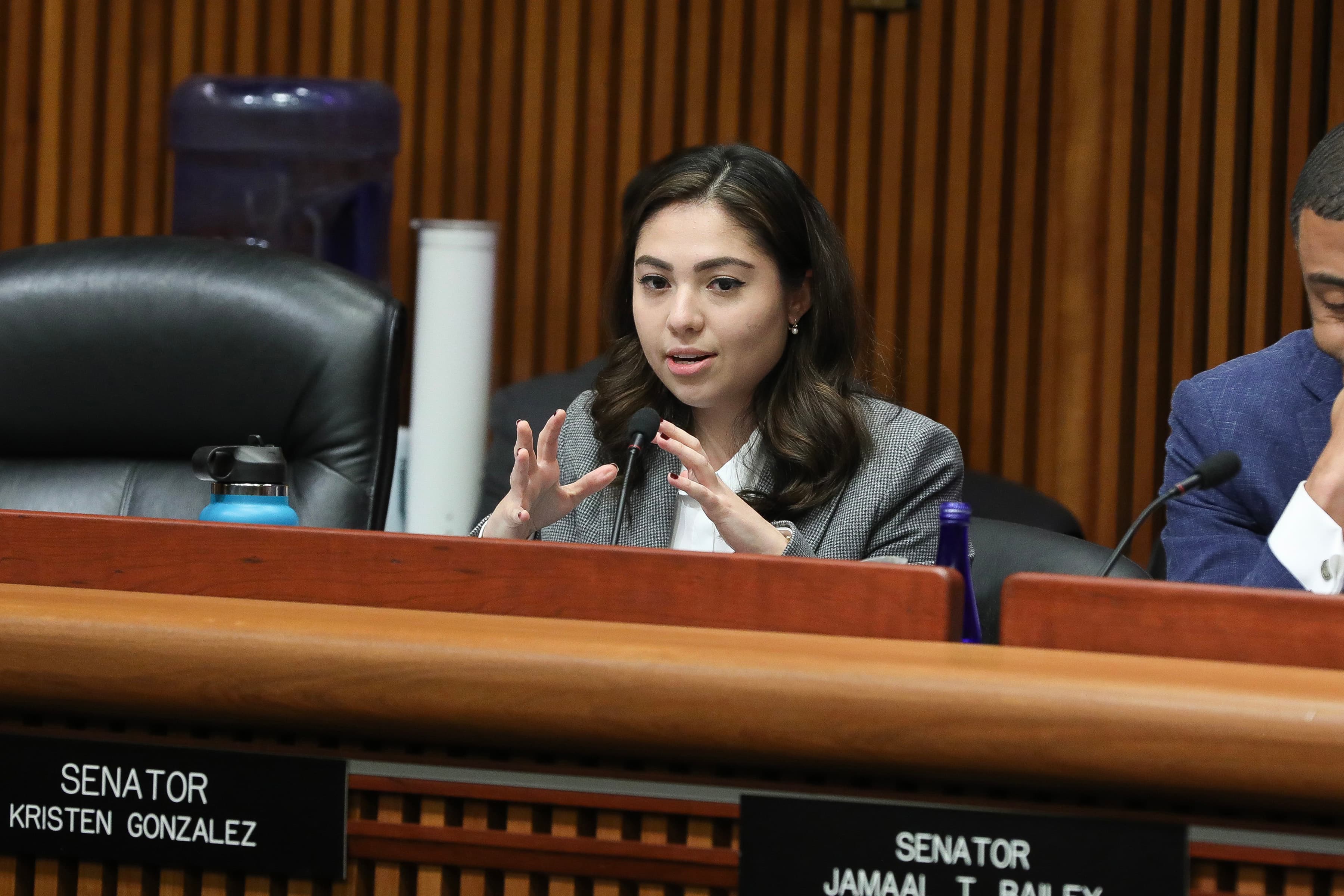 Kristen GonzalezCommented
Timeline
12 timeline entries on this page. Dates: January 25, 2023 to August 14, 2026
January 2023
Letitia James requests information about facial-recognition exclusions
The attorney general questioned whether litigation-related exclusions violated civil and human rights laws and urged MSG to reverse its policy.
[01]Letitia James
James questions the exclusion of lawyers at firms suing MSG and asks the company to reverse its policy. Her letter raises possible violations; it is not a court finding.
Letitia James seeks information about MSG's facial-recognition exclusion policy · Letitia JamesAttorney general's statement and description of the information requestDolan defends the policy; Hoylman-Sigal calls for legislation
Reaction
Dolan defended the exclusions in a FOX 5 interview. Hoylman-Sigal responded that legislators should expand admission protections to sporting events. In a statement the same day, MSG said the policy kept attorneys with active lawsuits against the company out of its venues until the litigation ended and did not cover sexual harassment or employment discrimination claims.
[02]James Dolan defends MSG's lawyer-exclusion policy in a FOX 5 interview
Dolan argues that a private venue may exclude lawyers involved in litigation against it. The article also carries MSG's explanation of the policy and its exceptions.
James Dolan defends MSG's lawyer-exclusion policy in a FOX 5 interviewFacial recognition and property-rights exchanges; company statement at the end[03]Brad Hoylman-Sigal
Hoylman-Sigal calls for legislation expanding admission protections to sporting events and criticizes the exclusion policy.
Brad Hoylman-Sigal responds to James Dolan's defense of the exclusions · Brad Hoylman-SigalHoylman-Sigal's response to the FOX 5 interview[04]Georgetown Law Technology Review analysis of MSG's facial-recognition exclusions
Rodriguez criticizes the policy while questioning whether existing state law prohibited it. His analysis argues for broader regulation of private facial-recognition uses.
Georgetown Law Technology Review analysis of MSG's facial-recognition exclusionsMarch 2023 analysis; paragraphs separating legality from the policy's merits[05]MSG Entertainment states its position regarding adverse attorney policy
MSG's statement describes the policy as barring attorneys with active lawsuits against the company until the litigation ends and says it does not cover sexual harassment or employment discrimination claims.
MSG Entertainment states its position regarding adverse attorney policyOur Policy and Our Rights section
February 2023
Assembly bill would extend ticket-holder protections to sporting events
Assemblymember Tony Simone's bill, the same as Senator Brad Hoylman-Sigal's S2424, would add sporting events to Civil Rights Law 40-b, which bars covered venues from turning away adult ticket holders. It was referred to committee in 2023 and again in 2024 and did not advance. A 2025-2026 version, A6310, the same as S9738, was referred to committee in 2025 and 2026. We found no record that either chamber had passed it as of October 2026.
[06]New York Assembly bill A3195 (2023-2024 session)
The Assembly record shows the bill, the same as S2424, adding sporting events to Civil Rights Law 40-b, and its referrals to committee in 2023 and 2024.
New York Assembly bill A3195 (2023-2024 session)Bill summary, actions and sponsor memo[07]New York Assembly bill A6310 (2025-2026 session)
The Assembly record shows the 2025-2026 version of the sporting-events bill, the same as S9738, with referrals to committee in March 2025 and January 2026. The sponsor memo cites MSG's exclusions of ticket holders.
New York Assembly bill A6310 (2025-2026 session)Bill summary, actions and sponsor memoMSG exempts lawyers in Tao Group litigation from the policy
MSG Entertainment said it had lifted its adverse attorney policy for litigation pending with Tao Group Hospitality entities while it explored a sale of its majority stake in Tao. The company said the policy stayed in place for other firms with active litigation against it.
[08]Madison Square Garden lifts ban on some lawyers as it explores sale of Tao Group
The ABA Journal quotes MSG's announcement lifting the policy for litigation with Tao Group entities and keeping it for other firms with active litigation against the company.
Madison Square Garden lifts ban on some lawyers as it explores sale of Tao GroupArticle text quoting MSG's February 6 release
March 2023
Appeals court vacates the injunction in Hutcher's suit over the ban
The Appellate Division, First Department, agreed with the trial court that Civil Rights Law 40-b requires MSG venues to admit ticket holders to theatrical performances and concerts but not to sporting events. It vacated the November 2022 preliminary injunction, holding that the statute's damages remedy is the plaintiffs' only remedy.
[09]Hutcher v Madison Square Garden Entertainment Corp., March 2023 appellate decision
The First Department held that Civil Rights Law 40-b covers MSG venues when they host theatrical performances or concerts but not sporting events. It vacated the preliminary injunction because the statute's damages remedy is the plaintiffs' only remedy.
Hutcher v Madison Square Garden Entertainment Corp., March 2023 appellate decisionDecision and order, 2023 NY Slip Op 01646
November 2023
Appeals court lets the Liquor Authority case against MSG proceed
The Appellate Division affirmed an April 2023 judgment dismissing MSG's bid to stop a State Liquor Authority proceeding. The authority had charged that the attorney exclusions meant the venues were no longer open to the general public. The court held that the authority had not exceeded its power and that MSG had to complete the administrative hearing before seeking court review. It quashed one investigatory subpoena the authority had sent to a nonparty.
[10]Matter of Madison Square Garden Entertainment Corp. v New York State Liquor Authority, November 2023 appellate decision
The court affirmed the dismissal of MSG's challenge to a State Liquor Authority proceeding over its attorney exclusions, required MSG to complete the administrative hearing first, and quashed one subpoena issued to a nonparty.
Matter of Madison Square Garden Entertainment Corp. v New York State Liquor Authority, November 2023 appellate decisionDecision and order, 2023 NY Slip Op 06090
December 2023
Appeals court rules in the Hutcher case as the firm drops its suit
The Appellate Division affirmed the denial of MSG's motion to dismiss the Civil Rights Law 40-b claims and reversed, as premature, a partial summary judgment of $662.35 for one of the firm's lawyers. The plaintiffs had told the court they would not pursue the case. Larry Hutcher said the firm dropped its suit after the ticket-reseller litigation that led to its ban was resolved, the ABA Journal reported.
[11]Hutcher v Madison Square Garden Entertainment Corp., December 2023 appellate decision
The court affirmed the denial of MSG's motion to dismiss the Civil Rights Law 40-b claims and reversed a partial summary judgment of $662.35 as premature. It notes that the plaintiffs said they would not pursue the case.
Hutcher v Madison Square Garden Entertainment Corp., December 2023 appellate decisionDecision and order, 2023 NY Slip Op 06314[12]Lawsuits challenging Madison Square Garden's lawyer ban are abating; only 2 remain
The ABA Journal reports that Davidoff Hutcher & Citron dropped its suit after the ticket-reseller case behind its ban was resolved, and that two challenges to the policy remained.
May 2024
Federal judge dismisses a biometric-privacy suit tied to the exclusions
Judge Lewis A. Kaplan dismissed claims by Aaron Gross and Jacob Blumenkrantz that MSG violated a New York City biometric privacy law by sharing customers' biometric data with a vendor to keep out lawyers at firms suing it. The court ruled that the law bars profiting from the data transaction itself and does not reach every indirect benefit a company draws from sharing the data.
[13]Gross v. Madison Square Garden Entertainment Corp., memorandum and opinion
Judge Kaplan dismissed claims that MSG violated New York City's biometric identifier law by sharing biometric data with a vendor to keep out lawyers at firms suing it. The opinion addresses the city law, not the merits of the exclusion policy.
Gross v. Madison Square Garden Entertainment Corp., memorandum and opinionDocument 46, Case 1:23-cv-03380 (S.D.N.Y.), pages 2-4
August 2025
MSG says lawyers suing it stay barred until their cases end
ESPN reported that MSG's exclusion list remained in effect and that, according to reports, more than a thousand lawyers at about 90 firms had been barred since 2022. In a statement issued after the story was published, MSG said the policy exists "to ensure the safety and security of our patrons and employees" and that firms suing the company or its employees "are deemed to be hostile and are prohibited from patronizing our venues until the litigation is concluded." MSG said their lawyers are reinstated once the litigation ends.
[14]ESPN reports that MSG's exclusion list remains in effect
Devin Gordon's August 2025 ESPN feature describes MSG's letters barring lawyers at firms suing the company and quotes a statement MSG issued after publication. Figures on the number of barred lawyers are attributed to other reports.
ESPN reports that MSG's exclusion list remains in effectSections on the attorney exclusion letters and MSG's statement
April 2026
MSG revokes the tickets of a lawyer suing it for an injured officer
WIRED reported that a letter to attorney John Scola dated April 30, 2026, said "Any tickets to MSG Venues ... are hereby revoked." Scola had sued MSG in February on behalf of NYPD officer John Przybyszewski, who alleges injuries suffered while working security at a 2025 boxing match at an MSG venue. MSG did not respond to WIRED's request for comment.
[15]A New York Cop Got Injured at a Boxing Match. Now Madison Square Garden Is Banning His Lawyer
WIRED reports that an April 30, 2026, letter revoked attorney John Scola's tickets to MSG venues after he sued MSG for an injured NYPD officer. MSG did not respond to WIRED's request for comment.
A New York Cop Got Injured at a Boxing Match. Now Madison Square Garden Is Banning His LawyerArticle text describing the April 30 letter
July 2026
Liquor Authority drops its access charges against MSG venues
Gothamist reported on July 22, 2026, that the State Liquor Authority had dropped, the previous week, its charges that the attorney exclusions violated the public-access rule for liquor licensees. Under the agreement, Madison Square Garden, Radio City Music Hall and the Beacon Theatre each agreed to pay $10,000 on a separate charge over an unauthorized corporate change. An authority spokesperson said the withdrawal did not endorse any exclusion policy. An MSG spokesperson said the fines concerned an administrative error.
[16]State drops case over MSG lawyer blacklist, issues $30K fine for paperwork
Gothamist reports that the State Liquor Authority dropped its access charges against three MSG venues in an agreement under which each venue agreed to pay a $10,000 penalty on a corporate-change charge. It quotes the authority and an MSG spokesperson.
August 2026
City Council bill to bar face scans of customers gains majority support
A City Council bill that would bar businesses open to the public, including arenas and concert venues, from using biometric recognition on customers had 28 co-sponsors, a majority of the 51-member Council, Gothamist reported. Councilmember Shahana Hanif announced the support of Mayor Zohran Mamdani's administration at a rally outside Madison Square Garden, where speakers cited Dolan's use of the technology to bar attorneys suing the venue. The bill still lacked the support of Speaker Julie Menin.
[17]Momentum builds to ban Madison Square Garden's 'surveillance empire'
Gothamist reports that a City Council bill restricting businesses' use of facial recognition on customers gained a majority of Council sponsors and the Mamdani administration's backing. It quotes an MSG spokesperson.
[18]New York City Council Int. 213-2026, biometric recognition in public accommodations
The Council's legislative record lists the bill's sponsors and actions: introduced and referred on January 29, 2026, heard and laid over by the Committee on Technology on March 2, 2026.
New York City Council Int. 213-2026, biometric recognition in public accommodationsLegislation details and history
Claims
Claims separate what was said from what is contested. Follow each source for the original wording and context.
What's disputed
Disputed claim
MSG is justified in excluding lawyers at firms litigating against it as a matter of private property ownership.
Sources (1)
- James Dolan defends MSG's lawyer-exclusion policy in a FOX 5 interviewFacial recognition and property-rights exchanges; company statement at the end
Response record
Responses
Choose one response filter, or select All responses to see the full record.
13 responses. First 6 shown initially. Newest first.
 Electronic Frontier FoundationElectronic Frontier Foundation, in regulatory comments
Before this statement
EFF's comments address the privacy and civil-rights effects of commercial data use.
"Madison Square Gardens was recently caught using this technology to exclude employees of a law firm that sued the venue’s parent company. ... A business could easily extend this kind of “enemies list” to people who, online or on the sidewalk outside, protest a venue’s discriminatory policies."
CondemnedCase context: James Dolan defends MSG's facial-recognition lawyer exclusions; New York officials object
Full statement and sources
EFF criticizes excluding employees of a law firm that sued MSG's parent company and warns that similar lists could target protesters.
After the statement
The comments use MSG's exclusions as an example of how businesses could use facial recognition against people who oppose them.
EFF warns that venue blacklists can extend to criticsSection on discriminatory automated decisions, page 7Why this label?
Reference point: MSG's policy of excluding lawyers at firms suing it. EFF cites MSG's exclusion of a law firm's employees as an example of discriminatory face recognition and warns that a business could extend such a list to protesters. Mixed or conditional loses because the comments offer no defense or qualification of that use.
This label describes the statement's response within the context above.
New York Civil Liberties UnionNYCLU, through privacy and technology testimony by Daniel Schwarz Before this statement
NYCLU submitted testimony to a City Council hearing on facial recognition in businesses.
"The widely reported deployment of facial recognition at Madison Square Garden to ban people from the stadium that had already purchased tickets ... illustrates the dangers from the growing surveillance industry and the urgent need for comprehensive privacy protections."
CondemnedCase context: James Dolan defends MSG's facial-recognition lawyer exclusions; New York officials object
Full statement and sources
NYCLU cites MSG's use of facial recognition to ban ticket holders as an example of surveillance dangers requiring privacy protections.
After the statement
The testimony also raises concerns about storing biometric data and about government surveillance.
NYCLU urges biometric privacy safeguards after MSG exclusionsTestimony, pages 1-2 and 5-6Why this label?
Reference point: MSG's policy of excluding lawyers at firms suing it. The NYCLU testimony says MSG's use of facial recognition to ban ticket holders illustrates the dangers of the surveillance industry. The closest alternative is that the passage only gives an example, but it attaches a negative evaluation to MSG's conduct, so it is criticism.
This label describes the statement's response within the context above.
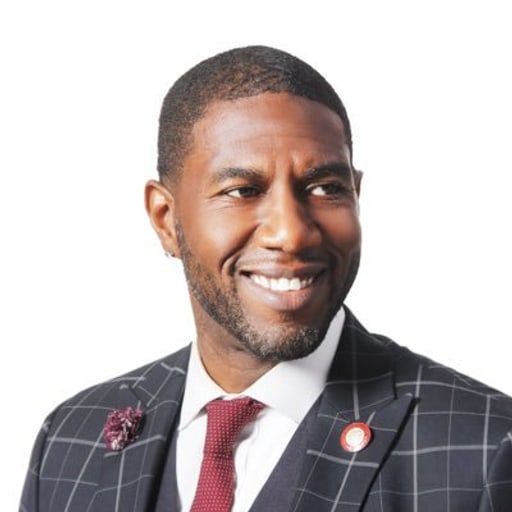 Jumaane WilliamsNew York City public advocate, in City Council testimony
Before this statement
Williams spoke at a City Council hearing on businesses' use of facial recognition, including MSG's venue exclusions.
"Individuals should not be removed from a place of business, because their employer is involved in legal action against said business."
CondemnedCase context: James Dolan defends MSG's facial-recognition lawyer exclusions; New York officials object
Full statement and sources
Williams criticizes excluding patrons because their employer is involved in legal action against a business and calls for stronger facial-recognition rules.
After the statement
Williams's testimony also addresses wider concerns about corporate and government use of facial recognition.
Jumaane Williams condemns facial-recognition blacklistingStatement as delivered to the City CouncilWhy this label?
Reference point: MSG's policy of excluding lawyers at firms suing it. Williams says people should not be removed from a business because their employer is in litigation against it, which rejects the policy directly. Mixed or conditional loses because the testimony sets no condition on that view.
This label describes the statement's response within the context above.
New York State Bar AssociationNew York State Bar Association, through its president Before this statement
In early 2023, MSG was using facial recognition to exclude lawyers at firms suing the company.
"The use of facial recognition software to exclude members of law firms from a Knicks basketball game or a Taylor Swift concert discriminates against lawyers for doing their jobs"
CondemnedCase context: James Dolan defends MSG's facial-recognition lawyer exclusions; New York officials object
Full statement and sources
Through president Sherry Levin Wallach, the association condemns facial-recognition exclusions tied to lawyers representing clients against a venue.
After the statement
The association launched a working group to study how the technology affects lawyers' ability to represent clients.
State Bar Association examines facial-recognition retaliationPresident Sherry Levin Wallach's statementWhy this label?
Reference point: MSG's policy of excluding lawyers at firms suing it. The association's president says using facial recognition to exclude members of law firms discriminates against lawyers for doing their jobs. Challenged the characterization loses because the statement rejects the practice rather than only disputing how it is described.
This label describes the statement's response within the context above.
James L. DolanMSG Entertainment chief executive, interviewed on Good Day New YorkDirectly involved Before this statement
Dolan appeared on Good Day New York to discuss facial recognition and MSG's lawyer exclusions.
"This is just about owning property, you know, any, a bakery, right? A restaurant, right? You get to say who you serve, right?"
Defended or excusedCase context: James Dolan defends MSG's facial-recognition lawyer exclusions; New York officials object
Full statement and sources
Dolan defends the exclusions as a private venue owner's decision about whom to admit.
After the statement
Dolan compared excluding litigating lawyers with a bakery declining business from a customer suing it.
James Dolan defends MSG's lawyer-exclusion policy in a FOX 5 interviewFacial recognition and property-rights exchanges; company statement at the endWhy this label?
Reference point: MSG's policy of excluding lawyers at firms with active lawsuits against it. Dolan argues that a property owner may choose whom it serves, which justifies the policy. Challenged the characterization is the closest alternative and loses because Dolan defends the policy itself rather than only disputing how critics describe it.
This label describes the statement's response within the context above.
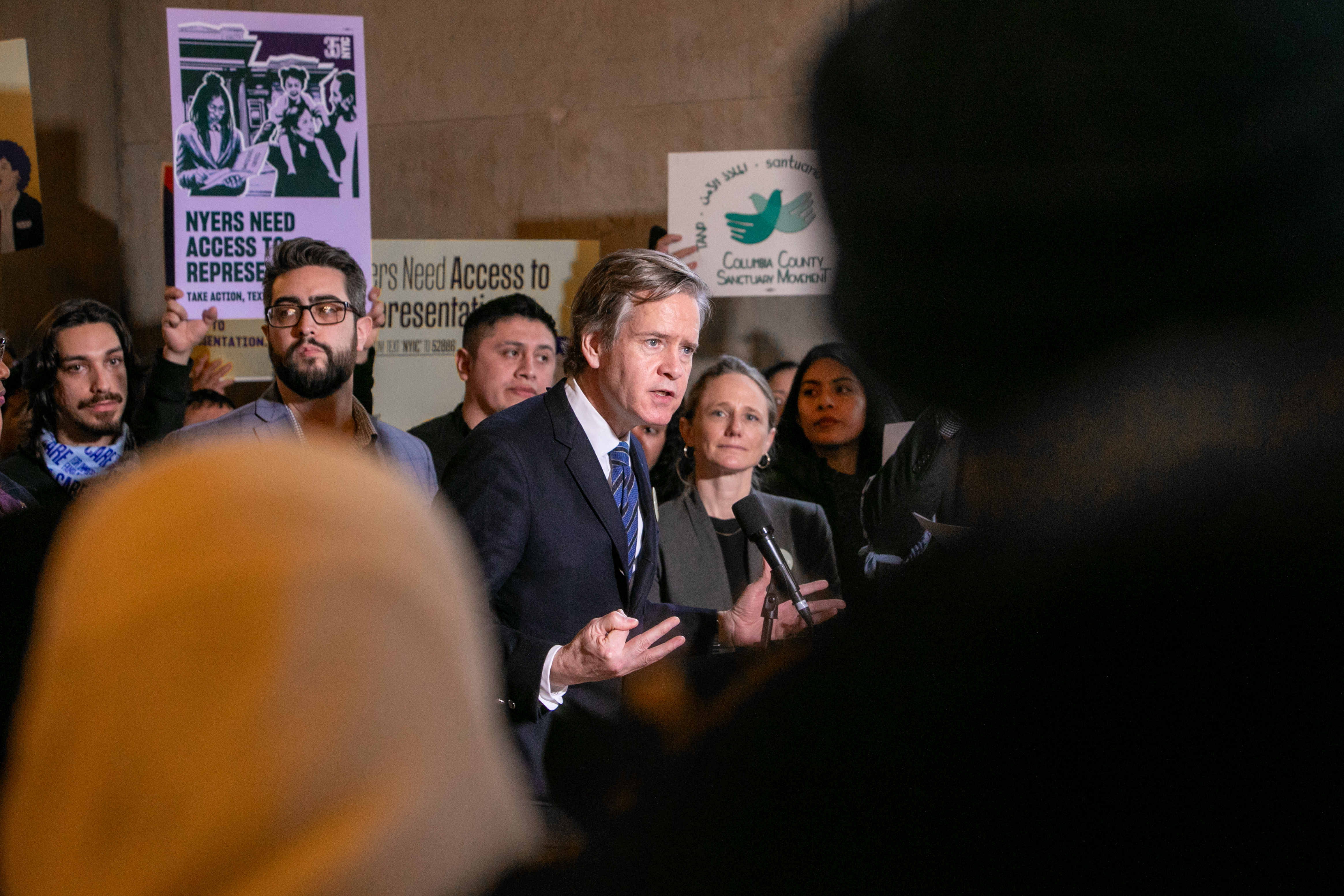 Brad Hoylman-SigalNew York state senatorDirectly involved
Before this statement
Hoylman-Sigal responded to Dolan's FOX 5 interview.
"New York shouldn’t allow petty tyrants to impose their warped fantasies on the public while reaping millions each year from taxpayer subsidies."
CondemnedCase context: James Dolan defends MSG's facial-recognition lawyer exclusions; New York officials object
Full statement and sources
Responding to Dolan's defense of the exclusions, Hoylman-Sigal said New York should not let "petty tyrants" impose their will on the public while collecting taxpayer subsidies, and called for closing the sporting-event exception in the state Civil Rights Law that allows Dolan to ban fans from Madison Square Garden.
After the statement
Hoylman-Sigal then thanked the attorney general and the Manhattan district attorney for opening inquiries into what the statement calls Dolan's vindictive business practices.
Brad Hoylman-Sigal responds to James Dolan's defense of the exclusions · Brad Hoylman-SigalHoylman-Sigal's response to the FOX 5 interviewWhy this label?
Reference point: MSG's policy of excluding lawyers at firms suing it. Hoylman-Sigal calls Dolan a petty tyrant over the exclusions and seeks legislation to stop them. Challenged the characterization loses because the statement attacks the practice itself rather than MSG's account of it.
This label describes the statement's response within the context above.
Show fewer responses
 Letitia JamesNew York attorney generalDirectly involved
Before this statement
The attorney general sent MSG an information request about facial recognition and litigation-related exclusions.
"MSG Entertainment cannot fight their legal battles in their own arenas ... we’re urging MSG Entertainment to reverse this policy."
CondemnedCase context: James Dolan defends MSG's facial-recognition lawyer exclusions; New York officials object
Full statement and sources
James criticizes the exclusions and calls on MSG to reverse the policy while seeking information about possible legal violations.
After the statement
The request raises possible violations of civil and human rights laws; it does not establish a violation.
Letitia James seeks information about MSG's facial-recognition exclusion policy · Letitia JamesAttorney general's statement and description of the information requestWhy this label?
Reference point: MSG's policy of excluding lawyers at firms suing it. James says MSG cannot fight its legal battles in its arenas and urges the company to reverse the policy, which is direct criticism. Mixed or conditional loses: the attorney general's letter asks about possible legal violations, but the stated view of the policy carries no condition.
This label describes the statement's response within the context above.
Larry K. HutcherAttorney, Knicks season-ticket holder and plaintiff suing MSG over the exclusions Before this statement
MSG used facial recognition to enforce a policy excluding attorneys at firms in litigation with the company, including attorneys not personally handling the litigation.
"It's clear that everyone recognizes that Dolan has acted in an arbitrary and capricious manner, it is based in a mean-spirited and vindictive way."
CondemnedCase context: James Dolan defends MSG's facial-recognition lawyer exclusions; New York officials object
Full statement and sources
Hutcher calls Dolan's lawyer ban arbitrary and capricious and welcomes the proposed law.
After the statement
Hutcher's firm was suing MSG at the time. In the same report, MSG defended its policy and criticized the proposed legislation.
Larry Hutcher condemns MSG exclusions and supports legislationHutcher interviewWhy this label?
Reference point: MSG's policy of excluding lawyers at firms suing it. Hutcher, a plaintiff suing MSG over the policy, says Dolan acted arbitrarily and capriciously and in a mean-spirited and vindictive way. Challenged the characterization loses because Hutcher criticizes the exclusions themselves.
This label describes the statement's response within the context above.
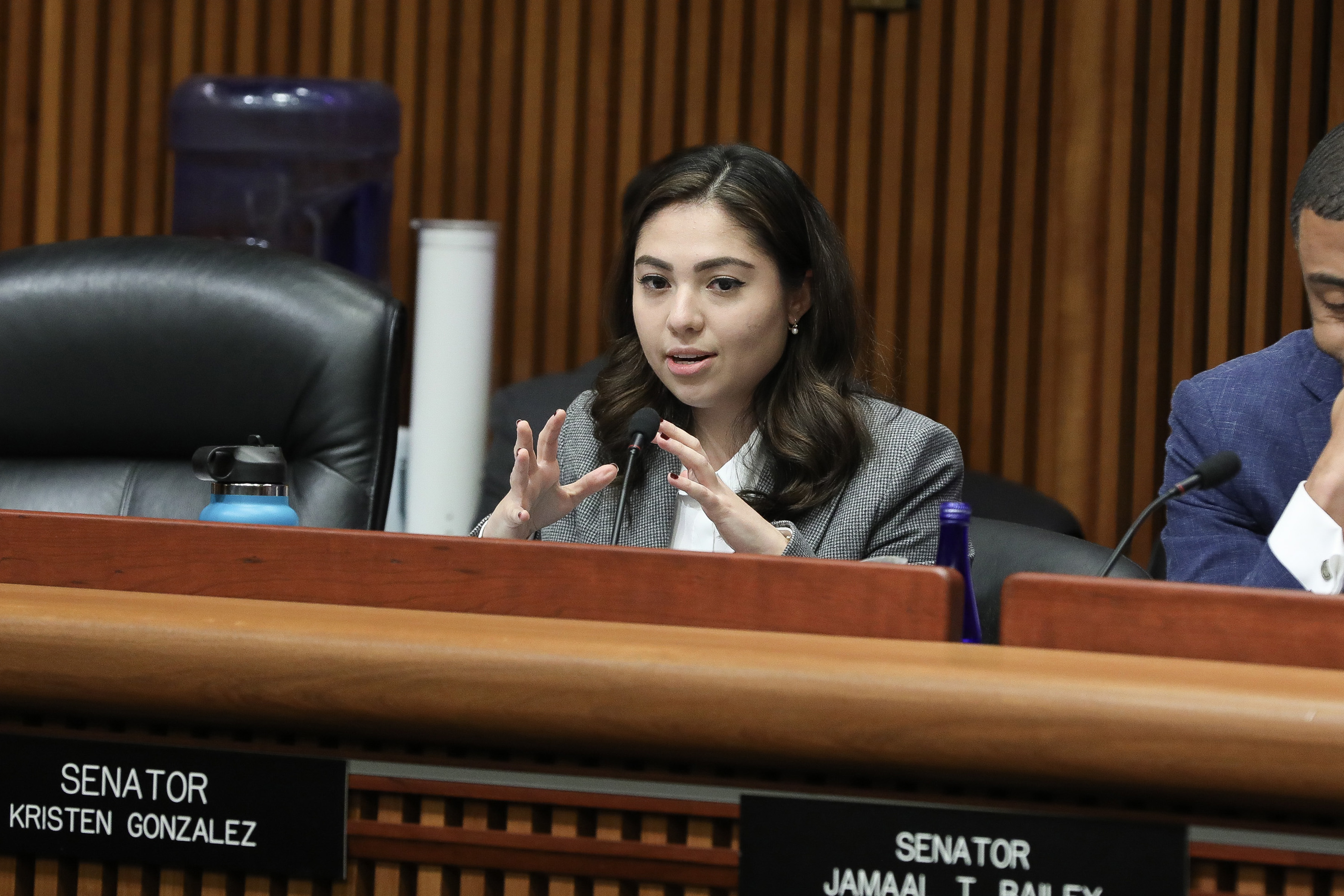 Kristen GonzalezNew York state senator and technology committee chair
Before this statement
Elected officials and privacy advocates rallied after MSG used facial recognition to exclude an attorney from a venue.
"If Madison Square Garden can use biometric technology to ban an attorney from its premises, what recourse is there for the average New Yorker? I'm alarmed by the lack of oversight regulating the use of biometric technologies by both private and public entities in the State."
CondemnedCase context: James Dolan defends MSG's facial-recognition lawyer exclusions; New York officials object
Full statement and sources
Gonzalez expresses alarm about biometric oversight after MSG excluded an attorney and calls for privacy regulation.
After the statement
In the same statement, Gonzalez said it is long overdue for the state to step in and enact regulations protecting the right to privacy and guarding against discrimination.
New York officials and privacy advocates oppose MSG's facial-recognition exclusionsStatements by Gonzalez, Krueger, Simone and Fox CahnWhy this label?
Reference point: MSG's policy of excluding lawyers at firms suing it. Gonzalez asks what recourse ordinary New Yorkers have if MSG can ban an attorney with biometric technology and says the lack of oversight is alarming. The question treats the exclusion as a misuse of the technology, so the statement is criticism. Mixed or conditional loses because Gonzalez expresses no support for any part of the practice.
This label describes the statement's response within the context above.
Liz KruegerNew York state senator Before this statement
Elected officials and privacy advocates rallied after MSG used facial recognition to exclude an attorney from a venue.
"MSG’s use of facial recognition technology to retaliate against employees of law firms engaged in litigation against them is deeply concerning. It is an unacceptable invasion of the privacy of all their patrons, and a blatant attempt to intimidate and bully those who might want to pursue their day in court against the company."
CondemnedCase context: James Dolan defends MSG's facial-recognition lawyer exclusions; New York officials object
Full statement and sources
Krueger condemns MSG's lawyer exclusions as retaliation and urges scrutiny of its public permits and benefits.
After the statement
Krueger added that the city and state should reconsider the permits, licenses and benefits they provide to MSG.
New York officials and privacy advocates oppose MSG's facial-recognition exclusionsStatements by Gonzalez, Krueger, Simone and Fox CahnWhy this label?
Reference point: MSG's policy of excluding lawyers at firms suing it. Krueger calls the policy retaliation, an invasion of patrons' privacy and an attempt to intimidate people who might sue the company. Challenged the characterization loses because Krueger criticizes the conduct itself.
This label describes the statement's response within the context above.
Tony SimoneNew York state assemblymember Before this statement
Elected officials and privacy advocates rallied after MSG used facial recognition to exclude an attorney from a venue.
"The use of facial recognition technology by MSG Entertainment to ban members of the public, not for safety reasons, but as perceived legal adversaries is incredibly disturbing ... Any policies that bar members of the public for non-safety reasons must cease immediately."
CondemnedCase context: James Dolan defends MSG's facial-recognition lawyer exclusions; New York officials object
Full statement and sources
Simone condemns excluding perceived legal adversaries rather than security risks and demands an end to the policy.
After the statement
Simone's statement also notes that MSG operates under a city special permit, holds State Liquor Authority licenses and receives a state tax abatement.
New York officials and privacy advocates oppose MSG's facial-recognition exclusionsStatements by Gonzalez, Krueger, Simone and Fox CahnWhy this label?
Reference point: MSG's policy of excluding lawyers at firms suing it. Simone calls banning perceived legal adversaries, rather than safety risks, disturbing and says such policies must stop. Minimized loses because Simone does not downplay the policy in any way.
This label describes the statement's response within the context above.
 Surveillance Technology Oversight ProjectS.T.O.P., through executive director Albert Fox Cahn
Before this statement
Elected officials and privacy advocates rallied after MSG used facial recognition to exclude an attorney from a venue.
"If MSG can do this to attorneys suing the company, they can also target employees and customers who sue the company for violating the law. It’s terrifying to think that other companies might follow suit, and that anytime you exercise your rights in court it will mean getting banned from public life."
CondemnedCase context: James Dolan defends MSG's facial-recognition lawyer exclusions; New York officials object
Full statement and sources
Through Albert Fox Cahn, S.T.O.P. condemns MSG's exclusions and warns that other businesses could punish customers for exercising legal rights.
After the statement
The coalition called on MSG to adopt a written policy for destroying biometric data once its initial purpose was complete.
New York officials and privacy advocates oppose MSG's facial-recognition exclusionsStatements by Gonzalez, Krueger, Simone and Fox CahnWhy this label?
Reference point: MSG's policy of excluding lawyers at firms suing it. Speaking for S.T.O.P., Albert Fox Cahn warns that the same approach could be used against employees and customers who sue and calls that prospect terrifying. The warning is criticism of the policy itself, so Challenged the characterization loses.
This label describes the statement's response within the context above.
Samuel L. DavisPartner at the firm employing excluded attorney Kelly Conlon Before this statement
MSG used facial recognition to enforce a policy excluding attorneys at firms in litigation with the company, including attorneys not personally handling the litigation.
"This whole scheme is a pretext for doing collective punishment on adversaries who would dare sue MSG in their multi-billion dollar network"
CondemnedCase context: James Dolan defends MSG's facial-recognition lawyer exclusions; New York officials object
Full statement and sources
Davis calls excluding lawyers because of their employer's litigation collective punishment.
After the statement
MSG says litigation creates an adverse environment and that only Conlon was excluded, not the rest of the Girl Scout group.
Sam Davis challenges MSG's exclusion of lawyersSam Davis statementWhy this label?
Reference point: MSG's policy of excluding lawyers at firms suing it. Davis, a partner at the firm where Kelly Conlon worked, calls the policy a pretext for collective punishment of people who sue MSG. Challenged the characterization loses because Davis rejects the policy itself rather than MSG's description of it.
This label describes the statement's response within the context above.
Sources
(25)
Interview
James Dolan defends MSG's lawyer-exclusion policy in a FOX 5 interview
Relevant passage: Facial recognition and property-rights exchanges; company statement at the end
About this source
Dolan argues that a private venue may exclude lawyers involved in litigation against it. The article also carries MSG's explanation of the policy and its exceptions.
- Author
- FOX 5 NY Staff
- Published
- Accessed
Original text
New York City Council Int. 213-2026, biometric recognition in public accommodations
Relevant passage: Legislation details and history
About this source
The Council's legislative record lists the bill's sponsors and actions: introduced and referred on January 29, 2026, heard and laid over by the Committee on Technology on March 2, 2026.
- Published
- Accessed
Reporting
ESPN reports that MSG's exclusion list remains in effect
Relevant passage: Sections on the attorney exclusion letters and MSG's statement
About this source
Devin Gordon's August 2025 ESPN feature describes MSG's letters barring lawyers at firms suing the company and quotes a statement MSG issued after publication. Figures on the number of barred lawyers are attributed to other reports.
- Published
- Accessed
Official statement
MSG Entertainment states its position regarding adverse attorney policy
Relevant passage: Our Policy and Our Rights section
About this source
MSG's statement describes the policy as barring attorneys with active lawsuits against the company until the litigation ends and says it does not cover sexual harassment or employment discrimination claims.
- Author
- MSG Entertainment
- Published
- Accessed
Reporting
Momentum builds to ban Madison Square Garden's 'surveillance empire'
Relevant passage: Article text
About this source
Gothamist reports that a City Council bill restricting businesses' use of facial recognition on customers gained a majority of Council sponsors and the Mamdani administration's backing. It quotes an MSG spokesperson.
- Author
- Charles Lane
- Published
- Accessed
Original text
New York Assembly bill A6310 (2025-2026 session)
Relevant passage: Bill summary, actions and sponsor memo
About this source
The Assembly record shows the 2025-2026 version of the sporting-events bill, the same as S9738, with referrals to committee in March 2025 and January 2026. The sponsor memo cites MSG's exclusions of ticket holders.
- Author
- New York State Assembly
- Published
- Accessed
Original text
New York Assembly bill A3195 (2023-2024 session)
Relevant passage: Bill summary, actions and sponsor memo
About this source
The Assembly record shows the bill, the same as S2424, adding sporting events to Civil Rights Law 40-b, and its referrals to committee in 2023 and 2024.
- Author
- New York State Assembly
- Published
- Accessed
Reporting
State drops case over MSG lawyer blacklist, issues $30K fine for paperwork
Relevant passage: Article text
About this source
Gothamist reports that the State Liquor Authority dropped its access charges against three MSG venues in an agreement under which each venue agreed to pay a $10,000 penalty on a corporate-change charge. It quotes the authority and an MSG spokesperson.
- Author
- Ryan Kost
- Published
- Accessed
Reporting
A New York Cop Got Injured at a Boxing Match. Now Madison Square Garden Is Banning His Lawyer
Relevant passage: Article text describing the April 30 letter
About this source
WIRED reports that an April 30, 2026, letter revoked attorney John Scola's tickets to MSG venues after he sued MSG for an injured NYPD officer. MSG did not respond to WIRED's request for comment.
- Author
- Noah Shachtman
- Published
- Accessed
Reporting
Madison Square Garden lifts ban on some lawyers as it explores sale of Tao Group
Relevant passage: Article text quoting MSG's February 6 release
About this source
The ABA Journal quotes MSG's announcement lifting the policy for litigation with Tao Group entities and keeping it for other firms with active litigation against the company.
- Author
- Debra Cassens Weiss
- Published
- Accessed
Reporting
Lawsuits challenging Madison Square Garden's lawyer ban are abating; only 2 remain
Relevant passage: Article text
About this source
The ABA Journal reports that Davidoff Hutcher & Citron dropped its suit after the ticket-reseller case behind its ban was resolved, and that two challenges to the policy remained.
- Author
- Debra Cassens Weiss
- Published
- Accessed
Original text
Gross v. Madison Square Garden Entertainment Corp., memorandum and opinion
Relevant passage: Document 46, Case 1:23-cv-03380 (S.D.N.Y.), pages 2-4
About this source
Judge Kaplan dismissed claims that MSG violated New York City's biometric identifier law by sharing biometric data with a vendor to keep out lawyers at firms suing it. The opinion addresses the city law, not the merits of the exclusion policy.
- Author
- Lewis A. Kaplan, U.S. District Judge
- Published
- Accessed
Original text
Hutcher v Madison Square Garden Entertainment Corp., December 2023 appellate decision
Relevant passage: Decision and order, 2023 NY Slip Op 06314
About this source
The court affirmed the denial of MSG's motion to dismiss the Civil Rights Law 40-b claims and reversed a partial summary judgment of $662.35 as premature. It notes that the plaintiffs said they would not pursue the case.
- Author
- Appellate Division, First Department
- Published
- Accessed
Original text
Matter of Madison Square Garden Entertainment Corp. v New York State Liquor Authority, November 2023 appellate decision
Relevant passage: Decision and order, 2023 NY Slip Op 06090
About this source
The court affirmed the dismissal of MSG's challenge to a State Liquor Authority proceeding over its attorney exclusions, required MSG to complete the administrative hearing first, and quashed one subpoena issued to a nonparty.
- Author
- Appellate Division, First Department
- Published
- Accessed
Original text
Hutcher v Madison Square Garden Entertainment Corp., March 2023 appellate decision
Relevant passage: Decision and order, 2023 NY Slip Op 01646
About this source
The First Department held that Civil Rights Law 40-b covers MSG venues when they host theatrical performances or concerts but not sporting events. It vacated the preliminary injunction because the statute's damages remedy is the plaintiffs' only remedy.
- Author
- Appellate Division, First Department
- Published
- Accessed
Reporting
Sam Davis challenges MSG's exclusion of lawyers
Relevant passage: Sam Davis statement
About this source
NBC New York interviews Kelly Conlon and Sam Davis after Conlon was barred from a Rockettes show. MSG defends its litigation policy and says other members of the group could attend.
- Published
- Accessed
Reporting
Larry Hutcher condemns MSG exclusions and supports legislation
Relevant passage: Hutcher interview
About this source
NBC New York reports Hutcher's criticism of the lawyer ban and support for legislation. Its account also includes MSG's defense of the policy.
- Published
- Accessed
Original text
EFF warns that venue blacklists can extend to critics
Relevant passage: Section on discriminatory automated decisions, page 7
About this source
EFF's comments to NTIA identify MSG's lawyer exclusions as an example of discriminatory biometric surveillance and argue for privacy safeguards.
- Published
- Accessed
Original text
NYCLU urges biometric privacy safeguards after MSG exclusions
Relevant passage: Testimony, pages 1-2 and 5-6
About this source
Daniel Schwarz testifies on behalf of the NYCLU, citing MSG as an example of surveillance risks and seeking meaningful consent and limits on use, retention and sharing.
- Published
- Accessed
Official statement
State Bar Association examines facial-recognition retaliation
Relevant passage: President Sherry Levin Wallach's statement
About this source
The association announces a working group and quotes its president opposing the use of facial recognition to exclude lawyers because their firms represent clients suing a venue.
- Published
- Accessed
Official statement
New York officials and privacy advocates oppose MSG's facial-recognition exclusions
Relevant passage: Statements by Gonzalez, Krueger, Simone and Fox Cahn
About this source
A state Senate release quotes lawmakers and S.T.O.P. opposing the exclusion of attorneys based on their employers' litigation. It includes requests for privacy safeguards and scrutiny of public benefits.
- Published
- Accessed
Official statement
Jumaane Williams condemns facial-recognition blacklisting
Relevant passage: Statement as delivered to the City Council
About this source
The public advocate's full hearing statement criticizes excluding people based on their employer's litigation and calls for government restrictions.
- Published
- Accessed
Analysis
Georgetown Law Technology Review analysis of MSG's facial-recognition exclusions
Relevant passage: March 2023 analysis; paragraphs separating legality from the policy's merits
About this source
Rodriguez criticizes the policy while questioning whether existing state law prohibited it. His analysis argues for broader regulation of private facial-recognition uses.
- Author
- Jon Rodriguez
- Published
- Accessed
Official statement
Letitia James seeks information about MSG's facial-recognition exclusion policy
Relevant passage: Attorney general's statement and description of the information request
About this source
James questions the exclusion of lawyers at firms suing MSG and asks the company to reverse its policy. Her letter raises possible violations; it is not a court finding.
- Published
- Accessed
Official statement
Brad Hoylman-Sigal responds to James Dolan's defense of the exclusions
Relevant passage: Hoylman-Sigal's response to the FOX 5 interview
About this source
Hoylman-Sigal calls for legislation expanding admission protections to sporting events and criticizes the exclusion policy.
- Published
- Accessed
Share or embed this case
The embed keeps its attribution link to The Dispute Index. Credit the image to The Dispute Index and link to the case page.
Cite this record
- Publisher
- The Dispute Index
- Title
- James Dolan defends MSG's facial-recognition lawyer exclusions; New York officials object
- First published
- Last updated
- Permalink
- https://disputeindex.com/cases/madison-square-garden-james-dolan-facial-recognition-lawyer-ban
The Dispute Index. "James Dolan defends MSG's facial-recognition lawyer exclusions; New York officials object". First published: 2026-10-18. Last updated: 2026-10-18. https://disputeindex.com/cases/madison-square-garden-james-dolan-facial-recognition-lawyer-ban