
Did a deputy's warrantless query of Flock license-plate data violate the Fourth Amendment, as a federal judge in Oklahoma ruled?
On October 1, 2026, a federal judge in Oklahoma held that a deputy's warrantless search of a car's month of license-plate-reader records violated the Fourth Amendment. Prosecutors had argued plates on public roads carry no privacy interest, and Flock expects reversal.
Claim in dispute
A Tulsa County deputy's warrantless query of the Flock and VehicleManager plate-reader databases for the historical locations of a Mazda with a California plate, which returned more than 50 records across several states over about a month, was a search under the Fourth Amendment that was not supported by probable cause and violated Melisa Kyle's Fourth Amendment rights.
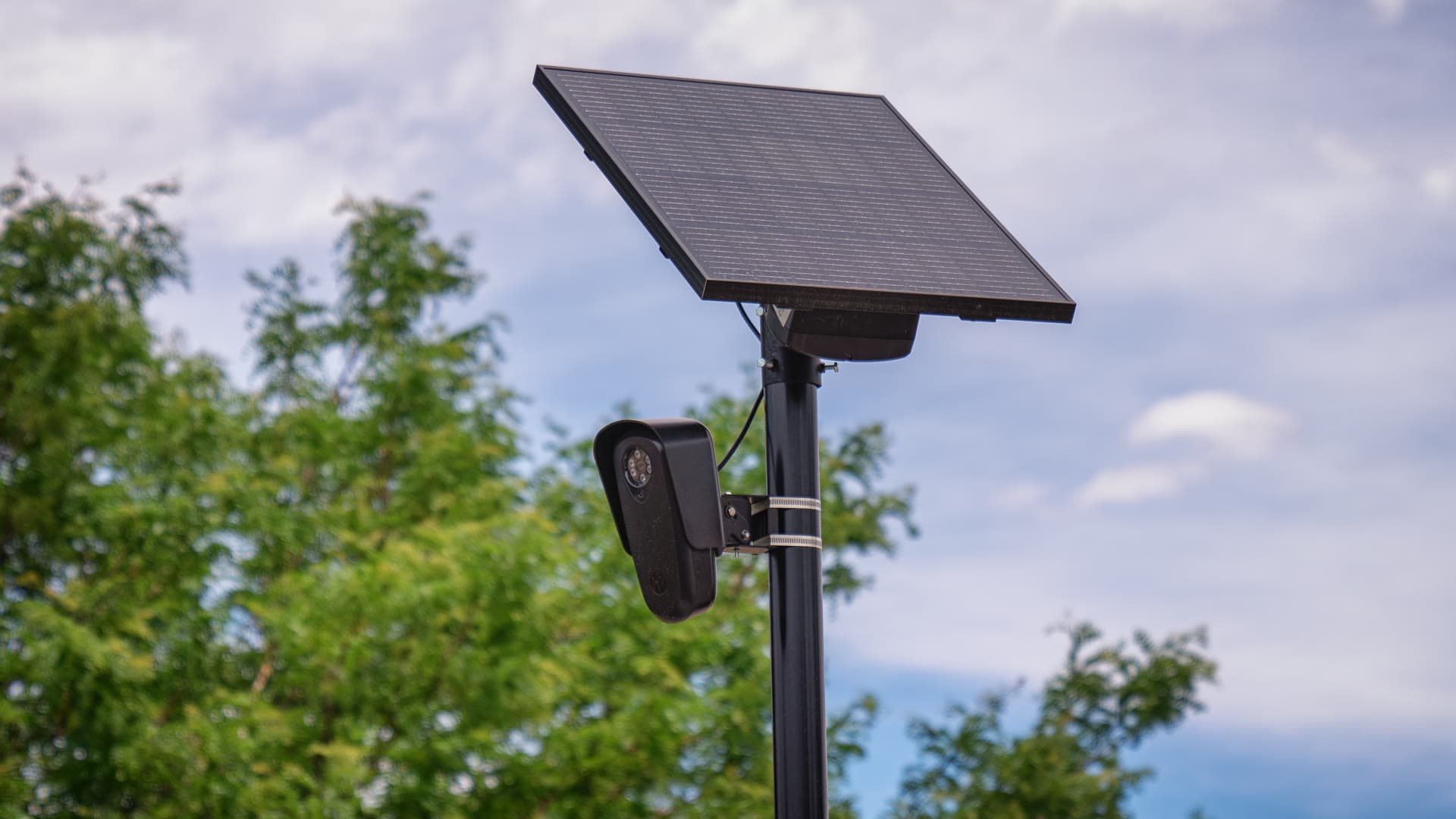
Case period:
Published by The Dispute Index editorial teamPublished Updated
Overview
The fixed reference point for classification in this case is the proposition that Tulsa County Deputy Sheriff Freddie Alaniz's warrantless query of the Flock and VehicleManager automated license plate reader (ALPR) databases for the historical locations of a Mazda with a California plate, which returned more than 50 records over about a month, was a search that violated the Fourth Amendment, as U.S. District Judge Sara E. Hill held on October 1, 2026 in United States v. Kyle, No. 4:26-cr-00189-SEH (N.D. Okla.), Doc. 62 (opens in a new tab). A response that asserts or endorses that proposition is recorded as Condemned, and a response that argues the query was lawful or needed no warrant is recorded as Defended or excused. A response that accepts only part of it is recorded under the label that fits what it accepts. The court's own opinion is recorded as a statement by the court, the way DI records court rulings in other cases by what they hold on the case question. The opinion is also where the reference point comes from, so that entry shows what the court held and is not independent support for it.
This case keeps four questions apart: what Judge Hill held and why, whether the ruling binds anyone beyond this case, what the government, the Tulsa County Sheriff's Office, Flock Safety and others have said about it, and how it bears on the wider debate over warrants for plate-reader searches. It does not decide whether Melisa Kyle committed the charged offense, whether Flock or the deputy acted improperly beyond what the sources attribute to them, or how an appeals court would rule. Information is current as of October 4, 2026.
According to the government's brief (opens in a new tab) and the deputy's incident report (opens in a new tab), Alaniz was on Interstate 44 in Tulsa at about 6:17 p.m. local time on May 10, 2026 when a black Mazda CX-50 with a California plate passed him. Judge Hill wrote that the camera on his patrol car captured the plate, that he followed the Mazda "for no apparent reason other than the fact that it had a California license plate," and that he ran a query in Flock and in VehicleManager, entering "traffic violation" and "investigation" as the reasons. At that point, she wrote, all he knew was that the car had a California plate. The results showed a short trip from Locust Grove, Oklahoma toward the California and Arizona border and back toward Missouri. The opinion treats the stop as justified because the Mazda followed another car too closely. Alaniz questioned Kyle about the trip while he kept reviewing the plate-reader records, gave her a written warning and returned her license, asked to search the car, and detained her for a dog sniff after she refused. A dog alerted and officers searched the car. A federal grand jury indicted (opens in a new tab) Kyle on May 19 on one count of possessing with intent to distribute 500 grams or more of a mixture containing methamphetamine. The government's brief puts the weight of the methamphetamine at approximately 90 pounds. The deputy's report gives 91 pounds for 46 bags, two of which field-tested presumptive positive for methamphetamine. The opinion states no quantity. Kyle is charged, and no court has found that she committed the offense.
The opinion rests suppression on two separate grounds. On the stop, Judge Hill held that Alaniz had no reasonable suspicion of criminal activity when he returned Kyle's license, that holding her longer was unlawful, and that all evidence recovered as a result of the stop must be suppressed because the government identified no applicable exception to the exclusionary rule. On the plate-reader query, she wrote that neither the Tenth Circuit nor the Supreme Court has decided whether ALPR use is a search and that, based on her research, it appears nearly every court to examine the question has said it is not. She said many of those decisions give too much weight to the 1983 beeper case, United States v. Knotts, without adequately accounting for the context of plate-reader technology and the Supreme Court's more recent decisions on large-scale location data. She then held that because the systems Alaniz used intruded on Kyle's "reasonable expectation of privacy in the whole of her physical movements," the query "was a search under the Fourth Amendment" that had no probable cause and no warrant. She described the systems as "a type of indiscriminate mass surveillance" that, unlike the tracking in Carpenter v. United States, is not aimed at one person. She suppressed everything obtained after Alaniz began the query.
The opinion limits its own reach. Judge Hill wrote that plate readers do not give the same fine detail as a cell phone, that people lack a reasonable expectation of privacy in their movements on a public road "in at least a broad sense," and that it is possible a dedicated team of officers could constitutionally collect the same information about one car by following it for a month. Her holding concerns a month of records across several states, and the opinion states no minimum number of records or days. It says the record does not show how long the data is kept or who keeps it. It does not discuss the good-faith exception to the exclusionary rule, and the government's opposition brief does not raise it. Because the opinion orders suppression on the stop ground as well, the order does not rest on the plate-reader holding alone.
This is one district court's decision in one criminal case, and it does not bind other courts. Judge Hill listed three Oklahoma federal decisions that reached the opposite conclusion: United States v. Schoggins (E.D. Okla. Jan. 28, 2026), United States v. Brown (W.D. Okla. Aug. 25, 2025) and United States v. Acosta (N.D. Okla. Aug. 22, 2025). We have not read those decisions independently. On March 17, 2026 the Fifth Circuit held in United States v. Porter (opens in a new tab) that using a plate-reader system of about ten fixed cameras was not a search and needed no warrant. On January 27, 2026 a federal judge in Virginia ruled for Norfolk in Schmidt v. City of Norfolk (opens in a new tab), a challenge to the city's 176 Flock cameras in which the federal government filed a statement of interest supporting the city. That decision is on appeal to the Fourth Circuit, where the plaintiffs' reply brief (opens in a new tab) was filed on July 23. The Supreme Court held in Chatrie v. United States (opens in a new tab) on June 29, 2026 that obtaining a person's cell-phone location data from Google was a search; Judge Hill relied on it and on Carpenter, and Chatrie did not involve plate readers.
Before the ruling, the U.S. Attorney's Office argued in its August 10 opposition brief (opens in a new tab) that plates on public roads are in plain view and carry no Fourth Amendment privacy interest, and the Federal Public Defender argued in its August 3 motion (opens in a new tab) that the query was a search. After the ruling, as of October 4, 2026, we could not locate a public statement from the U.S. Attorney's Office or the Tulsa County Sheriff's Office, and the docket (opens in a new tab) as copied by CourtListener on October 4 shows no notice of appeal. A government appeal of an order suppressing evidence must be filed within 30 days under 18 U.S.C. section 3731 (opens in a new tab). On October 1, Kyle's lawyer filed a motion, captioned unopposed, to revoke her detention order, and the court set a hearing for October 5. Flock, which was not a party, said through a spokesperson that the ruling goes against the weight of authority and that it expects the ruling to be appealed and overturned. Flock's CEO, Garrett Langley, told The Drive (opens in a new tab), in an interview published July 29, that, in the company's belief, "the courts have deemed this is not a warrantless search." Michael Soyfer of the Institute for Justice, which represents the plaintiffs in the Norfolk appeal, called the opinion "extremely important," and law professor Matthew Tokson called it a major ruling. We did not find a statement on the ruling from the Electronic Frontier Foundation or the American Civil Liberties Union as of October 4.
The ruling came as Congress weighs several plate-reader bills. Some turn on a warrant. Rep. Greg Steube (R-Fla.) introduced the FLAFO Act (opens in a new tab) on September 24, 2026, which would bar federal agencies from buying, operating, accessing or sharing data with networked plate-reader systems and would let them access one only with a warrant, with emergency and terrorism exceptions and carve-outs for some border and security activity. Rep. Keith Self (R-Texas) introduced H.R. 9716 (opens in a new tab) on July 15, which would require a federal judge's warrant, with emergency and consent exceptions, before federal agents access data from plate readers and other listed state or local surveillance devices. Others do not turn on a warrant. Rep. Tim Burchett's H.R. 9800 (opens in a new tab), introduced July 21, would bar federal agencies from purchasing, operating or accessing plate readers and other identification technology and would bar state and local use of federal funds for them, and Rep. Thomas Massie's Flock-Off Act (opens in a new tab), introduced September 2, would bar federal funds for such systems.
On October 2, Sens. Bernie Sanders (I-Vt.) and Jeff Merkley (D-Ore.) and Rep. Alexandria Ocasio-Cortez (D-N.Y.) released the Ban Flock Act (opens in a new tab), whose text (opens in a new tab) would bar federal agencies from using plate readers or accessing their data unless an Act of Congress authorizes specific uses, with an exception for tolling, and would withhold grants from five federal departments from state and local governments that do not ban their own use. That bill is a ban rather than a warrant requirement, and Sanders's release does not mention the ruling. Ocasio-Cortez introduced the same text in the House as H.R. 10691 (opens in a new tab) on October 1, and we found no Senate bill number as of October 4. TechCrunch's October 3 article calls it the Block Flock Act, while the sponsors' release and the text call it the Ban Flock Act.
Sen. Josh Hawley (R-Mo.) chaired a September 23 hearing (opens in a new tab) of the Senate Judiciary Subcommittee on Crime and Counterterrorism on Flock and announced (opens in a new tab) on September 30 a planned Stop Flock Abuse Act whose listed safeguards include written approval and audit logs for searches, deletion of driver data after ten days (with exceptions for active criminal investigations), a ban on selling data and no facial recognition. His release does not mention a warrant, and we found no bill text as of October 4. Sens. Ron Wyden and Adam Schiff wrote (opens in a new tab) to Flock on September 16, and Sens. Katie Britt and Raphael Warnock wrote (opens in a new tab) to the Attorney General on September 21, asking for answers by October 21, about misuse safeguards. Neither letter proposes a warrant requirement.
The Congressional Research Service wrote (opens in a new tab) on September 3 that no specific federal framework governs police use of plate readers and that state laws form a patchwork. The National Conference of State Legislatures counts (opens in a new tab) at least 28 states with statutes on plate-reader use or data retention as of September 2026. Minnesota's statute (opens in a new tab), for example, bars using a reader to monitor or track a person who is the subject of an active criminal investigation unless a warrant issued on probable cause authorizes it or exigent circumstances justify the use. DI's tracker on whether networked license-plate surveillance should exist (opens in a new tab) records positions on warrants more broadly.
Oklahoma has its own plate-reader statute. Title 47, section 7-606.1 (opens in a new tab) lets participating agencies use plate readers to enforce the compulsory insurance law and says the data may not be used "for purposes other than enforcement of the Compulsory Insurance Law or as otherwise permitted by law." On September 20, 2024, a McClain County judge relied on that wording in State v. Nguyen and State v. Ifabiyi (opens in a new tab) to exclude plate-reader data from trial without reaching the Fourth Amendment, but upheld the vehicle search as supported by probable cause apart from it. In Kyle, the defense argued the query violated the statute but wrote that this is not controlling under the Fourth Amendment, and the government argued that state law is irrelevant to that analysis in federal court. Judge Hill's opinion summarizes both arguments in a sentence each and does not address the statute in its reasoning. A Tulsa County Sheriff's Office major, speaking to News On 6 (opens in a new tab) for a report published the evening of August 12 (Central time), said the office issues no citations from Flock cameras and that the law covering them was "specifically written for the insurance commission." The report adds that Tulsa County officials say courts have upheld use of the cameras for investigations. In the same report, Latimer County Sheriff Adam Woodruff asked whether the government has a right to keep a diary of everywhere a person went and said officers should get a warrant from a judge to find a vehicle, and on July 21 he said his office will not use Flock cameras, according to News 9 (opens in a new tab).
As of October 4, 2026, it is not established whether Kyle committed the charged offense, whether the government will appeal, whether another court will adopt Judge Hill's reasoning on plate readers, or how long the systems the deputy searched keep their data and who keeps it, which the opinion says the record does not show.
Timeline
28 timeline entries on this page. Dates: May 27, 2016 to October 3, 2026
May 2016
1 event
Oklahoma's Legislature passes Senate Bill 359, creating a plate-reader program for enforcing the compulsory insurance law
The Oklahoma Legislature passed Senate Bill 359 in May 2016. The enrolled bill, codified as Title 47, section 7-606.1, lets participating law enforcement agencies use plate readers to collect data for enforcing Oklahoma's Compulsory Insurance Law and says the data "shall not be used by any individual or agency for purposes other than enforcement of the Compulsory Insurance Law or as otherwise permitted by law." Subsection G says the program does not prohibit other plate-reader systems used by private individuals or entities for purposes not otherwise prohibited by law. The section was amended in 2017. A printout from the Oklahoma State Courts Network dated 2026, filed in United States v. Kyle, shows the same wording in that subsection.
[01]Enrolled Senate Bill 359 (Oklahoma, 2016): Uninsured Vehicle Enforcement Program and automatic license plate readers
Source excerpt
shall not be used by any individual or agency for purposes other than enforcement of the Compulsory Insurance Law or as otherwise permitted by law
Enrolled text of the bill that created the Uninsured Vehicle Enforcement Program, codified as Title 47, section 7-606.1. Subsection C lets participating law enforcement agencies use plate-reader systems to collect data for the investigation and enforcement of Oklahoma's Compulsory Insurance Law, and subsection F says plate-reader data may not be used for other purposes except as otherwise permitted by law. The enrolled copy shows passage by the Senate on May 26 and by the House on May 27, 2016 and does not show the governor's approval date.
Enrolled Senate Bill 359 (Oklahoma, 2016): Uninsured Vehicle Enforcement Program and automatic license plate readersSection 1 (codified as 47 O.S. section 7-606.1), subsections C and F[02]47 O.S. section 7-606.1 (Oklahoma State Courts Network, 2026 printout), filed as Exhibit 17 to ECF No. 47 in United States v. Kyle
Source excerpt
shall not be used by any individual or agency for purposes other than enforcement of the Compulsory Insurance Law or as otherwise permitted by law
The codified section as printed from the Oklahoma State Courts Network with the legend 'OSCN 2026' and filed with the defense motion to suppress on August 3, 2026. Its history note lists Laws 2016, SB 359, chapter 365, section 1, as amended by Laws 2017, SB 115, chapter 74, section 2, effective November 1, 2017. The printout shows the same subsection F wording as the 2016 enrolled bill.
47 O.S. section 7-606.1 (Oklahoma State Courts Network, 2026 printout), filed as Exhibit 17 to ECF No. 47 in United States v. KyleExhibit 17, pages 1-2, subsections C(1) and F and the historical-data note
3038 days between recorded events
September 2024
1 event
A McClain County judge excludes plate-reader data from two drug-proceeds prosecutions under Oklahoma's plate-reader statute
In an order dated September 20, 2024, Judge Leah Edwards of the McClain County District Court wrote in State v. Nguyen and State v. Ifabiyi that the court "need not address the Fourth Amendment implications" of a plate-reader search because Oklahoma has "a statute directly on point," 47 O.S. section 7-606.1(F). She suppressed information gathered in violation of the statute and excluded the plate-reader data and inferences from it at trial. She denied suppression of the vehicle search itself, finding probable cause from the odor of marijuana independent of the plate-reader data. The order was filed on September 23, 2024.
[03]State v. Nguyen, No. CF-2023-2, and State v. Ifabiyi, No. CF-2023-3 (McClain County Dist. Ct. Sept. 20, 2024) (order denying, in part, motions to suppress evidence derived from ALPR data), filed as Exhibit 18 to ECF No. 47 in United States v. Kyle
Source excerpt
the Court excludes mention of the ALPR data or inferences derived therefrom at trial
Six-page state trial court order, dated September 20, 2024 and file-stamped September 23, 2024, in two drug-proceeds prosecutions arising from a January 4, 2023 stop in McClain County. Judge Edwards wrote that the court 'need not address the Fourth Amendment implications' of the plate-reader search because Oklahoma has 'a statute directly on point,' 47 O.S. section 7-606.1(F), and suppressed information gathered in violation of it and excluded the plate-reader data and inferences from trial. She denied suppression of the vehicle search itself, finding probable cause from the odor of marijuana independent of the plate-reader data. The copy is the one the defendant filed in federal court as Exhibit 18; the original docket is on the Oklahoma State Courts Network.
State v. Nguyen, No. CF-2023-2, and State v. Ifabiyi, No. CF-2023-3 (McClain County Dist. Ct. Sept. 20, 2024) (order denying, in part, motions to suppress evidence derived from ALPR data), filed as Exhibit 18 to ECF No. 47 in United States v. KyleOrder pages 3-6, conclusions of law parts I to III and the Conclusion
391 days between recorded events
October 2025
1 event
Rep. Tom Gann leads an Oklahoma House committee study of plate readers and warrantless searches
On October 16, 2025, Rep. Tom Gann (R-Inola) led a study before the Oklahoma House Public Safety Committee on automated license plate readers, which he described as a tool for mass surveillance that lets law enforcement conduct warrantless searches. His office's release says the law governing the readers statutorily "may only be used to show whether an Oklahoma motorist has automobile insurance," that presenters included defense attorney Shena Burgess and Alasdair Whitney of the Institute for Justice, and that it was suggested at the end that legislation be filed to set consequences for agencies found violating the law.
[04]Gann Studies License Plate Readers Impact on Privacy (Oklahoma House of Representatives)
Source excerpt
statutorily may only be used to show whether an Oklahoma motorist has automobile insurance
House release on a study Rep. Tom Gann (R-Inola) led before the House Public Safety Committee on October 16, 2025. It says Gann described plate readers as a tool for mass surveillance allowing warrantless searches, that presenters included defense attorney Shena Burgess and Alasdair Whitney of the Institute for Justice, and that it was suggested at the end that legislation be filed to set consequences for agencies found violating the law.
Gann Studies License Plate Readers Impact on Privacy (Oklahoma House of Representatives)Release, October 16, 2025, paragraphs 1-3 and the last paragraph
206 days between recorded events
May 2026
3 events
A Tulsa County deputy queries plate-reader databases for a California-plated Mazda, then stops it on Interstate 44
Incident
According to the government's brief and the deputy's incident report, Deputy Freddie Alaniz saw a black Mazda CX-50 with a California plate traveling east on Interstate 44 in Tulsa at about 6:17 p.m. on May 10, 2026 and ran a plate-reader search of the plate as it passed. Judge Hill's opinion records that the reasons he entered in the Flock and VehicleManager systems were "traffic violation" and "investigation," and that at the time of the queries all he knew was that the car had a California plate. He followed the Mazda and stopped it, which the opinion treats as justified because the driver followed another car too closely. His report lists the stop at 6:20 p.m.
[05]United States' Opposition to Defendant's Motion to Suppress, United States v. Kyle, No. 26-CR-189-SEH, ECF No. 50 (N.D. Okla. Aug. 10, 2026)
Source excerpt
In the present case, Ms. Kyle had no Fourth Amendment expectation of privacy in information in her license plate which was open to public view on public roadways.
The government's 24-page response to the motion to suppress. It gives the government's account of the May 10, 2026 stop, argues that the stop, the extended detention and the vehicle search were lawful, and argues in Part IV that using plate-reader data obtained in plain view on public roads did not violate the Fourth Amendment. It does not argue the good-faith exception to the exclusionary rule.
United States' Opposition to Defendant's Motion to Suppress, United States v. Kyle, No. 26-CR-189-SEH, ECF No. 50 (N.D. Okla. Aug. 10, 2026) · U.S. Attorney's Office for the Northern District of OklahomaPages 1-7 (statement of facts) and pages 22-24 (Parts IV and V, plate-reader data)[06]Tulsa County Sheriff's Office incident report TCSO-26-07841, filed as Exhibit 1 to ECF No. 47 (N.D. Okla. Aug. 3, 2026)
Source excerpt
As the vehicle passed me, I conducted a license plate reader search of the vehicle license plate
The deputy's written account of the stop, filed publicly by the defense as an exhibit. It gives the time as about 6:17 p.m. on May 10, 2026 and says he ran a license-plate-reader search as the Mazda passed him, before he saw the lane changes he cites as traffic violations. It estimates the weight of the methamphetamine found at 91 pounds.
Tulsa County Sheriff's Office incident report TCSO-26-07841, filed as Exhibit 1 to ECF No. 47 (N.D. Okla. Aug. 3, 2026) · Tulsa County Sheriff's OfficeNarrative, report pages 7-8 (ECF No. 47-1 pages 1-2)[07]United States v. Kyle, No. 4:26-cr-00189-SEH, Doc. 62 (N.D. Okla. Oct. 1, 2026) (Opinion and Order granting motion to suppress)
Source excerpt
That search was not supported by probable cause, and it was done without a warrant in violation of Kyle’s Fourth Amendment rights.
The 38-page Opinion and Order granting the defendant's opposed motion to suppress (ECF No. 47). It holds that the traffic stop was justified at its start but that the deputy extended it without reasonable suspicion, and that his query of the Flock and VehicleManager plate-reader systems for the Mazda's historical locations was a warrantless search that violated the Fourth Amendment. It suppresses the evidence recovered after the stop was extended (stop ground, p. 28) and, separately, all evidence obtained after the plate-reader query began (plate-reader ground, p. 38). On both grounds it states that the government identified no exception to the exclusionary rule.
United States v. Kyle, No. 4:26-cr-00189-SEH, Doc. 62 (N.D. Okla. Oct. 1, 2026) (Opinion and Order granting motion to suppress) · United States District Court for the Northern District of OklahomaOpinion pp. 28-38 (Part II.C, plate-reader search, and Conclusion) and pp. 9-28 (Parts II.A-B, the stop and its extension)A complaint charges Kyle with a drug offense and a magistrate orders her detained
On May 12, 2026 a criminal complaint was filed charging Melisa Kyle with possession of methamphetamine with intent to distribute, supported by a sworn affidavit from a DEA task force officer. The affidavit describes the stop as one for improper turn signals and does not mention a plate-reader query. At her initial appearance the same day, Magistrate Judge Jodi F. Jayne appointed the Federal Public Defender and ordered Kyle detained.
[08]Criminal complaint and affidavit, United States v. Kyle, ECF No. 1 (N.D. Okla. May 12, 2026)
Source excerpt
Possession of Methamphetamine with Intent to Distribute
A DEA task force officer's sworn affidavit supporting an arrest warrant. It describes the May 10, 2026 stop and the search of the car from the deputies' accounts and does not mention a plate-reader query.
Criminal complaint and affidavit, United States v. Kyle, ECF No. 1 (N.D. Okla. May 12, 2026)Page 1 (charge) and pages 4-6 (probable cause)[09]United States v. Kyle, No. 4:26-cr-00189 (N.D. Okla.) (CourtListener docket)
Source excerpt
OPINION AND ORDER by Judge Sara E Hill, ruling on motion(s)/document(s): #47 Granted (Re: 47 Opposed MOTION to Suppress ) as to Melisa Susan Kyle
The public docket for the prosecution as copied from the federal courts' electronic filing system, last updated October 4, 2026. CourtListener holds a second copy of this docket under a different PACER case number; this is the more complete one. It lists the complaint (May 12), the indictment (May 19), the motion to suppress (August 3), the government's opposition (August 10), the evidentiary hearing (August 27), the opinion (October 1) and the orders of October 1 and 2. It lists no notice of appeal.
United States v. Kyle, No. 4:26-cr-00189 (N.D. Okla.) (CourtListener docket)Docket entries 1 to 67, filed May 12 to October 2, 2026A grand jury indicts Kyle on one count of possession of methamphetamine with intent to distribute
The indictment charges that on or about May 10, 2026 Kyle possessed with intent to distribute 500 grams or more of a mixture containing methamphetamine, and it includes a forfeiture allegation for about $7,000 in currency. An indictment is a charge, and no court has found that Kyle committed the offense.
[10]Indictment, United States v. Kyle, ECF No. 14 (N.D. Okla. May 19, 2026)
Source excerpt
possessed with intent to distribute 500 grams or more of a mixture and substance containing a detectable amount of methamphetamine
The one-count indictment charging possession with intent to distribute 500 grams or more of a mixture containing methamphetamine on or about May 10, 2026, with a forfeiture allegation for about $7,000 in currency. An indictment is a charge, not a finding.
Indictment, United States v. Kyle, ECF No. 14 (N.D. Okla. May 19, 2026) · United States District Court for the Northern District of OklahomaPages 1-2 (Count One and forfeiture allegation)[09]United States v. Kyle, No. 4:26-cr-00189 (N.D. Okla.) (CourtListener docket)
Source excerpt
OPINION AND ORDER by Judge Sara E Hill, ruling on motion(s)/document(s): #47 Granted (Re: 47 Opposed MOTION to Suppress ) as to Melisa Susan Kyle
The public docket for the prosecution as copied from the federal courts' electronic filing system, last updated October 4, 2026. CourtListener holds a second copy of this docket under a different PACER case number; this is the more complete one. It lists the complaint (May 12), the indictment (May 19), the motion to suppress (August 3), the government's opposition (August 10), the evidentiary hearing (August 27), the opinion (October 1) and the orders of October 1 and 2. It lists no notice of appeal.
United States v. Kyle, No. 4:26-cr-00189 (N.D. Okla.) (CourtListener docket)Docket entries 1 to 67, filed May 12 to October 2, 2026
41 days between recorded events
June 2026
1 event
The Supreme Court holds in Chatrie that obtaining Google location data was a Fourth Amendment search
In Chatrie v. United States, argued April 27 and decided June 29, 2026, the Court held that police conducted a Fourth Amendment search when they acquired Okello Chatrie's location data from Google, because a person has a reasonable expectation of privacy in cell-phone location information. The case involved a geofence warrant and did not involve license plate readers. Judge Hill's October 1 opinion relies on Chatrie and on Carpenter v. United States.
[11]Chatrie v. United States, No. 25-112 (U.S. June 29, 2026)
Source excerpt
Police officers conducted a Fourth Amendment search when they acquired Chatrie’s location data from Google
The Court's decision on a geofence warrant for Google Location History data, argued April 27 and decided June 29, 2026. It holds that acquiring the data was a Fourth Amendment search because a person has a reasonable expectation of privacy in cell-phone location information. It does not mention license plate readers. Judge Hill's opinion cites it together with Carpenter v. United States.
Chatrie v. United States, No. 25-112 (U.S. June 29, 2026) · Supreme Court of the United StatesSyllabus, Held, pages 2-3[07]United States v. Kyle, No. 4:26-cr-00189-SEH, Doc. 62 (N.D. Okla. Oct. 1, 2026) (Opinion and Order granting motion to suppress)
Source excerpt
That search was not supported by probable cause, and it was done without a warrant in violation of Kyle’s Fourth Amendment rights.
The 38-page Opinion and Order granting the defendant's opposed motion to suppress (ECF No. 47). It holds that the traffic stop was justified at its start but that the deputy extended it without reasonable suspicion, and that his query of the Flock and VehicleManager plate-reader systems for the Mazda's historical locations was a warrantless search that violated the Fourth Amendment. It suppresses the evidence recovered after the stop was extended (stop ground, p. 28) and, separately, all evidence obtained after the plate-reader query began (plate-reader ground, p. 38). On both grounds it states that the government identified no exception to the exclusionary rule.
United States v. Kyle, No. 4:26-cr-00189-SEH, Doc. 62 (N.D. Okla. Oct. 1, 2026) (Opinion and Order granting motion to suppress) · United States District Court for the Northern District of OklahomaOpinion pp. 28-38 (Part II.C, plate-reader search, and Conclusion) and pp. 9-28 (Parts II.A-B, the stop and its extension)
16 days between recorded events
July 2026
3 events
Rep. Keith Self introduces the PRIVACY Act, which would require a federal judge's warrant for federal access to state and local plate-reader data
On July 15, 2026, Rep. Keith Self (R-Texas) introduced H.R. 9716, the Protecting Rights in Video and Equipment Acquired Discovery (PRIVACY) Act, with two original cosponsors. The text would have the Attorney General keep a list of state and local surveillance devices that includes automated license plate readers. It would bar the head of a federal law enforcement agency from accessing, querying or obtaining data from listed devices without a warrant issued by a federal judge, with exceptions for emergencies and consent. It would also limit retention to 30 days with limited extensions and bar prosecutors from admitting data obtained without a warrant as evidence in federal court. The bill was introduced before the October 1 ruling in United States v. Kyle.
[12]PRIVACY Act, H.R. 9716, introduced text
Introduced bill names its sponsors and would require federal warrants for access to covered state or local surveillance data, including plate readers.
PRIVACY Act, H.R. 9716, introduced textIntroducers and Section 2 warrant requirementRep. Tim Burchett introduces H.R. 9800, which would bar federal agencies from buying or accessing plate readers
On July 21, 2026, Rep. Tim Burchett (R-Tenn.) introduced H.R. 9800, the Protection Against Mass Surveillance Act, which was referred to the House Committee on Oversight and Government Reform. The text would bar federal agencies from purchasing, deploying, operating, accessing or contracting for automated license plate recognition systems, facial recognition and similar technology, and would bar state and local governments from using federal funds for them. It would require deletion within 30 days of data obtained in violation and bar its use as evidence. The text does not set a warrant requirement. The bill was introduced before the October 1 ruling in United States v. Kyle.
[13]Protection Against Mass Surveillance Act, H.R. 9800, introduced text
Burchett's introduced bill would bar federal agencies from using ALPR systems and bar state and local governments from spending federal funds on them.
Protection Against Mass Surveillance Act, H.R. 9800, introduced textSection 2 prohibitionLatimer County's sheriff says his office will not use Flock cameras
In a statement released July 21, 2026, which FOX23 describes as a social media post, Latimer County, Oklahoma Sheriff Adam Woodruff said his office will not use Flock Safety plate-reader cameras. News 9 reports that he cited privacy, data sharing, transparency and the potential for misuse, and that his office will not use Flock camera systems while he is sheriff. FOX23 reports that he wrote that he believes proactive policing and strong investigative work can protect the community without a system that he says infringes on people's privacy. The statement predates the October 1 ruling in United States v. Kyle.
[14]Flock camera technology won't be used in Latimer County, sheriff says (News 9)
Source excerpt
will not use Flock Safety automated license plate reader cameras, according to Sheriff Adam Woodruff
News 9 report, July 21, 2026, on a statement Latimer County Sheriff Adam Woodruff released that day saying his office will not use Flock Safety plate-reader cameras. It quotes his reasons, including privacy, data sharing, transparency and potential for misuse, and his pledge that the office will not use Flock camera systems while he is sheriff.
Flock camera technology won't be used in Latimer County, sheriff says (News 9)Paragraphs 1-3 and the quoted passages[15]Latimer County Sheriff says office will not be using flock cameras (FOX23)
Source excerpt
I have made the decision that the Latimer County Sheriff's Office will not utilize this technology in Latimer County.
FOX23 report, July 21, 2026, quoting a social media post by Latimer County Sheriff Adam Woodruff that his office will not use Flock Safety plate-reader camera systems. The report says he wrote that he believes proactive policing and strong investigative work can protect the community without a system that he says infringes on people's privacy.
Latimer County Sheriff says office will not be using flock cameras (FOX23)Paragraphs 1-2 and the quoted passages
August 2026
5 events
Kyle's lawyers move to suppress the evidence, challenging the plate-reader query, the stop and the detention
Claim
The Federal Public Defender filed an opposed motion to suppress with 21 exhibits, including the Flock and VehicleManager reports, the deputy's incident report and dash and body camera video. It argued that the plate-reader query was an unconstitutional search, that the stop was invalid at its start, and that Kyle was held after the stop ended without reasonable suspicion.
[16]Defendant's Opposed Motion to Suppress, United States v. Kyle, No. 26-CR-189-SEH, ECF No. 47 (N.D. Okla. Aug. 3, 2026)
Source excerpt
Such surveillance contravenes Ms. Kyle’s reasonable expectations of privacy; therefore, the ALPR search violated the Fourth Amendment and all evidence derived from that search should be suppressed.
The 24-page motion, filed with 21 exhibits, asking the court to suppress all evidence obtained on May 10, 2026. It argues that the plate-reader search was an unconstitutional search, that the stop was invalid at its start, and that Kyle was held after the stop ended without reasonable suspicion.
Defendant's Opposed Motion to Suppress, United States v. Kyle, No. 26-CR-189-SEH, ECF No. 47 (N.D. Okla. Aug. 3, 2026) · Office of the Federal Public Defender, Northern District of OklahomaPages 1-2 (facts) and pages 14-22 (Part III, plate-reader search); excerpt at page 18[09]United States v. Kyle, No. 4:26-cr-00189 (N.D. Okla.) (CourtListener docket)
Source excerpt
OPINION AND ORDER by Judge Sara E Hill, ruling on motion(s)/document(s): #47 Granted (Re: 47 Opposed MOTION to Suppress ) as to Melisa Susan Kyle
The public docket for the prosecution as copied from the federal courts' electronic filing system, last updated October 4, 2026. CourtListener holds a second copy of this docket under a different PACER case number; this is the more complete one. It lists the complaint (May 12), the indictment (May 19), the motion to suppress (August 3), the government's opposition (August 10), the evidentiary hearing (August 27), the opinion (October 1) and the orders of October 1 and 2. It lists no notice of appeal.
United States v. Kyle, No. 4:26-cr-00189 (N.D. Okla.) (CourtListener docket)Docket entries 1 to 67, filed May 12 to October 2, 2026Pinal County's sheriff says he will not renew the Flock contract, citing Fourth Amendment concerns
On August 5, 2026, Pinal County, Arizona Sheriff Ross Teeple told the county Board of Supervisors that his office would not renew its contract with Flock Safety, citing Fourth Amendment concerns about the company's plate-reader cameras, according to a county news item and AZFamily. AZFamily reports that the contract expires at the end of September. The announcement predates the October 1 ruling in United States v. Kyle.
[17]PCSO Not Renewing Flock Safety Camera Contract (Pinal County Sheriff's Office)
Source excerpt
Pinal County Sheriff Ross Teeple announced the cancellation of the Sheriff's Office contract with Flock Safety, citing 4th amendment concerns with the company's Automated License Plate Reader (ALPR) Cameras.
News item on the Pinal County website, posted August 7, 2026, about Sheriff Ross Teeple's announcement at the Wednesday, August 5 Board of Supervisors meeting that his office would end its Flock Safety contract. It adds that the Board was to consider a notice of termination at its next Wednesday meeting.
PCSO Not Renewing Flock Safety Camera Contract (Pinal County Sheriff's Office)News item text, first paragraph[18]Pinal County chooses not to renew Flock camera contract (AZFamily)
Source excerpt
I have serious Fourth Amendment concerns with some of the technology that is contained in those cameras, whether we have access to it or not
AZFamily report, published at 5:13 p.m. Arizona time on August 5, 2026, on Pinal County Sheriff Ross Teeple telling the Board of Supervisors he will not renew the county's Flock Safety contract, which the report says expires at the end of September. It quotes a statement he posted to social media.
Pinal County chooses not to renew Flock camera contract (AZFamily)Opening paragraphs, including the sheriff's quoted statementThe government opposes suppression, arguing plate data on public roads is in plain view
Claim
The U.S. Attorney's Office filed a 24-page opposition. It argued that the stop was lawful for failing to signal and for following too closely, that the deputy developed reasonable suspicion during the stop, that the car search was supported by probable cause after a drug dog alerted, that plate-reader data obtained in plain view on public roads did not violate the Fourth Amendment, and that Oklahoma's rules on plate readers are irrelevant to the federal question.
[05]United States' Opposition to Defendant's Motion to Suppress, United States v. Kyle, No. 26-CR-189-SEH, ECF No. 50 (N.D. Okla. Aug. 10, 2026)
Source excerpt
In the present case, Ms. Kyle had no Fourth Amendment expectation of privacy in information in her license plate which was open to public view on public roadways.
The government's 24-page response to the motion to suppress. It gives the government's account of the May 10, 2026 stop, argues that the stop, the extended detention and the vehicle search were lawful, and argues in Part IV that using plate-reader data obtained in plain view on public roads did not violate the Fourth Amendment. It does not argue the good-faith exception to the exclusionary rule.
United States' Opposition to Defendant's Motion to Suppress, United States v. Kyle, No. 26-CR-189-SEH, ECF No. 50 (N.D. Okla. Aug. 10, 2026) · U.S. Attorney's Office for the Northern District of OklahomaPages 1-7 (statement of facts) and pages 22-24 (Parts IV and V, plate-reader data)[09]United States v. Kyle, No. 4:26-cr-00189 (N.D. Okla.) (CourtListener docket)
Source excerpt
OPINION AND ORDER by Judge Sara E Hill, ruling on motion(s)/document(s): #47 Granted (Re: 47 Opposed MOTION to Suppress ) as to Melisa Susan Kyle
The public docket for the prosecution as copied from the federal courts' electronic filing system, last updated October 4, 2026. CourtListener holds a second copy of this docket under a different PACER case number; this is the more complete one. It lists the complaint (May 12), the indictment (May 19), the motion to suppress (August 3), the government's opposition (August 10), the evidentiary hearing (August 27), the opinion (October 1) and the orders of October 1 and 2. It lists no notice of appeal.
United States v. Kyle, No. 4:26-cr-00189 (N.D. Okla.) (CourtListener docket)Docket entries 1 to 67, filed May 12 to October 2, 2026News On 6 reports differing views from the Tulsa County Sheriff's Office and the Latimer County sheriff on plate-reader cameras
Reaction
On the evening of August 12, 2026 (Central time), News On 6 reported that Tulsa County Sheriff's Office Maj. Travis Jones said plate-reader cameras are not live feeds and do not identify who a vehicle is registered to, and that "That law for those cameras were specifically written for the insurance commission." The report says Latimer County Sheriff Adam Woodruff believes the cameras violate the Fourth Amendment and said that for a missing person, officers should "run it through that system, get a warrant from a judge and find that vehicle." The report predates the October 1 ruling in United States v. Kyle.
[19]Law enforcement agencies share differing views on license plate cameras (News On 6)
Source excerpt
get a warrant from a judge and find that vehicle
Local television report, dated August 12, 2026, on two Oklahoma agencies' views of plate-reader cameras. Tulsa County Sheriff's Office Maj. Travis Jones says the cameras are not live feeds and do not identify who a vehicle is registered to. The report says in its own words that Latimer County Sheriff Adam Woodruff believes the cameras violate the Fourth Amendment. It quotes him asking whether the government has a right to keep a diary of everywhere a person went, and saying officers should get a warrant from a judge to find a vehicle. The report predates the Oklahoma ruling.
Law enforcement agencies share differing views on license plate cameras (News On 6)Sections 'A constitutional debate' and 'Warrants versus wide use'Judge Hill holds an evidentiary hearing on the motion
Judge Hill heard testimony and argument. The minutes record that Government Exhibits 1 to 3 and Defendant's Exhibits 1 to 29 were admitted and that one defense exhibit was to be filed under seal.
[09]United States v. Kyle, No. 4:26-cr-00189 (N.D. Okla.) (CourtListener docket)
Source excerpt
OPINION AND ORDER by Judge Sara E Hill, ruling on motion(s)/document(s): #47 Granted (Re: 47 Opposed MOTION to Suppress ) as to Melisa Susan Kyle
The public docket for the prosecution as copied from the federal courts' electronic filing system, last updated October 4, 2026. CourtListener holds a second copy of this docket under a different PACER case number; this is the more complete one. It lists the complaint (May 12), the indictment (May 19), the motion to suppress (August 3), the government's opposition (August 10), the evidentiary hearing (August 27), the opinion (October 1) and the orders of October 1 and 2. It lists no notice of appeal.
United States v. Kyle, No. 4:26-cr-00189 (N.D. Okla.) (CourtListener docket)Docket entries 1 to 67, filed May 12 to October 2, 2026[07]United States v. Kyle, No. 4:26-cr-00189-SEH, Doc. 62 (N.D. Okla. Oct. 1, 2026) (Opinion and Order granting motion to suppress)
Source excerpt
That search was not supported by probable cause, and it was done without a warrant in violation of Kyle’s Fourth Amendment rights.
The 38-page Opinion and Order granting the defendant's opposed motion to suppress (ECF No. 47). It holds that the traffic stop was justified at its start but that the deputy extended it without reasonable suspicion, and that his query of the Flock and VehicleManager plate-reader systems for the Mazda's historical locations was a warrantless search that violated the Fourth Amendment. It suppresses the evidence recovered after the stop was extended (stop ground, p. 28) and, separately, all evidence obtained after the plate-reader query began (plate-reader ground, p. 38). On both grounds it states that the government identified no exception to the exclusionary rule.
United States v. Kyle, No. 4:26-cr-00189-SEH, Doc. 62 (N.D. Okla. Oct. 1, 2026) (Opinion and Order granting motion to suppress) · United States District Court for the Northern District of OklahomaOpinion pp. 28-38 (Part II.C, plate-reader search, and Conclusion) and pp. 9-28 (Parts II.A-B, the stop and its extension)[20]Minute sheet for the August 27, 2026 evidentiary hearing, United States v. Kyle (ECF No. 58)
Source excerpt
Government Exhibits 1-3 and Defendant’s Exhibits 1-29 admitted.
The court's minute sheet for the August 27, 2026 evidentiary hearing on the motion to suppress. It records the hearing times, the counsel present, that argument was heard and witnesses were sworn, that the listed exhibits were admitted, and that one defense exhibit was to be filed under seal. It does not name the witnesses.
Minute sheet for the August 27, 2026 evidentiary hearing, United States v. Kyle (ECF No. 58) · United States District Court for the Northern District of OklahomaMinute sheet, page 1
September 2026
8 events
Reps. Massie and Burlison introduce H.R. 10221, the Flock-Off Act
On September 2, 2026, Rep. Thomas Massie (R-Ky.) introduced H.R. 10221, the Flock-Off Act, with Rep. Eric Burlison (R-Mo.) and five other original cosponsors; it was referred to the House Committee on Oversight and Government Reform. The text bars the use of federal funds to buy, operate or contract for automated license plate readers and biometric cameras, requires federal agencies to remove federally funded systems and recipients to stop operating them within 180 days, and excepts certain border cameras and toll collection. The text does not set a warrant requirement. The bill was introduced before the October 1 ruling in United States v. Kyle.
[21]Flock-Off Act, H.R. 10221, introduced text
Introduced bill names its original sponsors and prohibits federal funds for covered camera systems, with stated exceptions.
Flock-Off Act, H.R. 10221, introduced textIntroducers and Section 2 federal funding prohibition[22]Massie and Burlison introduce the Flock-Off Act
Bill announcement, funding scope, exceptions, and sponsor quotations
Massie and Burlison introduce the Flock-Off ActBill announcement, funding scope, exceptions, and sponsor quotationsA Tulsa city councilor holds a town hall on Tulsa Police use of Flock cameras
On September 8, 2026, City Councilor Karen Gilbert held a town hall at Tulsa Tech's Lemley Campus where Tulsa Police Capt. Shane Tuell answered questions from about 30 people about the department's 107 Flock cameras, according to Public Radio Tulsa. Gilbert said the department audits entered tags weekly and Tuell said the department's policies are online. The department's website says Tulsa Police began using Flock plate readers in the summer of 2022. The 107 cameras are the Tulsa Police Department's; the deputy in United States v. Kyle worked for the Tulsa County Sheriff's Office, a separate agency.
[23]Flock Camera concerns aired at Tulsa Town Hall (Public Radio Tulsa)
Source excerpt
we have a very strict policy in place
Report on a September 8, 2026 town hall at Tulsa Tech's Lemley Campus, called by City Councilor Karen Gilbert, where Tulsa Police Capt. Shane Tuell answered questions from about 30 people about the department's 107 Flock cameras. Gilbert said the department audits entered tags weekly, and Tuell said the department's policies are online. The report says both thought the policies could be reviewed once interim Police Chief Jonathan Brooks was sworn in as chief, which the report says was due on October 1.
Flock Camera concerns aired at Tulsa Town Hall (Public Radio Tulsa)Body text: Gilbert's statement on weekly audits, Tuell's statement that policies are online, and the closing sentences on the 107 cameras[24]Flock Safety Information (Tulsa Police Department)
Source excerpt
In the summer of 2022, the Tulsa Police Department started using Flock Safety’s License Plate Reader technology
The department's own page, accessed October 4, 2026. It says the department began using Flock plate readers in the summer of 2022 and describes its Real Time Information Center, which lists automated license plate readers among its technology and says biometric surveillance such as facial recognition is not used. The page does not state a warrant policy.
Flock Safety Information (Tulsa Police Department)First paragraph and the Real Time Information Center FAQReps. Krishnamoorthi and Cloud introduce the NO FLOCK Act, which ties highway funds to state limits on plate-reader use
On September 14, 2026, Rep. Raja Krishnamoorthi (D-Ill.) and Rep. Michael Cloud (R-Texas) introduced H.R. 10366, the NO FLOCK Act, which was referred to the House Committee on Transportation and Infrastructure. The text would withhold 10 percent of a state's apportioned federal highway funds unless the state has a law prohibiting plate-reader use for anything other than enforcing toll systems, identifying stolen vehicles, missing or endangered persons or vehicles registered to persons with a felony warrant, or investigating a vehicle involved in a felony. The text does not set a search-warrant requirement. The bill was introduced before the October 1 ruling in United States v. Kyle.
[25]NO FLOCK Act, H.R. 10366, introduced text
Introduced bill names its sponsors and proposes a highway-funding penalty for states without limits on plate-reader use.
NO FLOCK Act, H.R. 10366, introduced textIntroducers and Section 2 permitted usesSens. Wyden and Schiff send Flock's chief executive a letter with seven questions about misuse safeguards
On September 17, 2026, Sens. Ron Wyden (D-Ore.) and Adam Schiff (D-Calif.) announced a letter, dated September 16, to Flock chief executive Garrett Langley. It asks seven numbered questions about safeguards against misuse, compliance with local and state laws, protections for patients seeking reproductive health care and a possible dashcam partnership, asks Flock to preserve records, and requests answers by September 25. The letter cites reports that immigration officials searched Flock databases without warrants and does not propose a warrant requirement. It was announced two weeks before the October 1 ruling in United States v. Kyle.
[26]Letter from Sens. Adam Schiff and Ron Wyden to Flock chief executive Garrett Langley (September 16, 2026)
Source excerpt
we request responses to the following questions no later than September 25, 2026
The senators write to Garrett Langley, chief executive officer of Flock Group, Inc., about reported misuse of Flock's plate readers and cameras and about Flock's August safeguards. Seven numbered questions cover compliance with local and state laws, search-reason controls, access limits, protections for patients seeking reproductive health care and a possible partnership to collect data from rideshare dashcams. The letter also asks Flock to preserve records. It mentions warrants only in citing reports that immigration officials searched Flock databases without them. The senators announced it in a release dated September 17.
Letter from Sens. Adam Schiff and Ron Wyden to Flock chief executive Garrett Langley (September 16, 2026) · Adam SchiffLetter pages 1-5, numbered questions 1 to 7 and the records-preservation request[27]Senators Schiff and Wyden press Flock on surveillance safeguards
In a joint letter, Schiff and Wyden criticize Flock's safeguards and seek information about misuse, access, and controls.
Senators Schiff and Wyden press Flock on surveillance safeguardsJoint letter paragraphs beginning We write seeking information and Flock claims to have the toolsSens. Britt and Warnock ask the Justice Department for plate-reader misuse guidance and answers by October 21
On September 23, 2026, Sens. Katie Britt (R-Ala.) and Raphael Warnock (D-Ga.) announced a letter, dated September 21, to Attorney General Todd Blanche. It asks the Justice Department to give state and local agencies guidance on preventing misuse of plate readers and to answer six questions about federal funding, grant oversight, training and audits by October 21, 2026. The letter focuses on reports of officers using the systems to stalk or harass partners and does not address search warrants. The announcement came eight days before the October 1 ruling in United States v. Kyle.
[28]Letter from Sens. Katie Britt and Raphael Warnock to Attorney General Todd Blanche on automatic license plate readers (September 21, 2026)
Source excerpt
We also request responses to the following questions by no later than October 21, 2026.
The senators ask the Justice Department to give state and local law enforcement agencies guidance on preventing misuse of plate readers, citing reports that officers used the systems to stalk or harass partners and that at least 50 officers have been charged with or accused of unauthorized use. Six questions ask about federal funding for the systems, grant oversight, training, data policies and audits. The letter is dated September 21, 2026 and addressed to Attorney General Todd Blanche. It does not address search warrants. The senators announced it in a release dated September 23.
Letter from Sens. Katie Britt and Raphael Warnock to Attorney General Todd Blanche on automatic license plate readers (September 21, 2026) · Katie BrittLetter pages 1-3, including the request for responses by October 21, 2026 and questions 1 to 6[29]Senators Britt and Warnock urge DOJ guidance on Flock cameras
Joint letter and Sen. Britt quotation
Senators Britt and Warnock urge DOJ guidance on Flock camerasJoint letter and Sen. Britt quotation[30]Britt calls for safeguards on automated license plate readers (Alabama Political Reporter)
Source excerpt
we must protect people’s Fourth Amendment rights
Report on Sen. Katie Britt's remarks at the September 23 subcommittee hearing, which it describes as calling for stronger safeguards on plate readers. It also reports that Britt and Sen. Raphael Warnock sent a letter on Monday to Attorney General Todd Blanche and asked the Justice Department to respond by October 21, and summarizes testimony by Pinal County Sheriff Ross Teeple.
Britt calls for safeguards on automated license plate readers (Alabama Political Reporter)Opening paragraphs and the paragraphs on the Britt-Warnock letterA Senate Judiciary subcommittee holds a hearing on Flock's nationwide plate-reader network
On September 23, 2026 at 2:30 p.m. Eastern time, the Senate Judiciary Subcommittee on Crime and Counterterrorism, chaired by Sen. Josh Hawley (R-Mo.), held a hearing titled "Always Watching: Flock's Nationwide AI Surveillance Network." The committee listed five witnesses: Lindsey Isaacs, listed as a wrongfully accused driver; Alasdair Whitney of the Institute for Justice; Pinal County, Arizona Sheriff Ross Teeple; cybersecurity engineer Benn Jordan; and Chad Marlow of the ACLU. Hawley's release says the chief executives of Flock, Axon, Motorola and Verkada declined to testify. In written testimony, Whitney urged Congress to require a warrant for federal access to historical location information, Marlow urged a ban on plate-reader use by agencies that receive federal funds, and Teeple wrote that he believes the latest AI-powered camera networks are "capable of violating our citizens' Fourth Amendment rights." Sen. Katie Britt (R-Ala.) said, according to the Alabama Political Reporter, "we must protect people's Fourth Amendment rights." Hawley's release summarizing the hearing is dated September 28. The hearing was eight days before the October 1 ruling in United States v. Kyle.
[31]Always Watching: Flock's Nationwide AI Surveillance Network (U.S. Senate Judiciary Committee hearing page)
Source excerpt
Witnesses: Lindsey Isaacs, Wrongfully Accused Driver; Alasdair Whitney, Legislative Counsel, Institute for Justice; The Honorable Ross Teeple, Sheriff, Pinal County Sheriff's Office; Benn Jordan, Cybersecurity Engineer; Chad Marlow, Senior Policy Counsel, ACLU.
Official Senate Judiciary Subcommittee on Crime and Counterterrorism hearing page, accessed 2026-09-23, confirming the hearing chaired by Sen. Josh Hawley into Flock Safety and other ALPR/AI-surveillance companies. Press coverage in the days before the hearing (e.g., reporting that none of the four invited company CEOs -- Flock's Garrett Langley, Axon's Rick Smith, Motorola Solutions's Greg Brown, and Verkada's Filip Kaliszan -- were confirmed to appear) is consistent with the confirmed witness list here, which lists five witnesses and no company executives. Neither the hearing page nor available coverage found as of this date describes the witnesses or senators specifically addressing the fake-police-account live-camera-search story (Flock City PD in Dunwoody, GA and Bryan, TX) covered in this case; the hearing instead addressed automated license plate reader misuse and privacy concerns in general terms (wrongful arrest, unsecured camera feeds, calls for federal restrictions on ALPR use).
Always Watching: Flock's Nationwide AI Surveillance Network (U.S. Senate Judiciary Committee hearing page)Official hearing page, "Always Watching: Flock's Nationwide AI Surveillance Network," Sept. 23, 2026, 2:30 PM ET, Dirksen Senate Office Building Room 562[32]ICYMI: Hawley Chairs Subcommittee Hearing Exposing Flock Cameras, Calls for Accountability
Source excerpt
chaired a Senate Judiciary Subcommittee on Crime and Counterterrorism hearing on Flock cameras
Hawley's release summarizing the September 23 subcommittee hearing, issued five days after it. It says the chief executives of Flock, Axon, Motorola and Verkada each declined his invitation to testify, that Flock answered in a written letter, and it quotes his remarks and his exchanges with witnesses Alasdair Whitney, Benn Jordan and Lindsey Isaacs. The release does not mention warrants.
ICYMI: Hawley Chairs Subcommittee Hearing Exposing Flock Cameras, Calls for Accountability · Josh HawleyPress release, September 28, 2026, opening paragraphs and the quoted exchanges with witnesses[33]Written testimony of Alasdair Whitney, Legislative Counsel, Institute for Justice, before the Senate Subcommittee on Crime and Counterterrorism, September 23, 2026
Source excerpt
Bind federal officials to a warrant requirement for historical location information
Written testimony submitted for the hearing 'Always Watching: Flock's Nationwide AI Surveillance Network.' Whitney urges Congress to require a warrant before federal officials access historical location information, and attaches the Institute for Justice's model bill, which would require a warrant for location data more than two hours old, cap retention at seven days absent a warrant and make evidence obtained in violation inadmissible.
Written testimony of Alasdair Whitney, Legislative Counsel, Institute for Justice, before the Senate Subcommittee on Crime and Counterterrorism, September 23, 2026 · Senate Committee on the JudiciarySection 'The Solution: Require a Warrant' and the closing paragraphs, pages 7-8[34]Statement of Chad A. Marlow, Senior Policy Counsel, American Civil Liberties Union, before the Senate Subcommittee on Crime and Counterterrorism, September 23, 2026
Source excerpt
The time has come for Congress to ban any law enforcement entity who receives federal funding from using ALPRs.
Written testimony submitted for the September 23 hearing. Marlow asks Congress to ban plate-reader use by any law enforcement entity that receives federal funding, without exceptions, and writes that the Supreme Court's June 2026 decision in Chatrie raised the possibility that mass plate-reader surveillance of people's locations without a warrant violates the Fourth Amendment.
Statement of Chad A. Marlow, Senior Policy Counsel, American Civil Liberties Union, before the Senate Subcommittee on Crime and Counterterrorism, September 23, 2026 · Senate Committee on the JudiciaryPages 8-9, paragraphs beginning 'The ALPR companies may also argue' and 'The time has come for Congress'[35]Written testimony of Sheriff Ross Teeple, Pinal County Sheriff's Office (Arizona), before the Senate Subcommittee on Crime and Counterterrorism, September 23, 2026
Source excerpt
capable of violating our citizens’ Fourth Amendment rights
Prepared testimony of the sheriff of Pinal County, Arizona, who writes that automatic license plate readers limited to reading plates are 'a great tool,' that his office ended its Flock contract, and that he believes the latest AI-powered camera networks are capable of violating Fourth Amendment rights. He asks for 'clear, statutory boundaries for automated surveillance.'
Written testimony of Sheriff Ross Teeple, Pinal County Sheriff's Office (Arizona), before the Senate Subcommittee on Crime and Counterterrorism, September 23, 2026 · Senate Committee on the JudiciaryPages 1-6; Fourth Amendment passages on pages 3 and 5-6[30]Britt calls for safeguards on automated license plate readers (Alabama Political Reporter)
Source excerpt
we must protect people’s Fourth Amendment rights
Report on Sen. Katie Britt's remarks at the September 23 subcommittee hearing, which it describes as calling for stronger safeguards on plate readers. It also reports that Britt and Sen. Raphael Warnock sent a letter on Monday to Attorney General Todd Blanche and asked the Justice Department to respond by October 21, and summarizes testimony by Pinal County Sheriff Ross Teeple.
Britt calls for safeguards on automated license plate readers (Alabama Political Reporter)Opening paragraphs and the paragraphs on the Britt-Warnock letterRep. Steube introduces H.R. 10606, the FLAFO Act, which would require federal agencies to get a warrant to access networked plate-reader data
On September 24, 2026, Rep. Greg Steube (R-Fla.) introduced H.R. 10606, the Facilitating Liberty and Accountability for Flock Observations (FLAFO) Act, which was referred to the House Committees on Oversight and Government Reform and on the Judiciary. The text bars federal agencies from buying, leasing, operating or accessing networked or AI-enabled plate-reader systems, or requesting or providing information from them, except as the bill provides. It lets an agency access such a system's information only with a warrant, with exceptions without one to locate a missing or endangered person, respond to an imminent threat or investigate a person believed to be tied to terrorism, espionage, sabotage or a foreign power, and it makes Justice Department funding for states and localities depend on substantially similar requirements. The bill was introduced a week before the October 1 ruling in United States v. Kyle.
[36]FLAFO Act, H.R. 10606, introduced text
Source excerpt
may only access information from a covered system or make a request described in subsection (a)(2) if the agency obtains a warrant
Introduced text of the bill, referred to the House Committee on Oversight and Government Reform and, in addition, the Committee on the Judiciary. Section 3 bars federal agencies from buying, leasing, operating or accessing a covered system, requesting information from one or providing information to one, except as the Act provides. Subsection (b) lets an agency access a covered system's information only with a warrant, and allows access without one to locate a missing or endangered person, respond to an imminent threat, or investigate a person believed to be tied to terrorism, espionage, sabotage or a foreign power. Section 5 makes Justice Department funding for states and localities depend on requirements substantially similar to the Act. A covered system is a plate-reader system that is networked or cross-jurisdictional, lets users search historical location across jurisdictions, or uses artificial intelligence to search by vehicle characteristics.
FLAFO Act, H.R. 10606, introduced textSection 3(a)-(b) (prohibition and warrant requirement), Section 5 (funding condition) and Section 6(2) (covered system)[37]Rep. Steube introduces FLAFO Act to rein in warrantless Flock surveillance
Steube describes a judicial-warrant rule for federal access to networked ALPR systems.
Rep. Steube introduces FLAFO Act to rein in warrantless Flock surveillanceAnnouncement and Steube quotationSen. Hawley announces plans to introduce the Stop Flock Abuse Act
On September 30, 2026, Sen. Josh Hawley (R-Mo.) announced that he will introduce the Stop Flock Abuse Act. His release lists seven requirements: no sale or sharing of vehicle location data with non-governmental third parties; a written approval process that logs every search authorization; an audit log of who searched, why, who approved it and what was viewed; encryption and storage in the United States; deletion of driver data after ten days, with narrow exceptions for active criminal investigations; no hardware or software from foreign adversaries; and a ban on facial recognition in plate-reader networks. The release does not mention a warrant, and as of October 4, 2026 we could not find a bill number or bill text. He announced it the day before the October 1 ruling in United States v. Kyle.
[38]Hawley announces proposed Stop Flock Abuse Act
Source excerpt
Law-abiding Americans should not be treated like criminals.
Hawley announces that he will introduce legislation requiring approval and audits of searches, limits on sharing and retention, U.S. data storage and restrictions on facial recognition and foreign technology.
Hawley announces proposed Stop Flock Abuse Act · Josh HawleySeptember 30 release, Hawley's second quoted paragraph and proposed safeguards
October 2026
5 events
Judge Hill grants the motion to suppress
Source release
In a 38-page Opinion and Order, Judge Hill held that the stop was justified at its start for following too closely, that Alaniz extended it without reasonable suspicion, and that his query of the Flock and VehicleManager systems was a warrantless search that violated the Fourth Amendment. She ordered the evidence from the stop and the later car search suppressed and wrote that the government identified no exception to the exclusionary rule. The opinion is a district court ruling in one case and does not bind other courts.
[07]United States v. Kyle, No. 4:26-cr-00189-SEH, Doc. 62 (N.D. Okla. Oct. 1, 2026) (Opinion and Order granting motion to suppress)
Source excerpt
That search was not supported by probable cause, and it was done without a warrant in violation of Kyle’s Fourth Amendment rights.
The 38-page Opinion and Order granting the defendant's opposed motion to suppress (ECF No. 47). It holds that the traffic stop was justified at its start but that the deputy extended it without reasonable suspicion, and that his query of the Flock and VehicleManager plate-reader systems for the Mazda's historical locations was a warrantless search that violated the Fourth Amendment. It suppresses the evidence recovered after the stop was extended (stop ground, p. 28) and, separately, all evidence obtained after the plate-reader query began (plate-reader ground, p. 38). On both grounds it states that the government identified no exception to the exclusionary rule.
United States v. Kyle, No. 4:26-cr-00189-SEH, Doc. 62 (N.D. Okla. Oct. 1, 2026) (Opinion and Order granting motion to suppress) · United States District Court for the Northern District of OklahomaOpinion pp. 28-38 (Part II.C, plate-reader search, and Conclusion) and pp. 9-28 (Parts II.A-B, the stop and its extension)[09]United States v. Kyle, No. 4:26-cr-00189 (N.D. Okla.) (CourtListener docket)
Source excerpt
OPINION AND ORDER by Judge Sara E Hill, ruling on motion(s)/document(s): #47 Granted (Re: 47 Opposed MOTION to Suppress ) as to Melisa Susan Kyle
The public docket for the prosecution as copied from the federal courts' electronic filing system, last updated October 4, 2026. CourtListener holds a second copy of this docket under a different PACER case number; this is the more complete one. It lists the complaint (May 12), the indictment (May 19), the motion to suppress (August 3), the government's opposition (August 10), the evidentiary hearing (August 27), the opinion (October 1) and the orders of October 1 and 2. It lists no notice of appeal.
United States v. Kyle, No. 4:26-cr-00189 (N.D. Okla.) (CourtListener docket)Docket entries 1 to 67, filed May 12 to October 2, 2026After the ruling, Kyle asks to be released and the court strikes the jury trial setting
On October 1, 2026 Kyle's lawyer filed a motion, captioned unopposed, asking the court to revoke her detention order and arguing that with the evidence suppressed the United States has no evidence proving a necessary element of the charge. On October 2 the court struck the jury trial setting, set a status conference for October 5 at 8:45 a.m., and set a hearing on the detention motion before Magistrate Judge Mark T. Steele for October 5 at 3 p.m. The docket copy last updated October 4 shows no notice of appeal.
[39]Defendant's Unopposed Motion to Revoke Detention Order, United States v. Kyle, ECF No. 63 (N.D. Okla. Oct. 1, 2026)
Source excerpt
With the suppression of the evidence the United States has no evidence proving a necessary element of the charge against Ms. Kyle.
A two-page motion filed the day of the opinion. It asks the court to revoke the order detaining Kyle and to order her release or set supervised conditions, arguing that the evidence the court relied on to detain her has been suppressed. The court referred it to Magistrate Judge Mark T. Steele.
Defendant's Unopposed Motion to Revoke Detention Order, United States v. Kyle, ECF No. 63 (N.D. Okla. Oct. 1, 2026) · Office of the Federal Public Defender, Northern District of OklahomaPage 1, paragraphs 2 to 4[09]United States v. Kyle, No. 4:26-cr-00189 (N.D. Okla.) (CourtListener docket)
Source excerpt
OPINION AND ORDER by Judge Sara E Hill, ruling on motion(s)/document(s): #47 Granted (Re: 47 Opposed MOTION to Suppress ) as to Melisa Susan Kyle
The public docket for the prosecution as copied from the federal courts' electronic filing system, last updated October 4, 2026. CourtListener holds a second copy of this docket under a different PACER case number; this is the more complete one. It lists the complaint (May 12), the indictment (May 19), the motion to suppress (August 3), the government's opposition (August 10), the evidentiary hearing (August 27), the opinion (October 1) and the orders of October 1 and 2. It lists no notice of appeal.
United States v. Kyle, No. 4:26-cr-00189 (N.D. Okla.) (CourtListener docket)Docket entries 1 to 67, filed May 12 to October 2, 2026404 Media reports the ruling and Flock says it expects an appeal
Reaction
404 Media's report, published October 2, 2026, quoted the opinion at length and quoted Michael Soyfer of the Institute for Justice. It was updated with a statement from a Flock spokesperson saying that Flock was not a party, that the ruling goes against the weight of authority, that the company expects an appeal and a reversal, and that the ruling is limited to its facts.
[40]Federal Judge Rules a Flock Search Was 'Indiscriminate Mass Surveillance' and Unconstitutional (404 Media)
Source excerpt
The ruling goes against the overwhelming weight of authority in similar cases across the country, including multiple recent decisions in Oklahoma, and we expect it will be appealed and ultimately overturned.
404 Media's report on the ruling, based on the opinion. It quotes the opinion at length, quotes Michael Soyfer of the Institute for Justice, and was updated with a statement from a Flock spokesperson. It says the decision will not set a binding precedent and that other cases are considering warrantless plate-reader searches.
Federal Judge Rules a Flock Search Was 'Indiscriminate Mass Surveillance' and Unconstitutional (404 Media)Full article; Michael Soyfer quotations in the middle of the article; Flock statement in the paragraph before the update noteSanders, Ocasio-Cortez and Merkley release the Ban Flock Act
Sen. Bernie Sanders, Rep. Alexandria Ocasio-Cortez and Sen. Jeff Merkley released the Ban Flock Act. Its text would bar federal agencies and officials from acquiring, possessing, accessing or using plate readers or data from readers run by others, unless an Act of Congress authorizes specific uses with data retention of no more than 48 hours, with an exception for tolling. It would also withhold grants from five federal departments from state and local governments that do not prohibit plate-reader use, and it would let people sue the federal government. The release does not mention the Oklahoma ruling. Rep. Ocasio-Cortez introduced the same text in the House as H.R. 10691 on October 1, 2026, and the text posted by Sen. Sanders's office has no bill number.
[41]NEWS: Sanders, Ocasio-Cortez, Merkley Unveil Ban Flock Act to Protect Americans' Right to Privacy
Source excerpt
The Ban Flock Act would prohibit federal agencies from using automatic license plate readers (ALPRs) and block federal funding from state and local governments that use this technology.
Sanders's release announcing the bill with Rep. Alexandria Ocasio-Cortez and Sen. Jeff Merkley. It describes what the bill would do and quotes the three sponsors. It does not mention the Oklahoma ruling.
NEWS: Sanders, Ocasio-Cortez, Merkley Unveil Ban Flock Act to Protect Americans' Right to Privacy · Bernie SandersPress release, October 2, 2026, paragraph 1 and the closing list of what the bill would do[42]Ban Flock Act, bill text posted by Sen. Sanders's office (119th Congress, 2d Session, bill number blank)
Source excerpt
without explicit statutory authorization, to withhold grants awarded by certain agencies from State and local governments that use automatic license plate readers, and to prohibit the use of Federal funds to purchase automatic license plate readers
The 14-page draft text of the Ban Flock Act as posted by Sanders's office. The first page reads "S. ll" with the committee blank, so the text carries no bill number. Section 3 bars federal agencies and officials from acquiring, possessing, accessing or using plate readers or data from readers run by others, unless an Act of Congress authorizes specific uses with 48-hour retention, and exempts tolling. Section 4 conditions grants from five federal departments on state and local bans. It contains no warrant provision for general use.
Ban Flock Act, bill text posted by Sen. Sanders's office (119th Congress, 2d Session, bill number blank) · Bernie SandersTitle; Section 3 (federal prohibition, exceptions and tolling); Section 4 (grant condition); Section 5 (federal funds)[43]Ocasio-Cortez, Sanders and Merkley announce the Ban Flock Act
Source excerpt
The Ban Flock Act would prohibit federal agencies from using automatic license plate readers (ALPRs) and block federal funding from state and local governments that use this technology.
The congressional sponsors described the proposed bill and their positions on Flock Safety and automatic license plate reader networks.
Ocasio-Cortez, Sanders and Merkley announce the Ban Flock Act · Alexandria Ocasio-CortezPress release, October 2, 2026, paragraphs 1-5[44]Ban Flock Act, H.R. 10691, introduced text
Source excerpt
may not acquire, possess, access, or use in the United States
House bill text introduced October 1, 2026, referred to the Committee on Oversight and Government Reform and eight other committees. Its operative sections match the Ban Flock Act text posted by Sen. Bernie Sanders's office with a blank Senate bill number. The bill bars federal agencies and officials from acquiring, possessing, accessing or using plate readers or plate data from other entities' readers unless an Act of Congress authorizes specific uses, and withholds grants from five federal departments from states and localities that do not prohibit plate-reader use. It mentions a warrant only for disclosure of toll-collection data.
Ban Flock Act, H.R. 10691, introduced textSection 3 (federal prohibition and exceptions), Section 3(c)(3)(D) (warrant for tolling data) and Section 4 (state and local grants)TechCrunch, CBS12 and a widely viewed post carry the ruling to a wider audience
Reaction
On October 3, 2026, CBS12 and TechCrunch reported on the ruling, and at 20:51 UTC the news account SCOTUS Wire posted a summary with an image of the opinion's first page. As of October 4, 2026 the post had more than 100,000 views. TechCrunch and CBS12 both noted that the ruling does not bind other courts.
[45]Federal judge calls Flock 'indiscriminate mass surveillance' (TechCrunch)
Source excerpt
does not create a binding precedent, but it is one of the first times that a federal judge has ruled that a Flock search is unconstitutional.
TechCrunch's weekend report, citing 404 Media. It summarizes the opinion, notes the ruling is not binding precedent, and mentions Sen. Bernie Sanders's bill; it calls the bill the Block Flock Act, while Sanders's release and the bill text call it the Ban Flock Act.
Federal judge calls Flock 'indiscriminate mass surveillance' (TechCrunch)Full article, paragraph 2[46]Federal judge rules warrantless license-plate reader search violated Fourth Amendment (CBS12)
Source excerpt
The ruling does not prohibit police from using every license-plate reader or mean a single camera scan is unconstitutional.
A West Palm Beach station's report that posts the opinion's PDF. It notes the opinion does not bind Florida courts, that the ruling focused on the historical, multistate search over about a month, and that the court also found the deputy extended the stop without reasonable suspicion.
Federal judge rules warrantless license-plate reader search violated Fourth Amendment (CBS12)Full article, paragraph 6[47]SCOTUS Wire post on X, October 3, 2026 (page 1 of the opinion attached)
Source excerpt
NEW: A federal judge in Oklahoma ruled that police violated the Fourth Amendment by searching Flock and other license plate reader data without a warrant, accessing more than 50 records of a driver’s movements across multiple states over a month.
A post by the news account SCOTUS Wire, whose profile describes it as breaking news from courts across the nation, summarizing the ruling with an image of the opinion's first page. As of October 4, 2026 it had more than 100,000 views.
SCOTUS Wire post on X, October 3, 2026 (page 1 of the opinion attached)Post text and attached image of the first page of the opinion
Claims
Claims separate what was said from what is contested. Follow each source for the original wording and context.
What's disputed
Disputed claim
A Tulsa County deputy's warrantless query of the Flock and VehicleManager plate-reader databases for the historical locations of a Mazda with a California plate, which returned more than 50 records across several states over about a month, was a search under the Fourth Amendment that was not supported by probable cause and violated Melisa Kyle's Fourth Amendment rights.
United States District Court for the Northern District of Oklahoma
Sources (1)
- United States v. Kyle, No. 4:26-cr-00189-SEH, Doc. 62 (N.D. Okla. Oct. 1, 2026) (Opinion and Order granting motion to suppress) · United States District Court for the Northern District of OklahomaOpinion pp. 28-38 (Part II.C, plate-reader search, and Conclusion) and pp. 9-28 (Parts II.A-B, the stop and its extension)
Disputed claim
Because a license plate on a public road is in plain view, Melisa Kyle had no Fourth Amendment expectation of privacy in plate-reader information about where her car was seen, so Deputy Alaniz's use of that information violated no Fourth Amendment right.
U.S. Attorney's Office for the Northern District of Oklahoma
Sources (1)
- United States' Opposition to Defendant's Motion to Suppress, United States v. Kyle, No. 26-CR-189-SEH, ECF No. 50 (N.D. Okla. Aug. 10, 2026) · U.S. Attorney's Office for the Northern District of OklahomaPages 1-7 (statement of facts) and pages 22-24 (Parts IV and V, plate-reader data)
Disputed claim
Deputy Alaniz's retrieval of Melisa Kyle's historical location data from plate-reader databases was a search under the Fourth Amendment whether or not plate-reader data is as detailed as cell-site or GPS data, and the evidence derived from it should be suppressed.
Office of the Federal Public Defender, Northern District of Oklahoma
Sources (1)
- Defendant's Opposed Motion to Suppress, United States v. Kyle, No. 26-CR-189-SEH, ECF No. 47 (N.D. Okla. Aug. 3, 2026) · Office of the Federal Public Defender, Northern District of OklahomaPages 1-2 (facts) and pages 14-22 (Part III, plate-reader search); excerpt at page 18
Disputed claim
Flock Safety said the ruling goes against the overwhelming weight of authority in similar cases, including multiple recent Oklahoma decisions, and that it expects the ruling to be appealed and overturned. It also said the ruling is limited to the specific facts of the case, sets no controlling precedent and does not affect law enforcement agencies' continued use of plate-reader technology.
Flock Safety
Sources (1)
- Federal Judge Rules a Flock Search Was 'Indiscriminate Mass Surveillance' and Unconstitutional (404 Media)Full article; Michael Soyfer quotations in the middle of the article; Flock statement in the paragraph before the update note
Show fewer disputed claims
Disputed claim
Michael Soyfer of the Institute for Justice said earlier court decisions on plate-reader cases were too narrow, and that Judge Hill's opinion gives proper weight to the breadth of the systems, which collect information about many people and can reveal intimate details of their lives.
Institute for Justice
Sources (1)
- Federal Judge Rules a Flock Search Was 'Indiscriminate Mass Surveillance' and Unconstitutional (404 Media)Full article; Michael Soyfer quotations in the middle of the article; Flock statement in the paragraph before the update note
Response record
Responses
Latest recorded positions: 7. Dates: August 3, 2026 to October 3, 2026
Choose one response filter, or select All responses to see the full record.
2 responses on this page
Flock SafetyDirectly involved "Flock was not a party to this case. The ruling goes against the overwhelming weight of authority in similar cases across the country, including multiple recent decisions in Oklahoma, and we expect it will be appealed and ultimately overturned. This ruling is limited to the specific facts of this case. It does not set controlling precedent and does not affect law enforcement agencies’ continued use of these important public safety technologies."
Defended or excusedResponding to: Flock Safety said the ruling goes against the overwhelming weight of authority in similar cases, including multiple recent Oklahoma decisions, and that it expects the ruling to be appealed and overturned. It also said the ruling is limited to the specific facts of the case, sets no controlling precedent and does not affect law enforcement agencies' continued use of plate-reader technology.
Read more
In a statement to 404 Media, a Flock Safety spokesperson said Flock was not a party to the case. The company said the ruling goes against the weight of authority in similar cases, including recent Oklahoma decisions, and that it expects an appeal and a reversal. It also said the ruling is limited to the specific facts of the case, sets no controlling precedent and does not affect law enforcement agencies' continued use of plate-reader technology.
Role at the time: Company spokesperson, in a statement to 404 Media that the outlet added to its October 2, 2026 article
Before the statement
404 Media published its report on October 2, 2026 and then updated it with the company's comment. In an interview The Drive published on July 29, 2026, Flock CEO Garrett Langley said that, in the company's belief, "the courts have deemed this is not a warrantless search."
After the statement
Judge Hill's opinion lists three Oklahoma federal decisions that reached the opposite conclusion on whether plate-reader use is a search. As of October 4, 2026, the docket shows no notice of appeal.
Federal Judge Rules a Flock Search Was 'Indiscriminate Mass Surveillance' and Unconstitutional (404 Media)Full article; Michael Soyfer quotations in the middle of the article; Flock statement in the paragraph before the update noteWhy this label?
The reference point is the proposition that the warrantless query was a search that violated the Fourth Amendment. Flock contests the holding and predicts reversal on the ground that existing authority points the other way, which defends the lawfulness of such searches, so we used Defended or excused. The closest competing label is Minimizes, because the statement also says the ruling is limited to its facts and does not change police use. It loses because the first half disputes the holding itself, which goes beyond downplaying its reach.
This label describes the statement's response within the context above.
U.S. Attorney's Office for the Northern District of OklahomaDirectly involved "In the present case, Ms. Kyle had no Fourth Amendment expectation of privacy in information in her license plate which was open to public view on public roadways. Therefore, there was no Fourth Amendment violation when Deputy Alaniz viewed her license plate information that had been obtained from cameras capturing information on public roadways."
Defended or excusedResponding to: Because a license plate on a public road is in plain view, Melisa Kyle had no Fourth Amendment expectation of privacy in plate-reader information about where her car was seen, so Deputy Alaniz's use of that information violated no Fourth Amendment right.
Read more
In its August 10, 2026 opposition to the motion to suppress, the U.S. Attorney's Office for the Northern District of Oklahoma argued that Kyle's license plate was in public view on public roadways when plate-reader cameras captured it, so no Fourth Amendment privacy interest was invaded when Deputy Alaniz used the data. It also argued that Oklahoma's rules on plate-reader use do not decide the federal question. The brief defends the traffic stop, the extended detention and the search of the car on separate grounds.
Role at the time: Assistant U.S. Attorney Tyson McCoy, signing the United States' opposition to the motion to suppress (ECF No. 50)
Before the statement
Kyle's lawyers moved to suppress on August 3, 2026, challenging the plate-reader query, the stop and the detention after the warning. The brief answers all three grounds.
After the statement
On October 1, 2026, Judge Hill rejected this argument as to the plate-reader query. She found the stop valid at its start but held that the later detention was unlawful. As of October 4, 2026, we could not locate a public statement from the U.S. Attorney's Office on the ruling.
United States' Opposition to Defendant's Motion to Suppress, United States v. Kyle, No. 26-CR-189-SEH, ECF No. 50 (N.D. Okla. Aug. 10, 2026) · U.S. Attorney's Office for the Northern District of OklahomaPages 1-7 (statement of facts) and pages 22-24 (Parts IV and V, plate-reader data)Why this label?
The reference point is the proposition that the warrantless query was a search that violated the Fourth Amendment. The brief argues that plates on public roads carry no privacy interest and that the deputy's use of the data violated nothing, which defends the query as lawful, so we used Defended or excused. The closest competing label is Denies. It loses because the brief argues the query was lawful under the plain-view principle and never says that a stated fact is false.
This label describes the statement's response within the context above.
Sources
(49)
Original text
United States v. Kyle, No. 4:26-cr-00189-SEH, Doc. 62 (N.D. Okla. Oct. 1, 2026) (Opinion and Order granting motion to suppress)
Relevant passage: Opinion pp. 28-38 (Part II.C, plate-reader search, and Conclusion) and pp. 9-28 (Parts II.A-B, the stop and its extension)
Excerpt
"That search was not supported by probable cause, and it was done without a warrant in violation of Kyle’s Fourth Amendment rights."
About this source
The 38-page Opinion and Order granting the defendant's opposed motion to suppress (ECF No. 47). It holds that the traffic stop was justified at its start but that the deputy extended it without reasonable suspicion, and that his query of the Flock and VehicleManager plate-reader systems for the Mazda's historical locations was a warrantless search that violated the Fourth Amendment. It suppresses the evidence recovered after the stop was extended (stop ground, p. 28) and, separately, all evidence obtained after the plate-reader query began (plate-reader ground, p. 38). On both grounds it states that the government identified no exception to the exclusionary rule.
- Author
- Judge Sara E. Hill, U.S. District Court for the Northern District of Oklahoma
- Published
- Accessed
Reporting
Latimer County Sheriff says office will not be using flock cameras (FOX23)
Relevant passage: Paragraphs 1-2 and the quoted passages
Excerpt
"I have made the decision that the Latimer County Sheriff's Office will not utilize this technology in Latimer County."
About this source
FOX23 report, July 21, 2026, quoting a social media post by Latimer County Sheriff Adam Woodruff that his office will not use Flock Safety plate-reader camera systems. The report says he wrote that he believes proactive policing and strong investigative work can protect the community without a system that he says infringes on people's privacy.
- Author
- FOX23.com News Staff
- Published
- Accessed
Reporting
Flock camera technology won't be used in Latimer County, sheriff says (News 9)
Relevant passage: Paragraphs 1-3 and the quoted passages
Excerpt
"will not use Flock Safety automated license plate reader cameras, according to Sheriff Adam Woodruff"
About this source
News 9 report, July 21, 2026, on a statement Latimer County Sheriff Adam Woodruff released that day saying his office will not use Flock Safety plate-reader cameras. It quotes his reasons, including privacy, data sharing, transparency and potential for misuse, and his pledge that the office will not use Flock camera systems while he is sheriff.
- Author
- Cassidy Mudd
- Published
- Accessed
Reporting
Pinal County chooses not to renew Flock camera contract (AZFamily)
Relevant passage: Opening paragraphs, including the sheriff's quoted statement
Excerpt
"I have serious Fourth Amendment concerns with some of the technology that is contained in those cameras, whether we have access to it or not"
About this source
AZFamily report, published at 5:13 p.m. Arizona time on August 5, 2026, on Pinal County Sheriff Ross Teeple telling the Board of Supervisors he will not renew the county's Flock Safety contract, which the report says expires at the end of September. It quotes a statement he posted to social media.
- Author
- Mitchell Koch
- Published
- Accessed
Official statement
PCSO Not Renewing Flock Safety Camera Contract (Pinal County Sheriff's Office)
Relevant passage: News item text, first paragraph
Excerpt
"Pinal County Sheriff Ross Teeple announced the cancellation of the Sheriff's Office contract with Flock Safety, citing 4th amendment concerns with the company's Automated License Plate Reader (ALPR) Cameras."
About this source
News item on the Pinal County website, posted August 7, 2026, about Sheriff Ross Teeple's announcement at the Wednesday, August 5 Board of Supervisors meeting that his office would end its Flock Safety contract. It adds that the Board was to consider a notice of termination at its next Wednesday meeting.
- Author
- Pinal County Sheriff's Office
- Published
- Accessed
Reporting
Britt calls for safeguards on automated license plate readers (Alabama Political Reporter)
Relevant passage: Opening paragraphs and the paragraphs on the Britt-Warnock letter
Excerpt
"we must protect people’s Fourth Amendment rights"
About this source
Report on Sen. Katie Britt's remarks at the September 23 subcommittee hearing, which it describes as calling for stronger safeguards on plate readers. It also reports that Britt and Sen. Raphael Warnock sent a letter on Monday to Attorney General Todd Blanche and asked the Justice Department to respond by October 21, and summarizes testimony by Pinal County Sheriff Ross Teeple.
- Author
- Alabama Political Reporter
- Published
- Accessed
Official statement
Flock Safety Information (Tulsa Police Department)
Relevant passage: First paragraph and the Real Time Information Center FAQ
Excerpt
"In the summer of 2022, the Tulsa Police Department started using Flock Safety’s License Plate Reader technology"
About this source
The department's own page, accessed October 4, 2026. It says the department began using Flock plate readers in the summer of 2022 and describes its Real Time Information Center, which lists automated license plate readers among its technology and says biometric surveillance such as facial recognition is not used. The page does not state a warrant policy.
- Author
- Tulsa Police Department
- Accessed
Reporting
Flock Camera concerns aired at Tulsa Town Hall (Public Radio Tulsa)
Relevant passage: Body text: Gilbert's statement on weekly audits, Tuell's statement that policies are online, and the closing sentences on the 107 cameras
Excerpt
"we have a very strict policy in place"
About this source
Report on a September 8, 2026 town hall at Tulsa Tech's Lemley Campus, called by City Councilor Karen Gilbert, where Tulsa Police Capt. Shane Tuell answered questions from about 30 people about the department's 107 Flock cameras. Gilbert said the department audits entered tags weekly, and Tuell said the department's policies are online. The report says both thought the policies could be reviewed once interim Police Chief Jonathan Brooks was sworn in as chief, which the report says was due on October 1.
- Author
- Dan Potter, Public Radio Tulsa
- Published
- Accessed
Reporting
Law enforcement agencies share differing views on license plate cameras (News On 6)
Relevant passage: Sections 'A constitutional debate' and 'Warrants versus wide use'
Excerpt
"get a warrant from a judge and find that vehicle"
About this source
Local television report, dated August 12, 2026, on two Oklahoma agencies' views of plate-reader cameras. Tulsa County Sheriff's Office Maj. Travis Jones says the cameras are not live feeds and do not identify who a vehicle is registered to. The report says in its own words that Latimer County Sheriff Adam Woodruff believes the cameras violate the Fourth Amendment. It quotes him asking whether the government has a right to keep a diary of everywhere a person went, and saying officers should get a warrant from a judge to find a vehicle. The report predates the Oklahoma ruling.
- Author
- News On 6 (Tulsa)
- Published
- Accessed
Official statement
Gann Studies License Plate Readers Impact on Privacy (Oklahoma House of Representatives)
Relevant passage: Release, October 16, 2025, paragraphs 1-3 and the last paragraph
Excerpt
"statutorily may only be used to show whether an Oklahoma motorist has automobile insurance"
About this source
House release on a study Rep. Tom Gann (R-Inola) led before the House Public Safety Committee on October 16, 2025. It says Gann described plate readers as a tool for mass surveillance allowing warrantless searches, that presenters included defense attorney Shena Burgess and Alasdair Whitney of the Institute for Justice, and that it was suggested at the end that legislation be filed to set consequences for agencies found violating the law.
- Author
- Oklahoma House of Representatives (Rep. Tom Gann, R-Inola)
- Published
- Accessed
Original text
State v. Nguyen, No. CF-2023-2, and State v. Ifabiyi, No. CF-2023-3 (McClain County Dist. Ct. Sept. 20, 2024) (order denying, in part, motions to suppress evidence derived from ALPR data), filed as Exhibit 18 to ECF No. 47 in United States v. Kyle
Relevant passage: Order pages 3-6, conclusions of law parts I to III and the Conclusion
Excerpt
"the Court excludes mention of the ALPR data or inferences derived therefrom at trial"
About this source
Six-page state trial court order, dated September 20, 2024 and file-stamped September 23, 2024, in two drug-proceeds prosecutions arising from a January 4, 2023 stop in McClain County. Judge Edwards wrote that the court 'need not address the Fourth Amendment implications' of the plate-reader search because Oklahoma has 'a statute directly on point,' 47 O.S. section 7-606.1(F), and suppressed information gathered in violation of it and excluded the plate-reader data and inferences from trial. She denied suppression of the vehicle search itself, finding probable cause from the odor of marijuana independent of the plate-reader data. The copy is the one the defendant filed in federal court as Exhibit 18; the original docket is on the Oklahoma State Courts Network.
- Author
- Judge Leah Edwards, District Court of McClain County, Oklahoma
- Published
- Accessed
Original text
47 O.S. section 7-606.1 (Oklahoma State Courts Network, 2026 printout), filed as Exhibit 17 to ECF No. 47 in United States v. Kyle
Relevant passage: Exhibit 17, pages 1-2, subsections C(1) and F and the historical-data note
Excerpt
"shall not be used by any individual or agency for purposes other than enforcement of the Compulsory Insurance Law or as otherwise permitted by law"
About this source
The codified section as printed from the Oklahoma State Courts Network with the legend 'OSCN 2026' and filed with the defense motion to suppress on August 3, 2026. Its history note lists Laws 2016, SB 359, chapter 365, section 1, as amended by Laws 2017, SB 115, chapter 74, section 2, effective November 1, 2017. The printout shows the same subsection F wording as the 2016 enrolled bill.
- Author
- Oklahoma State Courts Network (printout filed by the defendant)
- Published
- Accessed
Original text
Enrolled Senate Bill 359 (Oklahoma, 2016): Uninsured Vehicle Enforcement Program and automatic license plate readers
Relevant passage: Section 1 (codified as 47 O.S. section 7-606.1), subsections C and F
Excerpt
"shall not be used by any individual or agency for purposes other than enforcement of the Compulsory Insurance Law or as otherwise permitted by law"
About this source
Enrolled text of the bill that created the Uninsured Vehicle Enforcement Program, codified as Title 47, section 7-606.1. Subsection C lets participating law enforcement agencies use plate-reader systems to collect data for the investigation and enforcement of Oklahoma's Compulsory Insurance Law, and subsection F says plate-reader data may not be used for other purposes except as otherwise permitted by law. The enrolled copy shows passage by the Senate on May 26 and by the House on May 27, 2016 and does not show the governor's approval date.
- Author
- Oklahoma Legislature
- Published
- Accessed
Original text
Ban Flock Act, H.R. 10691, introduced text
Relevant passage: Section 3 (federal prohibition and exceptions), Section 3(c)(3)(D) (warrant for tolling data) and Section 4 (state and local grants)
Excerpt
"may not acquire, possess, access, or use in the United States"
About this source
House bill text introduced October 1, 2026, referred to the Committee on Oversight and Government Reform and eight other committees. Its operative sections match the Ban Flock Act text posted by Sen. Bernie Sanders's office with a blank Senate bill number. The bill bars federal agencies and officials from acquiring, possessing, accessing or using plate readers or plate data from other entities' readers unless an Act of Congress authorizes specific uses, and withholds grants from five federal departments from states and localities that do not prohibit plate-reader use. It mentions a warrant only for disclosure of toll-collection data.
- Author
- U.S. Government Publishing Office (bill introduced by Rep. Alexandria Ocasio-Cortez)
- Published
- Accessed
Original text
FLAFO Act, H.R. 10606, introduced text
Relevant passage: Section 3(a)-(b) (prohibition and warrant requirement), Section 5 (funding condition) and Section 6(2) (covered system)
Excerpt
"may only access information from a covered system or make a request described in subsection (a)(2) if the agency obtains a warrant"
About this source
Introduced text of the bill, referred to the House Committee on Oversight and Government Reform and, in addition, the Committee on the Judiciary. Section 3 bars federal agencies from buying, leasing, operating or accessing a covered system, requesting information from one or providing information to one, except as the Act provides. Subsection (b) lets an agency access a covered system's information only with a warrant, and allows access without one to locate a missing or endangered person, respond to an imminent threat, or investigate a person believed to be tied to terrorism, espionage, sabotage or a foreign power. Section 5 makes Justice Department funding for states and localities depend on requirements substantially similar to the Act. A covered system is a plate-reader system that is networked or cross-jurisdictional, lets users search historical location across jurisdictions, or uses artificial intelligence to search by vehicle characteristics.
- Author
- U.S. Government Publishing Office (bill introduced by Rep. Greg Steube)
- Published
- Accessed
Original text
Letter from Sens. Adam Schiff and Ron Wyden to Flock chief executive Garrett Langley (September 16, 2026)
Relevant passage: Letter pages 1-5, numbered questions 1 to 7 and the records-preservation request
Excerpt
"we request responses to the following questions no later than September 25, 2026"
About this source
The senators write to Garrett Langley, chief executive officer of Flock Group, Inc., about reported misuse of Flock's plate readers and cameras and about Flock's August safeguards. Seven numbered questions cover compliance with local and state laws, search-reason controls, access limits, protections for patients seeking reproductive health care and a possible partnership to collect data from rideshare dashcams. The letter also asks Flock to preserve records. It mentions warrants only in citing reports that immigration officials searched Flock databases without them. The senators announced it in a release dated September 17.
- Author
- Sens. Adam Schiff and Ron Wyden
- Published
- Accessed
Original text
Letter from Sens. Katie Britt and Raphael Warnock to Attorney General Todd Blanche on automatic license plate readers (September 21, 2026)
Relevant passage: Letter pages 1-3, including the request for responses by October 21, 2026 and questions 1 to 6
Excerpt
"We also request responses to the following questions by no later than October 21, 2026."
About this source
The senators ask the Justice Department to give state and local law enforcement agencies guidance on preventing misuse of plate readers, citing reports that officers used the systems to stalk or harass partners and that at least 50 officers have been charged with or accused of unauthorized use. Six questions ask about federal funding for the systems, grant oversight, training, data policies and audits. The letter is dated September 21, 2026 and addressed to Attorney General Todd Blanche. It does not address search warrants. The senators announced it in a release dated September 23.
- Author
- Sens. Katie Britt and Raphael Warnock
- Published
- Accessed
Original text
Written testimony of Sheriff Ross Teeple, Pinal County Sheriff's Office (Arizona), before the Senate Subcommittee on Crime and Counterterrorism, September 23, 2026
Relevant passage: Pages 1-6; Fourth Amendment passages on pages 3 and 5-6
Excerpt
"capable of violating our citizens’ Fourth Amendment rights"
About this source
Prepared testimony of the sheriff of Pinal County, Arizona, who writes that automatic license plate readers limited to reading plates are 'a great tool,' that his office ended its Flock contract, and that he believes the latest AI-powered camera networks are capable of violating Fourth Amendment rights. He asks for 'clear, statutory boundaries for automated surveillance.'
- Author
- Sheriff Ross Teeple, Pinal County Sheriff's Office
- Published
- Accessed
Original text
Statement of Chad A. Marlow, Senior Policy Counsel, American Civil Liberties Union, before the Senate Subcommittee on Crime and Counterterrorism, September 23, 2026
Relevant passage: Pages 8-9, paragraphs beginning 'The ALPR companies may also argue' and 'The time has come for Congress'
Excerpt
"The time has come for Congress to ban any law enforcement entity who receives federal funding from using ALPRs."
About this source
Written testimony submitted for the September 23 hearing. Marlow asks Congress to ban plate-reader use by any law enforcement entity that receives federal funding, without exceptions, and writes that the Supreme Court's June 2026 decision in Chatrie raised the possibility that mass plate-reader surveillance of people's locations without a warrant violates the Fourth Amendment.
- Author
- Chad A. Marlow, American Civil Liberties Union
- Published
- Accessed
Original text
Written testimony of Alasdair Whitney, Legislative Counsel, Institute for Justice, before the Senate Subcommittee on Crime and Counterterrorism, September 23, 2026
Relevant passage: Section 'The Solution: Require a Warrant' and the closing paragraphs, pages 7-8
Excerpt
"Bind federal officials to a warrant requirement for historical location information"
About this source
Written testimony submitted for the hearing 'Always Watching: Flock's Nationwide AI Surveillance Network.' Whitney urges Congress to require a warrant before federal officials access historical location information, and attaches the Institute for Justice's model bill, which would require a warrant for location data more than two hours old, cap retention at seven days absent a warrant and make evidence obtained in violation inadmissible.
- Author
- Alasdair Whitney, Institute for Justice
- Published
- Accessed
Official statement
ICYMI: Hawley Chairs Subcommittee Hearing Exposing Flock Cameras, Calls for Accountability
Relevant passage: Press release, September 28, 2026, opening paragraphs and the quoted exchanges with witnesses
Excerpt
"chaired a Senate Judiciary Subcommittee on Crime and Counterterrorism hearing on Flock cameras"
About this source
Hawley's release summarizing the September 23 subcommittee hearing, issued five days after it. It says the chief executives of Flock, Axon, Motorola and Verkada each declined his invitation to testify, that Flock answered in a written letter, and it quotes his remarks and his exchanges with witnesses Alasdair Whitney, Benn Jordan and Lindsey Isaacs. The release does not mention warrants.
- Author
- Office of Sen. Josh Hawley
- Published
- Accessed
Original text
Chatrie v. United States, No. 25-112 (U.S. June 29, 2026)
Relevant passage: Syllabus, Held, pages 2-3
Excerpt
"Police officers conducted a Fourth Amendment search when they acquired Chatrie’s location data from Google"
About this source
The Court's decision on a geofence warrant for Google Location History data, argued April 27 and decided June 29, 2026. It holds that acquiring the data was a Fourth Amendment search because a person has a reasonable expectation of privacy in cell-phone location information. It does not mention license plate readers. Judge Hill's opinion cites it together with Carpenter v. United States.
- Author
- Supreme Court of the United States
- Published
- Accessed
Original text
Reply Brief of Appellants, Schmidt v. City of Norfolk, No. 26-1227 (4th Cir. July 23, 2026)
Relevant passage: Cover page and Preliminary Statement, page 1
Excerpt
"the district court erred by holding that surveillance does not become a Fourth Amendment “search” until it captures “the whole, or nearly the whole, of a person’s movements.”"
About this source
The appellants' reply brief in the pending Fourth Circuit appeal of the Norfolk decision. It shows the appeal was still being briefed on July 23, 2026 and that Michael Soyfer is counsel for the plaintiffs. We did not find an argument date or decision as of October 4, 2026.
- Author
- Michael B. Soyfer and Robert Frommer, Institute for Justice
- Published
- Accessed
Original text
Ban Flock Act, bill text posted by Sen. Sanders's office (119th Congress, 2d Session, bill number blank)
Relevant passage: Title; Section 3 (federal prohibition, exceptions and tolling); Section 4 (grant condition); Section 5 (federal funds)
Excerpt
"without explicit statutory authorization, to withhold grants awarded by certain agencies from State and local governments that use automatic license plate readers, and to prohibit the use of Federal funds to purchase automatic license plate readers"
About this source
The 14-page draft text of the Ban Flock Act as posted by Sanders's office. The first page reads "S. ll" with the committee blank, so the text carries no bill number. Section 3 bars federal agencies and officials from acquiring, possessing, accessing or using plate readers or data from readers run by others, unless an Act of Congress authorizes specific uses with 48-hour retention, and exempts tolling. Section 4 conditions grants from five federal departments on state and local bans. It contains no warrant provision for general use.
- Author
- Sen. Bernie Sanders
- Published
- Accessed
Official statement
NEWS: Sanders, Ocasio-Cortez, Merkley Unveil Ban Flock Act to Protect Americans' Right to Privacy
Relevant passage: Press release, October 2, 2026, paragraph 1 and the closing list of what the bill would do
Excerpt
"The Ban Flock Act would prohibit federal agencies from using automatic license plate readers (ALPRs) and block federal funding from state and local governments that use this technology."
About this source
Sanders's release announcing the bill with Rep. Alexandria Ocasio-Cortez and Sen. Jeff Merkley. It describes what the bill would do and quotes the three sponsors. It does not mention the Oklahoma ruling.
- Author
- Office of Sen. Bernie Sanders
- Published
- Accessed
Original post
Matthew Tokson post on Bluesky, October 3, 2026
Relevant passage: Post text, with a link to the opinion on CourtListener
Excerpt
"A major ruling."
About this source
A post by Matthew Tokson, a University of Utah law professor who writes on the Fourth Amendment and new technologies, reacting to the opinion and linking to it.
- Author
- Matthew Tokson
- Published
- Accessed
Original post
SCOTUS Wire post on X, October 3, 2026 (page 1 of the opinion attached)
Excerpt
"NEW: A federal judge in Oklahoma ruled that police violated the Fourth Amendment by searching Flock and other license plate reader data without a warrant, accessing more than 50 records of a driver’s movements across multiple states over a month."
About this source
A post by the news account SCOTUS Wire, whose profile describes it as breaking news from courts across the nation, summarizing the ruling with an image of the opinion's first page. As of October 4, 2026 it had more than 100,000 views.
- Author
- SCOTUS Wire
- Published
- Accessed
Reporting
Federal judge rules warrantless license-plate reader search violated Fourth Amendment (CBS12)
Relevant passage: Full article, paragraph 6
Excerpt
"The ruling does not prohibit police from using every license-plate reader or mean a single camera scan is unconstitutional."
About this source
A West Palm Beach station's report that posts the opinion's PDF. It notes the opinion does not bind Florida courts, that the ruling focused on the historical, multistate search over about a month, and that the court also found the deputy extended the stop without reasonable suspicion.
- Author
- Eric Weiss, CBS12
- Published
- Accessed
Reporting
Federal judge calls Flock 'indiscriminate mass surveillance' (TechCrunch)
Relevant passage: Full article, paragraph 2
Excerpt
"does not create a binding precedent, but it is one of the first times that a federal judge has ruled that a Flock search is unconstitutional."
About this source
TechCrunch's weekend report, citing 404 Media. It summarizes the opinion, notes the ruling is not binding precedent, and mentions Sen. Bernie Sanders's bill; it calls the bill the Block Flock Act, while Sanders's release and the bill text call it the Ban Flock Act.
- Author
- Anthony Ha, TechCrunch
- Published
- Accessed
Reporting
Federal Judge Rules a Flock Search Was 'Indiscriminate Mass Surveillance' and Unconstitutional (404 Media)
Relevant passage: Full article; Michael Soyfer quotations in the middle of the article; Flock statement in the paragraph before the update note
Excerpt
"The ruling goes against the overwhelming weight of authority in similar cases across the country, including multiple recent decisions in Oklahoma, and we expect it will be appealed and ultimately overturned."
About this source
404 Media's report on the ruling, based on the opinion. It quotes the opinion at length, quotes Michael Soyfer of the Institute for Justice, and was updated with a statement from a Flock spokesperson. It says the decision will not set a binding precedent and that other cases are considering warrantless plate-reader searches.
- Author
- Jason Koebler, 404 Media
- Published
- Accessed
Original text
Defendant's Unopposed Motion to Revoke Detention Order, United States v. Kyle, ECF No. 63 (N.D. Okla. Oct. 1, 2026)
Relevant passage: Page 1, paragraphs 2 to 4
Excerpt
"With the suppression of the evidence the United States has no evidence proving a necessary element of the charge against Ms. Kyle."
About this source
A two-page motion filed the day of the opinion. It asks the court to revoke the order detaining Kyle and to order her release or set supervised conditions, arguing that the evidence the court relied on to detain her has been suppressed. The court referred it to Magistrate Judge Mark T. Steele.
- Author
- Robert S. Williams, Assistant Federal Public Defender
- Published
- Accessed
Original text
Tulsa County Sheriff's Office incident report TCSO-26-07841, filed as Exhibit 1 to ECF No. 47 (N.D. Okla. Aug. 3, 2026)
Relevant passage: Narrative, report pages 7-8 (ECF No. 47-1 pages 1-2)
Excerpt
"As the vehicle passed me, I conducted a license plate reader search of the vehicle license plate"
About this source
The deputy's written account of the stop, filed publicly by the defense as an exhibit. It gives the time as about 6:17 p.m. on May 10, 2026 and says he ran a license-plate-reader search as the Mazda passed him, before he saw the lane changes he cites as traffic violations. It estimates the weight of the methamphetamine found at 91 pounds.
- Author
- Deputy Freddie Alaniz, Tulsa County Sheriff's Office
- Published
- Accessed
Original text
Indictment, United States v. Kyle, ECF No. 14 (N.D. Okla. May 19, 2026)
Relevant passage: Pages 1-2 (Count One and forfeiture allegation)
Excerpt
"possessed with intent to distribute 500 grams or more of a mixture and substance containing a detectable amount of methamphetamine"
About this source
The one-count indictment charging possession with intent to distribute 500 grams or more of a mixture containing methamphetamine on or about May 10, 2026, with a forfeiture allegation for about $7,000 in currency. An indictment is a charge, not a finding.
- Author
- Grand jury for the Northern District of Oklahoma
- Published
- Accessed
Original text
Criminal complaint and affidavit, United States v. Kyle, ECF No. 1 (N.D. Okla. May 12, 2026)
Relevant passage: Page 1 (charge) and pages 4-6 (probable cause)
Excerpt
"Possession of Methamphetamine with Intent to Distribute"
About this source
A DEA task force officer's sworn affidavit supporting an arrest warrant. It describes the May 10, 2026 stop and the search of the car from the deputies' accounts and does not mention a plate-reader query.
- Author
- Evan Foster, DEA Task Force Officer
- Published
- Accessed
Original text
Defendant's Opposed Motion to Suppress, United States v. Kyle, No. 26-CR-189-SEH, ECF No. 47 (N.D. Okla. Aug. 3, 2026)
Relevant passage: Pages 1-2 (facts) and pages 14-22 (Part III, plate-reader search); excerpt at page 18
Excerpt
"Such surveillance contravenes Ms. Kyle’s reasonable expectations of privacy; therefore, the ALPR search violated the Fourth Amendment and all evidence derived from that search should be suppressed."
About this source
The 24-page motion, filed with 21 exhibits, asking the court to suppress all evidence obtained on May 10, 2026. It argues that the plate-reader search was an unconstitutional search, that the stop was invalid at its start, and that Kyle was held after the stop ended without reasonable suspicion.
- Author
- Robert S. Williams, Assistant Federal Public Defender
- Published
- Accessed
Original text
United States' Opposition to Defendant's Motion to Suppress, United States v. Kyle, No. 26-CR-189-SEH, ECF No. 50 (N.D. Okla. Aug. 10, 2026)
Relevant passage: Pages 1-7 (statement of facts) and pages 22-24 (Parts IV and V, plate-reader data)
Excerpt
"In the present case, Ms. Kyle had no Fourth Amendment expectation of privacy in information in her license plate which was open to public view on public roadways."
About this source
The government's 24-page response to the motion to suppress. It gives the government's account of the May 10, 2026 stop, argues that the stop, the extended detention and the vehicle search were lawful, and argues in Part IV that using plate-reader data obtained in plain view on public roads did not violate the Fourth Amendment. It does not argue the good-faith exception to the exclusionary rule.
- Author
- Tyson McCoy, Assistant U.S. Attorney
- Published
- Accessed
Original text
United States v. Kyle, No. 4:26-cr-00189 (N.D. Okla.) (CourtListener docket)
Relevant passage: Docket entries 1 to 67, filed May 12 to October 2, 2026
Excerpt
"OPINION AND ORDER by Judge Sara E Hill, ruling on motion(s)/document(s): #47 Granted (Re: 47 Opposed MOTION to Suppress ) as to Melisa Susan Kyle"
About this source
The public docket for the prosecution as copied from the federal courts' electronic filing system, last updated October 4, 2026. CourtListener holds a second copy of this docket under a different PACER case number; this is the more complete one. It lists the complaint (May 12), the indictment (May 19), the motion to suppress (August 3), the government's opposition (August 10), the evidentiary hearing (August 27), the opinion (October 1) and the orders of October 1 and 2. It lists no notice of appeal.
- Author
- CourtListener (RECAP archive of federal court dockets)
- Published
- Accessed
Original text
Minute sheet for the August 27, 2026 evidentiary hearing, United States v. Kyle (ECF No. 58)
Relevant passage: Minute sheet, page 1
Excerpt
"Government Exhibits 1-3 and Defendant’s Exhibits 1-29 admitted."
About this source
The court's minute sheet for the August 27, 2026 evidentiary hearing on the motion to suppress. It records the hearing times, the counsel present, that argument was heard and witnesses were sworn, that the listed exhibits were admitted, and that one defense exhibit was to be filed under seal. It does not name the witnesses.
- Published
- Accessed
Official statement
Ocasio-Cortez, Sanders and Merkley announce the Ban Flock Act
Relevant passage: Press release, October 2, 2026, paragraphs 1-5
Excerpt
"The Ban Flock Act would prohibit federal agencies from using automatic license plate readers (ALPRs) and block federal funding from state and local governments that use this technology."
About this source
The congressional sponsors described the proposed bill and their positions on Flock Safety and automatic license plate reader networks.
- Author
- Office of Representative Alexandria Ocasio-Cortez
- Published
- Accessed
Official statement
Hawley announces proposed Stop Flock Abuse Act
Relevant passage: September 30 release, Hawley's second quoted paragraph and proposed safeguards
Excerpt
"Law-abiding Americans should not be treated like criminals."
About this source
Hawley announces that he will introduce legislation requiring approval and audits of searches, limits on sharing and retention, U.S. data storage and restrictions on facial recognition and foreign technology.
- Author
- Office of Senator Josh Hawley
- Published
- Accessed
Official statement
Senators Schiff and Wyden press Flock on surveillance safeguards
Relevant passage: Joint letter paragraphs beginning We write seeking information and Flock claims to have the tools
About this source
In a joint letter, Schiff and Wyden criticize Flock's safeguards and seek information about misuse, access, and controls.
- Published
- Accessed
Original text
Protection Against Mass Surveillance Act, H.R. 9800, introduced text
Relevant passage: Section 2 prohibition
About this source
Burchett's introduced bill would bar federal agencies from using ALPR systems and bar state and local governments from spending federal funds on them.
- Published
- Accessed
Original text
NO FLOCK Act, H.R. 10366, introduced text
Relevant passage: Introducers and Section 2 permitted uses
About this source
Introduced bill names its sponsors and proposes a highway-funding penalty for states without limits on plate-reader use.
- Published
- Accessed
Original text
PRIVACY Act, H.R. 9716, introduced text
Relevant passage: Introducers and Section 2 warrant requirement
About this source
Introduced bill names its sponsors and would require federal warrants for access to covered state or local surveillance data, including plate readers.
- Published
- Accessed
Original text
Flock-Off Act, H.R. 10221, introduced text
Relevant passage: Introducers and Section 2 federal funding prohibition
About this source
Introduced bill names its original sponsors and prohibits federal funds for covered camera systems, with stated exceptions.
- Published
- Accessed
Official statement
Rep. Steube introduces FLAFO Act to rein in warrantless Flock surveillance
Relevant passage: Announcement and Steube quotation
About this source
Steube describes a judicial-warrant rule for federal access to networked ALPR systems.
- Published
- Accessed
Official statement
Senators Britt and Warnock urge DOJ guidance on Flock cameras
Relevant passage: Joint letter and Sen. Britt quotation
About this source
Joint letter and Sen. Britt quotation
- Author
- Office of Sen. Katie Britt
- Published
- Accessed
Official statement
Massie and Burlison introduce the Flock-Off Act
Relevant passage: Bill announcement, funding scope, exceptions, and sponsor quotations
About this source
Bill announcement, funding scope, exceptions, and sponsor quotations
- Author
- Office of Rep. Thomas Massie
- Published
- Accessed
Official statement
Always Watching: Flock's Nationwide AI Surveillance Network (U.S. Senate Judiciary Committee hearing page)
Relevant passage: Official hearing page, "Always Watching: Flock's Nationwide AI Surveillance Network," Sept. 23, 2026, 2:30 PM ET, Dirksen Senate Office Building Room 562
Excerpt
"Witnesses: Lindsey Isaacs, Wrongfully Accused Driver; Alasdair Whitney, Legislative Counsel, Institute for Justice; The Honorable Ross Teeple, Sheriff, Pinal County Sheriff's Office; Benn Jordan, Cybersecurity Engineer; Chad Marlow, Senior Policy Counsel, ACLU."
About this source
Official Senate Judiciary Subcommittee on Crime and Counterterrorism hearing page, accessed 2026-09-23, confirming the hearing chaired by Sen. Josh Hawley into Flock Safety and other ALPR/AI-surveillance companies. Press coverage in the days before the hearing (e.g., reporting that none of the four invited company CEOs -- Flock's Garrett Langley, Axon's Rick Smith, Motorola Solutions's Greg Brown, and Verkada's Filip Kaliszan -- were confirmed to appear) is consistent with the confirmed witness list here, which lists five witnesses and no company executives. Neither the hearing page nor available coverage found as of this date describes the witnesses or senators specifically addressing the fake-police-account live-camera-search story (Flock City PD in Dunwoody, GA and Bryan, TX) covered in this case; the hearing instead addressed automated license plate reader misuse and privacy concerns in general terms (wrongful arrest, unsecured camera feeds, calls for federal restrictions on ALPR use).
- Author
- U.S. Senate Committee on the Judiciary, Subcommittee on Crime and Counterterrorism
- Published
- Accessed
Cite this record
- Publisher
- The Dispute Index
- Title
- Did a deputy's warrantless query of Flock license-plate data violate the Fourth Amendment, as a federal judge in Oklahoma ruled?
- First published
- Last updated
- Permalink
- https://disputeindex.com/cases/did-a-deputys-warrantless-query-of-flock-license-plate-data-violate-the-fourth-amendment-as-a-federal-judge-in-oklahoma-ruled
The Dispute Index. "Did a deputy's warrantless query of Flock license-plate data violate the Fourth Amendment, as a federal judge in Oklahoma ruled?". First published: 2026-10-04. Last updated: 2026-10-04. https://disputeindex.com/cases/did-a-deputys-warrantless-query-of-flock-license-plate-data-violate-the-fourth-amendment-as-a-federal-judge-in-oklahoma-ruled