
Supreme Court weighs whether the Labor Department can impose H-2A penalties through its own judges; Sun Valley Orchards says only a federal court can
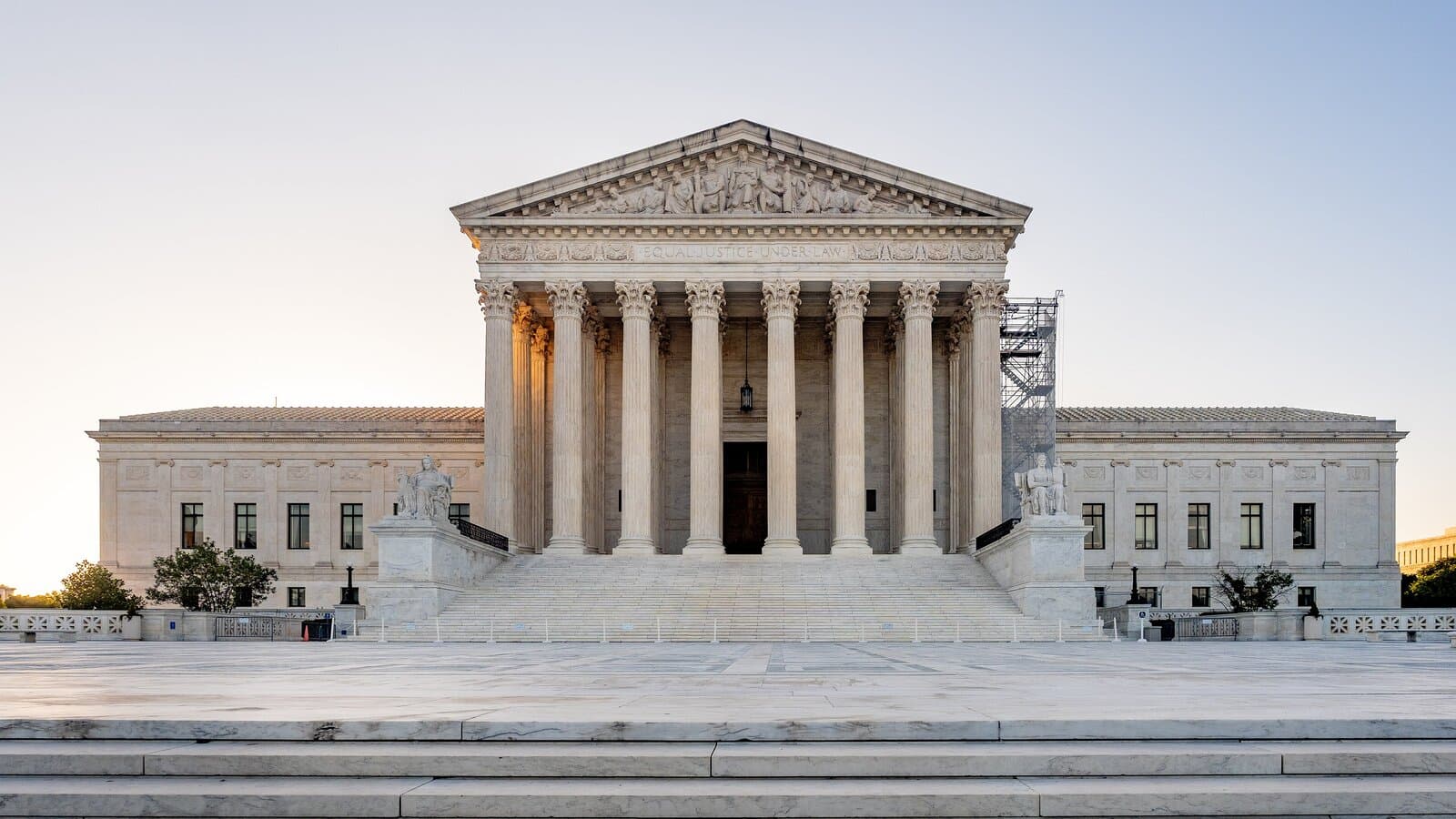
The Supreme Court heard argument on November 10, 2026, over whether the Labor Department may impose H-2A penalties and back wages through its own administrative judges. Sun Valley Orchards says the Constitution requires a federal court.
Case period:
Published by The Dispute Index editorial teamPublished Updated
Overview
In SEC v. Jarkesy (2024), the Supreme Court held that a defendant facing SEC civil penalties for securities fraud was entitled to a jury trial, while recognizing a public-rights exception for matters Congress may assign to the executive branch. The government argues that the H-2A program falls within two such categories, immigration and government-granted privileges. Sun Valley argues that the department pursued breach-of-contract claims and sought common-law remedies, which only a federal court may decide. At the argument, Principal Deputy Solicitor General Sarah M. Harris appeared for the department and Institute for Justice senior attorney Robert E. Johnson for the farm. The Hill reported that several of the Court's conservative justices expressed sympathy with the farm's arguments. The Institute for Justice says the Marino family closed the farm several years ago while the government continued to seek the penalties.
Timeline
3 timeline entries on this page. Dates: July 29, 2025 to November 10, 2026
July 2025
Third Circuit rules that the Labor Department's claims against Sun Valley Orchards must be tried in an Article III court
A Third Circuit panel reverses the district court's dismissal of Sun Valley Orchards' suit and directs judgment for the farm. It holds that the department's claims resemble a suit for breach of contract and seek common-law remedies, so they involve private rights, and it does not reach the farm's statutory argument. The court denies the government's petition for rehearing on October 15, 2025.
[01]United States Department of Justice
The government's merits brief in the Supreme Court, filed June 18, 2026. It sets out the Labor Department's findings against Sun Valley Orchards, the $211,800 in civil penalties and $344,945.80 in back wages ordered by the department's administrative law judge and review board, the rulings below, and the dates of the Third Circuit judgment and the grant of review.
Brief for the petitioners, Department of Labor v. Sun Valley Orchards, LLC, No. 25-966 · United States Department of JusticeJurisdiction, page 1; Statement, part C, pages 14-16[02]Institute for Justice
Sun Valley Orchards' merits brief in the Supreme Court, filed July 27, 2026 by the Institute for Justice. It argues that the Labor Department pursued breach-of-contract claims and sought common-law remedies, so an Article III court must decide them.
Brief for the respondent, Department of Labor v. Sun Valley Orchards, LLC, No. 25-966 · Institute for JusticeIntroduction, pages 1-2
April 2026
Supreme Court agrees to hear the Labor Department's appeal
The Supreme Court grants the government's petition, limited to whether Article III bars the Labor Department from adjudicating proceedings to collect monetary remedies from employers accused of violating H-2A employment terms, and whether 8 U.S.C. 1188(g)(2) authorizes it to do so.
[01]United States Department of Justice
The government's merits brief in the Supreme Court, filed June 18, 2026. It sets out the Labor Department's findings against Sun Valley Orchards, the $211,800 in civil penalties and $344,945.80 in back wages ordered by the department's administrative law judge and review board, the rulings below, and the dates of the Third Circuit judgment and the grant of review.
Brief for the petitioners, Department of Labor v. Sun Valley Orchards, LLC, No. 25-966 · United States Department of JusticeJurisdiction, page 1; Statement, part C, pages 14-16[03]Supreme Court of the United States
Official Supreme Court docket for No. 25-966. It records the April 27, 2026 grant of review limited to two questions, the filed briefs, and the November 10, 2026 argument with counsel for each side.
Supreme Court of the United States: Docket for No. 25-966, Department of Labor v. Sun Valley Orchards, LLC · Supreme Court of the United StatesProceedings and Orders: April 27, 2026 and November 10, 2026 entries[04]Institute for Justice
Institute for Justice release of April 27, 2026 on the Supreme Court's grant of review in Sun Valley Orchards' case, with statements from IJ attorneys and farm owner Joe Marino. It says the Marino family shut down the farm several years ago and that the government still seeks the penalties.
Institute for Justice: Supreme Court to Hear Family Farm's Case Challenging Agency Court that Acts as Prosecutor, Judge and Jury · Institute for JusticeFull release
November 2026
Supreme Court hears argument in Department of Labor v. Sun Valley Orchards
Principal Deputy Solicitor General Sarah M. Harris argues for the Labor Department and Robert E. Johnson of the Institute for Justice for the farm. The Hill reports that several conservative justices expressed sympathy with the farm's arguments and that Harris faced tough questioning on the government's reliance on immigration power, including Justice Neil Gorsuch asking why the statute should be read to allow a whole court system. Harris repeatedly asks the justices to draw clear lines for future cases.
[05]Supreme Court of the United States
Official transcript of the November 10, 2026 Supreme Court argument in Department of Labor v. Sun Valley Orchards, LLC, No. 25-966. Principal Deputy Solicitor General Sarah M. Harris argued for the Labor Department and Robert E. Johnson of the Institute for Justice argued for the farm. The transcript is marked subject to final review.
Supreme Court of the United States: Oral argument transcript, Department of Labor v. Sun Valley Orchards, LLC, No. 25-966 · Supreme Court of the United StatesArgument of Sarah M. Harris from page 3; argument of Robert E. Johnson from page 60; rebuttal from page 113[06]The Hill
Report on the November 10, 2026 Supreme Court argument in Department of Labor v. Sun Valley Orchards, with quotations from Sarah Harris, Rob Johnson, and Justices Gorsuch, Thomas, Sotomayor and Chief Justice Roberts, and the penalty and back-wage amounts at issue.
The Hill: Supreme Court weighs legality of executive branch fines for H-2A visas · The HillFull article
Claims
Claims separate what was said from what is contested. Follow each source for the original wording and context.
What's disputed
Disputed claim
U.S. Department of Labor
The Labor Department may adjudicate H-2A civil penalties and back-wage awards through its own administrative judges because the claims fall within the public-rights categories of immigration and government-granted privileges.
What is disputed
Sun Valley Orchards, represented by the Institute for Justice, argues that the department pursued breach-of-contract claims and sought common-law remedies, so under SEC v. Jarkesy only an Article III court may decide them. The Third Circuit agreed with the farm on July 29, 2025, and the Supreme Court heard the government's appeal on November 10, 2026.
Sources (3)
- Brief for the petitioners, Department of Labor v. Sun Valley Orchards, LLC, No. 25-966 · United States Department of JusticeJurisdiction, page 1; Statement, part C, pages 14-16
- Supreme Court of the United States: Oral argument transcript, Department of Labor v. Sun Valley Orchards, LLC, No. 25-966 · Supreme Court of the United StatesArgument of Sarah M. Harris from page 3; argument of Robert E. Johnson from page 60; rebuttal from page 113
- Brief for the respondent, Department of Labor v. Sun Valley Orchards, LLC, No. 25-966 · Institute for JusticeIntroduction, pages 1-2
Response record
Responses
Choose one response filter, or select All responses to see the full record.
2 matching responses. Newest first.
 U.S. Department of LaborPetitioner, represented at oral argument by Principal Deputy Solicitor General Sarah M. HarrisDirectly involved
Before this statement
Chief Justice John Roberts called the case, Department of Labor v. Sun Valley Orchards, on the morning of November 10, 2026, and Harris opened the argument for the petitioners.
"When a federal statutory claim resembles common-law actions and remedies, this Court presumes private rights are at stake and that Article III adjudication is required. But, as Jarkesy reaffirmed, that presumption is overcome when the federal claim fits within historical categories of public rights. Here, two historical public rights categories overlap: immigration and government-granted privileges."
Defended or excusedResponding to: The Labor Department may adjudicate H-2A civil penalties and back-wage awards through its own administrative judges because the claims fall within the public-rights categories of immigration and government-granted privileges.
Full statement and sources
Arguing for the Labor Department, Principal Deputy Solicitor General Sarah M. Harris told the Supreme Court that H-2A enforcement fits two historical public-rights categories, immigration and government-granted privileges, so the department may adjudicate it without an Article III court.
After the statement
Harris said the government exercises its immigration power on the employer's behalf to grant workers visas and let them stay and work for that employer, who in exchange agrees to comply with the conditions in 8 U.S.C. 1188 and its regulations, and that imposing civil penalties and back wages does not change the answer.
Supreme Court of the United States: Oral argument transcript, Department of Labor v. Sun Valley Orchards, LLC, No. 25-966 · Supreme Court of the United StatesArgument of Sarah M. Harris from page 3; argument of Robert E. Johnson from page 60; rebuttal from page 113Why this label?
The Labor Department argues that its H-2A penalty and back-wage claims against Sun Valley Orchards fall within public-rights categories that Congress may assign to the executive branch, and so defends deciding them before its own administrative judges.
This label describes the statement's response within the context above.
 Institute for JusticeCounsel for Sun Valley Orchards; argued by Institute for Justice senior attorney Robert E. JohnsonDirectly involved
Before this statement
Johnson opened the respondent's argument after Harris finished her argument for the Labor Department.
"This Court in Jarkesy made clear that the public rights exception is an atextual exception to Article III that must be applied carefully and with close attention to history. Yet the government here identifies no history extending the immigration adjudication tradition to the types of claims and remedies at issue here."
CondemnedResponding to: The Labor Department may adjudicate H-2A civil penalties and back-wage awards through its own administrative judges because the claims fall within the public-rights categories of immigration and government-granted privileges.
Full statement and sources
Arguing for Sun Valley Orchards, Institute for Justice senior attorney Robert E. Johnson told the Supreme Court that the public-rights exception must be applied with close attention to history, and that the government identified no history extending it to the claims and remedies against the farm.
After the statement
Johnson said the government's key case, Oceanic Steam, involved penalties tied to the executive's power over who may cross the border, which he called a far cry from a case about labor issues at a New Jersey farm with foreign and domestic workers.
Supreme Court of the United States: Oral argument transcript, Department of Labor v. Sun Valley Orchards, LLC, No. 25-966 · Supreme Court of the United StatesArgument of Sarah M. Harris from page 3; argument of Robert E. Johnson from page 60; rebuttal from page 113The Hill: Supreme Court weighs legality of executive branch fines for H-2A visas · The HillFull articleWhy this label?
The Institute for Justice, as the farm's counsel, argues that the claims fall outside the public-rights exception and belonged in an Article III court, and so opposes the Labor Department's use of its own judges to impose the penalties.
This label describes the statement's response within the context above.
Sources
(8)
Original text
Supreme Court of the United States: Oral argument transcript, Department of Labor v. Sun Valley Orchards, LLC, No. 25-966
Relevant passage: Argument of Sarah M. Harris from page 3; argument of Robert E. Johnson from page 60; rebuttal from page 113
About this source
Official transcript of the November 10, 2026 Supreme Court argument in Department of Labor v. Sun Valley Orchards, LLC, No. 25-966. Principal Deputy Solicitor General Sarah M. Harris argued for the Labor Department and Robert E. Johnson of the Institute for Justice argued for the farm. The transcript is marked subject to final review.
- Author
- Heritage Reporting Corporation, official reporters
- Published
- Accessed
Official statement
Institute for Justice: Supreme Court to Hear Family Farm's Case Challenging Agency Court that Acts as Prosecutor, Judge and Jury
Relevant passage: Full release
About this source
Institute for Justice release of April 27, 2026 on the Supreme Court's grant of review in Sun Valley Orchards' case, with statements from IJ attorneys and farm owner Joe Marino. It says the Marino family shut down the farm several years ago and that the government still seeks the penalties.
- Author
- Institute for Justice
- Published
- Accessed
Original text
Supreme Court of the United States: Docket for No. 25-966, Department of Labor v. Sun Valley Orchards, LLC
Relevant passage: Proceedings and Orders: April 27, 2026 and November 10, 2026 entries
About this source
Official Supreme Court docket for No. 25-966. It records the April 27, 2026 grant of review limited to two questions, the filed briefs, and the November 10, 2026 argument with counsel for each side.
- Author
- Supreme Court of the United States
- Accessed
Original text
Brief amici curiae of the New Civil Liberties Alliance, Americans for Prosperity Foundation, and the Buckeye Institute in support of respondent, No. 25-966
Relevant passage: Summary of the argument, pages 4-5; Argument, part I, page 5
About this source
Amicus brief filed August 3, 2026 by the New Civil Liberties Alliance with Americans for Prosperity Foundation and the Buckeye Institute, supporting Sun Valley Orchards in the Supreme Court.
- Author
- Margaret A. Little and others, New Civil Liberties Alliance
- Published
- Accessed
Official statement
Constitutional Accountability Center: Supreme Court Set to Clarify Public-Rights Doctrine as it Applies to Employers who Benefit from Immigrant Labor
Relevant passage: Full release
About this source
Constitutional Accountability Center release of November 10, 2026, after the Supreme Court argument in Department of Labor v. Sun Valley Orchards, with reactions from appellate counsel Joshua Blecher-Cohen and senior appellate counsel Smita Ghosh. CAC filed an amicus brief supporting the Labor Department in June 2026.
- Author
- Constitutional Accountability Center
- Published
- Accessed
Reporting
The Hill: Supreme Court weighs legality of executive branch fines for H-2A visas
Relevant passage: Full article
About this source
Report on the November 10, 2026 Supreme Court argument in Department of Labor v. Sun Valley Orchards, with quotations from Sarah Harris, Rob Johnson, and Justices Gorsuch, Thomas, Sotomayor and Chief Justice Roberts, and the penalty and back-wage amounts at issue.
- Author
- Zach Schonfeld
- Published
- Accessed
Original text
Brief for the respondent, Department of Labor v. Sun Valley Orchards, LLC, No. 25-966
Relevant passage: Introduction, pages 1-2
About this source
Sun Valley Orchards' merits brief in the Supreme Court, filed July 27, 2026 by the Institute for Justice. It argues that the Labor Department pursued breach-of-contract claims and sought common-law remedies, so an Article III court must decide them.
- Author
- Robert E. Johnson and others, Institute for Justice
- Published
- Accessed
Original text
Brief for the petitioners, Department of Labor v. Sun Valley Orchards, LLC, No. 25-966
Relevant passage: Jurisdiction, page 1; Statement, part C, pages 14-16
About this source
The government's merits brief in the Supreme Court, filed June 18, 2026. It sets out the Labor Department's findings against Sun Valley Orchards, the $211,800 in civil penalties and $344,945.80 in back wages ordered by the department's administrative law judge and review board, the rulings below, and the dates of the Third Circuit judgment and the grant of review.
- Author
- D. John Sauer, Solicitor General, and others
- Published
- Accessed
Share or embed this case
The embed keeps its attribution link to The Dispute Index. Credit the image to The Dispute Index and link to the case page.
Cite this record
- Publisher
- The Dispute Index
- Title
- Supreme Court weighs whether the Labor Department can impose H-2A penalties through its own judges; Sun Valley Orchards says only a federal court can
- First published
- Last updated
- Permalink
- https://disputeindex.com/cases/department-of-labor-v-sun-valley-orchards-h2a-agency-judges
The Dispute Index. "Supreme Court weighs whether the Labor Department can impose H-2A penalties through its own judges; Sun Valley Orchards says only a federal court can". First published: 2026-11-15. Last updated: 2026-11-15. https://disputeindex.com/cases/department-of-labor-v-sun-valley-orchards-h2a-agency-judges