
Are Trump's Section 301 "forced labor" tariffs a lawful remedy, or a pretext to revive struck-down global tariffs?
Businesses and 25 states say Trump's 10% and 12.5% Section 301 tariffs on 60 economies are a pretext to revive struck-down global tariffs. The administration says they lawfully answer forced-labor import failures. As of September 30, 2026, no court has ruled.
Claim in dispute
USTR determined on June 2, 2026 that each of 60 economies' failure to impose and effectively enforce a prohibition on the importation of goods produced with forced labor is unreasonable and burdens or restricts U.S. commerce, and on July 23, 2026, at the President's specific direction, imposed additional duties of 10% or 12.5% as the appropriate action under Section 301 to obtain the elimination of that practice.
Case period:
Published by The Dispute Index editorial teamPublished Updated
Overview
This case asks whether the tariffs the U.S. Trade Representative imposed under Section 301 of the Trade Act of 1974, effective July 24, 2026, are a lawful remedy for other countries' failure to ban imports of goods made with forced labor or, as the challengers argue, a pretext to revive global tariffs that the Supreme Court struck down and a Court of International Trade panel found unauthorized (that ruling is stayed on appeal). Each statement is labeled against one reference point: the Section 301 "forced labor" tariffs themselves, which add 10% or 12.5% to imports from 60 economies. The European Union counts as one economy. The Liberty Justice Center's complaint (opens in a new tab) counts 57 sovereign countries, Taiwan, Hong Kong and the European Union, and says that with the Union's 27 member states the action reaches at least 84 sovereign countries in addition to Taiwan and Hong Kong. The Learning Resources motion (opens in a new tab) puts the figure at 86 countries. Condemned means the speaker rejected the tariffs, for example by calling them unlawful, arbitrary or a pretext. Defended or excused means the speaker defended the tariffs as justified, proper or lawful. Challenged the characterization means the speaker disputed a label or an argument without taking a clear position on lawfulness. The case does not decide whether tariffs are good policy, whether forced labor is a real problem, whether the tariffs will survive an appeal, how refunds would work or what any trade deal contains. Those appear only as attributed background. Everything here is current as of September 30, 2026. As of that date no court had ruled on the Section 301 tariffs, and DI does not predict how the court will rule.
What the statute says, in plain words. Section 301 lets USTR act against a foreign country's practice that it finds "unreasonable or discriminatory" and that "burdens or restricts United States commerce." If USTR finds that and decides action is appropriate, the law says it "shall take all appropriate and feasible action" to "obtain the elimination of that act, policy, or practice," subject to the President's specific direction, and the authorized actions include duties on the country's goods (19 U.S.C. 2411 (opens in a new tab)). The statute calls a practice unreasonable if it is "otherwise unfair and inequitable" and lists examples, among them a persistent pattern of conduct that "permits any form of forced or compulsory labor." A related provision says that kind of labor practice is not treated as unreasonable if USTR determines the country has made "significant and tangible overall advancement" or that the practice is "not inconsistent with the level of economic development of the foreign country." Before it decides, and unless expeditious action is required, USTR must give interested persons a chance to present views, including a public hearing if one is requested, and must publish each determination with the facts it rests on (19 U.S.C. 2414 (opens in a new tab)). The parties read these provisions differently. The plaintiffs say USTR had to find, for each country, an unreasonable practice that burdens U.S. commerce and an action suited to eliminating it, and had to weigh each country's level of development. The government says USTR made findings for each of the 60 economies. Justice Department lawyer Eric Hamilton told the court that "The economic development language is not a requirement for the trade representative to consider," according to Agri-Pulse (opens in a new tab).
How the tariffs got here. On February 20, 2026, the Supreme Court ruled in Learning Resources, Inc. v. Trump (opens in a new tab) that the International Emergency Economic Powers Act (IEEPA) does not authorize the President to impose tariffs. Six justices joined the judgment and three dissented. A passage in Part II-A-2 of the Chief Justice's opinion, which only Justices Gorsuch and Barrett joined, lists Section 301 among the tariff statutes Congress tied to "demanding procedural prerequisites," and both sides in the Section 301 case cite it. The same day Trump issued a proclamation (opens in a new tab) imposing a 10% import surcharge under Section 122 of the Trade Act for 150 days, effective February 24, and USTR announced (opens in a new tab) that it would open "several investigations under Section 301" on an accelerated timeframe, naming forced labor among the areas of concern and describing the steps as taken "to ensure continuity in reaching these goals," which it tied to the aims of the reciprocal tariff program. On May 7 a divided three-judge panel of the Court of International Trade ruled (opens in a new tab) that the Section 122 surcharge was not authorized. Relief went only to the State of Washington and two businesses, including Burlap & Barrel, and the other states' claims were dismissed for lack of standing. On June 11 the Federal Circuit stayed (opens in a new tab) that ruling while the government appeals. The Section 122 surcharge ended at 12:01 a.m. on July 24, the moment the Section 301 duties took effect.
USTR's record and stated rationale. USTR opened 60 investigations on March 12 (notice (opens in a new tab)) and held public hearings on April 28 and 29. On June 2 it determined that each economy's failure to impose and effectively enforce a forced-labor import ban "is unreasonable and burdens or restricts U.S. commerce" (notice (opens in a new tab)). It gave four reasons the failure is unreasonable, including that it "permits firms that avail themselves of forced labor to produce goods at lower cost," and found a burden on U.S. commerce because U.S. producers face unfair competition from forced-labor goods in export markets and the U.S. market and because foreign goods made without forced labor are displaced into the U.S. and other markets. After more than 1,600 comments and hearings on July 7 to 9, USTR acted (opens in a new tab) on July 23: 10% on 17 economies that ban forced-labor imports, have committed to a ban in a trade agreement or have a partial regime, 12.5% on every other economy, and net-of-most-favored-nation rates for the European Union, Taiwan, Japan, Korea and Switzerland, with product exemptions. USTR says the duties cover 99.4% of U.S. imports (fact sheet (opens in a new tab)). The notice of action (opens in a new tab) says each action is taken "in accordance with the specific direction of the President" and that "While the elimination of forced labor generally is not the aim of these Section 301 investigations, as observed in the Report, the prevalence of forced labor has increased in recent years." It states the aim as encouraging each economy to impose and effectively enforce an import ban. We searched the text of USTR's March 17 notice, June 5 notice and July 28 notice, the President's July 23 memorandum (opens in a new tab) and USTR's July 23 release and fact sheet and found no mention of IEEPA, Section 122 or the Supreme Court ruling.
The government's case. The Justice Department's September 4 brief (opens in a new tab) argues that USTR made findings for each of the 60 economies in one report, that its determinations are discretionary and reasonable, that the President's specific direction is "expressly required by Section 301," and that the plaintiffs have not shown standing. On the pretext argument it says "it should come as no surprise that the Section 301 actions at issue in this case are consistent with the Trump Administration's trade policies and priorities," and that public statements by officials "do not vitiate the contemporaneously documented rationale" for USTR's actions. It relies on the Federal Circuit's 2025 decision in HMTX Industries v. United States for the position that the major questions and nondelegation doctrines are not implicated by Section 301. The President's memorandum says each tariff action "is only for the purpose of obtaining the elimination of the specific economy's act, policy, or practice found actionable under section 301 and not for any other purpose." The White House has said the United States "is using its lawful authority" (see the statements below).
The challengers' case. Three groups sued: seven companies led by Learning Resources, Inc. and represented by Akin Gump; Burlap & Barrel and Collective Horology, represented by the Liberty Justice Center; and 25 plaintiffs (23 states and the governors of Kentucky and Pennsylvania) led by the attorneys general of Oregon, Arizona and California. On August 19 the court named (opens in a new tab) the Learning Resources case the sample case and stayed the others. The Liberty Justice Center's clients and the states then filed amicus briefs in the sample case. The plaintiffs argue that Section 301 required country-specific findings and USTR used one shared analysis for all 60 economies; that the action is arbitrary and capricious, because, as the states put it, the rates bear no measured link to forced-labor imports from each economy, keep a 10% floor even for economies USTR says are taking steps, and give no way out; and that the forced-labor rationale is pretextual. For the last point the states' amicus brief collects public statements by officials, including USTR's February 20 statement and Greer's July 22 statement that "the trade strategy has not" changed (Senate Finance (opens in a new tab)), and the plaintiffs cite Trump's July 28 remark. Among other statements on the record, Treasury Secretary Scott Bessent said on February 22 that Section 301 studies would "get us back to the same tariff level" (CNN transcript (opens in a new tab)). The plaintiffs also say they do not condone forced labor. Their motion (opens in a new tab) states "Plaintiffs do not condone reliance on forced labor or forced-labor imports," and the states' complaint (opens in a new tab) says the plaintiff states "oppose forced labor in all its forms."
Amici and commentators. The docket (opens in a new tab) shows ten amicus briefs, all supporting the plaintiffs, and the court granted (opens in a new tab) leave for all ten on September 14. The filers are former trade officials Carla Hills, Alan Wm. Wolff and Warren Maruyama; the Cato Institute, Michael McConnell and Ilya Somin; the Goldwater Institute; the Progressive Policy Institute and Ed Gresser; professors Timothy Meyer and Gregory Shaffer; Consumer Watchdog; professor Barry Appleton; a group of economists that includes American Enterprise Institute scholars; the Liberty Justice Center's clients; and the plaintiff states. As of the docket's last update on September 30, we did not locate an amicus brief supporting the government. Peterson Institute economist William Cline estimates the tariffs are at least 40 to 50 times what the harm from forced labor to U.S. trade would warrant. Some critics also expect courts to defer: Scott Lincicome of the Cato Institute wrote that "Section 301 is more legally durable than the untested IEEPA" and that a court "might simply be unwilling to question the president's determinations and actions" (The Dispatch (opens in a new tab)). The Congressional Research Service said before the final action that it "did not identify any judicial decisions considering the scope of this language," meaning the statute's forced-labor example, and that it may be uncertain whether a country's failure to prevent imports of forced-labor goods fits that example (CRS (opens in a new tab)).
Who defends the tariffs on the record. As of September 30 we found the defense of their lawfulness coming mainly from the government: Greer and USTR, the White House, the Justice Department and Trump. Outside the administration we found named supporters of the policy but no independent legal defender. House Ways and Means Chairman Jason Smith said holding accountable countries that do too little against forced labor "is appropriate" (statement (opens in a new tab)). United Steelworkers president Roxanne Brown said her union welcomes the effort and is "deeply concerned" about extending the tariffs to Canada (USW (opens in a new tab)). Law-firm client alerts are more favorable on process than on merits. Holland & Knight wrote that USTR "has met all statutory requirements of Section 301, including public notice and opportunity to comment, public hearings and consultations with target countries" (alert (opens in a new tab)), and Winston Taylor wrote that the new measures "rest on substantially firmer legal footing" than the IEEPA tariffs (post (opens in a new tab)). These are assessments written for clients rather than arguments in the case. The record is lopsided toward the challengers and we have not padded the defense side.
What no court has decided and what is not yet public. No court has ruled on whether the Section 301 tariffs are lawful. The argument ran from 10 a.m. to 12:30 p.m. ET before Judges Jennifer Choe-Groves, Timothy Reif and Lisa Wang, and CNBC reported (opens in a new tab) that the judges said they will rule as quickly as they can. No date has been announced. Judges questioned both sides, and their questions are not positions. Also undecided are whether the plaintiffs have standing, which the government disputes, what remedy would follow, including whether it would reach people who are not parties, and whether the Federal Circuit will uphold the Section 122 ruling; we did not locate a merits decision there. USTR has not released the results of a separate Section 301 investigation of industrial excess capacity in 16 economies, begun in March (WWD (opens in a new tab)). Sources differ on some figures. CNBC describes the IEEPA refunds as more than $100 billion, while a States Newsroom report (opens in a new tab) says Customs and Border Protection is refunding about $166 billion, and the Supreme Court's opinion (opens in a new tab) did not address refunds. Counts of what the action covers run from 60 economies to 86 countries in the plaintiffs' filings, and some state press releases say more than 80 countries. What Trump and other officials meant by their statements about the earlier tariffs is disputed in the case, and DI records those statements without deciding the question.
People in this case
 Donald TrumpDirectly involved
 Jamieson GreerDirectly involved
 Dan RayfieldDirectly involved
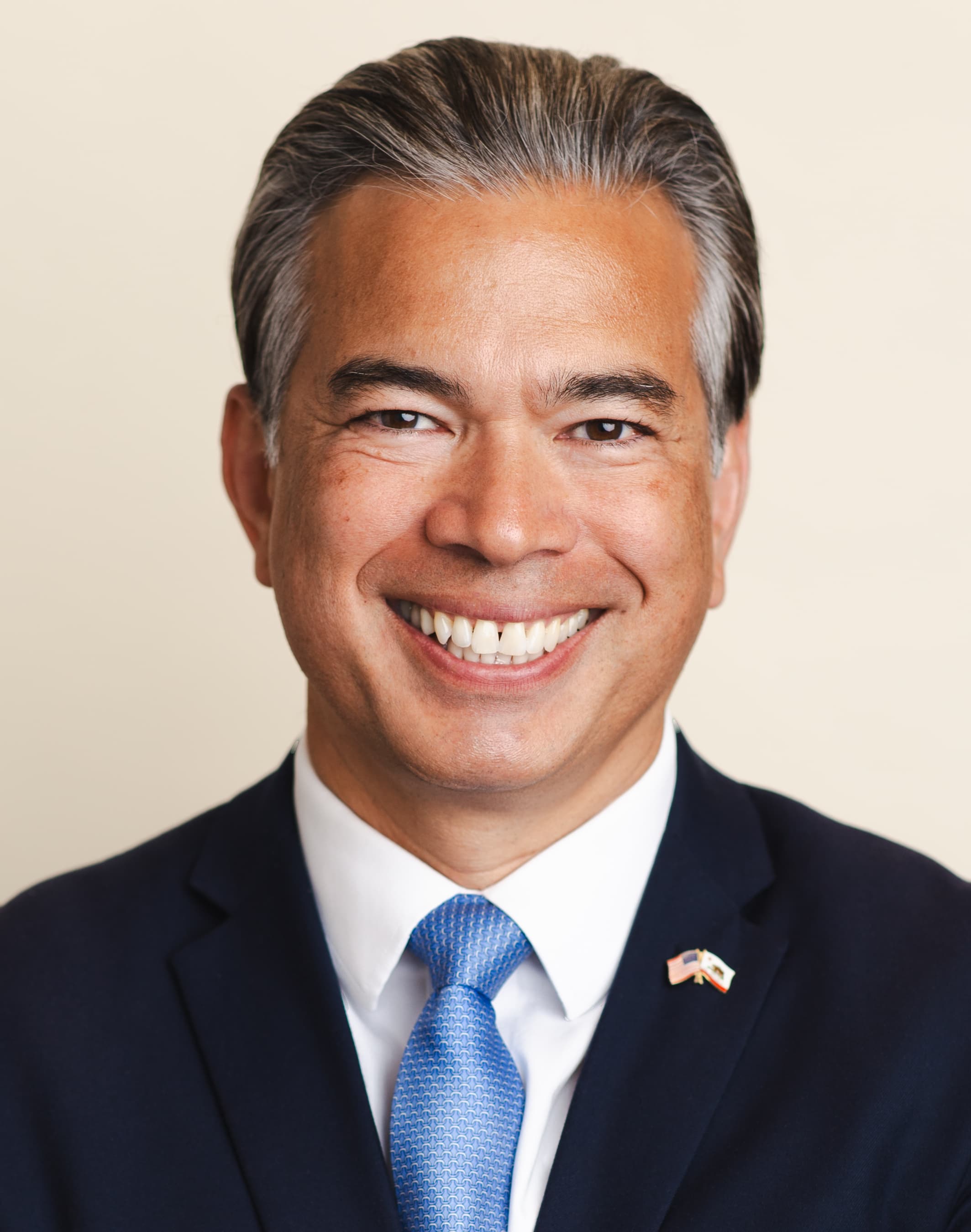 Rob BontaDirectly involved
Timeline
16 timeline entries on this page. Dates: February 20, 2026 to September 30, 2026
February 2026
3 events
Supreme Court holds that IEEPA does not authorize tariffs
Source release
In Learning Resources, Inc. v. Trump, argued November 5, 2025 and decided February 20, 2026, the Supreme Court held that the International Emergency Economic Powers Act does not authorize the President to impose tariffs. Chief Justice Roberts announced the judgment and wrote the opinion of the Court in part; Justices Sotomayor, Kagan, Gorsuch, Barrett and Jackson joined all or part of it, and Justices Thomas, Alito and Kavanaugh dissented. In dissent, Justice Kavanaugh wrote that the decision "might not substantially constrain a President's ability to order tariffs going forward" because other statutes authorize tariffs, and he named Section 301 among them. A passage in Part II-A-2 of the Chief Justice's opinion, which only Justices Gorsuch and Barrett joined, lists Section 301 among the tariff statutes subject to "demanding procedural prerequisites." The opinion does not address refunds of tariffs already paid.
[01]Learning Resources, Inc. v. Trump (Supreme Court of the United States, Nos. 24-1287 and 25-250), slip opinion
Source excerpt
Held: IEEPA does not authorize the President to impose tariffs.
The Court's February 20, 2026 decision, argued November 5, 2025. Chief Justice Roberts announced the judgment and wrote the opinion, joined in full by Justices Sotomayor, Kagan, Gorsuch, Barrett and Jackson for Parts I, II-A-1 and II-B; Justices Thomas, Alito and Kavanaugh dissented. The decision concerns IEEPA only. A passage in Part II-A-2, which only Justices Gorsuch and Barrett joined, lists Section 301 among tariff statutes that carry procedural conditions, and both sides in the Section 301 litigation cite it.
Learning Resources, Inc. v. Trump (Supreme Court of the United States, Nos. 24-1287 and 25-250), slip opinion · Supreme Court of the United StatesSyllabus (Held); Part II-A-2, pages 8-9 (plurality) on the "demanding procedural prerequisites" of tariff statutes; Kavanaugh, J., dissenting, pages 5-6 (quoted passage) and 62-63 (appendix on Section 301)Trump announces a 10% Section 122 surcharge and new Section 301 investigations; USTR says it will act "to ensure continuity"
Source release
At a news conference on the day of the ruling, Trump said he would sign an order imposing a 10-percent global tariff under Section 122 "and we're also initiating several section 301 and other investigations to protect our country from unfair trading practices of other countries and companies," and that "other alternatives will now be used to replace the ones that the Court incorrectly rejected." Proclamation 11012 imposed a 10% surcharge for 150 days, effective February 24. USTR's statement said alternative tools would be implemented and that the administration would take steps "to ensure continuity" including investigations under Section 301 on an accelerated timeframe "in keeping with the Section 301 statute's substantive and procedural requirements." It listed forced labor among the areas of concern the investigations would address. The plaintiffs in the Section 301 case cite this statement as evidence of pretext, and the government says the stated rationale for the forced-labor action is documented in USTR's own record.
[02]Imposing a Temporary Import Surcharge to Address Fundamental International Payments Problems (Proclamation 11012, February 20, 2026)
Source excerpt
Accordingly, I impose, for a period of 150 days, a temporary import surcharge of 10 percent ad valorem, as described below, on articles imported into the United States, effective February 24, 2026.
The proclamation imposing a 10% import surcharge under Section 122 of the Trade Act of 1974 on the day of the Supreme Court decision. Section 122 limits such a surcharge to 150 days unless Congress extends it.
Imposing a Temporary Import Surcharge to Address Fundamental International Payments Problems (Proclamation 11012, February 20, 2026) · The White HouseOperative paragraph imposing the surcharge for 150 days effective February 24, 2026[03]The President's News Conference, February 20, 2026 (transcript, American Presidency Project)
Source excerpt
Today I will sign an order to impose a 10-percent global tariff under section 122, over and above our normal tariffs already being charged, and we're also initiating several section 301 and other investigations to protect our country from unfair trading practices of other countries and companies.
Transcript of Trump's news conference on the day of the Supreme Court ruling, where he announced the Section 122 surcharge and Section 301 investigations. A Roll Call Factba.se transcript carries the same remarks.
The President's News Conference, February 20, 2026 (transcript, American Presidency Project)Opening remarks after the Supreme Court decision[04]Ambassador Greer Issues Statement on Supreme Court IEEPA Decision (USTR, February 20, 2026)
Source excerpt
Initiate several investigations under Section 301 of the Trade Act of 1974 ("Section 301") to deal with unjustifiable, unreasonable, discriminatory, and burdensome acts, policies, and practices by many trading partners.
USTR's statement on the day of the Supreme Court ruling. It says alternative tools would be implemented, lists a 10% Section 122 surcharge and new Section 301 investigations as steps taken "to ensure continuity," and names forced labor among the areas of concern the investigations would address. Both sides cite it.
Ambassador Greer Issues Statement on Supreme Court IEEPA Decision (USTR, February 20, 2026) · Office of the United States Trade RepresentativeParagraphs beginning "For many months" and "The Trump Administration will take the following actions"Greer and Bessent describe the Section 122 surcharge as a bridge to Section 301 and 232 tariffs
Claim
Two days after the ruling, Greer told ABC's This Week that "the policy hasn't changed" and "we're aiming for continuity," and that Section 301 investigations would follow the Section 122 surcharge. Treasury Secretary Scott Bessent told CNN's State of the Union that during the surcharge period "it is very likely that those studies will result in higher 232s, higher 301s, and it will get us back to the same tariff level." The states' complaint cites other statements from the same days, including USTR's February 20 release and Bessent's February 20 remarks in Dallas. The government's September 4 brief says the Section 301 actions are "consistent with the Trump Administration's trade policies and priorities" and that officials' public statements saying so "do not vitiate the contemporaneously documented rationale" for USTR's actions.
[05]This Week transcript, February 22, 2026: U.S. Trade Representative Jamieson Greer (ABC News)
Source excerpt
And so, the policy hasn't changed. The legal tool to implement it, that might change, but the policy hasn't changed. And so, we're aiming for continuity.
Greer's Sunday interview two days after the ruling. He says the policy has not changed and that Section 301 investigations will follow the Section 122 surcharge. The Section 301 plaintiffs quote it to argue the investigations were planned to continue the earlier tariffs.
This Week transcript, February 22, 2026: U.S. Trade Representative Jamieson Greer (ABC News)Greer's answers on what replaces the Supreme Court-invalidated tariffs[06]State of the Union transcript, February 22, 2026: Treasury Secretary Scott Bessent (CNN)
Source excerpt
So, during that time, it is very likely that those studies will result in higher 232s, higher 301s, and it will get us back to the same tariff level.
Treasury Secretary Scott Bessent's Sunday interview two days after the ruling, describing the Section 122 surcharge as a bridge while Section 232 and Section 301 studies proceed. Plaintiffs and the states cite his statements about restoring the earlier tariff level.
State of the Union transcript, February 22, 2026: Treasury Secretary Scott Bessent (CNN) · CNNBessent's answer on what the Section 122 period will produce[07]In re Section 301 Forced Labor Cases, Court No. 26-cv-3555-3JP: Defendant's Response in Opposition to Rule 56.1 Motion for Judgment on the Agency Record (ECF No. 22, September 4, 2026)
Source excerpt
The actions that USTR has taken at the direction of the President in this case are consistent with the text, object, and purpose of the Section 301 statute,
The government's brief in the sample case. It argues that USTR made findings for each of the 60 economies, that its determinations are reasonable and entitled to deference, that the President's specific direction is expressly required by Section 301, that the pretext argument is baseless, that plaintiffs have not shown standing, and that any relief should be limited. It relies on the Federal Circuit's 2025 decision in HMTX Industries v. United States.
In re Section 301 Forced Labor Cases, Court No. 26-cv-3555-3JP: Defendant's Response in Opposition to Rule 56.1 Motion for Judgment on the Agency Record (ECF No. 22, September 4, 2026) · United States Department of JusticeIntroduction, pages 1-3; Summary of Argument, pages 16-19[08]State of Oregon et al. v. Trump, Court of International Trade No. 26-03467: complaint (August 3, 2026)
Source excerpt
The Plaintiff States oppose forced labor in all its forms and support protections for workers around the globe. But the Administration cannot use forced labor as a pretext to continue its illegal tariff scheme.
The complaint of 25 plaintiffs (23 states and the governors of Kentucky and Pennsylvania). It alleges the tariff action is arbitrary, capricious and contrary to law, that the 60 investigations were completed in a fraction of the time such investigations usually take, and that the administration's own statements show the investigation was planned to continue the earlier tariffs. Under the court's August 19 order the states' case is stayed behind the Learning Resources sample case.
State of Oregon et al. v. Trump, Court of International Trade No. 26-03467: complaint (August 3, 2026) · Dan RayfieldComplaint, paragraphs 1-10 and 56-78 (ECF No. 2); the California attorney general's copy is cited
18 days between recorded events
March 2026
1 event
USTR opens 60 Section 301 investigations into forced-labor import bans
Source release
USTR initiated 60 investigations into whether economies' failure to impose and effectively enforce a prohibition on the importation of goods produced with forced labor is actionable under Section 301. The notice, published March 17, set public hearings beginning April 28 and a comment deadline of April 15. USTR says it held hearings on April 28 and 29, consulted more than 45 governments and received more than 2,100 public comments in the investigations.
[09]Initiation of Section 301 Investigations of Acts, Policies, and Practices of Various Economies Related to the Failure To Impose and Effectively Enforce a Prohibition on the Importation of Goods Produced With Forced Labor (91 FR 12884)
Source excerpt
The U.S. Trade Representative (Trade Representative) is initiating investigations with respect to acts, policies, and practices of the economies listed in Annex A of this notice related to the failure to impose and effectively enforce a prohibition on the importation of goods produced with forced labor.
USTR's notice opening the 60 investigations, with the hearing schedule beginning April 28, 2026 and the comment deadline of April 15. It states that the Trade Representative initiated the investigations on March 12, 2026.
Initiation of Section 301 Investigations of Acts, Policies, and Practices of Various Economies Related to the Failure To Impose and Effectively Enforce a Prohibition on the Importation of Goods Produced With Forced Labor (91 FR 12884) · Office of the United States Trade RepresentativeSummary and Dates; USTR says it initiated the investigations on March 12, 2026[10]USTR Takes Action in Forced Labor Section 301 Investigations (press release, July 23, 2026)
Source excerpt
Today, Ambassador Jamieson Greer is taking final action, at President Trump's direction, under Section 301 of the Trade Act of 1974 by imposing tariffs on 60 economies for their failure to impose and effectively enforce a prohibition on the importation of goods produced with forced labor.
USTR's announcement of the final action. It lists the 17 economies at 10% (Argentina, Bangladesh, Cambodia, Canada, Ecuador, El Salvador, Guatemala, Honduras, India, Indonesia, Jordan, Malaysia, Mexico, Pakistan, Sri Lanka, Trinidad and Tobago and the United Kingdom), the net-of-most-favored-nation rates for the European Union, Taiwan, Japan, Korea and Switzerland, and 12.5% for every other investigated economy. It gives the investigation timeline and quotes Greer.
USTR Takes Action in Forced Labor Section 301 Investigations (press release, July 23, 2026) · Office of the United States Trade RepresentativePress release text, quotation attributed to Ambassador Jamieson Greer, and Background section
56 days between recorded events
May 2026
1 event
Court of International Trade rules the Section 122 surcharge was not authorized
Source release
A divided three-judge panel of the Court of International Trade held in Oregon v. United States and Burlap and Barrel, Inc. v. United States that Proclamation 11012 was invalid because the trade and current-account deficits are not balance-of-payments deficits as Section 122 uses the term. Chief Judge Mark Barnett and Judge Claire Kelly formed the majority and Judge Timothy Stanceu dissented. The court gave relief to the State of Washington, Burlap and Barrel and Basic Fun and dismissed the other plaintiff states' claims for lack of standing. The ruling rests on the text of Section 122 and does not address pretext.
[11]Oregon v. United States and Burlap and Barrel, Inc. v. United States, Slip Op. 26-47 (Court of International Trade, May 7, 2026): opinion and order on the Section 122 tariffs
Source excerpt
Proclamation No. 11012 is invalid, and the tariffs imposed on Plaintiffs are unauthorized by law.
A divided three-judge panel held that the Section 122 surcharge was not authorized because the trade and current-account deficits are not balance-of-payments deficits as the statute uses the term. Relief went to the State of Washington, Burlap and Barrel, Inc. and Basic Fun, Inc.; the claims of the other plaintiff states were dismissed for lack of standing. The decision rests on the text of Section 122, not on any finding about pretext.
Oregon v. United States and Burlap and Barrel, Inc. v. United States, Slip Op. 26-47 (Court of International Trade, May 7, 2026): opinion and order on the Section 122 tariffs · U.S. Court of International TradeConclusion and order, page 53; the opinion's holding at page 46; Judge Stanceu's dissent follows
26 days between recorded events
June 2026
2 events
USTR finds the 60 economies' practices actionable and proposes 10% and 12.5% duties
Source release
USTR determined that each economy's failure to impose and effectively enforce a forced-labor import prohibition "is unreasonable and burdens or restricts U.S. commerce," and proposed duties of 10% on economies that have a ban, have committed to one in a trade agreement or have a partial regime, and 12.5% on all others. The determinations were published June 5 with a comment deadline of July 6. USTR found that 54 economies had failed to impose and effectively enforce a ban and that six (Canada, Ecuador, the European Union, Indonesia, Mexico and Pakistan) had a prohibition they did not effectively enforce.
[12]Notice of Determinations and Request for Comments Concerning Actions in Section 301 Investigations of Acts, Policies, and Practices of Various Economies Related to the Failure To Impose and Effectively Enforce a Prohibition on the Importation of Goods Produced With Forced Labor (91 FR 34272)
Source excerpt
The failure of each of the investigated economies to impose and effectively enforce a forced labor import prohibition is unreasonable because it: (1) undermines the universal aim of eliminating forced labor;
USTR's June 2, 2026 determinations and proposed action, published June 5. USTR gives four reasons the failure to impose and effectively enforce a forced-labor import prohibition is unreasonable, says it burdens or restricts U.S. commerce by exposing U.S. producers to unfair competition and displacing goods made without forced labor, and proposes duties of 10% or 12.5%. USTR also responds to comments that raised legal objections to the finding of unreasonableness.
Notice of Determinations and Request for Comments Concerning Actions in Section 301 Investigations of Acts, Policies, and Practices of Various Economies Related to the Failure To Impose and Effectively Enforce a Prohibition on the Importation of Goods Produced With Forced Labor (91 FR 34272) · Office of the United States Trade RepresentativeSection III (determinations on acts, policies, and practices) and section V (responses to significant comments)[10]USTR Takes Action in Forced Labor Section 301 Investigations (press release, July 23, 2026)
Source excerpt
Today, Ambassador Jamieson Greer is taking final action, at President Trump's direction, under Section 301 of the Trade Act of 1974 by imposing tariffs on 60 economies for their failure to impose and effectively enforce a prohibition on the importation of goods produced with forced labor.
USTR's announcement of the final action. It lists the 17 economies at 10% (Argentina, Bangladesh, Cambodia, Canada, Ecuador, El Salvador, Guatemala, Honduras, India, Indonesia, Jordan, Malaysia, Mexico, Pakistan, Sri Lanka, Trinidad and Tobago and the United Kingdom), the net-of-most-favored-nation rates for the European Union, Taiwan, Japan, Korea and Switzerland, and 12.5% for every other investigated economy. It gives the investigation timeline and quotes Greer.
USTR Takes Action in Forced Labor Section 301 Investigations (press release, July 23, 2026) · Office of the United States Trade RepresentativePress release text, quotation attributed to Ambassador Jamieson Greer, and Background sectionFederal Circuit stays the Section 122 injunction pending the government's appeal
Source release
In a nonprecedential order, the Federal Circuit granted the government's motion to stay the Court of International Trade's injunction on the Section 122 surcharge, saying it was persuaded the lower court's reading of "balance-of-payments deficit" may be incorrect while stating it was not offering its own interpretation at this stage. The surcharge stayed in effect until it expired in July. As of September 30, 2026, we did not locate a Federal Circuit merits decision.
[13]State of Oregon v. Trump, Nos. 2026-1804 and 2026-1805 (Federal Circuit, June 11, 2026): order granting stay pending appeal (copy hosted by Reason)
Source excerpt
Without prejudicing the ultimate disposition of these consolidated appeals by a merits panel, we conclude based upon the papers submitted that a stay is warranted under the circumstances.
The Federal Circuit's nonprecedential order staying the Court of International Trade's injunction on the Section 122 surcharge while the government's appeal proceeds. It says it does not offer its own interpretation of Section 122 at this stage. We did not locate the order on the court's own site, so the cited copy is the one Reason published.
41 days between recorded events
July 2026
4 events
Greer tells the Senate Finance Committee the authorities have changed but "the trade strategy has not"
Claim
In a prepared statement for a Senate Finance Committee hearing, Greer said the national emergency that defined 2025 trade policy "still exists," that "The specific authorities this Administration is using have changed, but the trade strategy has not," and that the administration is continuing to impose tariffs and negotiate deals. On the forced-labor investigations he said USTR's report found the failure to ban forced-labor imports unreasonable and a burden on U.S. commerce, and that the final action was expected as soon as the next day. The states and plaintiffs quote the first passage as evidence the Section 301 tariffs continue the earlier program.
[14]Greer opening statement, Senate Finance Committee hearing on the President's 2026 trade policy agenda (July 22, 2026)
Source excerpt
The specific authorities this Administration is using have changed, but the trade strategy has not.
Greer's prepared statement for the hearing the Senate Finance Committee held on July 22, 2026. Page 3 describes the forced-labor investigations and the proposed 10% and 12.5% duties. Page 1 says the specific authorities have changed but the trade strategy has not. The statement text is the PDF served at https://www.finance.senate.gov/download/07222026-greer-opening-statement&download=1; the archive copy captures only the download page. The committee's hearing page is https://www.finance.senate.gov/hearings/rescheduled-the-presidents-2026-trade-policy-agenda.
Greer opening statement, Senate Finance Committee hearing on the President's 2026 trade policy agenda (July 22, 2026) · Office of the United States Trade RepresentativeWritten statement, page 1 (national emergency and strategy) and page 3 (the forced-labor investigations)[15]Proposed Brief of Plaintiff States as Amici Curiae in Support of the Motion for Judgment on the Agency Record, ECF No. 46-1, September 11, 2026
Source excerpt
The stated rationale for the Tariff Action is pretextual.
The states' amicus brief in the sample case. It collects public statements by administration officials, including USTR's February 20 statement and Bessent's and Greer's remarks, as evidence that the forced-labor rationale is pretextual.
Proposed Brief of Plaintiff States as Amici Curiae in Support of the Motion for Judgment on the Agency Record, ECF No. 46-1, September 11, 2026 · Dan RayfieldArgument section A, pages 3-10 (administration statements cited as evidence of pretext)USTR imposes 10% and 12.5% duties on 60 economies at the President's direction
After more than 1,600 written comments and public hearings on July 7 to 9 at which USTR says more than 100 witnesses testified, USTR took final action on July 23 under Section 301. It imposed 10% on 17 economies that ban forced-labor imports, have committed to a ban in a trade agreement or have a partial regime, 12.5% on all other investigated economies, and rates net of most-favored-nation duties for the European Union, Taiwan, Japan, Korea and Switzerland, with product exemptions and tariff-rate quotas for some textile imports. USTR says the action covers 99.4% of U.S. imports. The President's memorandum of the same date gave the specific direction on the actions to take.
[16]Notice of Actions in Section 301 Investigations of Acts, Policies, and Practices of Various Economies Related to the Failure of Each Economy To Impose and Effectively Enforce a Prohibition on the Importation of Goods Produced With Forced Labor (91 FR 47318)
Source excerpt
In accordance with the specific direction of the President, the Trade Representative is taking actions in each of these investigations by imposing tariffs on all products of the investigated economy, with certain exemptions as provided in Annexes I and II to this notice
USTR's notice of final action in the 60 forced-labor investigations. It sets the 10% and 12.5% additional duties effective 12:01 a.m. eastern time on July 24, 2026, lists the product exemptions and tariff-rate quotas, and says each action is taken in accordance with the specific direction of the President. USTR released the notice on July 23, 2026 and the Federal Register published it on July 28.
Notice of Actions in Section 301 Investigations of Acts, Policies, and Practices of Various Economies Related to the Failure of Each Economy To Impose and Effectively Enforce a Prohibition on the Importation of Goods Produced With Forced Labor (91 FR 47318) · Office of the United States Trade RepresentativeSummary and section II (determinations of action in each investigation), with exemptions in Annexes I and II; published in the Federal Register on July 28, 2026 after USTR released it on July 23[17]Memorandum of July 23, 2026: Actions by the United States in the Investigations Under Section 301 of the Trade Act of 1974 of the Acts, Policies, and Practices of 60 Economies (91 FR 47717)
Source excerpt
Each tariff action directed in this memorandum is only for the purpose of obtaining the elimination of the specific economy's act, policy, or practice found actionable under section 301 and not for any other purpose.
The President's memorandum to the U.S. Trade Representative giving the specific direction on the actions to take in the 60 investigations. The Justice Department quotes its statement of purpose in its brief.
Memorandum of July 23, 2026: Actions by the United States in the Investigations Under Section 301 of the Trade Act of 1974 of the Acts, Policies, and Practices of 60 Economies (91 FR 47717) · Donald TrumpPresidential Documents, 91 FR 47717 (published July 28, 2026); the memorandum is dated July 23, 2026[10]USTR Takes Action in Forced Labor Section 301 Investigations (press release, July 23, 2026)
Source excerpt
Today, Ambassador Jamieson Greer is taking final action, at President Trump's direction, under Section 301 of the Trade Act of 1974 by imposing tariffs on 60 economies for their failure to impose and effectively enforce a prohibition on the importation of goods produced with forced labor.
USTR's announcement of the final action. It lists the 17 economies at 10% (Argentina, Bangladesh, Cambodia, Canada, Ecuador, El Salvador, Guatemala, Honduras, India, Indonesia, Jordan, Malaysia, Mexico, Pakistan, Sri Lanka, Trinidad and Tobago and the United Kingdom), the net-of-most-favored-nation rates for the European Union, Taiwan, Japan, Korea and Switzerland, and 12.5% for every other investigated economy. It gives the investigation timeline and quotes Greer.
USTR Takes Action in Forced Labor Section 301 Investigations (press release, July 23, 2026) · Office of the United States Trade RepresentativePress release text, quotation attributed to Ambassador Jamieson Greer, and Background section[18]Fact Sheet: USTR Section 301 Action in Response to the Failure of 60 Economies to Ban Imports Produced with Forced Labor (July 23, 2026)
Source excerpt
This action applies to the top 60 U.S. trade partners covering 99.4% of U.S. imports.
USTR's own summary of the action: a 10% or 12.5% tariff on 60 trading partners covering 99.4% of U.S. imports, with the exclusions it lists. It says 10 trading partners have agreed to enact a forced-labor import ban in their Agreements on Reciprocal Trade.
Fact Sheet: USTR Section 301 Action in Response to the Failure of 60 Economies to Ban Imports Produced with Forced Labor (July 23, 2026) · Office of the United States Trade RepresentativeFact sheet text, opening paragraphs and the section on exclusionsSection 301 duties take effect as the Section 122 surcharge ends; businesses sue
The Section 301 duties applied from 12:01 a.m. eastern time on July 24, 2026, the moment the 150-day Section 122 surcharge ended. The same day Burlap & Barrel and Collective Horology sued through the Liberty Justice Center, and Learning Resources, Inc. and six other companies sued through Akin Gump. Both complaints argue that USTR did not make the economy-by-economy findings Section 301 requires, and the Liberty Justice Center's complaint alleges the forced-labor rationale "is simply a pretext for tariffs."
[16]Notice of Actions in Section 301 Investigations of Acts, Policies, and Practices of Various Economies Related to the Failure of Each Economy To Impose and Effectively Enforce a Prohibition on the Importation of Goods Produced With Forced Labor (91 FR 47318)
Source excerpt
In accordance with the specific direction of the President, the Trade Representative is taking actions in each of these investigations by imposing tariffs on all products of the investigated economy, with certain exemptions as provided in Annexes I and II to this notice
USTR's notice of final action in the 60 forced-labor investigations. It sets the 10% and 12.5% additional duties effective 12:01 a.m. eastern time on July 24, 2026, lists the product exemptions and tariff-rate quotas, and says each action is taken in accordance with the specific direction of the President. USTR released the notice on July 23, 2026 and the Federal Register published it on July 28.
Notice of Actions in Section 301 Investigations of Acts, Policies, and Practices of Various Economies Related to the Failure of Each Economy To Impose and Effectively Enforce a Prohibition on the Importation of Goods Produced With Forced Labor (91 FR 47318) · Office of the United States Trade RepresentativeSummary and section II (determinations of action in each investigation), with exemptions in Annexes I and II; published in the Federal Register on July 28, 2026 after USTR released it on July 23[02]Imposing a Temporary Import Surcharge to Address Fundamental International Payments Problems (Proclamation 11012, February 20, 2026)
Source excerpt
Accordingly, I impose, for a period of 150 days, a temporary import surcharge of 10 percent ad valorem, as described below, on articles imported into the United States, effective February 24, 2026.
The proclamation imposing a 10% import surcharge under Section 122 of the Trade Act of 1974 on the day of the Supreme Court decision. Section 122 limits such a surcharge to 150 days unless Congress extends it.
Imposing a Temporary Import Surcharge to Address Fundamental International Payments Problems (Proclamation 11012, February 20, 2026) · The White HouseOperative paragraph imposing the surcharge for 150 days effective February 24, 2026[19]Burlap and Barrel, Inc. and Collective Horology LLC v. Greer, Court of International Trade No. 26-03345: complaint (July 24, 2026)
Source excerpt
But the purported rationale of addressing forced labor is simply a pretext for tariffs.
The first complaint against the Section 301 tariffs, filed the day they took effect by two small businesses represented by the Liberty Justice Center. It alleges that USTR did not make economy-by-economy findings, that the action was arbitrary and capricious, and that the forced-labor rationale is a pretext. The Liberty Justice Center's copy is cited.
Burlap and Barrel, Inc. and Collective Horology LLC v. Greer, Court of International Trade No. 26-03345: complaint (July 24, 2026) · Liberty Justice CenterComplaint, paragraph 48, page 16 (ECF No. 2)[20]Learning Resources, Inc. et al. v. United States, Court of International Trade No. 1:26-cv-03347: complaint (July 24, 2026)
Source excerpt
This action challenges the Administration's third attempt—under a third proffered statutory authority, after the first two attempts were held invalid—to impose essentially the same set of sweeping global tariffs on virtually all imports into the United States.
The complaint of Learning Resources, Inc., hand2mind, Inc., HMTX Industries LLC, Halstead New England Corporation, Metroflor Corporation, Shannon Specialty Floors LLC and shopHMTX LLC, filed the day the Section 301 duties took effect. The court later named this case the sample case. Learning Resources was also a petitioner in the Supreme Court's IEEPA case.
Learning Resources, Inc. et al. v. United States, Court of International Trade No. 1:26-cv-03347: complaint (July 24, 2026)Complaint, paragraphs 1-4, pages 1-2 (ECF No. 4); the copy Reason published is cited[21]Liberty Justice Center Challenges Unlawful Section 301 Tariffs as Administration Replaces Expiring Section 122 Tariffs (press release, July 24, 2026)
Source excerpt
Forced labor is morally indefensible, but an important objective does not give the government permission to ignore the law," said Sara Albrecht, Chairman and CEO of the Liberty Justice Center.
The Liberty Justice Center's announcement of the Burlap and Barrel and Collective Horology complaint, with statements from Sara Albrecht, litigation director Jeffrey Schwab and the two companies' founders. It says the case does not dispute that governments should combat forced labor and asks the court to declare the tariffs unlawful and preserve refunds.
Liberty Justice Center Challenges Unlawful Section 301 Tariffs as Administration Replaces Expiring Section 122 Tariffs (press release, July 24, 2026) · Liberty Justice CenterParagraph quoting Sara Albrecht, Chairman and CEO of the Liberty Justice CenterTrump says on Fox & Friends he has "other ways of doing the same thing"
Claim
Asked on Fox & Friends whether the tariffs he put forward over the previous days would hurt the economy, Trump said it is "a shame that I have to go a harder way for the tariffs" because the Supreme Court ruled against him, and that he has "other ways of doing the same thing." CNBC reported the remark under a headline saying the new tariffs are the same as those the Supreme Court struck down. Sara Albrecht of the Liberty Justice Center said it bolsters the challengers' argument. Trump did not name Section 301 or forced labor.
[22]Trump says tariffs have made the US 'a fortune' (Fox & Friends clip, July 28, 2026)
Source excerpt
it's a shame that I have to go a harder way for the tariffs because the Supreme Court in a very close decision, you know, ruled against me. Now I have other ways of doing the same thing, but it's a more cumbersome, you know, way of doing it.
Fox News's clip of President Trump on Fox & Friends on Tuesday, July 28, 2026. The host asks whether the tariffs announced over the previous days will hurt the economy. We transcribed the audio ourselves; CNBC's quotation of the same lines differs from our transcription only in commas.
Trump says tariffs have made the US 'a fortune' (Fox & Friends clip, July 28, 2026) · Fox News2:21 clip; the passage quoted runs from about 0:54 to 1:12 (our transcription of the audio)[23]Trump: New tariffs 'doing the same thing' as the ones struck down by Supreme Court (CNBC, July 28, 2026)
Source excerpt
"This statement bolsters our argument," Albrecht told CNBC in an emailed statement.
CNBC's report on the remark. Its headline and key points describe the tariffs as "doing the same thing" as those the Supreme Court struck down. Trump's own words, quoted in the article and in the Fox clip, are "other ways of doing the same thing."
Trump: New tariffs 'doing the same thing' as the ones struck down by Supreme Court (CNBC, July 28, 2026) · CNBCReport on Trump's Fox & Friends interview; includes a statement from Sara Albrecht of the Liberty Justice Center
August 2026
2 events
Twenty-five plaintiffs sue; the White House says the United States is using its lawful authority
Twenty-five plaintiffs, 23 states and the governors of Kentucky and Pennsylvania, filed State of Oregon et al. v. Trump in the Court of International Trade, led by the attorneys general of Oregon, Arizona and California. The complaint alleges the tariff action is arbitrary, capricious and contrary to law and that the administration "cannot use forced labor as a pretext to continue its illegal tariff scheme." White House spokesman Kush Desai said the United States "is using its lawful authority to obtain the elimination of unreasonable acts, policies, and practices that burden U.S. commerce."
[08]State of Oregon et al. v. Trump, Court of International Trade No. 26-03467: complaint (August 3, 2026)
Source excerpt
The Plaintiff States oppose forced labor in all its forms and support protections for workers around the globe. But the Administration cannot use forced labor as a pretext to continue its illegal tariff scheme.
The complaint of 25 plaintiffs (23 states and the governors of Kentucky and Pennsylvania). It alleges the tariff action is arbitrary, capricious and contrary to law, that the 60 investigations were completed in a fraction of the time such investigations usually take, and that the administration's own statements show the investigation was planned to continue the earlier tariffs. Under the court's August 19 order the states' case is stayed behind the Learning Resources sample case.
State of Oregon et al. v. Trump, Court of International Trade No. 26-03467: complaint (August 3, 2026) · Dan RayfieldComplaint, paragraphs 1-10 and 56-78 (ECF No. 2); the California attorney general's copy is cited[24]25 states sue over Trump's new tariffs, calling them 'pretext' to replace his old ones (Associated Press, August 3, 2026; Anchorage Daily News copy)
Source excerpt
The United States is using its lawful authority to obtain the elimination of unreasonable acts, policies, and practices that burden U.S. commerce," White House spokesman Kush Desai said.
The Associated Press's report on the states' lawsuit, with the White House's response from spokesman Kush Desai. CBS News and other outlets carried the same Desai statement.
25 states sue over Trump's new tariffs, calling them 'pretext' to replace his old ones (Associated Press, August 3, 2026; Anchorage Daily News copy) · Associated PressParagraph quoting White House spokesman Kush Desai[25]25 states sue Trump administration over latest round of tariffs (CBS News, August 3, 2026)
Source excerpt
The United States is using its lawful authority to obtain the elimination of unreasonable acts, policies and practices that burden U.S. commerce," White House spokesman Kush Desai said in a statement to CBS News.
CBS News's report on the states' lawsuit, with the White House's statement given to CBS. The wording differs from the Associated Press's copy of the same statement only by a comma.
25 states sue Trump administration over latest round of tariffs (CBS News, August 3, 2026) · CBS NewsParagraph quoting White House spokesman Kush Desai in a statement to CBS NewsCourt names Learning Resources the sample case; plaintiffs move for judgment on August 24
Source release
On August 19 the three-judge panel of Judges Jennifer Choe-Groves, Timothy Reif and Lisa Wang named Learning Resources, Inc. v. United States the sample case, stayed the other Section 301 forced-labor cases and appointed a Plaintiffs' Steering Committee of lawyers from Akin Gump, the Liberty Justice Center and the Oregon, Arizona and California attorney general offices. On August 24 the Learning Resources plaintiffs moved for judgment on the agency record, arguing that Section 301 requires country-by-country findings, that the action is arbitrary and capricious and that it is pretextual.
[26]In re Section 301 Forced Labor Cases, Court No. 26-cv-3555-3JP: Standard Procedural Order No. 26-02 (ECF No. 15, August 19, 2026)
Source excerpt
shall serve as the sample case for purposes of the Court's initial consideration and resolution of the plaintiffs' claims
The three-judge panel's order naming Learning Resources, Inc. v. United States (No. 1:26-cv-03347) the sample case, staying all other Section 301 forced-labor cases, and appointing a Plaintiffs' Steering Committee of counsel from Akin Gump, the Liberty Justice Center and the Oregon, Arizona and California attorney general offices.
In re Section 301 Forced Labor Cases, Court No. 26-cv-3555-3JP: Standard Procedural Order No. 26-02 (ECF No. 15, August 19, 2026) · U.S. Court of International TradeOrder, pages 1-2[27]In re Section 301 Forced Labor Cases, Court No. 26-cv-3555-3JP: Plaintiffs' Motion for Judgment on the Agency Record (ECF No. 16, August 24, 2026)
Source excerpt
In short, Defendants have now tried to re-create materially the same global tariff regime under three disparate statutes.
The merits motion in the court's sample case, filed for Learning Resources, Inc., hand2mind, Inc., HMTX Industries LLC, Halstead New England Corporation, Metroflor Corporation, Shannon Specialty Floors LLC and shopHMTX LLC. It argues that Section 301 requires country-by-country findings, that USTR's findings are arbitrary and capricious, and that the action is pretextual. It says the plaintiffs do not condone reliance on forced labor.
In re Section 301 Forced Labor Cases, Court No. 26-cv-3555-3JP: Plaintiffs' Motion for Judgment on the Agency Record (ECF No. 16, August 24, 2026)Introduction, pages 1-3 (PDF pages 14-16)
16 days between recorded events
September 2026
3 events
Justice Department files its response defending the tariffs
Source release
The Justice Department, with USTR's general counsel's office, filed its response. It argues that USTR made findings for each of the 60 economies, that its determinations are discretionary and reasonable, that the President's specific direction is required by Section 301, that the pretext argument is baseless, that the plaintiffs have not shown standing and that any relief should be narrow. The plaintiffs replied on September 18.
[07]In re Section 301 Forced Labor Cases, Court No. 26-cv-3555-3JP: Defendant's Response in Opposition to Rule 56.1 Motion for Judgment on the Agency Record (ECF No. 22, September 4, 2026)
Source excerpt
The actions that USTR has taken at the direction of the President in this case are consistent with the text, object, and purpose of the Section 301 statute,
The government's brief in the sample case. It argues that USTR made findings for each of the 60 economies, that its determinations are reasonable and entitled to deference, that the President's specific direction is expressly required by Section 301, that the pretext argument is baseless, that plaintiffs have not shown standing, and that any relief should be limited. It relies on the Federal Circuit's 2025 decision in HMTX Industries v. United States.
In re Section 301 Forced Labor Cases, Court No. 26-cv-3555-3JP: Defendant's Response in Opposition to Rule 56.1 Motion for Judgment on the Agency Record (ECF No. 22, September 4, 2026) · United States Department of JusticeIntroduction, pages 1-3; Summary of Argument, pages 16-19Ten amicus briefs are filed, all supporting the plaintiffs
Source release
Between September 10 and 11, ten sets of amici moved to file briefs supporting the plaintiffs: former trade officials Carla Hills, Alan Wm. Wolff and Warren Maruyama; Barry Appleton; the Goldwater Institute; the Progressive Policy Institute and Ed Gresser; Timothy Meyer and Gregory Shaffer; Consumer Watchdog; the Cato Institute, Michael McConnell and Ilya Somin; Burlap & Barrel and Collective Horology; the plaintiff states; and a group of economists. The court granted all ten motions on September 14. As of the docket's last update on September 30, 2026, we did not locate an amicus brief supporting the government.
[28]In re Section 301 Forced Labor Cases, Court of International Trade 1:26-cv-03555: docket (CourtListener)
A public copy of the master docket. It shows the August 13 and 19 procedural orders, the August 24 motion, the September 4 response, motions for leave to file ten amicus briefs on September 10 and 11, the September 14 order granting them, the September 18 reply and no ruling through September 30, 2026. CourtListener says its copy may not be up to date.
In re Section 301 Forced Labor Cases, Court of International Trade 1:26-cv-03555: docket (CourtListener)Docket entries 1 through 55, last updated September 30, 2026 at 1:25 p.m.[29]In re Section 301 Forced Labor Cases, Court No. 26-cv-03555-3JP: Order granting motions for leave to file amicus briefs (ECF No. 48, September 14, 2026)
Source excerpt
Upon consideration of the motions of proposed amici curiae (ECF Nos. 23, 25, 26, 29, 31, 35, 42, 44, 46, 47)
The panel's order granting ten motions for leave to file amicus briefs and deeming the briefs filed. The briefs are those of former trade officials, Barry Appleton, the Goldwater Institute, the Progressive Policy Institute and Ed Gresser, Timothy Meyer and Gregory Shaffer, Consumer Watchdog, the Cato Institute with Michael McConnell and Ilya Somin, Burlap and Barrel and Collective Horology, the plaintiff states, and a group of economists.
In re Section 301 Forced Labor Cases, Court No. 26-cv-03555-3JP: Order granting motions for leave to file amicus briefs (ECF No. 48, September 14, 2026) · U.S. Court of International TradeOrder, pages 1-3[30]Amici Curiae Brief of Former U.S. Trade Officials in Support of Plaintiffs (Carla A. Hills, Alan Wm. Wolff and Warren H. Maruyama), ECF No. 23-2, September 10, 2026
Source excerpt
This case concerns the Executive Branch's attempt to transform that targeted authority into a sweeping power to impose broad, economy-wide tariffs untethered from the statute Congress enacted.
A brief by three former senior U.S. trade officials: Carla Hills (U.S. Trade Representative 1989 to 1993), Alan Wm. Wolff (who the brief says originated the administration proposal that became Section 301) and Warren Maruyama (a former USTR general counsel). The court granted leave to file on September 14, 2026.
Amici Curiae Brief of Former U.S. Trade Officials in Support of Plaintiffs (Carla A. Hills, Alan Wm. Wolff and Warren H. Maruyama), ECF No. 23-2, September 10, 2026Interest of amici, page 1; Summary of argument, pages 2-3[31]Joint Brief of Amici Curiae Cato Institute, Michael W. McConnell, and Ilya Somin, ECF No. 42-1, September 11, 2026
Source excerpt
This sweeping imposition is just as unlawful as the IEEPA tariffs were, and for many of the same reasons.
A brief for the Cato Institute, Stanford law professor Michael McConnell and George Mason law professor Ilya Somin. It argues that Section 301 does not authorize worldwide tariffs, that the major questions doctrine applies, and that a contrary reading would raise nondelegation problems. The court granted leave to file on September 14, 2026.
Joint Brief of Amici Curiae Cato Institute, Michael W. McConnell, and Ilya Somin, ECF No. 42-1, September 11, 2026 · Cato InstituteIntroduction and summary of argument, pages 2-3[15]Proposed Brief of Plaintiff States as Amici Curiae in Support of the Motion for Judgment on the Agency Record, ECF No. 46-1, September 11, 2026
Source excerpt
The stated rationale for the Tariff Action is pretextual.
The states' amicus brief in the sample case. It collects public statements by administration officials, including USTR's February 20 statement and Bessent's and Greer's remarks, as evidence that the forced-labor rationale is pretextual.
Proposed Brief of Plaintiff States as Amici Curiae in Support of the Motion for Judgment on the Agency Record, ECF No. 46-1, September 11, 2026 · Dan RayfieldArgument section A, pages 3-10 (administration statements cited as evidence of pretext)Three-judge panel hears argument and says it will rule as quickly as it can
Judges Jennifer Choe-Groves, Timothy Reif and Lisa Wang heard argument from 10 a.m. to 12:30 p.m. ET in New York. Pratik Shah argued for the plaintiffs and Eric Hamilton for the government. Shah said the government must show each country's practices are unreasonable and burden U.S. commerce, and CNBC reported a judge asked "So what?" when he said the administration had additional motives. Hamilton said USTR performed a country-by-country analysis. Reuters reported that the court scrutinized the legal and factual underpinnings of the tariffs, and Agri-Pulse reported that they asked the government about the statute's economic-development language. The judges said before adjourning that they will rule as quickly as they can. As of September 30, 2026, no ruling had been issued.
[32]Trump's latest global tariffs face trade court challenge (CNBC, September 30, 2026)
Source excerpt
The hearing began at 10 a.m. ET and ended at 12:30 p.m. The judges said before adjourning that they will issue a ruling as quickly as they can.
CNBC's report on the September 30 hearing. It quotes Pratik Shah saying "We know this was not the only reason that they did this," a judge asking "So what?", and Justice Department lawyer Eric Hamilton on USTR's country-by-country analysis. It reports the judges said they will rule as quickly as they can.
Trump's latest global tariffs face trade court challenge (CNBC, September 30, 2026) · CNBCReport on the oral argument; published 10:04 a.m. and updated 1:33 p.m. EDT on September 30, 2026[33]U.S. trade court scrutinizes Trump's forced labour tariffs (Reuters, September 30, 2026; Global News copy)
Source excerpt
The government did not need to show "with metaphysical certainty" that forced labour was a "burden" on US commerce before imposing tariffs, he said.
Reuters' report on the hearing, as republished by Global News. It describes a panel of three judges appointed by Presidents Trump, Obama and Biden, quotes Shah on the "breakneck speed" of the action and reports Hamilton's statement that USTR thoroughly evaluated the prevalence of goods made with forced labor.
U.S. trade court scrutinizes Trump's forced labour tariffs (Reuters, September 30, 2026; Global News copy) · ReutersReport on the oral argument, posted 2:19 p.m. and updated 5:26 p.m. on September 30, 2026[34]Attorneys spar in court over forced-labor tariffs (Agri-Pulse, September 30, 2026)
Source excerpt
"The economic development language is not a requirement for the trade representative to consider," he said
Agri-Pulse's report on the hearing. It reports that the judges asked the government about the statute's economic-development language, quotes Hamilton's answer and Shah's reply, and quotes Judge Timothy Reif's question about extrapolation across similarly situated economies. The article misnames the statute as the Forced Labor Tariffs Act of 1974.
Attorneys spar in court over forced-labor tariffs (Agri-Pulse, September 30, 2026)Report on the oral argument, published 5:32 p.m. on September 30, 2026[35]U.S. attorney defends Trump's forced labor tariffs before trade court (Capital Press, September 30, 2026)
Source excerpt
"Forced labor, unfortunately, remains a persistent practice in the world today," he said.
Capital Press's report on the hearing, quoting Eric Hamilton on the persistence of forced labor and on the economic-development language in the statute, and Pratik Shah on the plaintiffs' political-history argument.
U.S. attorney defends Trump's forced labor tariffs before trade court (Capital Press, September 30, 2026)Report on the oral argument, published 3:00 p.m. on September 30, 2026[36]Court of International Trade Weighs Arguments Against Trump's Forced Labor Tariffs (WWD and Sourcing Journal, September 30, 2026)
Source excerpt
it's notable that the USTR hasn't released the results of a second Section 301 investigation launched around the same time.
A trade-press report on the hearing. It quotes Pratik Shah and Eric Hamilton and says USTR has not released the results of its separate Section 301 investigation of industrial excess capacity in 16 economies, begun in March.
Court of International Trade Weighs Arguments Against Trump's Forced Labor Tariffs (WWD and Sourcing Journal, September 30, 2026)Report on the hearing and the paragraph on USTR's separate excess-capacity investigation
Claims
Claims separate what was said from what is contested. Follow each source for the original wording and context.
What's disputed
Disputed claim
USTR determined on June 2, 2026 that each of 60 economies' failure to impose and effectively enforce a prohibition on the importation of goods produced with forced labor is unreasonable and burdens or restricts U.S. commerce, and on July 23, 2026, at the President's specific direction, imposed additional duties of 10% or 12.5% as the appropriate action under Section 301 to obtain the elimination of that practice.
Office of the United States Trade Representative
Sources (6)
- Notice of Determinations and Request for Comments Concerning Actions in Section 301 Investigations of Acts, Policies, and Practices of Various Economies Related to the Failure To Impose and Effectively Enforce a Prohibition on the Importation of Goods Produced With Forced Labor (91 FR 34272) · Office of the United States Trade RepresentativeSection III (determinations on acts, policies, and practices) and section V (responses to significant comments)
- Notice of Actions in Section 301 Investigations of Acts, Policies, and Practices of Various Economies Related to the Failure of Each Economy To Impose and Effectively Enforce a Prohibition on the Importation of Goods Produced With Forced Labor (91 FR 47318) · Office of the United States Trade RepresentativeSummary and section II (determinations of action in each investigation), with exemptions in Annexes I and II; published in the Federal Register on July 28, 2026 after USTR released it on July 23
- USTR Takes Action in Forced Labor Section 301 Investigations (press release, July 23, 2026) · Office of the United States Trade RepresentativePress release text, quotation attributed to Ambassador Jamieson Greer, and Background section
- 19 U.S. Code Section 2411: Actions by United States Trade Representative (Section 301 of the Trade Act of 1974)Subsection (b) (discretionary action); subsection (d)(3)(A), (B)(iii)(III) and (C)(i) (definition of unreasonable)
- 19 U.S. Code Section 2414: Determinations by Trade RepresentativeSubsection (b) (opportunity for views before determinations) and subsection (c) (publication)
- Legal Authority for Section 301 Tariffs to Address Forced Labor and Excess Manufacturing Capacity (Congressional Research Service Legal Sidebar LSB11460, July 21, 2026) · Congressional Research ServiceSection on the forced-labor investigation
Disputed claim
The Justice Department said in its September 4, 2026 brief that USTR made findings on unreasonableness, burden and appropriate action for each of the 60 investigated economies on a record of data, testimony and comments, and that its determinations are reasonable and consistent with Section 301.
United States Department of Justice
Sources (2)
- In re Section 301 Forced Labor Cases, Court No. 26-cv-3555-3JP: Defendant's Response in Opposition to Rule 56.1 Motion for Judgment on the Agency Record (ECF No. 22, September 4, 2026) · United States Department of JusticeIntroduction, pages 1-3; Summary of Argument, pages 16-19
- Trump's latest global tariffs face trade court challenge (CNBC, September 30, 2026) · CNBCReport on the oral argument; published 10:04 a.m. and updated 1:33 p.m. EDT on September 30, 2026
Disputed claim
Learning Resources, Inc. and six other companies said in their August 24, 2026 motion that USTR's determinations are "pretextual and preordained" and that the administration has now tried to re-create "materially the same global tariff regime under three disparate statutes."
Learning Resources, Inc.
Sources (4)
- Learning Resources, Inc. et al. v. United States, Court of International Trade No. 1:26-cv-03347: complaint (July 24, 2026)Complaint, paragraphs 1-4, pages 1-2 (ECF No. 4); the copy Reason published is cited
- In re Section 301 Forced Labor Cases, Court No. 26-cv-3555-3JP: Plaintiffs' Motion for Judgment on the Agency Record (ECF No. 16, August 24, 2026)Introduction, pages 1-3 (PDF pages 14-16)
- Burlap and Barrel, Inc. and Collective Horology LLC v. Greer, Court of International Trade No. 26-03345: complaint (July 24, 2026) · Liberty Justice CenterComplaint, paragraph 48, page 16 (ECF No. 2)
- State of Oregon et al. v. Trump, Court of International Trade No. 26-03467: complaint (August 3, 2026) · Dan RayfieldComplaint, paragraphs 1-10 and 56-78 (ECF No. 2); the California attorney general's copy is cited
Disputed claim
Oregon, Arizona and California, leading the 25 plaintiffs in State of Oregon et al. v. Trump, said in their August 3, 2026 complaint that USTR did not make the country-specific findings Section 301 requires: it investigated 60 economies in about two and a half months, tied the 10% and 12.5% rates to no measured level of forced-labor imports, and left no way for an economy to escape the tariffs.
Sources (2)
- State of Oregon et al. v. Trump, Court of International Trade No. 26-03467: complaint (August 3, 2026) · Dan RayfieldComplaint, paragraphs 1-10 and 56-78 (ECF No. 2); the California attorney general's copy is cited
- Attorney General Bonta Sues Trump Administration for a Third Time over Its Illegal Tariffs (California Attorney General, August 3, 2026) · Rob BontaPress release, paragraphs on the claims in the complaint
Response record
Responses
Latest recorded positions: 13. Dates: July 23, 2026 to September 10, 2026
Choose one response filter, or select All responses to see the full record.
1 response on this page
United Steelworkers "At the same time, we remain deeply concerned by the decision to extend these tariffs to Canada while the Canadian government is actively strengthening its ban on goods manufactured with forced labor."
Mixed or conditionalCase context: Are Trump's Section 301 "forced labor" tariffs a lawful remedy, or a pretext to revive struck-down global tariffs?
Read more
In a July 23, 2026 statement on USTR's announcement, United Steelworkers International President Roxanne Brown said the union welcomes the administration's efforts to use trade policy to curtail forced labor and other abusive trade practices. She also said the union is "deeply concerned by the decision to extend these tariffs to Canada" while the Canadian government is strengthening its own ban on forced-labor goods, and urged the administration to keep pursuing action against forced labor while working with Canada.
Role at the time: Labor union, through International President Roxanne Brown, in a press release
Before the statement
USTR's June 5 notice listed Canada among six economies that have a forced-labor import prohibition but, in USTR's finding, do not effectively enforce it, and the July 23 action put Canada in the 10% group. The union says it represents 850,000 workers in metals, mining, pulp and paper, rubber, chemicals, glass, auto supply and energy.
After the statement
USTR's July 24 release collecting statements of support quoted the union's welcome but did not include its paragraph about Canada. The union's statement says Canada should be a partner in confronting unfair trade rather than a target of measures meant to address it. As of September 30, 2026, no court had ruled.
USW Welcomes Curbs on Forced Labor, Urges Collaboration with Canadian Allies (United Steelworkers, July 23, 2026) · United SteelworkersStatement by International President Roxanne BrownAmerican Steelworkers, Manufacturers, and Farmers Praise President Trump's Tariff Action to Combat Forced Labor in Global Supply Chains (USTR, July 24, 2026) · Office of the United States Trade RepresentativeParagraph attributed to House Ways and Means Committee Chairman Jason Smith (MO-08)Why this label?
Relative to the Section 301 forced-labor tariffs, the union backs the aim and the use of trade policy against forced labor but objects to applying the tariffs to Canada, so its position combines support with a specific objection. We used Mixed or conditional. The closest competing label is Defended or excused, because the union welcomes the action, but the objection to Canada's inclusion is a material part of the statement.
This label describes the statement's response within the context above.
Sources
(57)
Original text
Notice of Actions in Section 301 Investigations of Acts, Policies, and Practices of Various Economies Related to the Failure of Each Economy To Impose and Effectively Enforce a Prohibition on the Importation of Goods Produced With Forced Labor (91 FR 47318)
Relevant passage: Summary and section II (determinations of action in each investigation), with exemptions in Annexes I and II; published in the Federal Register on July 28, 2026 after USTR released it on July 23
Excerpt
"In accordance with the specific direction of the President, the Trade Representative is taking actions in each of these investigations by imposing tariffs on all products of the investigated economy, with certain exemptions as provided in Annexes I and II to this notice"
About this source
USTR's notice of final action in the 60 forced-labor investigations. It sets the 10% and 12.5% additional duties effective 12:01 a.m. eastern time on July 24, 2026, lists the product exemptions and tariff-rate quotas, and says each action is taken in accordance with the specific direction of the President. USTR released the notice on July 23, 2026 and the Federal Register published it on July 28.
- Author
- Office of the United States Trade Representative
- Published
- Accessed
Official statement
Letter from Senator Ron Wyden to Ambassador Jamieson Greer on USTR's proposed forced-labor tariffs (July 9, 2026)
Relevant passage: Letter, paragraph on statements by administration officials
Excerpt
"Statements by Administration officials clearly indicate that this Section 301 action is merely an effort to reconstruct President Trump's global tariff regime after it was invalidated by the Supreme Court in Learning Resources Inc. v. Trump."
About this source
Wyden's letter to Greer on the proposal to impose 10% and 12.5% tariffs on 60 economies. He urges the administration to focus on enforcing the laws on the books against forced labor rather than use forced labor as a pretext for broad tariffs.
- Author
- Ron Wyden
- Published
- Accessed
Official statement
Wyden Statement on Trump's Latest Tariff Tantrum (Senate Committee on Finance, July 24, 2026)
Relevant passage: Statement text, quotation attributed to Wyden
Excerpt
"This is a blatant attempt to revive Trump's illegal global tariffs under a different name."
About this source
A statement from Senate Finance Committee Ranking Member Ron Wyden after the administration announced the Section 301 tariffs. He urges Congress to pass the bill he introduced that week to rein in presidential tariff authority.
- Author
- Ron Wyden
- Published
- Accessed
Official statement
Foreign Ministry Spokesperson Lin Jian's Regular Press Conference on July 24, 2026 (Ministry of Foreign Affairs of the People's Republic of China)
Relevant passage: Answer to the AFP question on the new U.S. tariffs
Excerpt
"We oppose all forms of unilateral tariffs. Tariff wars and trade wars serve no one's interests."
About this source
The transcript of the foreign ministry's July 24 press conference. Asked about the 12.5% tariff on China, spokesperson Lin Jian restated China's opposition to unilateral tariffs and did not address whether the action is lawful.
- Author
- Lin Jian
- Published
- Accessed
Official statement
MOFCOM Spokesperson's Remarks on the U.S. Release of Final Measures in the Section 301 Investigation on "Forced Labor" (Ministry of Commerce of China, July 27, 2026)
Relevant passage: Answer, paragraphs 1 and 2; the page says it was released on July 27
Excerpt
"The latest move to initiate a Section 301 investigation and impose unilateral tariffs under the pretext of "forced labor" is a typical act of unilateralism and protectionism, which China firmly opposes."
About this source
A question-and-answer statement by an unnamed spokesperson for China's Ministry of Commerce on USTR's final action. The answer also says the U.S. side had repeatedly indicated an intention to replace the IEEPA and Section 122 tariffs with Section 301 tariffs and reserves the right to take all necessary measures.
- Author
- Ministry of Commerce spokesperson
- Published
- Accessed
Official statement
Chairman Smith Applauds Trump Administration's Strong Action Against Forced Labor Globally (House Ways and Means Committee, June 3, 2026)
Relevant passage: Statement text
Excerpt
"President Trump is standing up for American workers, fulfilling his commitment to use tariffs to address unfair trade practices, and continuing America's longstanding leadership in the fight to prohibit trade in goods made with forced labor."
About this source
Ways and Means Chairman Jason Smith's statement the day after USTR issued its affirmative determinations in the 60 investigations. He says USTR's report shows that too many trading partners fall short of basic cooperation on forced labor.
- Author
- Jason Smith
- Published
- Accessed
Archived source
The new Section 301 tariffs for forced labor are vastly excessive (Peterson Institute for International Economics, page as captured August 22, 2026)
Relevant passage: Summary paragraph of the page as captured by the Internet Archive on August 22, 2026
Excerpt
"are about 40 to 50 times the magnitude that could be warranted on the basis of US exports lost and US imports increased as a consequence of trade in goods produced using forced labor."
About this source
The Internet Archive's August 22, 2026 capture of the PIIE policy brief page. The summary then read "about 40 to 50 times." PIIE revised the brief's estimates in September 2026, and the live text now reads "at least 40 to 50 times."
- Author
- William R. Cline
- Published
- Accessed
Original text
In re Section 301 Forced Labor Cases, Court No. 26-cv-3555-3JP: Plaintiffs' Reply in Support of Motion for Judgment on the Agency Record (ECF No. 52, September 18, 2026)
Relevant passage: Introduction, page 1
Excerpt
"Defendants' response boils down to a plea for deference."
About this source
The plaintiffs' reply to the government's September 4 response. It argues that Section 301 requires country-by-country findings, that USTR did not make them and that what they call the government's pretextual inquiry adds to USTR's violations.
- Author
- Akin Gump Strauss Hauer & Feld LLP, counsel for Learning Resources, Inc. and six other plaintiffs
- Published
- Accessed
Interview
Author of America's tariff statute: Trump's tariffs are illegal (CNN, September 25, 2026)
Relevant passage: Quotations from Alan Wm. Wolff and Sara Albrecht
Excerpt
"I have a long history with it. And it's being misused."
About this source
CNN's report with interviews of Alan Wm. Wolff, who it says drafted what became Section 301 as the Nixon administration's lead international trade lawyer, and Sara Albrecht of the Liberty Justice Center.
- Author
- David Goldman
- Published
- Accessed
Analysis
Why Trump will lose (again) on the new challenge to his tariffs (Peterson Institute for International Economics RealTime Economics blog, August 12, 2026)
Relevant passage: Final section
Excerpt
"The courts will look very closely at it, and it will likely fail."
About this source
A blog post by Alan Wm. Wolff and Warren Maruyama, who describe themselves as former USTR general counsels, predicting the challenge to the Section 301 tariffs will succeed. It is a prediction by the authors and not a ruling.
- Author
- Alan Wm. Wolff and Warren Maruyama
- Published
- Accessed
Original text
Brief of Economists as Amici Curiae in Support of Plaintiffs, ECF No. 47-1, September 11, 2026
Relevant passage: Summary of argument, page 2
Excerpt
"In sum, forced labor's effect on U.S. commerce is small; the tariffs meant to address it are not."
About this source
A brief by economists, among them American Enterprise Institute scholars Stan Veuger, Steven Kamin, Kyle Pomerleau and Alan Viard. It says it does not address the parties' legal arguments and argues that the tariffs are disproportionate to the effect of forced labor on U.S. commerce and large enough to raise a major question. Its signatories are listed with their affiliations in an appendix.
- Author
- Economists, represented by Jenner & Block LLP (Adam G. Unikowsky and Aaron R. Cooper)
- Published
- Accessed
Official statement
Attorney General Rayfield Urges U.S. Trade Representative to Stop Hitting American Consumers and Businesses with Illegal Tariffs (Oregon Department of Justice, July 6, 2026)
Relevant passage: Press release, quotation from Attorney General Dan Rayfield
Excerpt
"But the USTR isn't fighting forced labor with these tariffs."
About this source
The Oregon attorney general's announcement of a comment letter to USTR from Oregon and 21 other states on the proposed 10% and 12.5% tariffs. Rayfield says Oregon agrees that forced labor has no place in the marketplace.
- Author
- Oregon Department of Justice
- Published
- Accessed
Official statement
Attorney General Dan Rayfield Again Leads Coalition Suing to Stop Trump's Illegal Tariffs (Oregon Department of Justice, August 3, 2026)
Relevant passage: Press release, quotation from Attorney General Dan Rayfield and the list of co-plaintiffs
Excerpt
"The lawsuit is led by Oregon Attorney General Dan Rayfield, Arizona Attorney General Kris Mayes, and California Attorney General Rob Bonta."
About this source
The Oregon Department of Justice's announcement of State of Oregon et al. v. Trump. It lists the co-plaintiff states and the governors of Kentucky and Pennsylvania and says the complaint alleges that the actions exceed legal authority and violate the Administrative Procedure Act.
- Author
- Oregon Department of Justice
- Published
- Accessed
Official statement
Attorney General Bonta Sues Trump Administration for a Third Time over Its Illegal Tariffs (California Attorney General, August 3, 2026)
Relevant passage: Press release, paragraphs on the claims in the complaint
Excerpt
"The rushed nature of the investigation, the breadth of the tariffs, and the USTR's reliance on case studies and general macroeconomic studies as opposed to fact-intensive and case-specific findings in its investigation show that the Section 301 tariffs are pretextual"
About this source
The California attorney general's announcement of the 25-plaintiff complaint. It says the investigation covered 60 economies at once in about two and a half months where such inquiries typically take a year or more, and that the lawsuit was led by the attorneys general of California, Arizona and Oregon.
- Author
- Office of California Attorney General Rob Bonta
- Published
- Accessed
Original text
Learning Resources, Inc. et al. v. United States, Court of International Trade No. 1:26-cv-03347: complaint (July 24, 2026)
Relevant passage: Complaint, paragraphs 1-4, pages 1-2 (ECF No. 4); the copy Reason published is cited
Excerpt
"This action challenges the Administration's third attempt—under a third proffered statutory authority, after the first two attempts were held invalid—to impose essentially the same set of sweeping global tariffs on virtually all imports into the United States."
About this source
The complaint of Learning Resources, Inc., hand2mind, Inc., HMTX Industries LLC, Halstead New England Corporation, Metroflor Corporation, Shannon Specialty Floors LLC and shopHMTX LLC, filed the day the Section 301 duties took effect. The court later named this case the sample case. Learning Resources was also a petitioner in the Supreme Court's IEEPA case.
- Author
- Akin Gump Strauss Hauer & Feld LLP (counsel for the plaintiffs)
- Published
- Accessed
Original text
In re Section 301 Forced Labor Cases, Court No. 26-cv-03555-3JP: Order granting motions for leave to file amicus briefs (ECF No. 48, September 14, 2026)
Relevant passage: Order, pages 1-3
Excerpt
"Upon consideration of the motions of proposed amici curiae (ECF Nos. 23, 25, 26, 29, 31, 35, 42, 44, 46, 47)"
About this source
The panel's order granting ten motions for leave to file amicus briefs and deeming the briefs filed. The briefs are those of former trade officials, Barry Appleton, the Goldwater Institute, the Progressive Policy Institute and Ed Gresser, Timothy Meyer and Gregory Shaffer, Consumer Watchdog, the Cato Institute with Michael McConnell and Ilya Somin, Burlap and Barrel and Collective Horology, the plaintiff states, and a group of economists.
- Author
- Judges Jennifer Choe-Groves, Timothy M. Reif and Lisa W. Wang
- Published
- Accessed
Official statement
USW Welcomes Curbs on Forced Labor, Urges Collaboration with Canadian Allies (United Steelworkers, July 23, 2026)
Relevant passage: Statement by International President Roxanne Brown
Excerpt
"At the same time, we remain deeply concerned by the decision to extend these tariffs to Canada while the Canadian government is actively strengthening its ban on goods manufactured with forced labor."
About this source
The United Steelworkers' statement on the day of the final action. The union welcomes the administration's efforts to use trade policy against forced labor and objects to the inclusion of Canada.
- Author
- Roxanne Brown
- Published
- Accessed
Reporting
Court of International Trade Weighs Arguments Against Trump's Forced Labor Tariffs (WWD and Sourcing Journal, September 30, 2026)
Relevant passage: Report on the hearing and the paragraph on USTR's separate excess-capacity investigation
Excerpt
"it's notable that the USTR hasn't released the results of a second Section 301 investigation launched around the same time."
About this source
A trade-press report on the hearing. It quotes Pratik Shah and Eric Hamilton and says USTR has not released the results of its separate Section 301 investigation of industrial excess capacity in 16 economies, begun in March.
- Author
- Kate Nishimura
- Published
- Accessed
Analysis
Legal Authority for Section 301 Tariffs to Address Forced Labor and Excess Manufacturing Capacity (Congressional Research Service Legal Sidebar LSB11460, July 21, 2026)
Relevant passage: Section on the forced-labor investigation
Excerpt
"CRS did not identify any judicial decisions considering the scope of this language."
About this source
A Congressional Research Service sidebar written before the final action. It describes the statute's forced-labor language, says CRS found no judicial decision on its scope, and sets out arguments each side may make without taking a side.
- Author
- Christopher T. Zirpoli
- Published
- Accessed
Analysis
The new Section 301 tariffs for forced labor are vastly excessive (Peterson Institute for International Economics Policy Brief 26-14, William R. Cline, August 2026, revised September 2026)
Relevant passage: Summary, page 1 of the brief PDF (https://www.piie.com/sites/default/files/2026-08/pb26-14.pdf); discussion of Section 301(b) on pages 7 and 8
Excerpt
"As a consequence, the forced-labor provision does not constitute a credible basis for replacing the "reciprocal" tariffs ruled illegal by the Supreme Court."
About this source
A policy brief by PIIE senior fellow emeritus William R. Cline estimating that the tariffs are at least 40 to 50 times what the harm from forced labor to U.S. trade would warrant. PIIE revised the brief's estimates in September 2026; an August capture says "about 40 to 50 times" where the revised text says "at least 40 to 50 times." The quoted summary sentence is in the PDF; the web page and its August archive carry a shorter summary. The argument is economic proportionality, and the brief acknowledges that Section 301(b) does not repeat the proportionality clause found elsewhere in the statute.
- Author
- William R. Cline
- Published
- Accessed
Reporting
Trump used impossible foreign labor standards as tariff workaround, small businesses say (States Newsroom, republished by CT Mirror, September 29, 2026)
Relevant passage: Sections on Alan Wm. Wolff and Sara Albrecht; the Justice Department, White House and USTR responses
Excerpt
"The Department of Justice declined to comment Monday on ongoing litigation."
About this source
A States Newsroom report the day before the hearing. It quotes Alan Wm. Wolff and Sara Albrecht, and says the Justice Department declined to comment and the White House and USTR did not respond on Monday, September 28. It also reports that U.S. Customs and Border Protection was still refunding about $166 billion collected under the IEEPA tariffs.
- Author
- Ashley Murray
- Published
- Accessed
Reporting
25 states sue Trump administration over latest round of tariffs (CBS News, August 3, 2026)
Relevant passage: Paragraph quoting White House spokesman Kush Desai in a statement to CBS News
Excerpt
"The United States is using its lawful authority to obtain the elimination of unreasonable acts, policies and practices that burden U.S. commerce," White House spokesman Kush Desai said in a statement to CBS News."
About this source
CBS News's report on the states' lawsuit, with the White House's statement given to CBS. The wording differs from the Associated Press's copy of the same statement only by a comma.
- Author
- Mary Cunningham, CBS News
- Published
- Accessed
Official statement
Chairman Smith: Trump Administration is Fighting for American Workers and American Values (House Ways and Means Committee, July 23, 2026)
Relevant passage: Statement text, first paragraph after the introduction
Excerpt
"Holding accountable those countries that are not doing nearly enough to rid their supply chains of goods produced with forced labor is appropriate to address unfair trading practices that put American workers at a competitive disadvantage."
About this source
A statement from Ways and Means Committee Chairman Jason Smith of Missouri on the day USTR announced the final action. The committee's page is the original of the statement USTR also quoted in its July 24 release.
- Author
- Jason Smith
- Published
- Accessed
Official statement
Greer opening statement, Senate Finance Committee hearing on the President's 2026 trade policy agenda (July 22, 2026)
Relevant passage: Written statement, page 1 (national emergency and strategy) and page 3 (the forced-labor investigations)
Excerpt
"The specific authorities this Administration is using have changed, but the trade strategy has not."
About this source
Greer's prepared statement for the hearing the Senate Finance Committee held on July 22, 2026. Page 3 describes the forced-labor investigations and the proposed 10% and 12.5% duties. Page 1 says the specific authorities have changed but the trade strategy has not. The statement text is the PDF served at https://www.finance.senate.gov/download/07222026-greer-opening-statement&download=1; the archive copy captures only the download page. The committee's hearing page is https://www.finance.senate.gov/hearings/rescheduled-the-presidents-2026-trade-policy-agenda.
- Author
- Jamieson Greer
- Published
- Accessed
Original video
Trump says tariffs have made the US 'a fortune' (Fox & Friends clip, July 28, 2026)
Relevant passage: 2:21 clip; the passage quoted runs from about 0:54 to 1:12 (our transcription of the audio)
Excerpt
"it's a shame that I have to go a harder way for the tariffs because the Supreme Court in a very close decision, you know, ruled against me. Now I have other ways of doing the same thing, but it's a more cumbersome, you know, way of doing it."
About this source
Fox News's clip of President Trump on Fox & Friends on Tuesday, July 28, 2026. The host asks whether the tariffs announced over the previous days will hurt the economy. We transcribed the audio ourselves; CNBC's quotation of the same lines differs from our transcription only in commas.
- Author
- Fox News
- Published
- Accessed
Reporting
Trump: New tariffs 'doing the same thing' as the ones struck down by Supreme Court (CNBC, July 28, 2026)
Relevant passage: Report on Trump's Fox & Friends interview; includes a statement from Sara Albrecht of the Liberty Justice Center
Excerpt
""This statement bolsters our argument," Albrecht told CNBC in an emailed statement."
About this source
CNBC's report on the remark. Its headline and key points describe the tariffs as "doing the same thing" as those the Supreme Court struck down. Trump's own words, quoted in the article and in the Fox clip, are "other ways of doing the same thing."
- Author
- Kevin Breuninger
- Published
- Accessed
Reporting
25 states sue over Trump's new tariffs, calling them 'pretext' to replace his old ones (Associated Press, August 3, 2026; Anchorage Daily News copy)
Relevant passage: Paragraph quoting White House spokesman Kush Desai
Excerpt
"The United States is using its lawful authority to obtain the elimination of unreasonable acts, policies, and practices that burden U.S. commerce," White House spokesman Kush Desai said."
About this source
The Associated Press's report on the states' lawsuit, with the White House's response from spokesman Kush Desai. CBS News and other outlets carried the same Desai statement.
- Author
- Paul Wiseman and Mae Anderson
- Published
- Accessed
Reporting
Attorneys spar in court over forced-labor tariffs (Agri-Pulse, September 30, 2026)
Relevant passage: Report on the oral argument, published 5:32 p.m. on September 30, 2026
Excerpt
""The economic development language is not a requirement for the trade representative to consider," he said"
About this source
Agri-Pulse's report on the hearing. It reports that the judges asked the government about the statute's economic-development language, quotes Hamilton's answer and Shah's reply, and quotes Judge Timothy Reif's question about extrapolation across similarly situated economies. The article misnames the statute as the Forced Labor Tariffs Act of 1974.
- Author
- Steve Davies
- Published
- Accessed
Reporting
U.S. attorney defends Trump's forced labor tariffs before trade court (Capital Press, September 30, 2026)
Relevant passage: Report on the oral argument, published 3:00 p.m. on September 30, 2026
Excerpt
""Forced labor, unfortunately, remains a persistent practice in the world today," he said."
About this source
Capital Press's report on the hearing, quoting Eric Hamilton on the persistence of forced labor and on the economic-development language in the statute, and Pratik Shah on the plaintiffs' political-history argument.
- Author
- Don Jenkins
- Published
- Accessed
Reporting
U.S. trade court scrutinizes Trump's forced labour tariffs (Reuters, September 30, 2026; Global News copy)
Relevant passage: Report on the oral argument, posted 2:19 p.m. and updated 5:26 p.m. on September 30, 2026
Excerpt
"The government did not need to show "with metaphysical certainty" that forced labour was a "burden" on US commerce before imposing tariffs, he said."
About this source
Reuters' report on the hearing, as republished by Global News. It describes a panel of three judges appointed by Presidents Trump, Obama and Biden, quotes Shah on the "breakneck speed" of the action and reports Hamilton's statement that USTR thoroughly evaluated the prevalence of goods made with forced labor.
- Author
- Dietrich Knauth
- Published
- Accessed
Reporting
Trump's latest global tariffs face trade court challenge (CNBC, September 30, 2026)
Relevant passage: Report on the oral argument; published 10:04 a.m. and updated 1:33 p.m. EDT on September 30, 2026
Excerpt
"The hearing began at 10 a.m. ET and ended at 12:30 p.m. The judges said before adjourning that they will issue a ruling as quickly as they can."
About this source
CNBC's report on the September 30 hearing. It quotes Pratik Shah saying "We know this was not the only reason that they did this," a judge asking "So what?", and Justice Department lawyer Eric Hamilton on USTR's country-by-country analysis. It reports the judges said they will rule as quickly as they can.
- Author
- Kevin Breuninger
- Published
- Accessed
Original text
Proposed Brief of Plaintiff States as Amici Curiae in Support of the Motion for Judgment on the Agency Record, ECF No. 46-1, September 11, 2026
Relevant passage: Argument section A, pages 3-10 (administration statements cited as evidence of pretext)
Excerpt
"The stated rationale for the Tariff Action is pretextual."
About this source
The states' amicus brief in the sample case. It collects public statements by administration officials, including USTR's February 20 statement and Bessent's and Greer's remarks, as evidence that the forced-labor rationale is pretextual.
- Author
- Plaintiff states (Oregon, Arizona and California leading)
- Published
- Accessed
Original text
Joint Brief of Amici Curiae Cato Institute, Michael W. McConnell, and Ilya Somin, ECF No. 42-1, September 11, 2026
Relevant passage: Introduction and summary of argument, pages 2-3
Excerpt
"This sweeping imposition is just as unlawful as the IEEPA tariffs were, and for many of the same reasons."
About this source
A brief for the Cato Institute, Stanford law professor Michael McConnell and George Mason law professor Ilya Somin. It argues that Section 301 does not authorize worldwide tariffs, that the major questions doctrine applies, and that a contrary reading would raise nondelegation problems. The court granted leave to file on September 14, 2026.
- Author
- Ilya Somin and Michael W. McConnell, with Crowell & Moring LLP
- Published
- Accessed
Original text
Amici Curiae Brief of Former U.S. Trade Officials in Support of Plaintiffs (Carla A. Hills, Alan Wm. Wolff and Warren H. Maruyama), ECF No. 23-2, September 10, 2026
Relevant passage: Interest of amici, page 1; Summary of argument, pages 2-3
Excerpt
"This case concerns the Executive Branch's attempt to transform that targeted authority into a sweeping power to impose broad, economy-wide tariffs untethered from the statute Congress enacted."
About this source
A brief by three former senior U.S. trade officials: Carla Hills (U.S. Trade Representative 1989 to 1993), Alan Wm. Wolff (who the brief says originated the administration proposal that became Section 301) and Warren Maruyama (a former USTR general counsel). The court granted leave to file on September 14, 2026.
- Author
- Carla A. Hills, Alan Wm. Wolff and Warren H. Maruyama
- Published
- Accessed
Original text
In re Section 301 Forced Labor Cases, Court of International Trade 1:26-cv-03555: docket (CourtListener)
Relevant passage: Docket entries 1 through 55, last updated September 30, 2026 at 1:25 p.m.
About this source
A public copy of the master docket. It shows the August 13 and 19 procedural orders, the August 24 motion, the September 4 response, motions for leave to file ten amicus briefs on September 10 and 11, the September 14 order granting them, the September 18 reply and no ruling through September 30, 2026. CourtListener says its copy may not be up to date.
- Author
- CourtListener (RECAP)
- Published
- Accessed
Original text
In re Section 301 Forced Labor Cases, Court No. 26-cv-3555-3JP: Standard Procedural Order No. 26-02 (ECF No. 15, August 19, 2026)
Relevant passage: Order, pages 1-2
Excerpt
"shall serve as the sample case for purposes of the Court's initial consideration and resolution of the plaintiffs' claims"
About this source
The three-judge panel's order naming Learning Resources, Inc. v. United States (No. 1:26-cv-03347) the sample case, staying all other Section 301 forced-labor cases, and appointing a Plaintiffs' Steering Committee of counsel from Akin Gump, the Liberty Justice Center and the Oregon, Arizona and California attorney general offices.
- Author
- Judges Jennifer Choe-Groves, Timothy M. Reif and Lisa W. Wang
- Published
- Accessed
Original text
In re Section 301 Forced Labor Cases, Court No. 26-cv-3555-3JP: Defendant's Response in Opposition to Rule 56.1 Motion for Judgment on the Agency Record (ECF No. 22, September 4, 2026)
Relevant passage: Introduction, pages 1-3; Summary of Argument, pages 16-19
Excerpt
"The actions that USTR has taken at the direction of the President in this case are consistent with the text, object, and purpose of the Section 301 statute,"
About this source
The government's brief in the sample case. It argues that USTR made findings for each of the 60 economies, that its determinations are reasonable and entitled to deference, that the President's specific direction is expressly required by Section 301, that the pretext argument is baseless, that plaintiffs have not shown standing, and that any relief should be limited. It relies on the Federal Circuit's 2025 decision in HMTX Industries v. United States.
- Author
- U.S. Department of Justice, Civil Division (Assistant Attorney General Brett A. Shumate; Deputy Assistant Attorney General Eric J. Hamilton), with the Office of the U.S. Trade Representative
- Published
- Accessed
Original text
In re Section 301 Forced Labor Cases, Court No. 26-cv-3555-3JP: Plaintiffs' Motion for Judgment on the Agency Record (ECF No. 16, August 24, 2026)
Relevant passage: Introduction, pages 1-3 (PDF pages 14-16)
Excerpt
"In short, Defendants have now tried to re-create materially the same global tariff regime under three disparate statutes."
About this source
The merits motion in the court's sample case, filed for Learning Resources, Inc., hand2mind, Inc., HMTX Industries LLC, Halstead New England Corporation, Metroflor Corporation, Shannon Specialty Floors LLC and shopHMTX LLC. It argues that Section 301 requires country-by-country findings, that USTR's findings are arbitrary and capricious, and that the action is pretextual. It says the plaintiffs do not condone reliance on forced labor.
- Author
- Akin Gump Strauss Hauer & Feld LLP, counsel for Learning Resources, Inc. and six other plaintiffs
- Published
- Accessed
Original text
State of Oregon et al. v. Trump, Court of International Trade No. 26-03467: complaint (August 3, 2026)
Relevant passage: Complaint, paragraphs 1-10 and 56-78 (ECF No. 2); the California attorney general's copy is cited
Excerpt
"The Plaintiff States oppose forced labor in all its forms and support protections for workers around the globe. But the Administration cannot use forced labor as a pretext to continue its illegal tariff scheme."
About this source
The complaint of 25 plaintiffs (23 states and the governors of Kentucky and Pennsylvania). It alleges the tariff action is arbitrary, capricious and contrary to law, that the 60 investigations were completed in a fraction of the time such investigations usually take, and that the administration's own statements show the investigation was planned to continue the earlier tariffs. Under the court's August 19 order the states' case is stayed behind the Learning Resources sample case.
- Author
- Plaintiff states, led by the attorneys general of Oregon, Arizona and California
- Published
- Accessed
Official statement
Liberty Justice Center Challenges Unlawful Section 301 Tariffs as Administration Replaces Expiring Section 122 Tariffs (press release, July 24, 2026)
Relevant passage: Paragraph quoting Sara Albrecht, Chairman and CEO of the Liberty Justice Center
Excerpt
"Forced labor is morally indefensible, but an important objective does not give the government permission to ignore the law," said Sara Albrecht, Chairman and CEO of the Liberty Justice Center."
About this source
The Liberty Justice Center's announcement of the Burlap and Barrel and Collective Horology complaint, with statements from Sara Albrecht, litigation director Jeffrey Schwab and the two companies' founders. It says the case does not dispute that governments should combat forced labor and asks the court to declare the tariffs unlawful and preserve refunds.
- Author
- Liberty Justice Center
- Published
- Accessed
Original text
Burlap and Barrel, Inc. and Collective Horology LLC v. Greer, Court of International Trade No. 26-03345: complaint (July 24, 2026)
Relevant passage: Complaint, paragraph 48, page 16 (ECF No. 2)
Excerpt
"But the purported rationale of addressing forced labor is simply a pretext for tariffs."
About this source
The first complaint against the Section 301 tariffs, filed the day they took effect by two small businesses represented by the Liberty Justice Center. It alleges that USTR did not make economy-by-economy findings, that the action was arbitrary and capricious, and that the forced-labor rationale is a pretext. The Liberty Justice Center's copy is cited.
- Author
- Liberty Justice Center (counsel for the plaintiffs)
- Published
- Accessed
Original text
State of Oregon v. Trump, Nos. 2026-1804 and 2026-1805 (Federal Circuit, June 11, 2026): order granting stay pending appeal (copy hosted by Reason)
Relevant passage: Order, pages 3-5
Excerpt
"Without prejudicing the ultimate disposition of these consolidated appeals by a merits panel, we conclude based upon the papers submitted that a stay is warranted under the circumstances."
About this source
The Federal Circuit's nonprecedential order staying the Court of International Trade's injunction on the Section 122 surcharge while the government's appeal proceeds. It says it does not offer its own interpretation of Section 122 at this stage. We did not locate the order on the court's own site, so the cited copy is the one Reason published.
- Author
- United States Court of Appeals for the Federal Circuit (per curiam)
- Published
- Accessed
Original text
Oregon v. United States and Burlap and Barrel, Inc. v. United States, Slip Op. 26-47 (Court of International Trade, May 7, 2026): opinion and order on the Section 122 tariffs
Relevant passage: Conclusion and order, page 53; the opinion's holding at page 46; Judge Stanceu's dissent follows
Excerpt
"Proclamation No. 11012 is invalid, and the tariffs imposed on Plaintiffs are unauthorized by law."
About this source
A divided three-judge panel held that the Section 122 surcharge was not authorized because the trade and current-account deficits are not balance-of-payments deficits as the statute uses the term. Relief went to the State of Washington, Burlap and Barrel, Inc. and Basic Fun, Inc.; the claims of the other plaintiff states were dismissed for lack of standing. The decision rests on the text of Section 122, not on any finding about pretext.
- Author
- Chief Judge Mark A. Barnett and Judge Claire R. Kelly (Judge Timothy C. Stanceu dissenting)
- Published
- Accessed
Interview
State of the Union transcript, February 22, 2026: Treasury Secretary Scott Bessent (CNN)
Relevant passage: Bessent's answer on what the Section 122 period will produce
Excerpt
"So, during that time, it is very likely that those studies will result in higher 232s, higher 301s, and it will get us back to the same tariff level."
About this source
Treasury Secretary Scott Bessent's Sunday interview two days after the ruling, describing the Section 122 surcharge as a bridge while Section 232 and Section 301 studies proceed. Plaintiffs and the states cite his statements about restoring the earlier tariff level.
- Author
- CNN
- Published
- Accessed
Interview
This Week transcript, February 22, 2026: U.S. Trade Representative Jamieson Greer (ABC News)
Relevant passage: Greer's answers on what replaces the Supreme Court-invalidated tariffs
Excerpt
"And so, the policy hasn't changed. The legal tool to implement it, that might change, but the policy hasn't changed. And so, we're aiming for continuity."
About this source
Greer's Sunday interview two days after the ruling. He says the policy has not changed and that Section 301 investigations will follow the Section 122 surcharge. The Section 301 plaintiffs quote it to argue the investigations were planned to continue the earlier tariffs.
- Author
- ABC News
- Published
- Accessed
Original text
The President's News Conference, February 20, 2026 (transcript, American Presidency Project)
Relevant passage: Opening remarks after the Supreme Court decision
Excerpt
"Today I will sign an order to impose a 10-percent global tariff under section 122, over and above our normal tariffs already being charged, and we're also initiating several section 301 and other investigations to protect our country from unfair trading practices of other countries and companies."
About this source
Transcript of Trump's news conference on the day of the Supreme Court ruling, where he announced the Section 122 surcharge and Section 301 investigations. A Roll Call Factba.se transcript carries the same remarks.
- Author
- Donald J. Trump
- Published
- Accessed
Official statement
Imposing a Temporary Import Surcharge to Address Fundamental International Payments Problems (Proclamation 11012, February 20, 2026)
Relevant passage: Operative paragraph imposing the surcharge for 150 days effective February 24, 2026
Excerpt
"Accordingly, I impose, for a period of 150 days, a temporary import surcharge of 10 percent ad valorem, as described below, on articles imported into the United States, effective February 24, 2026."
About this source
The proclamation imposing a 10% import surcharge under Section 122 of the Trade Act of 1974 on the day of the Supreme Court decision. Section 122 limits such a surcharge to 150 days unless Congress extends it.
- Author
- Donald J. Trump
- Published
- Accessed
Original text
Learning Resources, Inc. v. Trump (Supreme Court of the United States, Nos. 24-1287 and 25-250), slip opinion
Relevant passage: Syllabus (Held); Part II-A-2, pages 8-9 (plurality) on the "demanding procedural prerequisites" of tariff statutes; Kavanaugh, J., dissenting, pages 5-6 (quoted passage) and 62-63 (appendix on Section 301)
Excerpt
"Held: IEEPA does not authorize the President to impose tariffs."
About this source
The Court's February 20, 2026 decision, argued November 5, 2025. Chief Justice Roberts announced the judgment and wrote the opinion, joined in full by Justices Sotomayor, Kagan, Gorsuch, Barrett and Jackson for Parts I, II-A-1 and II-B; Justices Thomas, Alito and Kavanaugh dissented. The decision concerns IEEPA only. A passage in Part II-A-2, which only Justices Gorsuch and Barrett joined, lists Section 301 among tariff statutes that carry procedural conditions, and both sides in the Section 301 litigation cite it.
- Author
- Chief Justice John G. Roberts, Jr.
- Published
- Accessed
Official statement
American Steelworkers, Manufacturers, and Farmers Praise President Trump's Tariff Action to Combat Forced Labor in Global Supply Chains (USTR, July 24, 2026)
Relevant passage: Paragraph attributed to House Ways and Means Committee Chairman Jason Smith (MO-08)
Excerpt
"Holding accountable those countries that are not doing nearly enough to rid their supply chains of goods produced with forced labor is appropriate to address unfair trading practices that put American workers at a competitive disadvantage."
About this source
A USTR release compiling statements of support for the action from unions, trade associations, companies and one member of Congress. USTR selected and published the statements, so they show who supported the action in USTR's account. They are the statements of the named speakers, not of USTR.
- Author
- Office of the United States Trade Representative
- Published
- Accessed
Official statement
Ambassador Greer Issues Statement on Supreme Court IEEPA Decision (USTR, February 20, 2026)
Relevant passage: Paragraphs beginning "For many months" and "The Trump Administration will take the following actions"
Excerpt
"Initiate several investigations under Section 301 of the Trade Act of 1974 ("Section 301") to deal with unjustifiable, unreasonable, discriminatory, and burdensome acts, policies, and practices by many trading partners."
About this source
USTR's statement on the day of the Supreme Court ruling. It says alternative tools would be implemented, lists a 10% Section 122 surcharge and new Section 301 investigations as steps taken "to ensure continuity," and names forced labor among the areas of concern the investigations would address. Both sides cite it.
- Author
- Office of the United States Trade Representative
- Published
- Accessed
Official statement
Fact Sheet: USTR Section 301 Action in Response to the Failure of 60 Economies to Ban Imports Produced with Forced Labor (July 23, 2026)
Relevant passage: Fact sheet text, opening paragraphs and the section on exclusions
Excerpt
"This action applies to the top 60 U.S. trade partners covering 99.4% of U.S. imports."
About this source
USTR's own summary of the action: a 10% or 12.5% tariff on 60 trading partners covering 99.4% of U.S. imports, with the exclusions it lists. It says 10 trading partners have agreed to enact a forced-labor import ban in their Agreements on Reciprocal Trade.
- Author
- Office of the United States Trade Representative
- Published
- Accessed
Official statement
USTR Takes Action in Forced Labor Section 301 Investigations (press release, July 23, 2026)
Relevant passage: Press release text, quotation attributed to Ambassador Jamieson Greer, and Background section
Excerpt
"Today, Ambassador Jamieson Greer is taking final action, at President Trump's direction, under Section 301 of the Trade Act of 1974 by imposing tariffs on 60 economies for their failure to impose and effectively enforce a prohibition on the importation of goods produced with forced labor."
About this source
USTR's announcement of the final action. It lists the 17 economies at 10% (Argentina, Bangladesh, Cambodia, Canada, Ecuador, El Salvador, Guatemala, Honduras, India, Indonesia, Jordan, Malaysia, Mexico, Pakistan, Sri Lanka, Trinidad and Tobago and the United Kingdom), the net-of-most-favored-nation rates for the European Union, Taiwan, Japan, Korea and Switzerland, and 12.5% for every other investigated economy. It gives the investigation timeline and quotes Greer.
- Author
- Office of the United States Trade Representative
- Published
- Accessed
Official statement
Memorandum of July 23, 2026: Actions by the United States in the Investigations Under Section 301 of the Trade Act of 1974 of the Acts, Policies, and Practices of 60 Economies (91 FR 47717)
Relevant passage: Presidential Documents, 91 FR 47717 (published July 28, 2026); the memorandum is dated July 23, 2026
Excerpt
"Each tariff action directed in this memorandum is only for the purpose of obtaining the elimination of the specific economy's act, policy, or practice found actionable under section 301 and not for any other purpose."
About this source
The President's memorandum to the U.S. Trade Representative giving the specific direction on the actions to take in the 60 investigations. The Justice Department quotes its statement of purpose in its brief.
- Author
- Donald J. Trump
- Published
- Accessed
Original text
Initiation of Section 301 Investigations of Acts, Policies, and Practices of Various Economies Related to the Failure To Impose and Effectively Enforce a Prohibition on the Importation of Goods Produced With Forced Labor (91 FR 12884)
Relevant passage: Summary and Dates; USTR says it initiated the investigations on March 12, 2026
Excerpt
"The U.S. Trade Representative (Trade Representative) is initiating investigations with respect to acts, policies, and practices of the economies listed in Annex A of this notice related to the failure to impose and effectively enforce a prohibition on the importation of goods produced with forced labor."
About this source
USTR's notice opening the 60 investigations, with the hearing schedule beginning April 28, 2026 and the comment deadline of April 15. It states that the Trade Representative initiated the investigations on March 12, 2026.
- Author
- Office of the United States Trade Representative
- Published
- Accessed
Original text
Notice of Determinations and Request for Comments Concerning Actions in Section 301 Investigations of Acts, Policies, and Practices of Various Economies Related to the Failure To Impose and Effectively Enforce a Prohibition on the Importation of Goods Produced With Forced Labor (91 FR 34272)
Relevant passage: Section III (determinations on acts, policies, and practices) and section V (responses to significant comments)
Excerpt
"The failure of each of the investigated economies to impose and effectively enforce a forced labor import prohibition is unreasonable because it: (1) undermines the universal aim of eliminating forced labor;"
About this source
USTR's June 2, 2026 determinations and proposed action, published June 5. USTR gives four reasons the failure to impose and effectively enforce a forced-labor import prohibition is unreasonable, says it burdens or restricts U.S. commerce by exposing U.S. producers to unfair competition and displacing goods made without forced labor, and proposes duties of 10% or 12.5%. USTR also responds to comments that raised legal objections to the finding of unreasonableness.
- Author
- Office of the United States Trade Representative
- Published
- Accessed
Original text
19 U.S. Code Section 2414: Determinations by Trade Representative
Relevant passage: Subsection (b) (opportunity for views before determinations) and subsection (c) (publication)
Excerpt
"shall provide an opportunity (after giving not less than 30 days notice thereof) for the presentation of views by interested persons, including a public hearing if requested by any interested person"
About this source
The Section 301 procedure for determinations: notice, an opportunity for interested persons to present views, advice from advisory committees, and publication of each determination with a description of the facts on which it is based.
- Author
- Legal Information Institute, Cornell Law School
- Accessed
Original text
19 U.S. Code Section 2411: Actions by United States Trade Representative (Section 301 of the Trade Act of 1974)
Relevant passage: Subsection (b) (discretionary action); subsection (d)(3)(A), (B)(iii)(III) and (C)(i) (definition of unreasonable)
Excerpt
"an act, policy, or practice of a foreign country is unreasonable or discriminatory and burdens or restricts United States commerce"
About this source
The text of Section 301 of the Trade Act of 1974 as codified. Subsection (b) says what USTR must find before taking discretionary action. Subsection (d)(3) defines an unreasonable practice, lists a persistent pattern of conduct that permits any form of forced or compulsory labor among its examples, and says that example is not treated as unreasonable if USTR determines the country has made significant and tangible overall advancement or the practice is not inconsistent with its level of economic development. The parties read these provisions differently.
- Author
- Legal Information Institute, Cornell Law School
- Accessed
Cite this record
- Publisher
- The Dispute Index
- Title
- Are Trump's Section 301 "forced labor" tariffs a lawful remedy, or a pretext to revive struck-down global tariffs?
- First published
- Last updated
- Permalink
- https://disputeindex.com/cases/are-trumps-section-301-forced-labor-tariffs-a-lawful-remedy-or-a-pretext-to-revive-struck-down-global-tariffs
The Dispute Index. "Are Trump's Section 301 "forced labor" tariffs a lawful remedy, or a pretext to revive struck-down global tariffs?". First published: 2026-10-01. Last updated: 2026-10-01. https://disputeindex.com/cases/are-trumps-section-301-forced-labor-tariffs-a-lawful-remedy-or-a-pretext-to-revive-struck-down-global-tariffs