
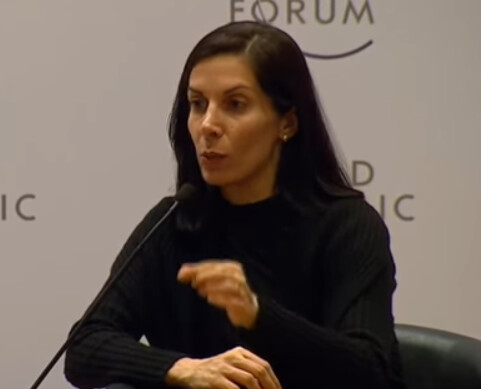
Nita Farahany

Portrait of Nita Farahany
World Economic Forum, via Wikimedia Commons, CC BY 3.0SourceCC BY 3.0Converted from PNG to JPEG.

Nita Farahany is a professor of law and philosophy at Duke University who writes about the ethics and law of emerging technologies, including neurotechnology and artificial intelligence, and about what she calls cognitive liberty. She is the author of The Battle for Your Brain (2023).

What we have documented

We have documented 1 statement by Nita Farahany, in 1 case. Each statement below gives the quotation, its original source and a link to the full case.

Case updates

Want the next important update?

Follow "Character.AI argues the First Amendment bars a lawsuit blaming its chatbot for a teen's suicide" and get an email when an important development changes the record.

Important updates only. Free. Confirm your email to start. Unsubscribe anytime. How we handle your email.

Statements by Nita Farahany

Portrait of Nita Farahany

Nita Farahany

Role at the time: Law and philosophy professor at Duke University, in an essay for the Stay Tuned with Preet Bharara newsletter

Mixed or conditional

Response to this claim

The First Amendment bars Megan Garcia's claims against Character.AI because they would impose liability for expressive content that the platform's users have a right to receive.

“But here we reach an uncomfortable paradox. To argue that certain AI outputs lack First Amendment protection risks catastrophic consequences for free speech. ... Yet the opposite extreme, which is absolute First Amendment protection for all AI outputs, leaves us defenseless against systems deliberately engineered to erode our cognitive autonomy.”
Open source (opens in a new tab)Cognitive Capture, ChatBots, and AI SafetyFull essay
Why we used this label

The reference point is Character.AI's argument that the First Amendment bars tort claims seeking to hold it liable for its chatbots' output. Mixed or conditional: Farahany warns that denying First Amendment protection to AI outputs risks catastrophic consequences for free speech, which supports part of the defense's premise, but rejects absolute protection and criticizes the company's strategy as an attempt to evade accountability. The closest competing label is Condemned; it loses because she does not argue that the output is unprotected.

A participant is a subject of the case. A speaker has a statement documented in it. A commentator has an opinion or editorial documented in it.

Topics in this coverage