
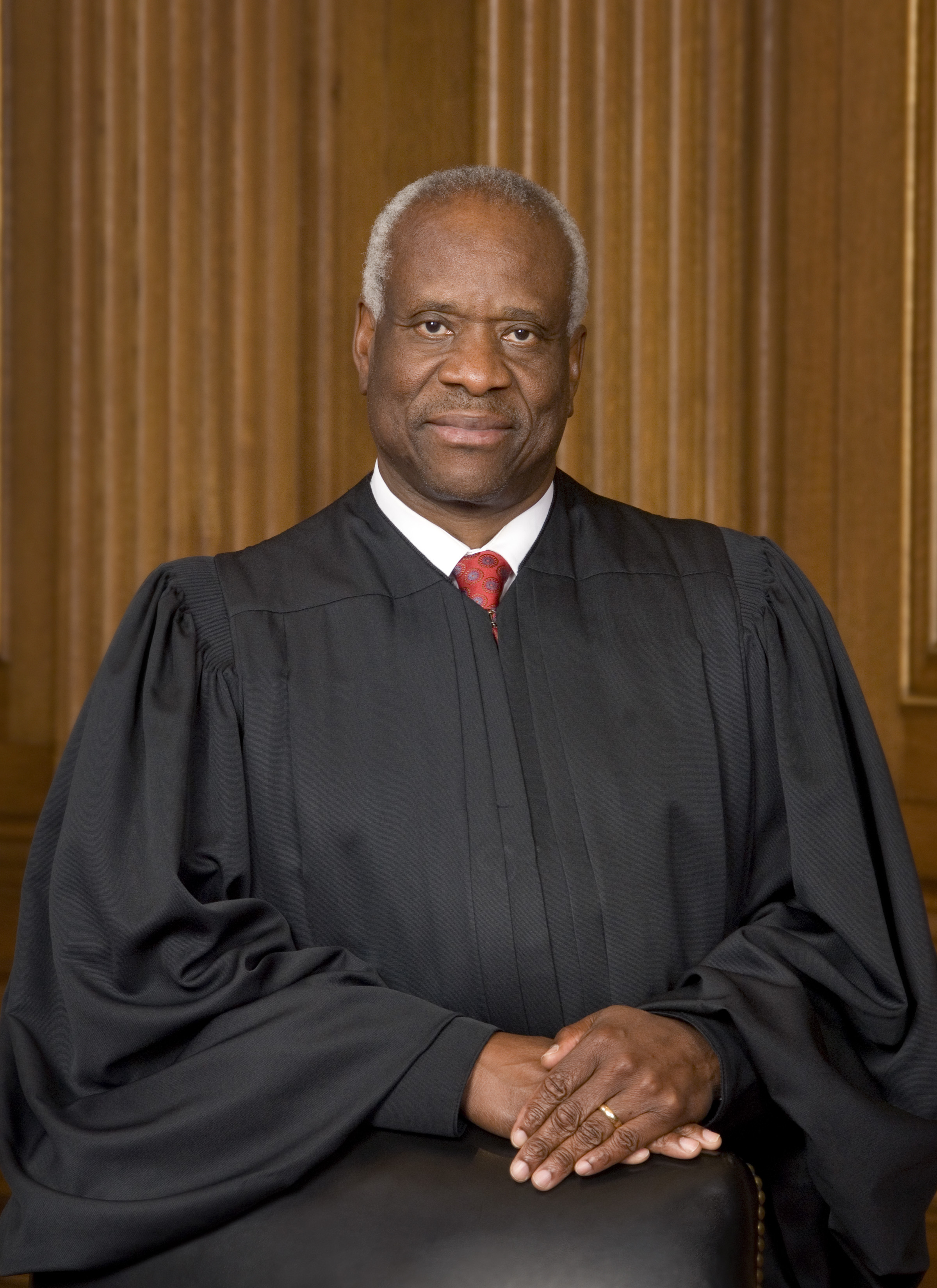
Clarence Thomas
Role at the time: Associate justice of the United States Supreme Court
Statement summary
Thomas says the government obtained the carriers' records rather than searching Carpenter's property.
“By obtaining the cell-site records of MetroPCS and Sprint, the Government did not search Carpenter’s property. He did not create the records, he does not maintain them, he cannot control them, and he cannot destroy them. Neither the terms of his contracts nor any provision of law makes the records his. The records belong to MetroPCS and Sprint.”
The Supreme Court's 5-4 decision of June 22, 2018, written by Chief Justice Roberts, holding that the government's acquisition of historical cell-site location records from wireless carriers was a Fourth Amendment search that generally requires a warrant. The Court said individuals have a reasonable expectation of privacy in the whole of their physical movements, called its decision narrow, and said it did not call into question conventional surveillance techniques and tools such as security cameras. It does not address license-plate readers.
Archived copy (opens in a new tab)Why we used this label
Relative to police obtaining Carpenter's location records without a warrant, Thomas argues that the records belong to the carriers and rejects Carpenter's claimed Fourth Amendment interest.