
Explainer
Who can ICE detain, and how can detainees challenge it?
Immigration detention is civil, not criminal. Federal law requires ICE to detain some noncitizens and lets it release others on bond. Since 2025 ICE has treated people who entered without inspection as ineligible for bond; most appeals courts have rejected that reading, and the Supreme Court has agreed to decide it.
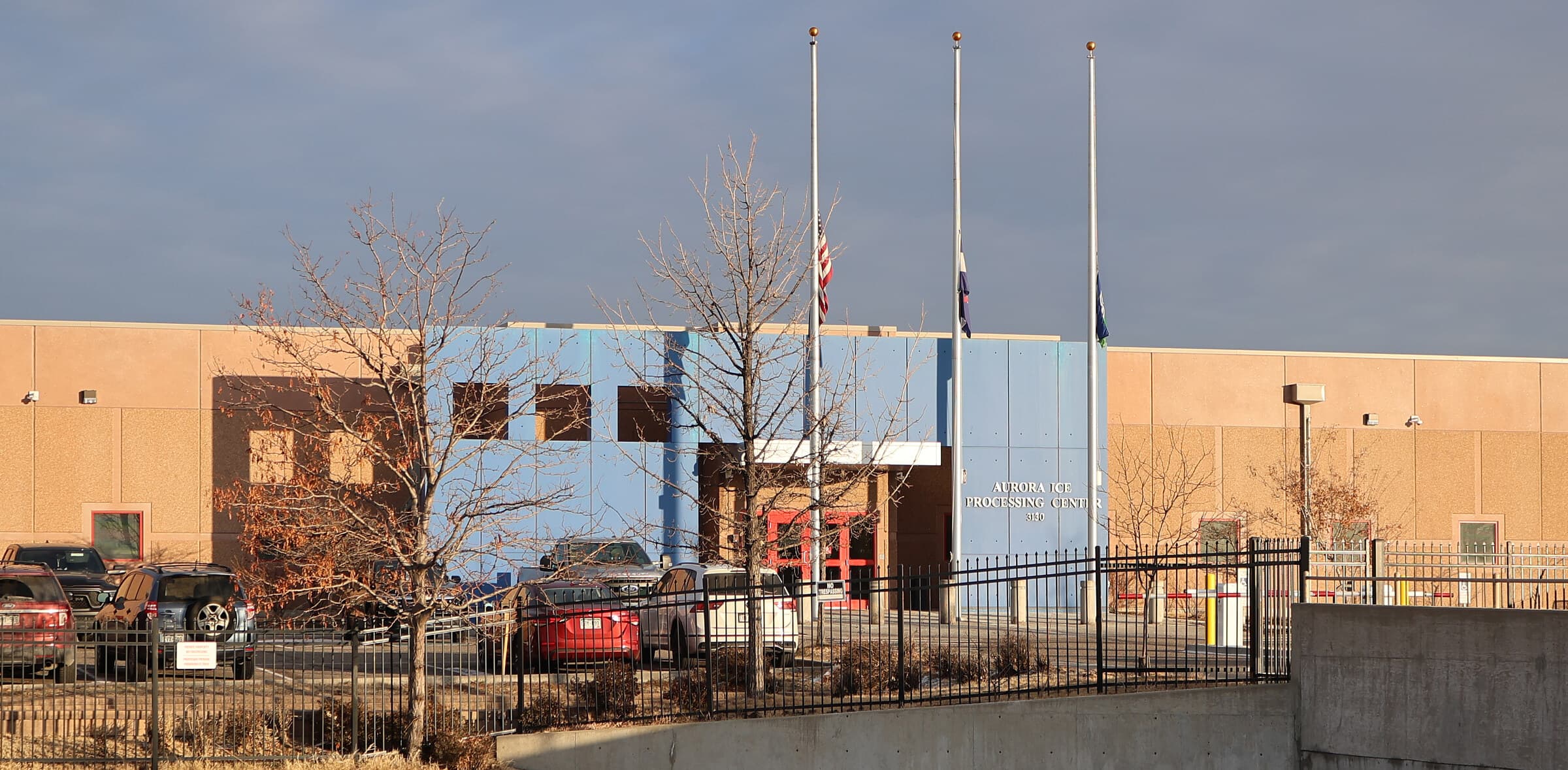
What immigration detention is
Immigration detention holds noncitizens while the government decides whether to remove them from the country, or until it carries out a removal. The Supreme Court has described immigration detention proceedings as "civil, not criminal," and assumed they are not meant to punish.1 ICE also calls its detention "non-punitive." It says it detains people to secure their presence for immigration proceedings or removal, along with people the law requires it to detain and people it judges a public safety or flight risk, and that it may release others with conditions case by case.2
The Court has said the Constitution's due process guarantee applies to all "persons" within the United States, whether their presence is lawful or unlawful.1 How much process that guarantee requires for people in detention is one of the questions courts are now deciding.
The laws that authorize it
Four parts of the Immigration and Nationality Act do most of the work.
The first, 8 U.S.C. 1225(b), covers applicants for admission. The law treats a noncitizen who arrives in the United States, or who is here without having been admitted, as an applicant for admission. If an examining officer finds that an applicant who is "seeking admission" is not "clearly and beyond a doubt entitled to be admitted," the person "shall be detained" for removal proceedings. People in expedited removal must be held until their fear claim is decided and, if it fails, until removal; those found to have a credible fear are held while their asylum claim is considered.3 Courts disagree over who counts as seeking admission, as described below.4 The only release the statute allows for them is parole, which DHS may grant case by case for urgent humanitarian reasons or significant public benefit, as the Congressional Research Service (CRS) explains.4
The second, 8 U.S.C. 1226(a), lets the government arrest a noncitizen on a warrant and either keep the person detained during removal proceedings or release the person on a bond of at least $1,500 or on conditional parole.5 Federal regulations give people held under this section a bond hearing at the start of their detention,6 where an immigration judge can review ICE's decision to keep them.4
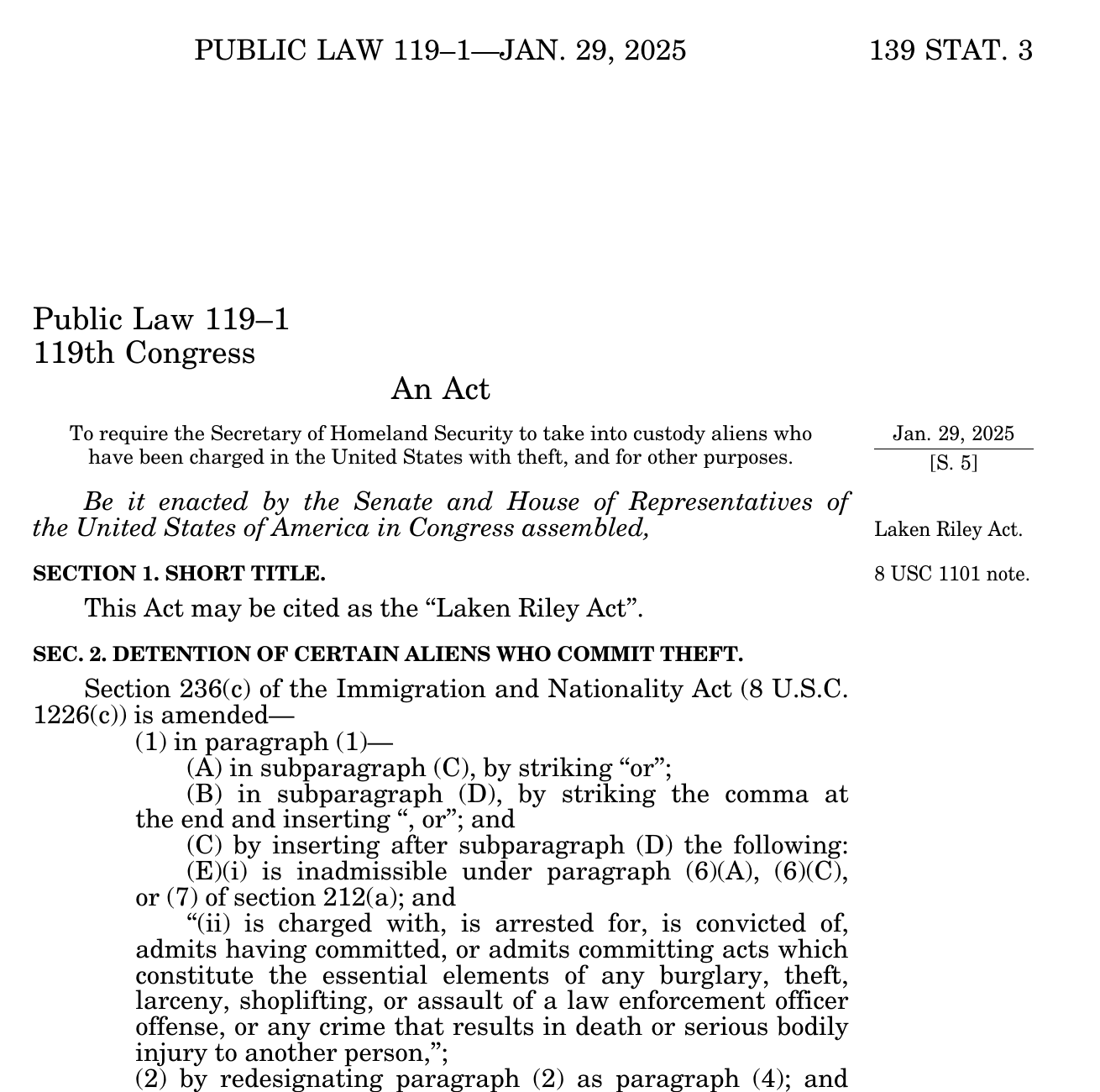
The third, 8 U.S.C. 1226(c), requires detention of people who fall within listed criminal and terrorism grounds.5 The Laken Riley Act, approved on January 29, 2025, added people who are inadmissible on certain listed grounds and who are charged with, arrested for, convicted of or admit to burglary, theft, larceny, shoplifting, assaulting a law enforcement officer or a crime causing death or serious bodily injury.75 The act also lets state attorneys general sue over releases, bond or parole decisions under 1226, over parole decisions generally, and over failures to detain people the law requires to be detained under 1225(b) and 1231.7
The fourth, 8 U.S.C. 1231, applies after a final removal order. The government must carry out the removal within a 90-day removal period and must detain the person during it, and it may keep certain people detained after that period.8
What the Supreme Court has said
In Zadvydas v. Davis (2001), the Court read the post-order statute not to allow indefinite detention. It set six months as a presumptively reasonable period; after that, if a detainee gives good reason to believe removal is not likely in the reasonably foreseeable future, the government must rebut it with evidence.1
In Demore v. Kim (2003), the Court held that "detention during removal proceedings is a constitutionally permissible part of that process," and upheld mandatory detention under 1226(c) of a man who had been a lawful permanent resident since childhood.9 In Nielsen v. Preap (2019), it held that 1226(c) detention stays mandatory even when officials did not detain the person immediately on release from criminal custody.10
In Jennings v. Rodriguez (2018), the Court read 1225(b) to "mandate detention of applicants for admission until certain proceedings have concluded," and held that 1225(b), 1226(a) and 1226(c) do not give detainees a statutory right to periodic bond hearings. It did not decide the detainees' constitutional arguments.6 In 2022 it held that the post-order statute does not require bond hearings after six months at which the government must prove flight risk or danger by clear and convincing evidence11 and that lower courts cannot issue class-wide injunctions against the detention provisions.12
Entering without inspection and overstaying a visa
Immigration law defines admission as "the lawful entry" of a noncitizen "after inspection and authorization by an immigration officer."13 Someone who came in on a visa and stayed past it was admitted; someone who crossed without being inspected was not.
Before 2025 the difference usually did not decide who got a bond hearing. CRS reports that DHS and the former Immigration and Naturalization Service long took the position that people present without admission were eligible for bond, even though they count as applicants for admission.4 The Associated Press reported that prior administrations typically let most noncitizens without criminal records who were arrested away from the border ask for a bond hearing.14
People who were admitted and later overstayed or violated the terms of their visas are covered by 1226, the Fifth Circuit has said, even while siding with the government on people who were never admitted. It also noted that not everyone held under 1226(a) is eligible for release on bond.15
The 2025 change on bond
On May 15, 2025, the Board of Immigration Appeals held in Matter of Q. Li that a person arrested without a warrant while arriving in the United States is detained under 1225(b) and cannot later get bond under 1226(a).16
On July 8, 2025, DHS issued guidance titled "Interim Guidance Regarding Detention Authority for Applicants for Admission," as a federal court later recounted.17 CRS reports that the guidance reads 1225(b)(2)(A), rather than 1226(a), to cover all applicants for admission, including people already living in the country who were never admitted, so that only people who were admitted and are charged as deportable remain eligible for bond hearings under 1226(a). CRS also noted in September 2026 that the guidance did not appear to have been posted on ICE's website.4
On September 5, 2025, in Matter of Yajure Hurtado, the Board held that immigration judges "lack authority to hear bond requests or to grant bond" to people present without admission, and that the statute requires their detention "without regard to how many years" they have lived in the country.18 The administration says the policy is lawful under a 1996 immigration law, the AP reported.14
How the courts have ruled
District courts have mostly ruled against the policy.4 On November 20, 2025, U.S. District Judge Sunshine S. Sykes in California found that 1226(a), not 1225(b)(2)(A), governed the detention of the petitioners denied bond hearings.17 The American Civil Liberties Union says hundreds of district judges have rejected the administration's reading, the AP reported.14
The appeals courts split. As of September 17, 2026, CRS reported, the First, Second, Third, Fourth, Sixth, Seventh, Ninth, Tenth and Eleventh Circuits had held that 1225(b)(2)(A) applies only to people seeking to enter the country, while the Fifth and Eighth Circuits had sided with the executive branch. Several of the majority circuits reasoned that the government's reading would make the Laken Riley Act's addition to 1226(c) unnecessary; the Fifth and Eighth found no such redundancy. The Third and Sixth Circuits also held, or upheld rulings, that holding people already living in the country without bond hearings violates due process, while the executive branch has argued that people who were never admitted have no due process protections beyond those Congress and the executive provide.4
On February 6, 2026, a Fifth Circuit panel reversed district court orders requiring bond hearings or release.15 On April 28, 2026, the Second Circuit held that a detainee was held under 1226(a) and affirmed the grant of his habeas petition.19 On October 23, 2026, the full Fifth Circuit held that three detainees were not entitled to individual hearings before being detained during their removal proceedings, and that the length of their detention raised no constitutional issue. Seven of the court's 17 judges dissented, six of them in an opinion by Judge Leslie H. Southwick.20
The Supreme Court case
On October 1, 2026, the Supreme Court agreed to hear Rhoney v. Barbosa da Cunha, the Second Circuit case. The question it will decide is "whether 8 U.S.C. 1225(b)(2)(A) mandates the detention pending removal proceedings of aliens who, like respondent, are present in the United States without having been admitted."21
The Justice Department argues that the Fifth and Eighth Circuits read the statute correctly.19 It told the Court the split has produced mandatory detention in some circuits and bond hearings in others, the AP reported.14 Barbosa da Cunha's lawyers at the ACLU argue that 1226(a), which allows release on bond, governs people who entered the country, and say "millions of noncitizens could be affected" by the government's reading.22
Habeas petitions
A detainee can challenge detention in federal district court by petitioning for a writ of habeas corpus, which a court may grant to a person held "in custody in violation of the Constitution or laws" of the United States.23 The immigration statute bars courts from setting aside the government's discretionary detention and bond decisions under 1226,5 but the Supreme Court has held that this bar does not stop a habeas challenge to the constitutionality of a detention law,9 and that habeas remains available to challenge detention after a removal order.1
The number of petitions has surged. The Transactional Records Access Clearinghouse (TRAC) counted 9,059 immigration habeas lawsuits filed in March 2026, more than 85 times the number a year earlier, and attributed the jump to increased arrests, detentions and deportations.24 ProPublica found that immigrants filed more habeas cases in the first 13 months of the second Trump administration than in the previous three administrations combined, with new filings slowing from April 2026.25 In November 2026, border czar Tom Homan said courts were weighed down by about 85,000 immigration habeas cases, the AP reported.26 On October 26, 2026, the acting U.S. attorney in western Washington told U.S. District Judge David Estudillo that his office could no longer appear in every one of the dozens of petitions filed there each week.27
Numbers, facilities and oversight
ICE's statistics list 65,765 people in detention on July 11, 2026, the latest date it had published, and an average daily population of about 71,937 in January 2026, the highest month of the fiscal year to that point.28 TRAC reported that 70.6 percent of the people held on July 11 had no criminal conviction.29
ICE holds detainees in its own processing centers and in several other types of facilities, including ones used under agreements with state and local governments, some of them run by private contractors.28 It says every facility holding its detainees must follow one of its sets of detention standards.2 The American Immigration Council estimated that about 90 percent of people ICE detained as of early 2025 were held in facilities owned or operated by private prison companies.30
Congress has written oversight into DHS's funding. A provision known as Section 527 bars DHS from using its funds to stop members of Congress from entering its detention facilities to conduct oversight, and says nothing in it "may be construed to require a Member of Congress to provide prior notice." In December 2025 a federal judge found that House members were likely to succeed in showing that ICE's visit policies were unlawful.31 DHS then issued a nearly identical policy on January 8, 2026, and a federal judge froze it on February 2.32 At a November 3, 2026 argument in the government's appeal of that order, a D.C. Circuit panel appeared likely to side with the members, while a Justice Department lawyer argued that they lack standing and that the case is effectively moot, Courthouse News reported.32
History
- June 28, 2001
Zadvydas v. Davis rules out indefinite detention after a removal order and sets a six-month presumption.1
- April 29, 2003
Demore v. Kim upholds mandatory detention during removal proceedings under 1226(c).9
- February 27, 2018
Jennings v. Rodriguez holds that the detention statutes give no statutory right to periodic bond hearings.6
- March 19, 2019
Nielsen v. Preap holds that 1226(c) detention stays mandatory even if officials did not detain the person on release from criminal custody.10
- January 29, 2025
The Laken Riley Act adds a category of mandatory detention.7
- July 8, 2025
DHS issues interim guidance treating people who entered without inspection as subject to mandatory detention.17
- September 5, 2025
The Board of Immigration Appeals holds in Matter of Yajure Hurtado that immigration judges cannot grant them bond.18
- November 20, 2025
A federal judge in California rules that 1226(a) governs the detention of petitioners denied bond hearings.17
- February 6, 2026
A Fifth Circuit panel sides with the government.15
- March 2026
TRAC counts 9,059 immigration habeas lawsuits filed in a single month.24
- April 28, 2026
The Second Circuit holds that 1226(a) governs a detainee who was never admitted.19
- October 1, 2026
The Supreme Court agrees to decide the question in Rhoney v. Barbosa da Cunha.21
- October 23, 2026
The full Fifth Circuit rules that three detainees were not entitled to bond hearings.20
- October 26, 2026
The acting U.S. attorney in western Washington says his office cannot appear in every habeas petition.27
What is disputed
Whether the Fifth Amendment entitles people held under 8 U.S.C. 1225(b)(2)(A) to an individual bond hearing, as the petitioners and the dissenting judges argue, or allows their detention without one, as the government argued and the full Fifth Circuit held.
See the case: Fifth Circuit rejects bond hearings for three immigration detainees; dissenters invoke due processWhether ICE lawfully detained William Lizardo, as DHS maintained, or whether his arrest and detention violated the Fourth and Fifth Amendments, as Judge Michael J. Davis found in granting his habeas petition.
See the case: Judge orders ICE to release a Minnesota dentist arrested at his green card interview; DHS says he overstayedWhether due process required ICE to give Paula Albornoz Hernandez notice and a bond hearing before detaining her, as Judge Dena Coggins held, or whether ICE lawfully detained her, as DHS maintains, saying she overstayed a visa.
See the case: Judge orders ICE to release a UC Berkeley student arrested at SFO; DHS says she overstayed her visa and calls the judge an activistWhether ICE had grounds to detain Wisconsin State Trooper Carel Van Der Merwe because, as DHS says, he overstayed a 2019 admission, or whether he is lawfully in the country as an asylum applicant with work authorization, as his attorney says.
See the case: ICE detains Wisconsin State Trooper Carel Van Der Merwe at the Madison airport; DHS says he overstayed a 2019 visa, and his lawyer says he is a lawful asylum applicantWhether ICE should keep Ann Lawani in custody pending removal, as DHS says, or release her under supervision while her habeas petition is pending, as Rep. Josh Harder and the University of San Francisco ask.
See the case: ICE detains USF nursing professor Ann Lawani at her Lodi home and moves her to Louisiana; DHS says she overstayed a 2007 admission, and Rep. Josh Harder demands her releaseWhether the volume of habeas petitions in western Washington reflects high-volume, often copied filings that strain the U.S. Attorney's Office, as Acting U.S. Attorney Charles Neil Floyd wrote, or the detentions produced by the administration's own policy, as Above the Law's Kathryn Rubino argues.
See the case: U.S. Attorney's Office in western Washington says it will no longer defend ICE in many detention cases; Judge Cartwright frees a detainee whose petition went unansweredWhether DHS may require members of Congress to give seven days' notice before visiting detention facilities, as DHS argues, or whether the rule violates the Section 527 funding provision, as the House Democrats who sued argue, and whether the members have standing to sue.
See the case: House Democrats sue to keep unannounced oversight visits to ICE detention facilities; DHS says members must give a week's noticeWhether the Hashemi-Tahmasebi family's detention pending removal rests on national-security and foreign-policy grounds, as the State Department and other officials say, or punishes the family for a relative's actions, as the family and its lawyers say.
See the case: Did ICE Detain an Entire Family for What Eissa Hashemi's Mother Did?Whether the Alexandria, Louisiana site is a short-stay staging facility, as ICE and its operators say, or child detention, as Sen. Ron Wyden and immigrant rights groups say.
See the case: ICE and its contractors call an Alexandria, Louisiana site for families and unaccompanied children a staging center; advocates call it child detention
Cases on the Dispute Index
Gov. Tina Kotek calls for an Oregon law that would never allow immigration detention facilities; Homeland Security cites the Supremacy Clause
Oregon Gov. Tina Kotek says she wants lawmakers to pass a bill so the state never allows immigration detention facilities. The Department of Homeland Security cites the Supremacy Clause, and a law professor says such a law could not survive a federal challenge.
U.S. Attorney's Office in western Washington says it will no longer defend ICE in many detention cases; Judge Cartwright frees a detainee whose petition went unanswered
Acting U.S. Attorney Charles Neil Floyd told the federal court in western Washington on October 26, 2026 that his office lacks the lawyers to answer every immigration habeas petition. A judge then freed a detainee whose petition went unanswered.
ICE detains USF nursing professor Ann Lawani at her Lodi home and moves her to Louisiana; DHS says she overstayed a 2007 admission, and Rep. Josh Harder demands her release
ICE arrested Ann Lawani, a Lodi nurse who directs a University of San Francisco nursing program, on September 16, 2026 and moved her to Louisiana. DHS says she overstayed a 2007 admission; Rep. Josh Harder and her university seek her release.
ICE detains Wisconsin State Trooper Carel Van Der Merwe at the Madison airport; DHS says he overstayed a 2019 visa, and his lawyer says he is a lawful asylum applicant
ICE detained Wisconsin State Trooper Carel Van Der Merwe at Dane County Regional Airport on November 5, 2026. DHS says he overstayed a 2019 visa; his lawyer says he is a lawful asylum applicant. He was released the next day.
Judge orders ICE to release a UC Berkeley student arrested at SFO; DHS says she overstayed her visa and calls the judge an activist
ICE arrested UC Berkeley student and asylum seeker Paula Albornoz Hernandez at SFO on October 30, 2026. A federal judge ordered her released, finding she was detained without a required hearing. DHS called the judge an activist.
Judge orders ICE to release a Minnesota dentist arrested at his green card interview; DHS says he overstayed
Judge Michael J. Davis ordered the release of William Lizardo, a Canadian dentist ICE arrested at an immigration interview on a removal order issued after notice went to an outdated address. DHS says he overstayed and calls Davis an activist judge.
ICE and its contractors call an Alexandria, Louisiana site for families and unaccompanied children a staging center; advocates call it child detention
ICE plans to hold families, unaccompanied children and adult women awaiting removal at a former barracks in Alexandria, Louisiana. Its operators call it a staging center for voluntary departures, ICE says people await deportation flights, and Sen. Ron Wyden and advocates call it child detention.
House Democrats sue to keep unannounced oversight visits to ICE detention facilities; DHS says members must give a week's notice
House Democrats say DHS's requirement of seven days' notice before oversight visits to immigration detention facilities violates a spending law. DHS says it enforces the rule only with funds that law does not cover, and DOJ says the members lack standing.
Fifth Circuit rejects bond hearings for three immigration detainees; dissenters invoke due process
The Fifth Circuit rejects three detainees' constitutional claims to individualized bond hearings. The en banc decision divides the judges over what due process requires during removal proceedings; dissenters argue that detention needs more justification.
Did ICE Detain an Entire Family for What Eissa Hashemi's Mother Did?
U.S. officials revoked the Hashemi-Tahmasebi family's permanent residency and detained them, citing national-security and foreign-policy concerns tied to Eissa Hashemi's mother. The family and its supporters say the government imposed guilt by association.
Sources
- Zadvydas v. Davis, 533 U.S. 678 (2001), opinion of the Court (opens in a new tab) · Saved copy (opens in a new tab)
- Detention Management (opens in a new tab) · Saved copy (opens in a new tab)
- 8 U.S.C. 1225: Inspection by immigration officers; expedited removal of inadmissible arriving aliens; referral for hearing (opens in a new tab) · Saved copy (opens in a new tab)
- Mandatory Detention During Removal Proceedings: Circuit Split (CRS Legal Sidebar LSB11438) (opens in a new tab) · Saved copy (opens in a new tab)
- 8 U.S.C. 1226: Apprehension and detention of aliens (opens in a new tab) · Saved copy (opens in a new tab)
- Jennings v. Rodriguez, 583 U.S. 281 (2018) (opens in a new tab) · Saved copy (opens in a new tab)
- Public Law 119-1, Laken Riley Act, 139 Stat. 3 (opens in a new tab) · Saved copy (opens in a new tab)
- 8 U.S.C. 1231: Detention and removal of aliens ordered removed (opens in a new tab) · Saved copy (opens in a new tab)
- Demore v. Kim, 538 U.S. 510 (2003), opinion of the Court (opens in a new tab) · Saved copy (opens in a new tab)
- Nielsen v. Preap, 586 U.S. 392 (2019) (opens in a new tab) · Saved copy (opens in a new tab)
- Johnson v. Arteaga-Martinez, 596 U.S. 573 (2022) (opens in a new tab) · Saved copy (opens in a new tab)
- Garland v. Aleman Gonzalez, 596 U.S. 543 (2022) (opens in a new tab) · Saved copy (opens in a new tab)
- 8 U.S.C. 1101: Definitions (opens in a new tab) · Saved copy (opens in a new tab)
- Supreme Court grants review of Trump administration's mandatory detention policy for immigrants (opens in a new tab) · Saved copy (opens in a new tab)
- Buenrostro-Mendez v. Bondi, No. 25-20496 (5th Cir. Feb. 6, 2026) (opens in a new tab) · Saved copy (opens in a new tab)
- Matter of Q. Li, 29 I&N Dec. 66 (BIA 2025) (opens in a new tab) · Saved copy (opens in a new tab)
- Maldonado Bautista v. Santacruz, No. 5:25-cv-01873 (C.D. Cal. Nov. 20, 2025), order granting partial summary judgment (ECF 81) (opens in a new tab) · Saved copy (opens in a new tab)
- Matter of Yajure Hurtado, 29 I&N Dec. 216 (BIA 2025) (opens in a new tab) · Saved copy (opens in a new tab)
- Petition for a writ of certiorari, Rhoney v. Barbosa da Cunha, No. 26-104, with the Second Circuit opinion in the appendix (opens in a new tab) · Saved copy (opens in a new tab)
- Fifth Circuit en banc opinion in Sosnava Rodriguez v. Vergara (opens in a new tab) · Saved copy (opens in a new tab)
- Question presented, No. 26-104, Rhoney v. Barbosa da Cunha (opens in a new tab) · Saved copy (opens in a new tab)
- Response to petition for a writ of certiorari, Rhoney v. Barbosa da Cunha, No. 26-104 (opens in a new tab) · Saved copy (opens in a new tab)
- 28 U.S.C. 2241: Power to grant writ (opens in a new tab) · Saved copy (opens in a new tab)
- Surge in Immigration Lawsuits Hits Record High in 2026 (opens in a new tab) · Saved copy (opens in a new tab)
- Habeas tracker: immigration detention challenges in federal court (opens in a new tab) · Saved copy (opens in a new tab)
- Associated Press: Faced with influx, prosecutor in Washington says he lacks resources to defend immigration cases (opens in a new tab) · Saved copy (opens in a new tab)
- Letter from Acting U.S. Attorney Charles Neil Floyd to Chief Judge David S. Estudillo on appearances in immigration habeas cases (opens in a new tab) · Saved copy (opens in a new tab)
- ICE Detention Statistics, FY 2026 year to date (spreadsheet) (opens in a new tab) · Saved copy (opens in a new tab)
- Immigration Detention Quick Facts (opens in a new tab) · Saved copy (opens in a new tab)
- Immigration Detention Expansion in Trump's Second Term (opens in a new tab) · Saved copy (opens in a new tab)
- Memorandum opinion, Neguse v. ICE, No. 25-cv-2463 (D.D.C. Dec. 17, 2025), ECF 36 (opens in a new tab) · Saved copy (opens in a new tab)
- DC Circuit signals ICE ban on surprise lawmaker oversight visits unlawful (opens in a new tab)
Last reviewed November 15, 2026. We review this explainer when a case that uses it changes. Report an error