
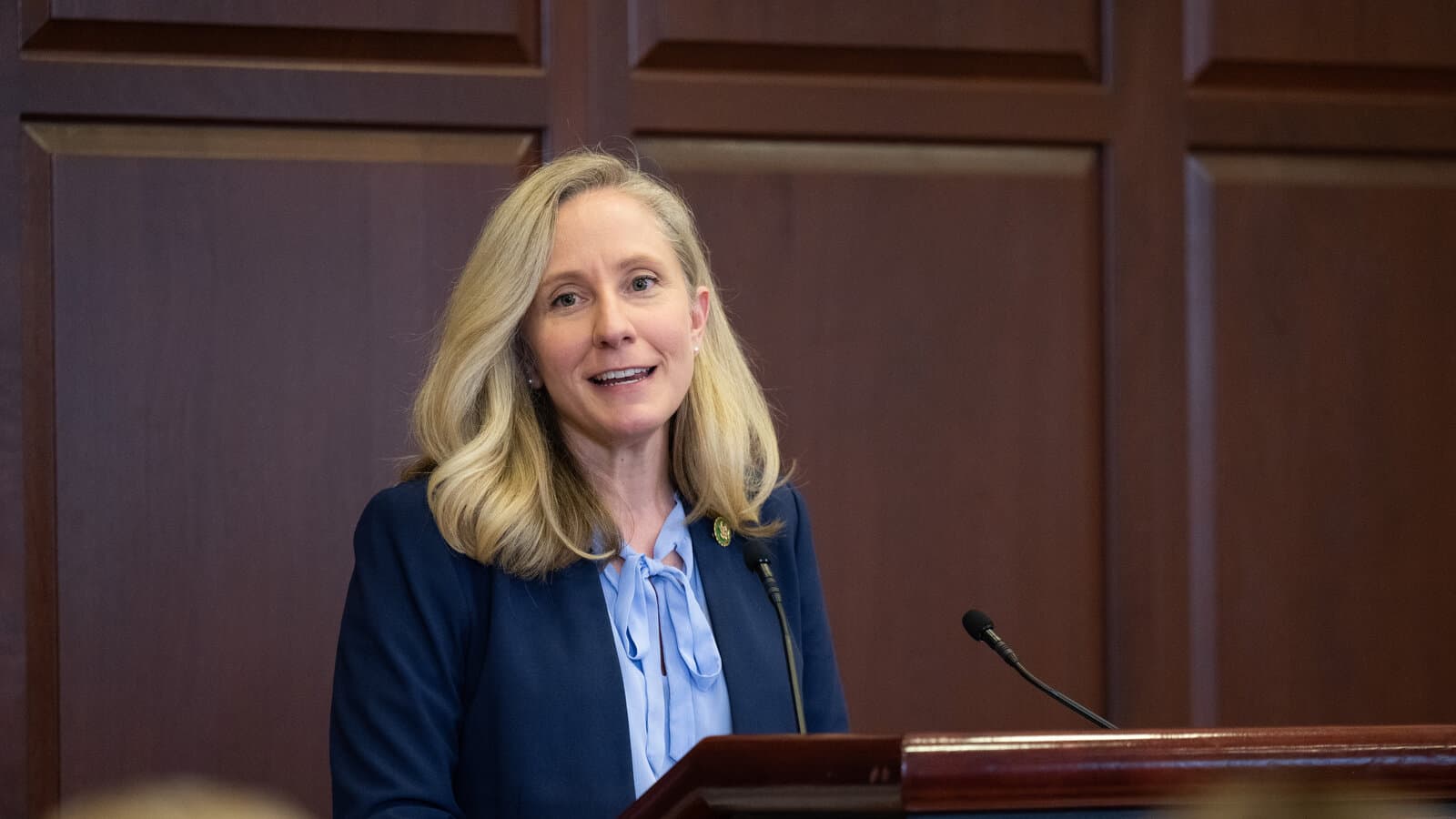
Spanberger's office says public money should go to public education and that, at this point, it has not seen evidence the program would help Virginia's public school students
Abigail SpanbergerGovernor of Virginia, in a written statement from her office
In a written statement, Spanberger's office says the administration has not seen evidence that the program would benefit students in Virginia's public schools and points to new education funding in the state budget.
“Public money should go to public education, and the Spanberger Administration, at this point, has not seen evidence that this program would benefit students in Virginia's public schools. After working to deliver a record $2 billion in new education funding in the bipartisan state budget, Governor Spanberger will continue to focus on making sure public schools have the resources they need to set students up for long-term success.”
Reporting
Reporting
Where this statement fits
Spanberger won't finish Virginia's enrollment in the federal school choice tax credit; Bessent says she is playing politics with children's futures
On November 13, 2026, The Washington Post reported that Gov. Abigail Spanberger's administration would not complete Virginia's enrollment in the Federal Scholarship Tax Credit, the school choice program created by the 2025 federal tax law. Her predecessor, Glenn Youngkin, took the first step in January, days before leaving office, but the second step, a state-certified list of scholarship-granting organizations, was never submitted. If no list reaches the IRS by February 15, 2027, those organizations cannot give scholarships to Virginia students under the program in 2027. Treasury Secretary Scott Bessent wrote on November 15 that Spanberger was shutting Virginia children, including public school students, out of education scholarships, and told her to stop playing politics with their futures. Spanberger's office said on November 16 that public money should go to public education and that the administration had not seen evidence the program would benefit students in Virginia's public schools. The Virginia Education Association praised the decision. Youngkin, the National Catholic Educational Association, Aaron Baer of the Center for Christian Virtue and education policy writer Chad Aldeman criticized it.
Source and context
Reporting
About this source
29News prints the governor's office's November 16 written statement in full and explains how the program works, with comments from VEA President Carol Bauer and University of Virginia professor Daniel Player.
Archived copy (opens in a new tab)Reporting
About this source
K-12 Dive reports the governor's office's Monday statement and reactions from the Virginia Education Association, the National Catholic Educational Association and Aaron Baer.
Archived copy (opens in a new tab)Before the quotation
29News reports that Spanberger's administration will not complete the enrollment process that former Gov. Glenn Youngkin started for the Federal Scholarship Tax Credit, which is scheduled to begin Jan. 1, 2027.
After the quotation
29News reports that the administration plans to monitor how the program affects students, families and schools in participating states before reconsidering Virginia's involvement.
How this statement is classified
The label describes this statement's response within the context above.
Why this label?
The case concerns Spanberger's decision not to complete Virginia's enrollment in the federal scholarship tax credit. Her office gives its reasons for that decision: public money should go to public education, and it has not seen evidence the program would help students in Virginia's public schools. Giving reasons why the decision is right is a defense of it.
- Recorded on
- Published here
More from this case
Read the full caseYoungkin says Spanberger is turning away billions for Virginia families to cozy up to teachers union bosses
“Democrat governors in NY, NM, and CO have opted-in to the Education Freedom Tax Credit, yet @GovernorVA Spanberger is pulling Virginia out. What planet is she on? She's turning away billions for Virginia families to cozy up to teachers union bosses. Disgraceful.”Read statement
Virginia Education Association applauds Spanberger's decision not to opt Virginia into the federal program
Virginia Education Association
“The Virginia Education Association applauds Governor Abigail Spanberger's decision not to opt Virginia into the federal voucher program established under President Trump's H.R. 1, protecting hundreds of millions of dollars in funding designated for the Commonwealth's public schools.”Read statement
Bessent tells Spanberger to stop playing politics with children's futures and certify Virginia's scholarship organizations
“Governor Spanberger is slamming the door on education scholarships for Virginia children, including students in PUBLIC schools. ... Governor Spanberger: certify the scholarship organizations. Stop playing politics with children's futures.”Read statement
Share or embed this statement
The embed keeps its attribution link to The Dispute Index. Credit the image to The Dispute Index and link to the statement page.
Cite this record
- Publisher
- The Dispute Index
- Title
- Spanberger's office says public money should go to public education and that, at this point, it has not seen evidence the program would help Virginia's public school students
- First published
- Last updated
- Permalink
- https://disputeindex.com/events/9368-in-a-written-statement-spanberger-s-office-says
Last updated marks the most recent saved version of this published statement.
The Dispute Index. "Spanberger's office says public money should go to public education and that, at this point, it has not seen evidence the program would help Virginia's public school students". First published: 2026-11-17. Last updated: 2026-11-17. https://disputeindex.com/events/9368-in-a-written-statement-spanberger-s-office-says