
Jeffrey Schwab says Section 301 does not authorize a global tariff program
Jeffrey M. SchwabLiberty Justice Center senior counsel and director of litigation
Schwab argues that Section 301 does not authorize a predetermined global tariff program without country-specific findings and a remedy tied to the foreign practice.
“Section 301 is a targeted, country-specific and practice-specific remedial authority. It is not a freestanding authorization to tax substantially all imports from substantially all countries at preestablished rates.”
Official statement
Where this statement fits
Are Trump's Section 301 "forced labor" tariffs a lawful remedy, or a pretext to revive struck-down global tariffs?
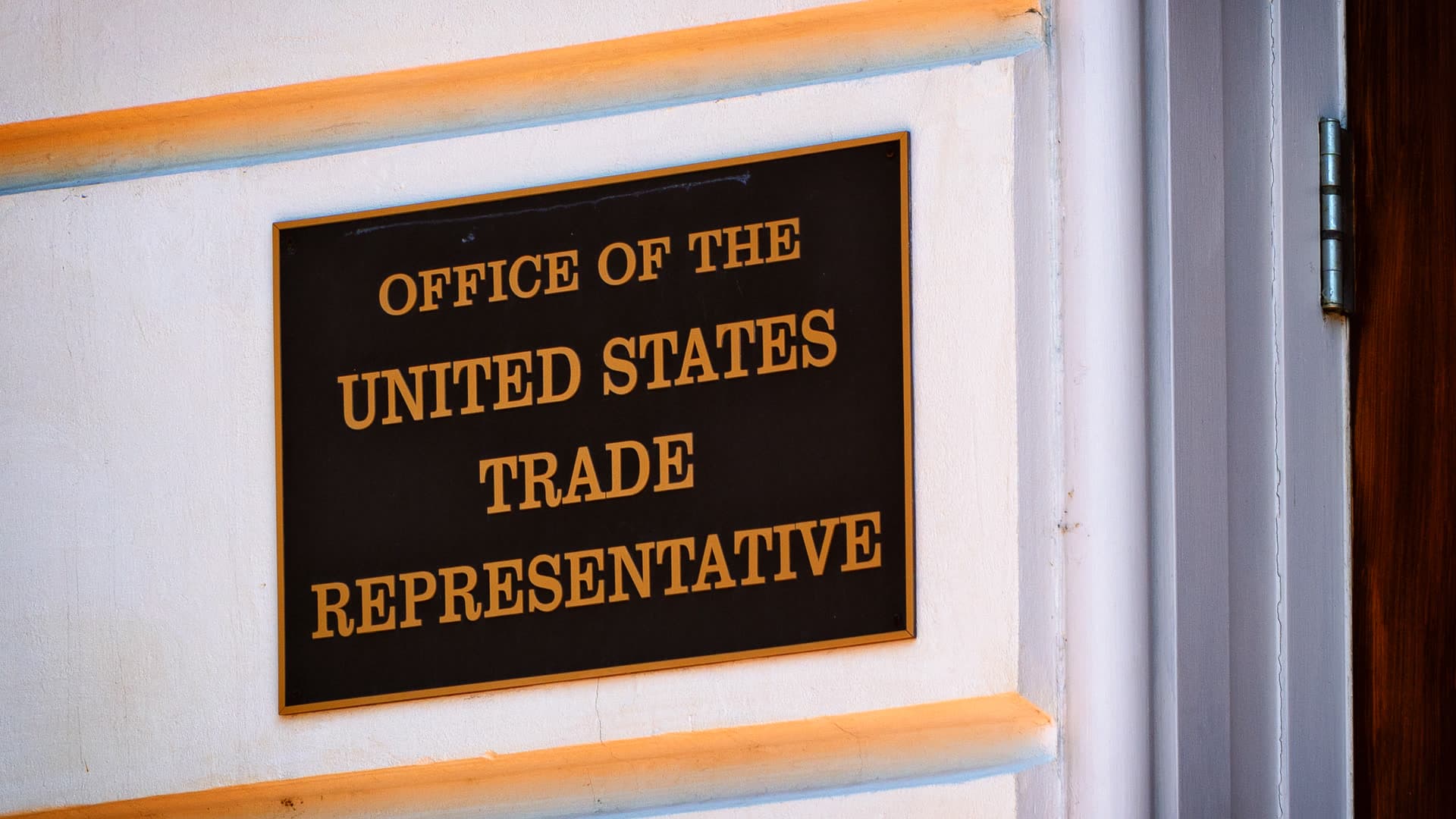
On July 23, 2026, U.S. Trade Representative Jamieson Greer, at President Trump's direction, imposed additional tariffs of 10% or 12.5% on imports from 60 economies under Section 301 of the Trade Act of 1974. The duties took effect July 24. USTR says each economy failed to impose and effectively enforce a ban on imports of goods made with forced labor, which it found unreasonable and a burden on U.S. commerce. Businesses and 25 states sued in the Court of International Trade. They say the forced-labor rationale is a pretext for re-creating the global tariffs the Supreme Court struck down in February, and that USTR skipped the country-by-country findings the statute requires. The Justice Department says USTR made findings for all 60 economies on a record of data, testimony and public comments. A three-judge panel heard argument on September 30, 2026. As of that date, no court had ruled on the Section 301 tariffs. The disputed question is whether the tariffs are a lawful remedy under Section 301 or a pretext to revive the struck-down global tariffs.
Source and context
Official statement
About this source
The plaintiff companies and their counsel give separate statements in the same lawsuit announcement.
Archived copy (opens in a new tab)Before the quotation
The release announces the small-business challenge and distinguishes opposing forced labor from accepting the tariffs as a lawful remedy.
After the quotation
The release describes the request to declare the tariffs unlawful and preserve refunds.
How this statement is classified
The label describes this statement's response within the context above.
Why this label?
Relative to the tariffs, Schwab argues that they exceed the authority Congress granted. This criticizes the policy itself, not merely its name.
- Recorded on
- Published here
More from this case
Read the full caseLiberty Justice Center asks the court to set aside the forced-labor tariffs
Liberty Justice Center
“Our answer: Set aside these unlawful tariffs.”Read statement
DOJ defends USTR's tariff authority and opposes setting the tariffs aside
United States Department of Justice
“Congress included an expansive definition of “unreasonable” acts, policies, or practices, in Section 301.”Read statement
Burlap & Barrel says it is absorbing tariff costs and calls the Section 301 duties unlawful
Burlap & Barrel
“We have refused to raise our prices to customers or to pass the costs along to our partner farmers, so we've covered the increase internally. This has been quite challenging for us as a bootstrapped social enterprise.”Read statement
Share or embed this statement
The embed keeps its attribution link to The Dispute Index. Credit the image to The Dispute Index and link to the statement page.
Cite this record
- Publisher
- The Dispute Index
- Title
- Jeffrey Schwab says Section 301 does not authorize a global tariff program
- First published
- Last updated
- Permalink
- https://disputeindex.com/events/6306-schwab-argues-that-section-301-does-not-authorize
Last updated marks the most recent saved version of this published statement.
The Dispute Index. "Jeffrey Schwab says Section 301 does not authorize a global tariff program". First published: 2026-10-21. Last updated: 2026-10-21. https://disputeindex.com/events/6306-schwab-argues-that-section-301-does-not-authorize