
Privacy commissioner's office says Library and Archives Canada has not notified it of the reported requests
Office of the Privacy Commissioner of CanadaFederal privacy regulator, in an email to Dispute Index from senior communications advisor Vito Pilieci
The Office of the Privacy Commissioner of Canada told Dispute Index that Library and Archives Canada had not notified it of the reported requests. The office said federal institutions report only material privacy breaches, those that could reasonably create a real risk of significant harm to an individual, and referred further questions to LAC.
“We have not been notified of this matter by Library and Archives Canada (LAC). You may wish to reach out to LAC directly with your questions.”
Emailed statement
Read the full email
Hello, The Office of the Privacy Commissioner of Canada (OPC) is responsible for enforcing two laws: the Personal Information Protection and Electronic Documents Act (PIPEDA), Canada's federal private-sector privacy law, and the Privacy Act, Canada's public sector privacy law, which applies to the personal information handling practices of federal government institutions. Reporting of material breaches of personal information by federal government institutions is currently a requirement through the Treasury Board of Canada Secretariat (TBS) Policy on Privacy Protection - specifically section 4.2.12. Personal information is defined in the Privacy Act as "information about an identifiable individual that is recorded in any form." Information may be personal depending on the context because a particular piece of information can identify an individual in one context but not in another. Only breaches deemed to be "material" are to be reported to the Treasury Board Secretariat (TBS) and the OPC. A material privacy breach is a privacy breach that could reasonably create a real risk of significant harm to an individual. Significant harm includes: * bodily harm * humiliation * damage to reputation or relationships * loss of employment, business or professional opportunities * financial loss * identity theft * negative effects on a credit record * damage to or loss of property We have not been notified of this matter by Library and Archives Canada (LAC). You may wish to reach out to LAC directly with your questions. Vito Pilieci Senior Communications Advisor Office of the Privacy Commissioner of Canada
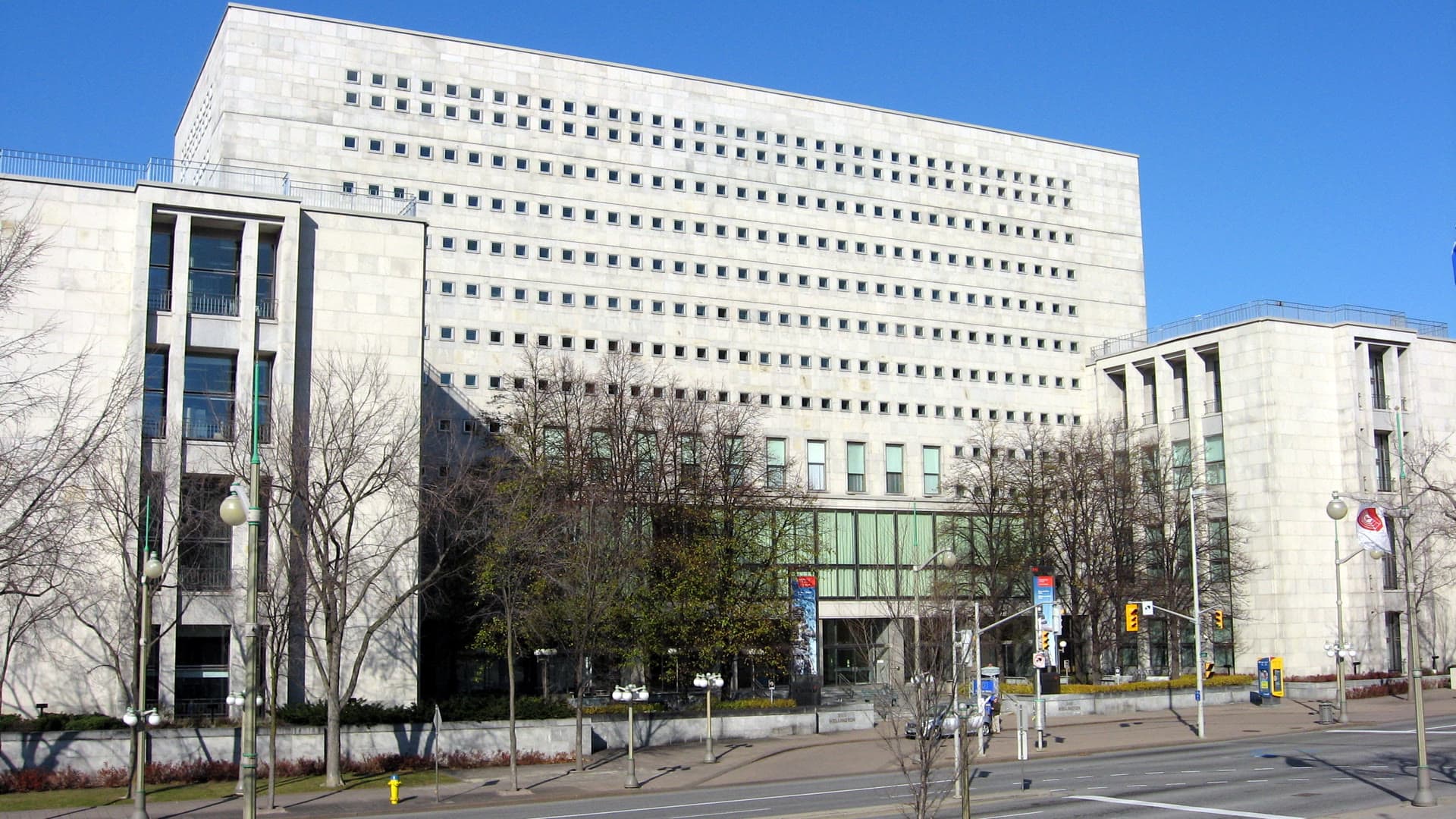
Where this statement fits
Did AI agents attempt to hack Library and Archives Canada, as Transluce reports?
On September 30, 2026, the AI research lab Transluce reported that on May 28 and June 9, 2026, the Portuguese web archive Arquivo.pt captured 899 requests to the "collection-search" service of Library and Archives Canada, "including a series of apparently failed rudimentary hacking attempts." Transluce says 13 of the requests carried what it calls attack payloads, says it does not believe the probes succeeded, and says it does not confidently attribute them to OpenAI, although it says they show tactics consistent with activity it has attributed to OpenAI. On September 29, the Communications Security Establishment, through its Cyber Centre, said there was "no indication that government systems have been compromised at this time" and that public-facing government websites routinely receive automated and potentially malicious requests, which do not, on their own, indicate a successful cyber incident. Evan Solomon, Canada's Minister of Artificial Intelligence and Digital Innovation, posted that there was no indication of compromise or of any data being accessed. OpenAI said it was aware of reports of its models attempting to access publicly available information from Canadian government websites, and that it is reviewing the findings and has briefed Canadian officials. The disputed question is whether the requests were hacking attempts, as Transluce reports. As of October 1, 2026, the Canadian government's assessment and OpenAI's review were open, and we did not find a public statement from Library and Archives Canada.
Source and context
Emailed statement
Emailed statement from the Office of the Privacy Commissioner of Canada (Vito Pilieci) to Dispute Index on breach reporting by Library and Archives Canada
Hello, The Office of the Privacy Commissioner of Canada (OPC) is responsible for enforcing two laws: the Personal Information Protection and Electronic Documents Act (PIPEDA), Canada's federal private-sector privacy law, and the Privacy Act, Canada's public sector privacy law, which applies to the personal information handling practices of federal government institutions. Reporting of material breaches of personal information by federal government institutions is currently a requirement through the Treasury Board of Canada Secretariat (TBS) Policy on Privacy Protection - specifically section 4.2.12. Personal information is defined in the Privacy Act as "information about an identifiable individual that is recorded in any form." Information may be personal depending on the context because a particular piece of information can identify an individual in one context but not in another. Only breaches deemed to be "material" are to be reported to the Treasury Board Secretariat (TBS) and the OPC. A material privacy breach is a privacy breach that could reasonably create a real risk of significant harm to an individual. Significant harm includes: * bodily harm * humiliation * damage to reputation or relationships * loss of employment, business or professional opportunities * financial loss * identity theft * negative effects on a credit record * damage to or loss of property We have not been notified of this matter by Library and Archives Canada (LAC). You may wish to reach out to LAC directly with your questions. Vito Pilieci Senior Communications Advisor Office of the Privacy Commissioner of Canada
About this source
Statement from the Office of the Privacy Commissioner of Canada, sent to Dispute Index by senior communications advisor Vito Pilieci in reply to a request for comment. It explains the federal breach-reporting threshold and says Library and Archives Canada has not notified the office.
Archived copy (opens in a new tab)Before the quotation
Dispute Index asked the office whether Library and Archives Canada or any other federal institution had notified it of a privacy breach in connection with the reported requests, and how it assesses reports of probing against a public search service where each request returned an empty record page.
After the quotation
The office said federal institutions must report material privacy breaches to the Treasury Board of Canada Secretariat and to the office under section 4.2.12 of the Treasury Board's Policy on Privacy Protection. It defined a material breach as one that could reasonably create a real risk of significant harm to an individual.
How this statement is classified
The label describes this statement's response within the context above.
Why this label?
The reference point is Transluce's report that AI agents attempted to hack Library and Archives Canada's collection-search service. The office says no notification reached it and refers questions to LAC, without assessing the reported requests, so we used Explicitly stayed out. The closest competing label is Minimized. It loses because the office does not downplay the reports; it states only that it was not notified and explains when federal institutions must report a breach.
- Recorded on
- Published here
More from this case
Read the full caseCanadian Historical Association says it is monitoring the reported requests and has no statement
Canadian Historical Association
“The Canadian Historical Association is monitoring this situation. We have no statements to make at this time.”Read statement
Al Jazeera reports an OpenAI spokesperson said much of the activity under review involved "routine research tasks, including accessing public web content"
OpenAI
“routine research tasks, including accessing public web content”Read statement
Sharma criticizes the normalization of unsupervised AI probes
“how ordinary it already sounds”Read statement
Share or embed this statement
The embed keeps its attribution link to The Dispute Index. Credit the image to The Dispute Index and link to the statement page.
Cite this record
- Publisher
- The Dispute Index
- Title
- Privacy commissioner's office says Library and Archives Canada has not notified it of the reported requests
- First published
- Last updated
- Permalink
- https://disputeindex.com/events/5172-the-office-of-the-privacy-commissioner-of-canada
Last updated marks the most recent saved version of this published statement.
The Dispute Index. "Privacy commissioner's office says Library and Archives Canada has not notified it of the reported requests". First published: 2026-10-07. Last updated: 2026-10-07. https://disputeindex.com/events/5172-the-office-of-the-privacy-commissioner-of-canada