
Be'eri resident Omri Shifroni says firing tank shells at a house with hostages was not a moral decision
Omri ShifroniKibbutz Be'eri resident and relative of hostages killed in Pessi Cohen's house
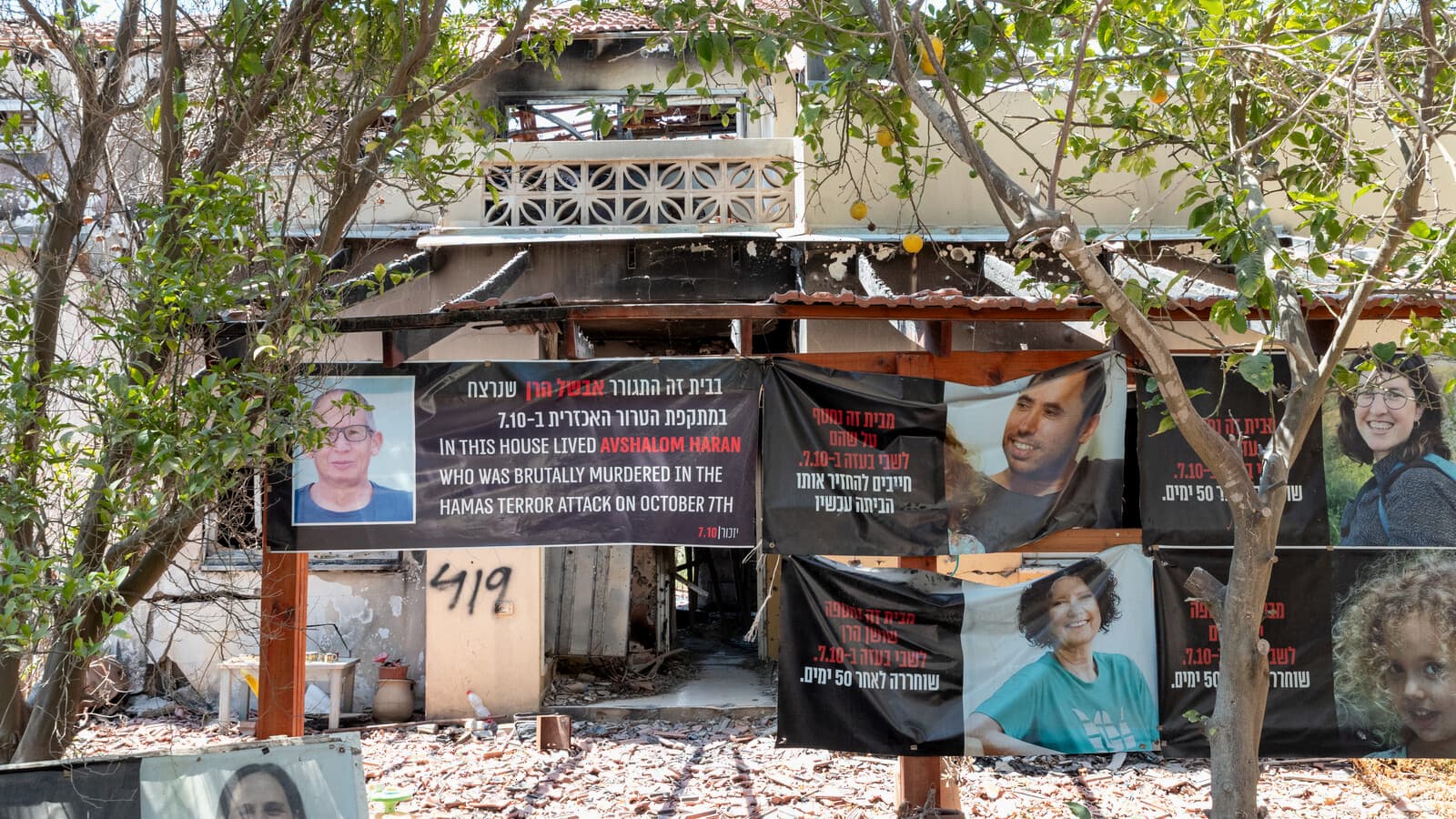
Omri Shifroni, whose aunt and her grand-niece and grand-nephew were killed in Pessi Cohen's house, told ABC News in Australia that the decision to fire tank shells at the house was "not the right decision, not a good decision and not moral." He said he understood there was great chaos and pressure to end the event, and that he thinks the forces did not intend to kill hostages.
“I think it was not the right decision, not a good decision and not moral. But I can also understand there was great chaos in Be'eri and there was a lot of pressure to end the event there. I think they didn't intend to shoot and to kill hostages, but when you shoot a tank shell on a house, you need to take into account that that is likely to happen.”
Reporting
Where this statement fits
Did Israeli forces kill Israelis under the Hannibal Directive on October 7?
On October 7, 2023, Hamas-led attackers struck southern Israel. About 1,200 people were killed in Israel that day and about 250 were taken hostage into Gaza. In July 2024, Haaretz reported that documents and testimony show the Israeli military used the Hannibal procedure, which directs force to stop soldiers from being taken captive, at three army sites that day. The detailed findings of a UN commission of inquiry say Israeli fire likely killed at least 14 Israeli civilians in two incidents. The IDF has said a helicopter likely killed Efrat Katz of Kibbutz Nir Oz and that tank shrapnel highly likely killed one hostage outside a house in Kibbutz Be'eri, and it has defended the decisions of its commanders. Former defense minister Yoav Gallant said in February 2025 that he thinks an order to apply the procedure was given tactically in some places and not in others. The dispute is over whether, and how often, Israeli forces fired on Israeli captives that day, and how many Israelis that fire killed.
Source and context
Reporting
About this source
An ABC investigation by its Middle East correspondents. It quotes Kibbutz Be'eri resident Omri Shifroni, whose aunt and her grand-niece and grand-nephew were killed in Pessi Cohen's house, Pessi Cohen's daughter-in-law Sharon Cohen, former Air Force colonel Nof Erez, and an IDF statement saying questions of this kind would be looked into at a later stage. The ABC corrected the story on September 10, 2024 to say a reported order was given at midday on October 7, not midnight.
Archived copy (opens in a new tab)Before the quotation
Shifroni told the ABC, "We know that at least one hostage was killed by one of the shells." The ABC reports that his aunt Ayala and her grand-niece Liel and grand-nephew Yanai were killed in the house, he believes by the attackers, while he hid with his family on the other side of the kibbutz.
After the quotation
The ABC reports that Pessi Cohen's daughter-in-law, Sharon Cohen, told Israeli radio in July 2024 that the IDF inquiry's finding that hostages inside were not hit by tank shells was "not really true" and that autopsies were essentially not done.
How this statement is classified
The label describes this statement's response within the context above.
Why this label?
The reference point is the Israeli military's use of fire on October 7, 2023, under or in the manner of the Hannibal Directive, that put Israeli captives at risk of being killed by Israeli forces. Shifroni says firing tank shells at a house holding hostages was wrong and not moral. He also says he understands the chaos and pressure and believes the forces did not intend to kill hostages, which explains the decision without endorsing it. The closest competing label is Mixed or conditional; we used Condemned because his own judgment of the decision is negative.
- Recorded on
- Published here
- People and groups discussed
- Israel Defense Forces
More from this case
Read the full caseMehdi Hasan says Israel's military should have to answer for its actions on October 7
“A lot of the Israeli families of those killed and abducted want an independent investigation into what happened on Oct. 7, and I agree with them. Hamas clearly killed hundreds of Israelis and committed crimes and abuses, which they should answer for. The Israeli military, however, should also have to answer for its actions on that chaotic and bloody day – and the Hannibal Directive needs to be exposed, once and for all.”Read statement
Institute for Strategic Dialogue says the Hannibal Directive has been central to false claims about October 7 deaths
Institute for Strategic Dialogue
“In some cases, the idea that the Israeli military deliberately killed its own citizens was linked to the ‘Hannibal Directive’ – a controversial Israeli military policy that directs the use of force (even if it poses a threat to life) to prevent the abduction of hostages. The Hannibal Directive has been central to false claims that Israeli security forces killed as many or more civilians than Hamas, and in downplaying well-documented war crimes against civilians.”Read statement
State Department spokesperson Matthew Miller says Hamas was responsible for the overwhelming number of deaths on October 7
“Boy, it certainly does not, Said. I don't think there's any question ... I don't think there's any question that it was Hamas ... I don't think it's any question it's Hamas that is responsible for the overwhelming number of deaths on October 7th.”Read statement
Cite this record
- Publisher
- The Dispute Index
- Title
- Be'eri resident Omri Shifroni says firing tank shells at a house with hostages was not a moral decision
- First published
- Last updated
- Permalink
- https://disputeindex.com/events/4908-omri-shifroni-whose-aunt-and-her-grand-niece
Last updated marks the most recent saved version of this published statement.
The Dispute Index. "Be'eri resident Omri Shifroni says firing tank shells at a house with hostages was not a moral decision". First published: 2026-10-06. Last updated: 2026-10-06. https://disputeindex.com/events/4908-omri-shifroni-whose-aunt-and-her-grand-niece