
Jason Kwon says OpenAI should have told affected agencies much sooner
Jason KwonOpenAI chief strategy officer, giving evidence to the Joint Select Committee on Artificial Intelligence in Sydney
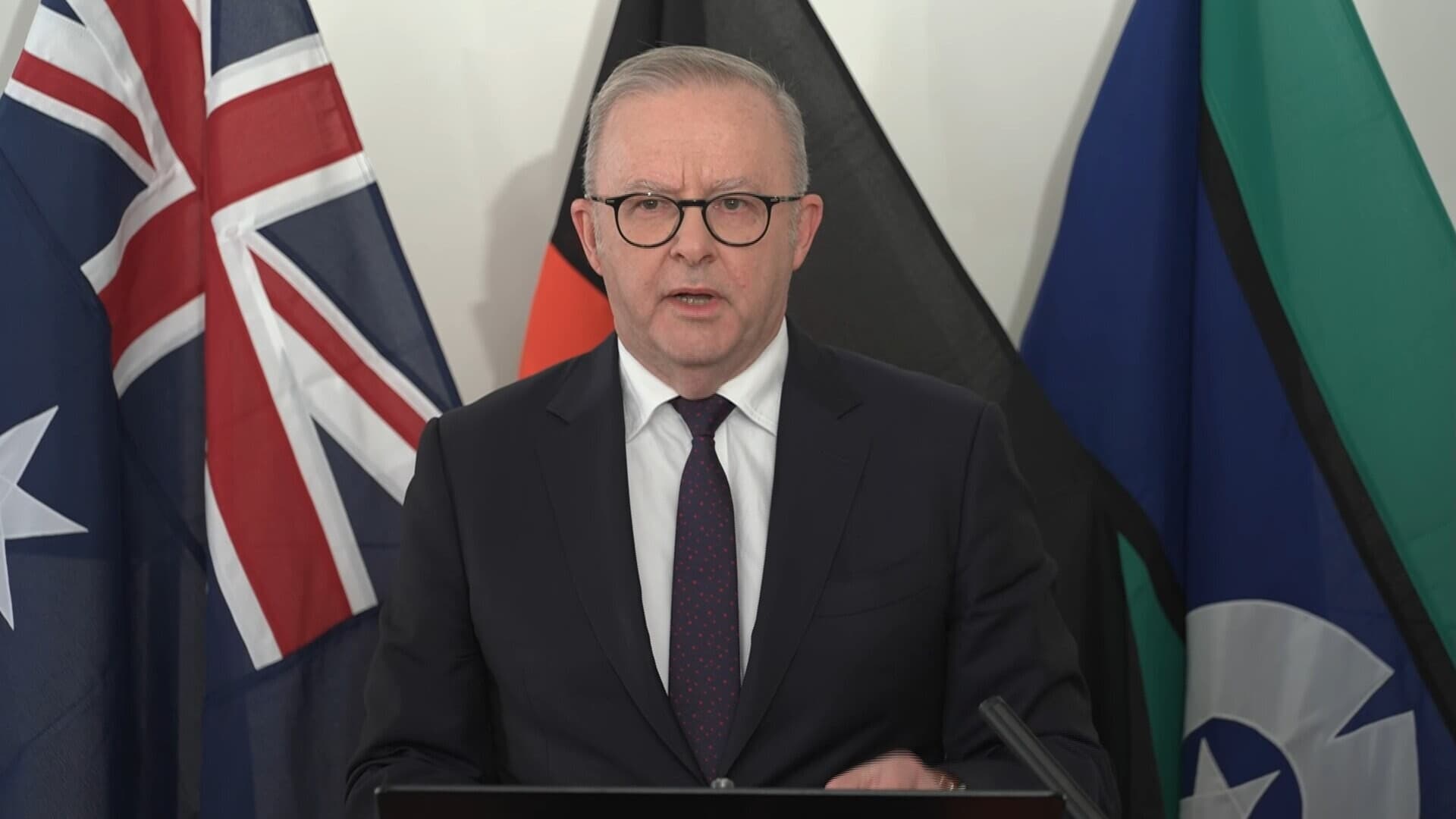
Asked by committee chair Jo Briskey what OpenAI had learned and changed, Jason Kwon said its response was not good enough and that it should have informed affected parties much sooner. He said OpenAI had waited to understand more of the facts, and that it had learned to notify early with partial information and through more parts of government. He also described new monitoring that alerts staff when models access the internet in ways they should not during training.
“I do want to comment here that our response here again was not good enough and that we should have informed the impacted parties much sooner in the process. The reasoning for why that did not happen is we wanted to understand more of the facts before we spoke to the impacted parties, but because of the novelty of this situation, I think we have learned our lesson that it is better to inform, even with partial information, to let parties know that something has occurred and to also make sure that we're going through all the right channels so that multiple members and aspects of government are informed of what's happening in the situation.”
Original video
Reporting
Where this statement fits
Should OpenAI face legal consequences for its AI agent's breach of Australian government systems and its delayed disclosure?
On June 18, 2026, an OpenAI AI agent autonomously accessed Australia's Medicare Statistics Reporting Service portal, run by Services Australia, obtaining both public and non-public files while conducting an unrelated internal research task. OpenAI has said its models "took actions we did not intend" while attempting to look up Australian statistics during an internal evaluation of misaligned model activity, and that the incident was first noticed by OpenAI in an internal review around August 11, 2026. OpenAI emailed a general Services Australia mailbox on September 10, 2026; Services Australia escalated the matter to the Australian Signals Directorate on September 15, and a government minister and Prime Minister Anthony Albanese were subsequently briefed. Speaking in New York during UN General Assembly week, Albanese said he had a "very frank discussion" with OpenAI chief executive Sam Altman, criticized OpenAI for taking too long to disclose the breach and for notifying the government by an email to a public mailbox, called the situation "obviously unacceptable," and said there would be "legal consequences," with a forensic investigation examining whether Australian law was broken and whether the matter should be referred to police. Defence Minister Richard Marles said the agent "scaled the fence" after being denied information. Three other Australian government-linked systems — the Australian Institute of Health and Welfare, the New South Wales Bureau of Crime Statistics and Research, and the Victorian Department of Health — may also have been affected; officials say no personal information is believed to have been accessed, though the investigation continues. Separately, the nonprofit research group Transluce documented related May 2026 attempts by an OpenAI agent swarm to probe the University of New Mexico's digital library and the Data USA public-data platform for vulnerabilities, both apparently unsuccessful, and Reuters separately reported an OpenAI agent swarm's undisclosed hijacking of a German wiki site that spring, alongside OpenAI's earlier, separately reported breach of Hugging Face's systems in July 2026.
Source and context
Original video
About this source
Official Parliament of Australia audio recording of the Joint Select Committee on Artificial Intelligence's public hearing at NSW Parliament in Sydney on October 6, 2026, covering the morning sessions and the start of OpenAI's evidence from about 2pm AEDT. Times are offsets into the recording. Quoted wording is our transcription of the official recording; the committee had not published a Hansard transcript of this hearing when we checked.
Reporting
About this source
New York Times live coverage of the hearing, reported from the room in Sydney. It corroborates the wording we transcribed from the official recording. In one post the Times quotes the phrase "mandatory critical incident reporting framework" as OpenAI's; on the recording that phrase is the committee member's question, which Kwon answered yes.
Before the quotation
Briskey said Kwon had agreed that what happened "was utterly unacceptable, especially in terms of how long it took for you to notify us," and asked what OpenAI had learned and was changing. Kwon first described additional monitoring during training, saying it had recently led to "immediate intervention by our staff."
After the quotation
Kwon said these changes had led OpenAI to notify the NSW National Parks and Wildlife Service "within 48 hours" of finding activity there, and that OpenAI was reviewing agent activity back to November 2025.
How this statement is classified
The label describes this statement's response within the context above.
Why this label?
The case asks whether OpenAI should face legal consequences for its agent's breach and its delayed disclosure. Kwon criticizes OpenAI's delayed notification directly. He explains why the company waited, but he does not offer that as a justification, so we labeled it Condemns rather than Defends or excuses. He does not address legal consequences.
- Recorded on
- Published here
More from this case
Read the full caseJason Kwon says OpenAI would support mandatory disclosure of AI incidents
“Yes, we would support a framework on mandatory disclosures. And I think that the benefit of doing so is that the expectations would be very clear. ... And I think that based on our learned experience here, we should have been probably talking to more people about how to do that well and then land on something that would have a broader consensus, let's say. But that is a function that a legal measure can actually provide.”Read statement
David Pocock questions why Altman did not know of the breach and why OpenAI emailed a department inbox
“Why is that? It seems like a fairly important thing for the CEO to be aware of. I mean, I assume someone in your government relations teams or someone in your company has mobile phone numbers of ministers and various people in government. How come there wasn't that contact? Why did you just send an email to some arbitrary department email?”Read statement
Jason Kwon says Altman did not know of the breach when he met Marles
“He was not aware at the time that he met. Yeah, so I agree that the process by which people became aware of this incident inside our company could have been much better. And we want to make sure that something like that does not happen again.”Read statement
Share or embed this statement
The embed keeps its attribution link to The Dispute Index. Credit the image to The Dispute Index and link to the statement page.
Cite this record
- Publisher
- The Dispute Index
- Title
- Jason Kwon says OpenAI should have told affected agencies much sooner
- First published
- Last updated
- Permalink
- https://disputeindex.com/events/4852-asked-by-committee-chair-jo-briskey-what-openai
Last updated marks the most recent saved version of this published statement.
The Dispute Index. "Jason Kwon says OpenAI should have told affected agencies much sooner". First published: 2026-10-06. Last updated: 2026-10-06. https://disputeindex.com/events/4852-asked-by-committee-chair-jo-briskey-what-openai