
Economists' brief signer Dr. Stan Veuger personally backs Professor Ilya Somin's view that the Section 301 tariffs exceed the statute
Stan VeugerSenior fellow at the American Enterprise Institute and signatory of the economists' amicus brief supporting the plaintiffs, in an emailed comment sent on his behalf, speaking for himself
Dr. Stan Veuger, an American Enterprise Institute senior fellow and the first signatory of an economists' amicus brief that says it does not address the parties' legal arguments, told Dispute Index that, speaking for himself, he agrees with Professor Ilya Somin on the government's reliance on HMTX. Professor Somin had told Dispute Index that nothing as sweeping as the tariffs could be authorized by Section 301 and that a statute authorizing it would be an unconstitutional delegation. Asked whether the brief's finding that forced labor's effect on U.S. commerce is small bears on the statute's burden test, Dr. Veuger said the brief speaks for itself.
“I think the brief speaks for itself on point 1. Speaking for myself I agree with Ilya Somin's view on point 2.”
Emailed statement
Read the full email
I think the brief speaks for itself on point 1. Speaking for myself I agree with Ilya Somin's view on point 2.
Original text
Where this statement fits
Are Trump's Section 301 "forced labor" tariffs a lawful remedy, or a pretext to revive struck-down global tariffs?
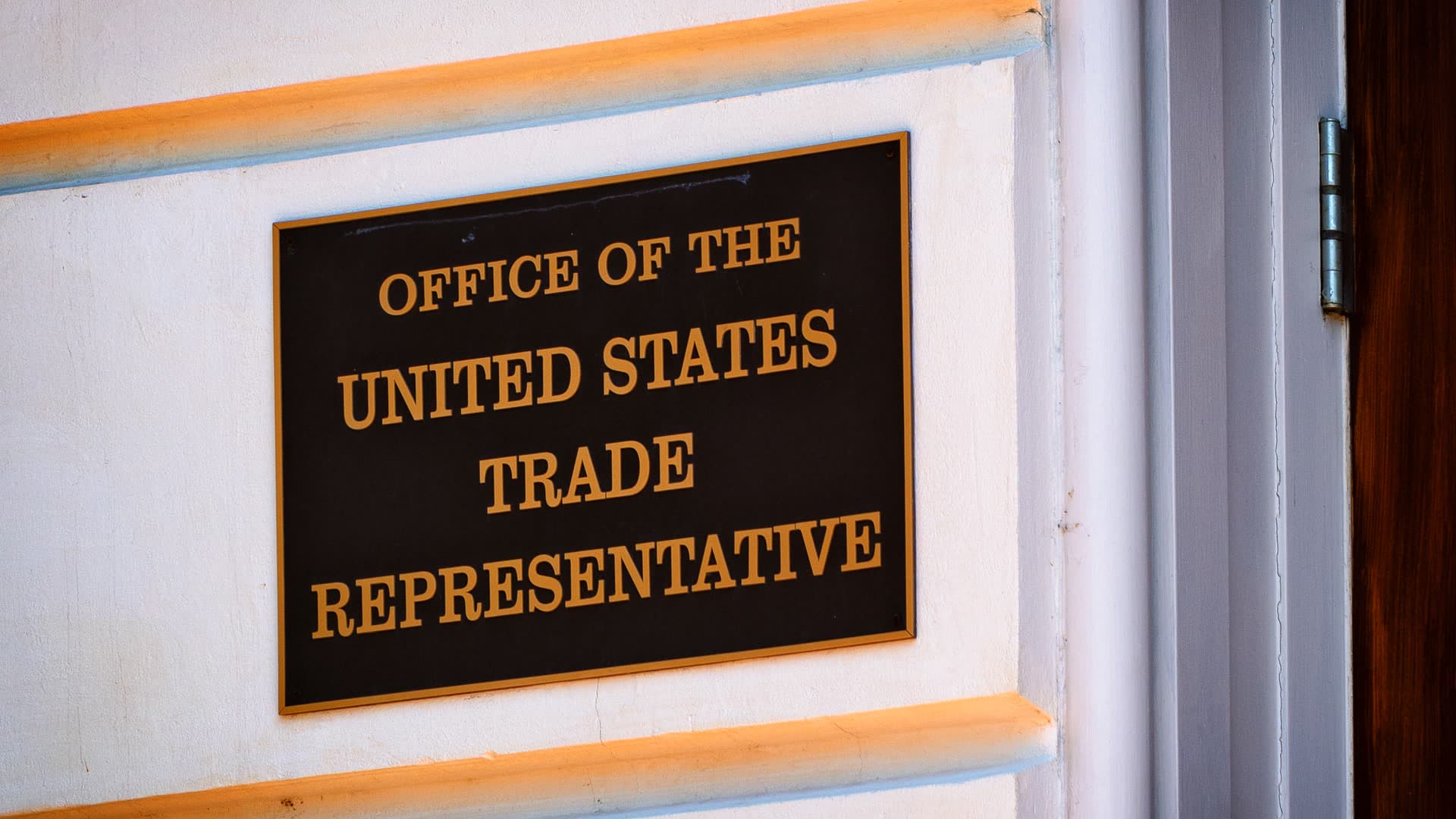
On July 23, 2026, U.S. Trade Representative Jamieson Greer, at President Trump's direction, imposed additional tariffs of 10% or 12.5% on imports from 60 economies under Section 301 of the Trade Act of 1974. The duties took effect July 24. USTR says each economy failed to impose and effectively enforce a ban on imports of goods made with forced labor, which it found unreasonable and a burden on U.S. commerce. Businesses and 25 states sued in the Court of International Trade. They say the forced-labor rationale is a pretext for re-creating the global tariffs the Supreme Court struck down in February, and that USTR skipped the country-by-country findings the statute requires. The Justice Department says USTR made findings for all 60 economies on a record of data, testimony and public comments. A three-judge panel heard argument on September 30, 2026. As of that date, no court had ruled on the Section 301 tariffs. The disputed question is whether the tariffs are a lawful remedy under Section 301 or a pretext to revive the struck-down global tariffs.
Source and context
Emailed statement
Emailed statement from Stan Veuger to Dispute Index on the Section 301 tariffs
I think the brief speaks for itself on point 1. Speaking for myself I agree with Ilya Somin's view on point 2.
About this source
Hannah Bowen of the American Enterprise Institute's media relations team sent this comment by email, attributing it to Dr. Stan Veuger personally and not to the group of brief signers as a whole, in reply to a Dispute Index request of October 1, 2026. That request asked (1) whether the signers' finding that forced labor's effect on U.S. commerce is small bears on the statute's requirement that a practice "burdens or restricts United States commerce," and (2) how the signers respond to the government's reliance on the Federal Circuit's 2025 decision in HMTX Industries v. United States. The link is to Dr. Veuger's AEI profile; the comment itself is not published there.
Archived copy (opens in a new tab)Original text
About this source
A brief by economists, among them American Enterprise Institute scholars Stan Veuger, Steven Kamin, Kyle Pomerleau and Alan Viard. It says it does not address the parties' legal arguments and argues that the tariffs are disproportionate to the effect of forced labor on U.S. commerce and large enough to raise a major question. Its signatories are listed with their affiliations in an appendix.
Before the quotation
Dispute Index asked the economists who signed the September 11 brief (1) whether their finding that forced labor's effect on U.S. commerce is small bears on the statute's requirement that a practice "burdens or restricts United States commerce," and (2) how they respond to the government's reliance on the Federal Circuit's 2025 decision in HMTX Industries v. United States. AEI's media relations office replied with this comment from Dr. Veuger, saying it should not be attributed to the signers as a whole.
After the quotation
On the second question, Professor Somin had told Dispute Index on October 1 that "nothing so massive and sweeping as the government's current Section 301 tariffs can possibly authorized by the statute. And if a statute did authorize it, it would be an unconstitutional delegation of legislative power to the executive."
How this statement is classified
The label describes this statement's response within the context above.
Why this label?
Relative to the Section 301 forced-labor tariffs, Dr. Veuger personally endorses Professor Somin's view that the statute cannot authorize tariffs this sweeping and that a statute that did would be unconstitutional, a legal position the economists' brief itself does not take. That rejects the tariffs as lawful, so we labeled it Condemned. On the statute's burden test he added nothing beyond the brief.
- Recorded on
- Published here
More from this case
Read the full caseBurlap & Barrel says it is absorbing tariff costs and calls the Section 301 duties unlawful
Burlap & Barrel
“We have refused to raise our prices to customers or to pass the costs along to our partner farmers, so we've covered the increase internally. This has been quite challenging for us as a bootstrapped social enterprise.”Read statement
Gresser says USTR never showed forced-labor goods are traded or underpriced, so it has no right to impose the tariffs
“Ours argues that USTR's 301 investigation has not actually identified a "burden" or "restriction" on U.S. commerce - the standard the statute sets for administrations wanting to use it to impose tariffs - and so the Report of last June does not give USTR a right to impose tariffs.”Read statement
Professor Somin says HMTX supports the challenge to the Section 301 tariffs
“On your other question, nothing so massive and sweeping as the government's current Section 301 tariffs can possibly authorized by the statute. And if a statute did authorize it, it would be an unconstitutional delegation of legislative power to the executive.”Read statement
Share or embed this statement
The embed keeps its attribution link to The Dispute Index. Credit the image to The Dispute Index and link to the statement page.
Cite this record
- Publisher
- The Dispute Index
- Title
- Economists' brief signer Dr. Stan Veuger personally backs Professor Ilya Somin's view that the Section 301 tariffs exceed the statute
- First published
- Last updated
- Permalink
- https://disputeindex.com/events/4504-dr-stan-veuger-an-american-enterprise-institute-senior
Last updated marks the most recent saved version of this published statement.
The Dispute Index. "Economists' brief signer Dr. Stan Veuger personally backs Professor Ilya Somin's view that the Section 301 tariffs exceed the statute". First published: 2026-10-03. Last updated: 2026-10-03. https://disputeindex.com/events/4504-dr-stan-veuger-an-american-enterprise-institute-senior