
Quebec’s premier backs the alliance but demands a formal seat at the table
Christine FréchettePremier of Quebec, posting in French on her own account
Quebec Premier Christine Fréchette said she supports Carney’s efforts to draw Canada and the European Union closer, while formally asking that Quebec be given special status in the alliance, with a seat at the table in any negotiation touching provincial jurisdiction.
“Today, I formally ask Mark Carney that Quebec obtain special status in this alliance: a formal seat at the table and direct participation in discussions that touch on our own jurisdictions as well as our interests. ... Quebec cannot be a mere spectator of this new alliance. We are a distinct nation. (Translated from French. Original: Aujourd’hui, je demande formellement à Mark Carney que le Québec obtienne un statut particulier dans cette alliance : une place formelle à la table et une participation directe aux discussions qui touchent nos compétences propres ainsi que nos intérêts. … Le Québec ne peut pas être un simple spectateur de cette nouvelle alliance. Nous sommes une nation distincte.)”
Original post
Where this statement fits
Should Canada become an associate member of the European Union?
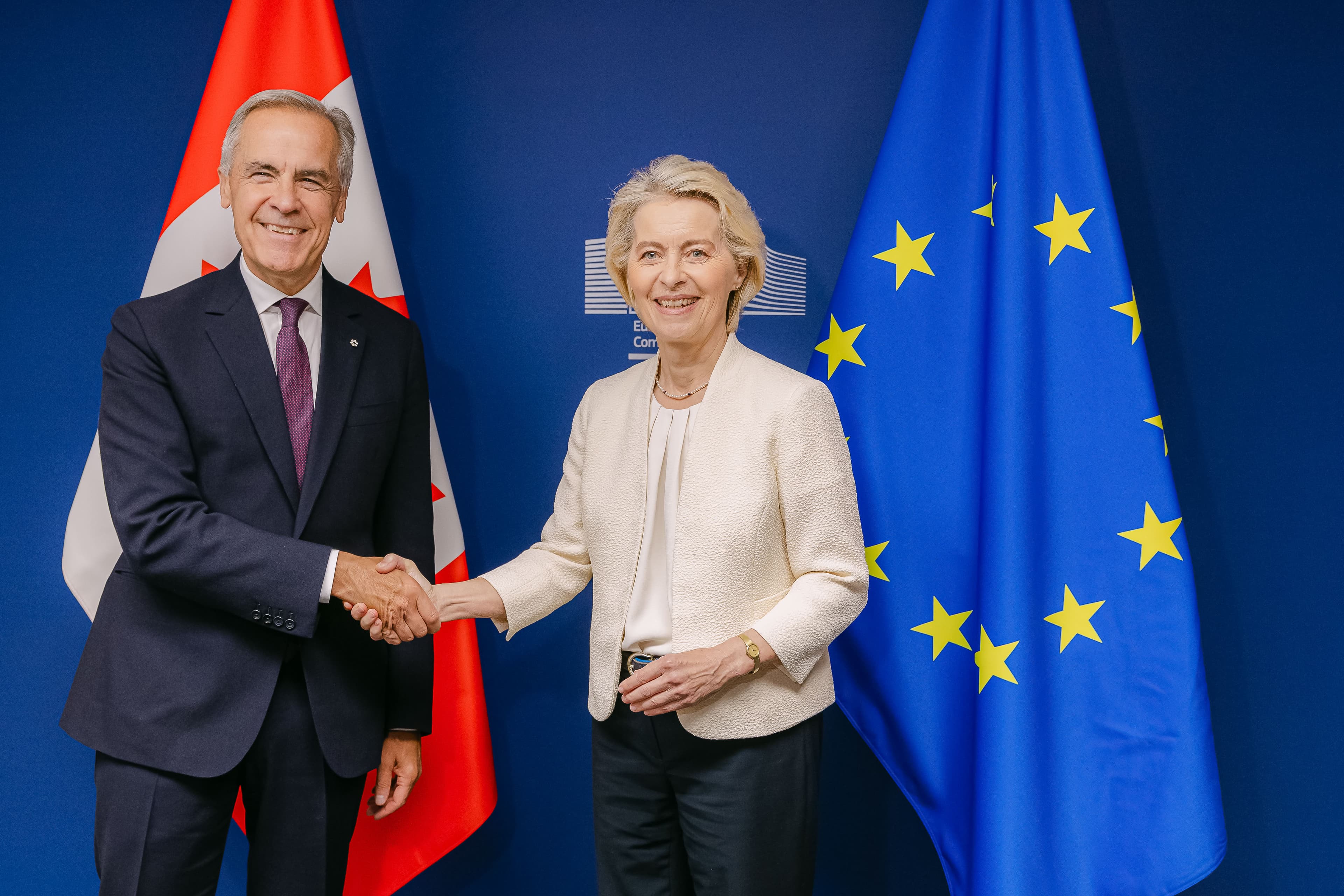
In her State of the European Union address on 16 September 2026, European Commission President Ursula von der Leyen said she would like to work with Prime Minister Mark Carney on opening the door for Canada to be the first associate member of the European Union, as part of moving beyond the existing CETA trade agreement to what she called an Alliance for the Future. Carney, present as an invited guest, told the European Parliament the following day that Canada welcomes the ambition, while attributing the associate-member phrase to von der Leyen rather than adopting it, and promised debates and a vote in the Canadian Parliament on the final structure. Conservative leader Pierre Poilievre set red lines against Canadians paying taxes to Brussels, following European laws they did not vote on, or adopting European immigration policy. United States President Donald Trump said that if he judged the arrangement a hostile act he would impose heavy tariffs on Europe or curtail trade. No agreement has been signed, and associate membership is not a status defined in the European Union's treaties.
Source and context
Original post
About this source
Posted in French. Fréchette supports the initiative while demanding a formal seat for Quebec in negotiations touching provincial jurisdiction, citing Quebec’s distinct status at the OIF and UNESCO. This is the first provincial intervention recorded in this case and interlocks with the separate argument that Ottawa cannot implement treaty commitments in fields the constitution assigns to the provinces.
Before the quotation
Posted the day after von der Leyen’s address and the day Carney spoke to the European Parliament. Quebec holds distinct representation at the OIF and UNESCO, and was the first non-European federated state to conclude a cooperation agreement with the European Committee of the Regions.
After the quotation
Fréchette names clean energy, critical minerals, aerospace, defence and artificial intelligence as the sectors at issue. Several of these fall wholly or partly within provincial jurisdiction under the Canadian constitution, which is the basis of a separate argument that Ottawa cannot implement what it signs.
How this statement is classified
The label describes this statement's response within the context above.
Why this label?
On whether Canada should become an associate member of the EU, Fréchette holds two positions at once. She endorses the direction, citing tariff pressure and the need to diversify markets, and simultaneously conditions Quebec’s participation on obtaining a distinct status within it, arguing the province cannot be “a simple spectator.” That is a substantive condition attached to support rather than a qualification of it, which is what separates this from “Defended or excused”. She is the first provincial voice in this case, and her demand bears on whether Ottawa can deliver commitments in fields the constitution assigns to the provinces.
- Recorded on
- Published here
- People and groups discussed
- Mark Carney
More from this case
Read the full caseCarleton's Achim Hurrelmann doubts an associate-member status for Canada can be set up soon
“I'm not sure if a status with that name can be established for Canada any time soon”Read statement
Poilievre says the summit cut no tariffs and warns against aligning Canada with European policies
“Worse, there was lots of talk at the summit about aligning Canada with the insane European taxes, debt, immigration and anti-oil and gas policies that have left parts of Europe bankrupt and burning.”Read statement
German ambassador says the two sides should give the associate-member label real content
“The president of the commission and the prime minister are using the term associated membership, so let's fill that name with life and see what it can be about. I think we should not be distracted by the label in question from the important content that has been agreed today”Read statement
Share or embed this statement
The embed keeps its attribution link to The Dispute Index. Credit the image to The Dispute Index and link to the statement page.
Cite this record
- Publisher
- The Dispute Index
- Title
- Quebec’s premier backs the alliance but demands a formal seat at the table
- First published
- Last updated
- Permalink
- https://disputeindex.com/events/1101-quebec-premier-christine-fr%C3%A9chette-said-she-supports-carney
Last updated marks the most recent saved version of this published statement.
The Dispute Index. "Quebec’s premier backs the alliance but demands a formal seat at the table". First published: 2026-09-19. Last updated: 2026-10-07. https://disputeindex.com/events/1101-quebec-premier-christine-fr%C3%A9chette-said-she-supports-carney