
Shapiro challenges El-Sayed’s assurance about Sharia
Writing personally as the author of a Daily Wire opinion column.
“that is not true on a global level at all.”
Source and context
Original text
About this source
Shapiro’s column characterizes the Piker passage as part of a broader political shift in the Democratic coalition.
Before the quotation
In his August 26, 2026 Daily Wire opinion column, Shapiro recounts El-Sayed’s comparison of Muslim religious observance with Christian canon law. Immediately afterward, Shapiro disputes El-Sayed’s assurance that nobody is trying to impose Sharia by evaluating it globally. Locator: the two consecutive paragraphs beginning with the discussion of Sharia and canon law, browser text lines 69–71. The quotation is a contiguous fragment of Shapiro’s own response, rather than the words he attributes to El-Sayed
After the quotation
The next paragraph shifts to criticism of El-Sayed’s campaigning with Hasan Piker. The Sharia passage itself disputes the assurance at a global level. DI’s case concerns El-Sayed’s defense of personal religious practice and opposition to Sharia bans; Shapiro’s broader objection is preserved without treating it as evidence that El-Sayed seeks to impose religious government.
How this statement is classified
Case context: Abdul El-Sayed’s Sharia-law defense: religious freedom or support for religious government?
The label describes this statement’s response within the context above.
Why this label?
Relative to El-Sayed’s portrayal of his Sharia-law position as personal religious freedom, Shapiro challenges the assurance that no one is imposing Sharia by arguing that it is untrue globally.
- Recorded on
- Published here
- People and groups discussed
- Abdul El-Sayed
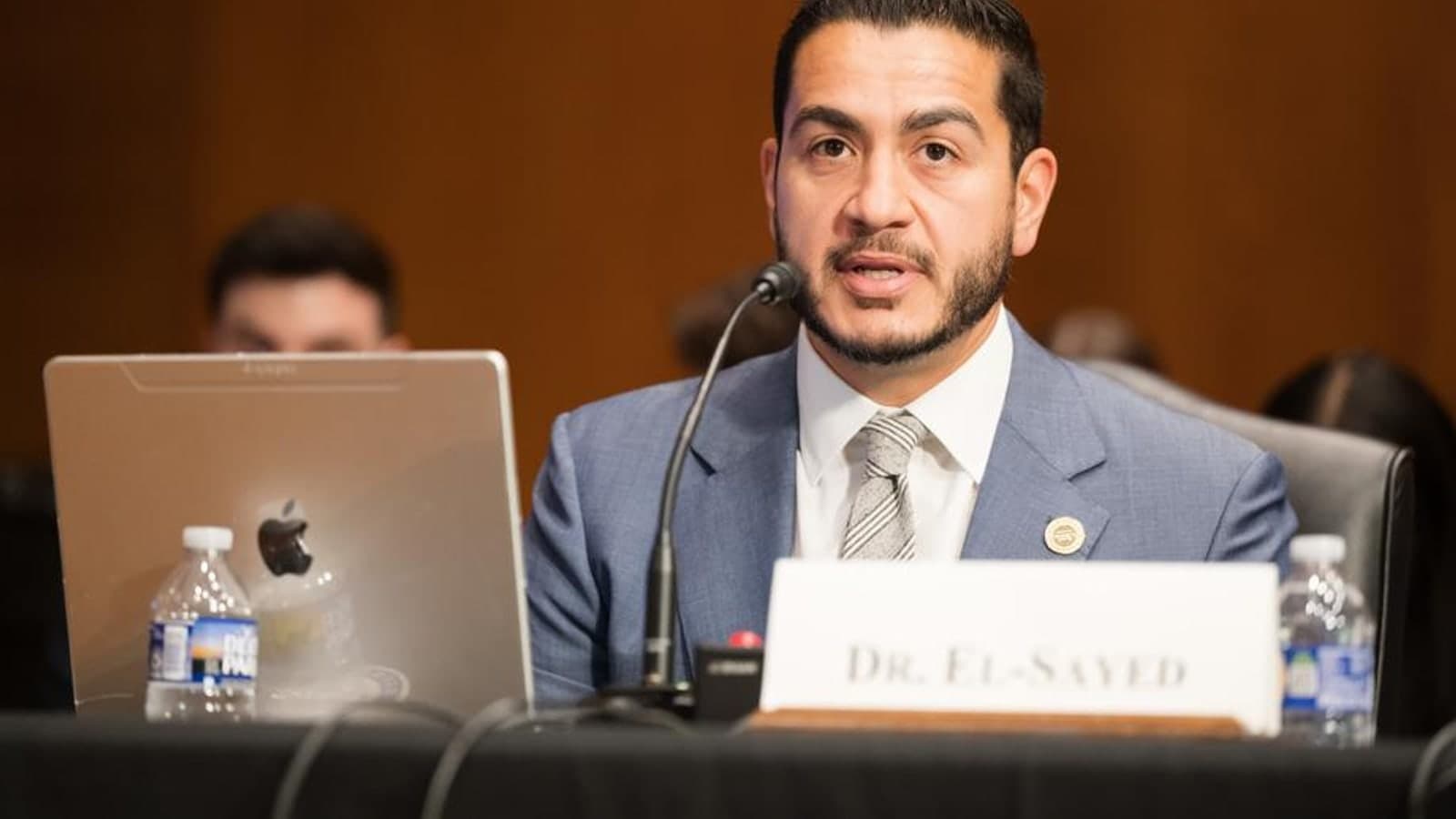
Abdul El-Sayed’s Sharia-law defense: religious freedom or support for religious government?
Explore the case context, sources and public responses.
More from this case
Read the full case“When Abdul El-Sayed says he has a, quote, ‘obligation,’ to comply with Sharia law, he means it.”Read statement
“we have a right to decide which principles we wish to have organize our societies”Read statement
“Because he could not be more obscenely, iniquitously wrong.”Read statement